


|
MINISTRY OF INDUSTRY AND TRADE OF VIETNAM |
SOCIALIST REPUBLIC OF VIETNAM |
|
No. 29/2026/TT-BCT |
Hanoi, June 2, 2026 |
CIRCULAR
OPERATION OF COMPETITIVE WHOLESALE ELECTRICITY MARKET
Pursuant to the Law on Electricity No. 61/2024/QH15, amended by the Law on Atomic Energy No. 94/2025/QH15;
Pursuant to Decree No. 40/2025/ND-CP dated February 26, 2025 of the Government of Vietnam on functions, tasks, entitlements, and organizational structure of the Ministry of Industry and Trade of Vietnam;
At the request of the Director of the Electricity Authority of Vietnam;
The Minister of Industry and Trade of Vietnam hereby promulgates the Circular on the operation of the competitive wholesale electricity market.
Chapter I
GENERAL PROVISIONS
Article 1. Scope
This Circular provides for:
1. The operation of the competitive wholesale electricity market (hereinafter referred to as the “electricity market”), including the following principal contents: registration for participation in the electricity market; preparation of electricity market operation plans; the offer mechanism; the dispatch scheduling mechanism; electricity metering in the electricity market; determination of the market price and settlement calculation; information announcement; supervision of electricity market operation; and responsibilities of units participating in the electricity market.
2. The threshold for large electricity consumers participating in cases of direct power trading.
Article 2. Regulated entities
This Circular applies to the following entities:
1. Electricity wholesale units.
2. Generation units.
3. Power system and electricity market operation units.
4. Electricity transmission units.
5. Vietnam Electricity (EVN).
6. Large electricity consumers participating in the direct power trading mechanism.
7. Fuel supply units.
Article 3. Interpretation of terms
For the purpose of this Circular, the following terms shall be construed as follows:
1. AGC (Automatic Generation Control) means an automatic control system that adjusts the active power output of a generating unit, power plant, power plant cluster, or energy storage battery system to ensure the safe and stable operation of the power system.
2. Offer means the offer to sell electricity into the electricity market for each generating unit, submitted by the offering entity to the power system and electricity market operation unit using the offer form prescribed in this Circular.
3. Scheduling offer means an offer accepted by the power system and electricity market operation unit for preparing the day-ahead dispatch schedule and the next trading interval dispatch schedule.
4. Default offer means the offer used by the power system and electricity market operation unit for preparing the day-ahead dispatch schedule and the next trading interval dispatch schedule where no valid offer is received from the generation unit.
5. Settlement statement means the statement calculating payments to direct trading generation units and electricity purchasing units, prepared by the power system and electricity market operation unit for each trading day and each settlement period.
6. Electricity market intervention means an action that changes the normal operating mode of the electricity market, which the power system and electricity market operation unit must implement to handle the situations specified in Clause 1 Article 71 of this Circular.
7. Short-term hydrothermal optimization program means the short-term hydrothermal optimization software used by the power system and electricity market operation unit to calculate unit commitment schedules and dispatch schedules for preparing the electricity market operation plan for the following week and the day-ahead dispatch schedule of power plants indirectly participating in the electricity market.
8. Settlement period means the period for preparing settlement documents and invoices for transactions in the electricity market, covering a period of 1 month commencing on the first day of each month.
9. Declared capacity means the maximum available capacity of a generating unit declared by the offering entity or a power plant indirectly participating in the electricity market.
10. Dispatched capacity means the output capacity of a generating unit actually dispatched by the power system and electricity market operation unit during a trading interval.
11. Next trading interval dispatched capacity means the output capacity of a generating unit expected to be dispatched during the first trading interval in the next trading interval dispatch schedule.
12. Day-ahead dispatched capacity means the output capacity of a generating unit expected to be dispatched during the trading intervals in the day-ahead dispatch schedule according to the results of the constrained scheduling.
13. Minimum stable generation capacity means the minimum generation output (Pmin) of a generating unit of a power plant, determined as the lower value between the Pmin agreed upon by the electricity seller and the electricity purchaser in the power purchase agreement and the actual Pmin of the generating unit.
14. Incremental generation capacity means the difference between the dispatched capacity and the capacity scheduled in the market price schedule of a generating unit.
15. Electricity Market Web Portal means the web portal used for announcing information on the operation of the power system and the electricity market.
16. Direct power trading mechanism means the mechanism governing direct power trading between generation units and large electricity consumers in accordance with Decree No. 57/2025/ND-CP of the Government of Vietnam, and any amendments, supplements, or replacements thereto.
17. Calculation cycle during operating day D means a calculation cycle conducted every 8 hours.
18. Auxiliary services mean secondary frequency control, fast start, operating reserve, voltage control, and black start services to ensure electricity supply.
19. Incremental generation output means the electricity generated by a generating unit corresponding to its incremental generation capacity.
20. Offering entity means the entity that directly submits an offer in the electricity market, including a generation unit, power plants registered to submit offers directly, and the entity representing a cascade hydropower group in submitting offers.
21. Fuel supply unit means an entity supplying or trading fuel for electricity generation, including Vietnam National Coal – Mineral Industries Holding Corporation Limited (Vinacomin), Dong Bac Corporation, Petrovietnam Gas Joint Stock Corporation (PV GAS), and other fuel suppliers and traders.
22. Electricity wholesale unit means an entity that purchases electricity in the spot electricity market and from EVN for wholesale and retail sale to other organizations and individuals, currently comprising the 5 Power Corporations under EVN (Northern Power Corporation, Central Power Corporation, Southern Power Corporation, Hanoi Power Corporation, and Ho Chi Minh City Power Corporation).
23. Electricity purchasing unit means an entity participating in the competitive wholesale electricity market as an electricity purchaser, including electricity wholesale units and EVN.
24. Generation unit means an electricity unit that owns and operates one or more power plants connected to the national power system.
25. Indirect trading generation unit means a generation unit that owns and operates a power plant which does not submit offers directly to the electricity market and is not subject to the settlement mechanism prescribed in Chapter VIII of this Circular.
26. Generation unit under direct power purchase agreements means a generation unit that owns and operates one or more power plants participating in the electricity market and enters into power purchase agreements between such power plants and an electricity wholesale unit.
27. Direct trading generation unit means a generation unit that owns and operates a power plant whose dispatch is scheduled based on submitted offers and whose settlement is calculated in accordance with Chapter VIII of this Circular.
28. Electricity metering data management unit means an entity responsible for operating the system for collecting, processing, and storing electricity metering data serving the electricity market, including the power system and electricity market operation unit, generation units, electricity transmission units, and electricity wholesale units, within the scope of each entity’s management of electricity metering data.
29. Electricity transmission unit means an electricity unit licensed to conduct electricity activities in the field of electricity transmission and responsible for managing and operating the national transmission grid.
30. Power system and electricity market operation unit means the entity performing the functions of the National Load Dispatch Center and the Electricity Market Transaction Operator in accordance with the Law on Electricity (currently the National Power System and Market Operator Company Limited).
31. Electricity export unit means an electricity unit responsible for concluding and managing electricity export contracts with electricity export delivery points on the transmission grid of the national power system in accordance with regulations.
32. FTP (File Transfer Protocol) means the file transfer protocol and tool used for transmitting and receiving information and files among units participating in the electricity market.
33. Market capacity price means the price determined for each trading interval and applied for calculating capacity payments to generation units in the electricity market.
34. Offer floor price means the lowest price that an offering entity is permitted to offer for a generating unit in the day-ahead offer.
35. Market energy price means the price per unit of electrical energy determined for each trading interval and applied for calculating energy payments in the electricity market.
36. Full market electricity price means the sum of the market energy price and the market capacity price for each trading interval.
37. Offer price cap means the highest price that an offering entity is permitted to offer for a generating unit in the day-ahead offer.
38. Electricity market price cap means the maximum market energy price, determined annually.
39. Value of lost load means the parameter used in the calculation model to represent the penalty function value when the calculation model produces a result requiring load shedding due to insufficient generation resources.
40. Water value means the expected marginal value calculated for the volume of water stored in hydropower reservoirs when used for electricity generation to substitute for thermal power generation in the future, converted into a value per unit of electrical energy.
41. Efficiency degradation factor means the factor representing the degradation in the efficiency of a generating unit over its operating period.
42. Annual average load factor means the ratio of the total annual electricity generation output to the product of the total installed capacity and the total number of hours used for calculating the annual load factor.
43. Monthly average load factor means the ratio of the total monthly electricity generation output to the product of the total installed capacity and the total number of hours used for calculating the monthly load factor.
44. Electricity market information system means the system of equipment and databases serving the management of and exchange of information for the electricity market, managed by the power system and electricity market operation unit.
45. Electricity market information technology system means the system of equipment comprising the electricity market information system, the SCADA/EMS system, the electricity metering system, digital signatures meeting the operational requirements of the electricity market, and other systems prescribed in this Circular.
46. Battery Energy Storage System (BESS) means a system comprising batteries, chargers, controllers, and other equipment connected to the power grid to store electrical energy in the batteries during charging and discharge the stored electrical energy when required.
47. Monthly event confirmation dossier means the dossier prepared in accordance with Article 6 of Appendix IV enclosed with this Circular regarding the Procedure for Cooperation in the Reconciliation of Settlement Data among the power system and electricity market operation unit, generation units, and electricity purchasing units.
48. Power purchase agreement means a written agreement between the electricity purchaser and the electricity seller governing the sale and purchase of electricity.
49. Reservoir at risk of spillage means a hydropower reservoir falling into one of the following cases:
a) A hydropower reservoir having a regulating capacity of less than 2 days;
b) A hydropower reservoir having a regulating capacity of 2 days or more that has not yet discharged water but will reach the normal water level or the maximum permissible water level under the inter-reservoir operation procedures within the next 2 days if it is not dispatched according to its available capacity;
c) A hydropower reservoir subject to a written water release notification issued by a competent state authority;
d) A hydropower reservoir located in an area directly affected by a typhoon, tropical depression, or other hazardous weather phenomena according to the official bulletin issued by the National Center for Hydro-Meteorological Forecasting or a Regional Hydro-Meteorological Station.
50. Electricity Market Operations Engineer means the person directly responsible for operation planning, power source dispatch scheduling, auxiliary services scheduling, and settlement calculation in the electricity market.
51. Large electricity consumers participating in the direct power trading mechanism means large electricity consumers eligible to participate in the direct power trading mechanism in accordance with Decree No. 57/2025/ND-CP of the Government of Vietnam, and any amendments, supplements, or replacements thereto, having an average monthly electricity consumption as follows:
a) From 20.000 kWh per month or more for the direct power trading mechanism through private connection grids;
b) From 200.000 kWh per month or more for the direct power trading mechanism through the national grid.
52. Daily operating time blocks comprise the periods from 00:00 to 08:00, 08:00 to 16:00, and 16:00 to 24:00.
53. Load block means the parameter used in the water value calculation model, determined from a pair of values consisting of a time period (hours) and load (MWh). For water value calculations, the weekly load shall comprise at least 5 load blocks.
54. Constrained scheduling means the arrangement of the dispatch order of generating units using the least-cost electricity procurement method while taking into account the technical constraints of the power system.
55. Unconstrained scheduling means the arrangement of the dispatch order of generating units using the least-cost electricity procurement method without taking into account the constraints of the power system.
56. Next trading interval dispatch schedule means the projected dispatch schedule of generating units for electricity generation and provision of auxiliary services for the next trading interval and the following 7 trading intervals, as calculated and announced by the power system and electricity market operation unit.
57. Day-ahead dispatch schedule means the projected dispatch schedule of generating units for electricity generation and provision of auxiliary services for the trading intervals of the following trading day, prepared by the power system and electricity market operation unit.
58. Intra-day dispatch schedule means the projected dispatch schedule of generating units for electricity generation and provision of auxiliary services for trading intervals within the daily operating time blocks, as calculated and announced by the power system and electricity market operation unit.
59. Market energy price schedule means the schedule prepared by the power system and electricity market operation unit after the current trading day to determine the market energy price for each trading interval.
60. Electricity market simulation model means the system of software used by the power system and electricity market operation unit to simulate the dispatch of generating units and calculate the market energy price in preparing annual, monthly, and weekly operation plans.
61. Water value calculation model means the hydrothermal optimization software system used by the power system and electricity market operation unit to calculate water value in preparing annual, monthly, and weekly operation plans.
62. Reservoir limit water level means the minimum upstream water level of a hydropower reservoir at the end of each month of the year or at the end of each week of the month, calculated and announced by the power system and electricity market operation unit in accordance with the regulations on medium-term and short-term electricity supply adequacy assessments under the regulations on dispatching, operation, switching operations, incident handling, black start, and restoration of the national power system promulgated by the Ministry of Industry and Trade of Vietnam, while ensuring that the reservoir limit water level does not exceed the water level prescribed for the flood season under the reservoir operation procedures and inter-reservoir operation procedures.
63. Optimal water level means the upstream water level of a hydropower reservoir at the end of each month or each week, ensuring the most efficient use of water for electricity generation while satisfying the applicable operational constraints, as calculated and announced by the power system and electricity market operation unit.
64. Year N means the current year of electricity market operation, calculated according to the calendar year.
65. Day D means the current trading day.
66. Typical day means a day selected as having a typical electricity consumption pattern of the electricity load in accordance with the regulations on implementation of demand-side management promulgated by the Ministry of Industry and Trade of Vietnam. Typical days include typical working days, weekend days (Saturday and Sunday), and holidays (if any) for the year, month, and week.
67. Trading day means a day on which electricity market trading activities take place, from 00:00 to 24:00 every day.
68. BOT power plant means a power plant invested under the Build – Operate – Transfer model through a contract between the project owner and a competent state authority.
69. Best new entrant means a newly commissioned thermal power plant with the lowest calculated average generation price for the following year and whose power purchase agreement price is agreed upon based on the generation service price prescribed in the regulations on the method for determining generation service prices; principles for calculating electricity prices for implementation of power projects; and principal contents of power purchase agreements promulgated by the Ministry of Industry and Trade of Vietnam, and within the electricity generation price bracket prescribed in the regulations on dossiers, procedures, and methods for determining and approving electricity generation price brackets; and regulations on dossiers and procedures for developing and approving electricity import price brackets promulgated by the Ministry of Industry and Trade of Vietnam. The best new entrant shall be selected annually for use in calculating the market capacity price.
70. Gas-fired thermal power plant subject to the constraint of maximum use of gas fuel sources means a gas-fired thermal power project using domestically produced natural gas that is invested, constructed, and put into operation in accordance with the Law on Electricity, Decree No. 56/2025/ND-CP of the Government of Vietnam, amended by Decree No. 100/2025/ND-CP, and any amendments, supplements, or replacements thereto.
71. Strategic multi-purpose hydropower plant means a hydropower plant included in the list decided by the Prime Minister of Vietnam in accordance with Point b Clause 2 Article 5 of the Law on Electricity.
72. Contract-allocated power plant means a power plant that has a power purchase agreement with EVN and is allocated to an electricity wholesale unit in accordance with Clause 2 Article 40 of this Circular.
73. Cascade hydropower group means a group of hydropower plants where the water discharged from the reservoir of an upstream cascade hydropower plant accounts for all or most of the inflow to the reservoir of the downstream cascade hydropower plant, and there is no regulating reservoir of 2 days or more between these two power plants.
74. Trading node means the location used to determine the delivered and received electricity output for electricity sale and purchase transactions in the spot electricity market within the electricity market.
75. Dispatch scheduling software means the software system used by the power system and electricity market operation unit to prepare day-ahead, intra-day, and next trading interval dispatch schedules for generating units in the electricity market.
76. Electricity load for settlement calculation means the total electricity output of the entire power system, converted to the terminals of generating units, plus electricity import output during a trading interval.
77. Contracted electricity output means the electricity output negotiated and agreed upon by the parties in a power purchase agreement, or calculated and announced by the power system and electricity market operation unit in accordance with this Circular.
78. Take-or-pay electricity output (hereinafter referred to as “take-or-pay”) includes:
a) The minimum committed purchase electricity output under power purchase agreements in the set of contracts for a power plant project invested under the public-private partnership model applying the Build – Operate – Transfer (BOT) contract type, or under supplementary agreements between the electricity purchasing unit and the BOT generation unit, and the committed dispatched electricity output under electricity import contracts (if any);
b) The electricity output operated and dispatched corresponding to the maximum level according to gas supply availability, satisfying fuel, capacity, and available generation output constraints of the gas-fired thermal power plant subject to the constraint of maximum use of gas fuel sources, and the demand and technical constraints of the national power system.
79. Metered output means the metered electricity output of a power plant at the electricity delivery and receipt point.
80. Annual planned output means the electricity output of a power plant expected to be dispatched in the following year.
81. Monthly planned output means the electricity output of a power plant expected to be dispatched in the months of the year.
82. Fuel consumption rate means the amount of thermal energy consumed by a generating unit or power plant to produce one unit of electrical energy.
83. User account means the login name of a user or member unit used to access the Electricity Market Web Portal.
84. Offer gate closure time means the time after which generation units are not permitted to modify their offers, except in the cases prescribed in Article 49 of this Circular. In the electricity market, the offer gate closure time for Day D is 11:30 on Day D-1; for a daily operating time block, it is before 8 hours prior to the commencement time; and for next-interval operation, it is before 30 minutes prior to the commencement time.
85. Month M means the current month of electricity market operation, calculated according to the calendar month.
86. Electricity market participant means an entity participating in trading activities or providing services on the electricity market in accordance with Article 2 of this Circular, except for the case prescribed in Clause 7 Article 2 of this Circular.
87. Spot electricity market means the market for electricity purchase and sale during trading intervals, operated by the electricity market transaction operator in accordance with the levels of the competitive electricity market.
88. Capacity shortage means a situation where the total declared capacity of all generation units is lower than the forecast system load demand during a trading interval.
89. Electricity market information means all data and information relating to activities of the electricity market.
90. Dispatch order means the result of arranging the capacity bands in the offer according to the principle of prices from low to high, taking into account the constraints of the power system.
91. Total hours for calculating annual load factor means the total number of hours of Year N for generating units that have commenced commercial operation from Year N-1 or earlier, or the total number of hours from the time of commercial operation of the generating unit until the end of the year for generating units commencing commercial operation in Year N, excluding the outage period of the generating unit under the approved maintenance plan for Year N.
92. Total hours for calculating monthly load factor means the total number of hours of Month M for generating units that have commenced commercial operation from Month M-1 or earlier, or the total number of hours from the time of commercial operation of the generating unit until the end of the month for generating units commencing operation in Month M, excluding the outage period of the generating unit under the approved maintenance plan for Month M.
93. Slow-start generating unit means a generating unit that is unable to start and synchronize with the grid in less than 30 minutes.
94. Electricity market website means the website used for announcing electricity market information.
95. Week T means the current week of electricity market operation.
96. Gas fuel limit exceedance means a case where the total capacity of the first price band with identical offer prices in the offers of gas turbine generating units submitted for day-ahead or next-interval scheduling, plus the minimum stable generation capacity of generating units of power plants indirectly participating in the electricity market scheduled for dispatch, exceeds the total capacity limit of such power plants calculated and converted from the gas limit. Gas fuel limit exceedance applies to dispatch scheduling and shall not be used to adjust the contracted electricity output of power plants.
97. Metering point means the location where the electricity metering system is installed to determine delivered and received electricity output for electricity market settlement, in compliance with the regulations on electricity transmission systems, electricity distribution systems, and electricity metering promulgated by the Ministry of Industry and Trade of Vietnam and other relevant laws.
98. Forced outage rate means the probability of unavailability of a generating unit due to incidents, calculated as the percentage (%) of the number of forced outage intervals over the sum of available intervals and forced outage intervals.
Chapter II
REGISTRATION FOR PARTICIPATION IN ELECTRICITY MARKET
Article 4. Responsibilities of generation units for participation in electricity market
1. Except for the power plants prescribed in Clauses 2 and 3 of this Article, generation units owning and operating the following power plants shall complete procedures for registration for direct participation in the electricity market, including:
a) Power plants with an installed capacity greater than 30 MW connected to the national power system (including BOT power plants whose contracts have expired and which have been transferred to Vietnam, and hydropower plants operating in cooperation with strategic multi-purpose hydropower plants as prescribed in Point b Clause 4 Article 51 of the Law on Electricity);
b) Hydropower plants with an installed capacity of 10 MW or more whose power purchase agreements under the avoided cost tariff have expired, including cascade hydropower plants;
c) Power plants using other renewable energy sources with an installed capacity of 10 MW or more whose power purchase agreements under the State’s incentive or preferential pricing mechanisms have expired;
d) Renewable energy power plants participating in the direct power trading mechanism through the national grid in accordance with regulations.
2. Power plants not prescribed in Clause 1 of this Article may choose to participate in the electricity market. Where they choose to directly participate in the electricity market, generation units shall:
a) Prepare infrastructure as prescribed in Clause 5 of this Article;
b) Complete and submit the dossier for registration for participation in the electricity market as prescribed in Clause 1 Article 7 of this Circular;
c) Comply with the requirements applicable to generation units participating in the electricity market under this Circular and relevant legislative documents.
3. Generation units owning and operating power plants that indirectly participate in the electricity market include:
a) BOT power plants with valid power purchase agreements;
b) Gas-fired thermal power plants subject to the constraint of maximum use of gas fuel sources;
c) Strategic multi-purpose hydropower plants;
d) Imported power sources;
dd) Power plants using other renewable energy sources, except for the cases prescribed in Clauses 1 and 2 of this Article, and renewable energy power plants participating in the direct power trading mechanism through private connection grids in accordance with regulations;
e) Power plants located in industrial parks that sell only part of, or do not sell, their electricity output to the national power system, except for the case prescribed in Clause 2 of this Article;
g) Power plants providing must-run auxiliary services or fast start services according to the annually announced list;
h) Renewable energy power plants operating under the avoided cost tariff mechanism with valid power purchase agreements;
i) Pumped-storage hydropower plants;
k) Independent Battery Energy Storage Systems (BESS) serving the demand of the national power system.
4. Before November 1 of Year N, the power system and electricity market operation unit shall prepare lists of direct trading generation units, indirect trading generation units, and electricity purchasing units in the electricity market for Year N+1 for announcement to electricity market participants, and concurrently report them to the Electricity Authority of Vietnam for monitoring and supervision.
5. Generation units owning and operating power plants directly participating in the electricity market shall invest in and complete equipment systems for connection to the electricity market information system (including the offer system, dispatch order management system, electricity market settlement support system, and internal electricity market information network connection system), the SCADA/EMS system, the electricity metering system, and digital signatures, meeting the operational requirements of the electricity market and other requirements in accordance with regulations.
Article 5. Responsibilities of electricity wholesale units for participation in electricity market
1. Electricity wholesale units shall register for participation in the electricity market where they purchase electricity at metering points within the scope of the competitive wholesale electricity market prescribed in Article 77 of this Circular.
2. Electricity wholesale units shall invest in and complete equipment systems for connection to the electricity market information system, the electricity metering system, and remote metering data collection systems at boundary metering points within their management scope, as well as digital signatures, meeting the operational requirements of the electricity market and other systems in accordance with regulations.
Article 6. Time of participation in electricity market
1. Generation units owning and operating power plants shall participate in the electricity market as follows:
a) From the first day of Month M, if the commercial operation date of the power plant is recognized before the 25th day of Month M-1;
b) From the first day of Month M+1, if the commercial operation date of the power plant is recognized from the 25th day to the last day of Month M-1.
2. Generation units owning and operating power plants whose power purchase agreements under the State’s incentive or preferential mechanisms have expired, including BOT power plants transferred to Vietnam, shall participate in the electricity market as follows:
a) From the first day of Month M, if the power purchase agreement under the regulations on the method for determining generation service prices; principles for calculating electricity prices for implementation of power projects; and principal contents of power purchase agreements promulgated by the Ministry of Industry and Trade of Vietnam is concluded before the 25th day of Month M-1;
b) From the first day of Month M+1, if the power purchase agreement under the regulations on the method for determining generation service prices; principles for calculating electricity prices for implementation of power projects; and principal contents of power purchase agreements is concluded from the 25th day to the last day of Month M-1, unless the generation unit voluntarily registers for participation in the electricity market from the first day of Month M after fully satisfying the prescribed conditions.
3. Electricity wholesale units shall participate in the electricity market from the date on which they carry out electricity delivery, receipt, and purchase from the transmission grid.
Article 7. Registration for participation in electricity market by direct trading generation units and electricity wholesale units
1. For direct trading generation units
a) A generation unit may participate in the electricity market when it fully satisfies the following requirements:
– Its electricity operation license in the field of electricity generation remains valid;
– It has completed acceptance testing and put into operation the systems prescribed in Clause 5 Article 4 of this Circular;
– It has completed the conclusion of the power purchase agreement, and the commercial operation date of the power plant has been recognized as agreed upon by the parties in the power purchase agreement;
– An agreement has been reached on the entity representing the cascade hydropower group in submitting offers, where the generation unit acts as the representative of the cascade hydropower group.
b) At least 7 working days before the latest date by which it is required to participate in the electricity market as prescribed in Article 6 of this Circular, the generation unit shall submit 1 set of the dossier for registration for participation in the electricity market for each power plant to the power system and electricity market operation unit via the electricity market website. The power system and electricity market operation unit shall provide guidance to units on the components of the dossier for registration for participation in the electricity market by generation units.
2. For electricity wholesale units
a) An electricity wholesale unit may participate in the electricity market when it satisfies the following requirements:
– Its electricity operation license remains valid;
– It satisfies the regulations on electricity metering at its boundary delivery and receipt metering points in accordance with regulations;
– It has completed acceptance testing and put into operation the remote metering data collection system at boundary metering points within its management scope, the internal electricity market information network connection system, and digital signatures.
b) At least 7 working days before the latest date by which it is required to participate in the electricity market as prescribed in Article 6 of this Circular, the electricity wholesale unit shall submit 1 set of the dossier for registration for participation in the electricity market to the power system and electricity market operation unit via the electricity market website. The power system and electricity market operation unit shall provide guidance to units on the components of the dossier for registration for participation in the electricity market by electricity wholesale units.
Article 8. Inspection of dossiers for registration for participation in electricity market
1. Within 2 working days from the date of receipt of the dossier, the power system and electricity market operation unit shall inspect the completeness of the dossier for registration for participation in the electricity market and request the registering entity to supplement and complete the dossier if the dossier fails to satisfy the requirements prescribed in Article 7 of this Circular.
2. Within 3 working days from the date of receipt of a valid dossier, the power system and electricity market operation unit shall inspect the dossier and assess the entity’s eligibility for official participation in the electricity market.
3. Where the entity registering for participation in the electricity market has fully satisfied the conditions for participation in the electricity market, the power system and electricity market operation unit shall notify the registering entity and announce the information on the electricity market website at least 24 hours before the time such entity officially participates in the electricity market.
Article 9. Information on electricity market participants
1. Electricity market participants shall register their general information with the power system and electricity market operation unit.
2. The power system and electricity market operation unit shall develop and announce detailed requirements for information for registration for participation in the electricity market applicable to each type of electricity market participant.
3. Registration of meters and connection points
a) The power system and electricity market operation unit shall establish and maintain registration information on meters and connection points within the trading scope of the electricity market;
b) For each meter, the registration information shall clearly identify the entity responsible for managing and operating the meter and the entity responsible for collecting metering data from the meter;
c) The power system and electricity market operation unit shall cooperate with relevant electricity market participants in confirming the connection points and meters at the connection points of each electricity market participant;
d) Where there is any change in ownership of or responsibility for a connection point, the relevant electricity market participant shall notify the power system and electricity market operation unit.
4. The power system and electricity market operation unit shall retain and update registration information of all electricity market participants.
5. Where there is any change in registration information, the electricity market participant shall notify the power system and electricity market operation unit of such change.
6. The power system and electricity market operation unit shall update and announce registration information of electricity market participants, including any changes, and fully retain historical information and data.
7. The power system and electricity market operation unit shall report to the Electricity Authority of Vietnam cases of registration for participation in the electricity market, commencement of participation in the electricity market, or failure to carry out registration for participation in the electricity market in accordance with regulations.
8. On a monthly basis, the power system and electricity market operation unit shall update, consolidate, and report to the Electricity Authority of Vietnam when an entity registers for participation in the electricity market or when there is any change relating to the participation of an electricity market participant, including: the registration status and results of assessment of registration dossiers of new members, cases of failure to carry out registration for participation in the electricity market in accordance with regulations, changes in registration information, or cessation of participation in the electricity market by electricity market participants.
Article 10. Termination of participation in electricity market
1. Cases of termination of participation in the electricity market
a) A power plant shall terminate participation in the electricity market in the following cases:
– At the request of the generation unit owning and operating the power plant where the power plant completely ceases operation or where the power plant does not maintain and is unable to restore the installed capacity stated in the information registered for participation in the electricity market within 1 year;
– The electricity operation license in the field of electricity generation of the power plant is revoked or expires.
b) An electricity wholesale unit no longer purchases electricity at the delivery and receipt points within the scope of the electricity market, or its electricity operation license in the field of electricity wholesale or retail is revoked or expires.
2. Where an electricity operation license is revoked, the time of termination of participation in the electricity market by the generation unit or electricity wholesale unit shall be counted from the time such electricity operation license is revoked under the decision of the competent authority. In other cases, at least 30 days before the intended time of termination of participation in the electricity market, the electricity market participant shall send a written request for termination of participation in the electricity market to the power system and electricity market operation unit.
3. Within 10 days from the date of receipt of the written notice requesting termination of participation in the electricity market from an electricity market participant, the power system and electricity market operation unit shall consider and decide thereon, and report to the Electricity Authority of Vietnam for supervision of implementation.
4. The power system and electricity market operation unit shall retain the dossier and announce information on the electricity market website regarding the termination of the electricity market participant’s participation in the electricity market.
Article 11. Dispatch of power plants not yet directly participating in electricity market and power plants indirectly participating in electricity market
1. For power plants that have not been issued an electricity operation license, or whose electricity operation license has expired or has been revoked, the power system and electricity market operation unit shall not dispatch such power plants to generate electricity to the national power system, except where urgent situations arise that seriously threaten the ability to ensure electricity supply and are approved by the Minister of Industry and Trade of Vietnam in accordance with regulations.
2. For power plants or generating units of power plants that have been issued an electricity operation license:
a) In the following cases: power plants required to participate in the electricity market as prescribed in Article 4 of this Circular but whose owning generation units fail to complete registration for participation in the electricity market; power plants without power purchase agreements, except for strategic multi-purpose hydropower plants; power plants with power purchase agreements but without official electricity prices or with expired electricity prices; or generating units without agreement on their commercial operation date or not yet in official operation, the power system and electricity market operation unit shall not dispatch such power plants to generate electricity to the national power system, except in the following cases:
– A supply-demand imbalance occurs in the power system or dispatch is necessary to ensure electricity supply;
– Dispatch is necessary to satisfy downstream water supply requirements under inter-reservoir operation procedures, single-reservoir operation procedures, or at the request of a competent state authority, for hydropower plants;
– Dispatch is necessary to prevent spilling, for hydropower plants.
b) For power plants that have an agreed commercial operation date and have submitted dossiers for registration for participation in the electricity market, or are awaiting the time of participation in the electricity market: they shall be dispatched as power plants indirectly participating in the electricity market;
c) For generating units of power plants that have an agreed commercial operation date or have entered official operation, while the remaining generating units have not yet been energized for the first time or remain under testing for commercial operation or official operation: they shall be dispatched as power plants indirectly participating in the electricity market.
3. Where dispatched by the power system and electricity market operation unit under Clauses 1 and 2 of this Article, the generation unit owning and operating the power plant or generating unit of the power plant shall be paid in accordance with the power purchase agreement or the agreement reached between the two parties.
Chapter III
PRINCIPLES FOR OPERATION OF ELECTRICITY MARKET
Article 12. Principles for operation of electricity market
1. Ensure openness, transparency, equality, fair competition, and non-discrimination among units participating in the electricity market; and safeguard the lawful rights and interests of electricity market participants.
2. Respect and guarantee the right of electricity sellers and purchasers in the electricity market to freely choose their trading counterparties and transaction methods.
3. The State shall regulate the operation of the competitive electricity market to ensure the sustainable development of the power system and satisfy the requirements for safe, stable, reliable, and efficient electricity supply.
Article 13. Trading day, trading interval, dispatch interval, and operating principles
1. A trading day shall be calculated from 00:00 to 24:00 of a calendar day.
2. A trading interval shall be 30 minutes, commencing at the beginning of each 30-minute period during the trading day. When infrastructure conditions are satisfied, the Ministry of Industry and Trade of Vietnam shall consider reducing the trading interval to less than 30 minutes.
3. A dispatch interval shall be 30 minutes, commencing at the beginning of each 30-minute period during the trading day. When infrastructure conditions are satisfied, the Ministry of Industry and Trade of Vietnam shall consider reducing the dispatch interval to less than 30 minutes, concurrently with the reduction of the trading interval prescribed in Clause 2 of this Article.
4. During participation in the electricity market, all units shall comply with this Circular and follow the dispatch instructions of the power system and electricity market operation unit to ensure the stable operation of the electricity market, effective competition, and the stable, safe, and reliable operation of the power system.
5. Generation units shall cooperate with fuel supply units to ensure the availability of sufficient primary fuel to meet the operational and dispatch requirements of the national power system; and shall submit offers that satisfy fuel constraints and ensure the safe operation of the fuel supply system.
Article 14. Electricity trading nodes
1. The trading node of each electricity market participant shall be determined as follows:
a) For a generation unit, the trading node shall be the electricity delivery and receipt point between the power plant owned by the generation unit and the national power system;
b) For an electricity wholesale unit, the trading node shall be:
– The electricity delivery and receipt point between the transmission grid and the distribution grid of the electricity purchasing unit;
– The electricity delivery and receipt point, if any, between power plants participating in the electricity market and the distribution grid of the electricity purchasing unit;
– The electricity delivery and receipt point on the distribution grid with another electricity purchasing unit participating in the electricity market.
2. Generation units and electricity purchasing units shall register their trading nodes with the power system and electricity market operation unit during the registration process for participation in the electricity market. Where there is any change to existing trading nodes or any addition of new trading nodes, generation units and electricity purchasing units shall notify the power system and electricity market operation unit accordingly.
3. The power system and electricity market operation unit shall cooperate with relevant units in establishing, managing, and announcing the list of trading nodes corresponding to each electricity market participant.
4. The power system and electricity market operation unit shall cooperate with relevant units in establishing and managing the list of electricity meters for each trading node to determine the electricity output traded in the electricity market at such trading node during each trading interval.
Article 15. Offer price limits
1. The offer prices of generating units in the electricity market shall be limited by the offer floor price and the offer price cap.
2. For thermal generating units
a) The offer price cap of a thermal generating unit shall be determined annually, adjusted monthly, and calculated based on the following factors:
– The heat rate of the generating unit;
– The efficiency degradation factor over the operating period of the generating unit;
– Fuel prices;
– The variable price under the power purchase agreement.
b) The offer floor price of a thermal generating unit shall be VND 0/kWh.
3. For hydropower generating units:
a) The offer price cap of a hydropower generating unit shall be prescribed in Article 44 of this Circular;
b) The offer floor price of a hydropower generating unit shall be VND 0/kWh.
Article 16. Market prices applicable to direct trading generation units
1. Market energy price applicable to generation units
a) The power system and electricity market operation unit shall calculate the market energy price after the operating period based on the unconstrained scheduling method;
b) The market energy price shall not exceed the electricity market price cap.
2. Market capacity price applicable to generation units
a) The power system and electricity market operation unit shall calculate the market capacity price during the preparation of the operation plan for the following year, and such price shall remain unchanged throughout the applicable year;
b) The market capacity price shall be calculated on the principle of ensuring that the best new entrant fully recovers its variable costs and fixed costs.
3. The full market electricity price applicable to generation units shall be the sum of the following 2 components:
a) The market energy price applicable to generation units;
b) The market capacity price applicable to generation units.
Article 17. Determination of contracted electricity output
1. General provisions
a) The generation unit and the electricity purchasing unit shall negotiate, agree upon, and specify in the power purchase agreement either the contracted electricity output or the percentage of electricity output settled at the contract price, within the range prescribed in Point b of this Clause, for determining the annual contracted electricity output or the contracted electricity output for each year of a multi-year period. Based on the annual contracted electricity output agreed upon in the power purchase agreement, the generation unit and the electricity purchasing unit shall calculate and agree on the allocation of the contracted electricity output to each month of the year.
Where the generation unit and the electricity purchasing unit agree on the annual and monthly contracted electricity output, they shall notify the power system and electricity market operation unit of the agreed contents in writing so that the power system and electricity market operation unit may allocate the contracted electricity output to each trading interval. Where the generation unit and the electricity purchasing unit only agree on the percentage of electricity output settled at the contract price, they shall notify the power system and electricity market operation unit, which shall calculate and allocate the contracted electricity output in accordance with this Circular.
b) The percentage of electricity output settled at the contract price shall not exceed 100% and shall not be lower than 60%.
c) For long-term contracted electricity output:
– Annually, the power system and electricity market operation unit shall calculate scenarios for long-term contracted electricity output for the subsequent 5-year period based on: updated forecasts of the national power system load demand and regional load demand; available capacity and projected dispatched electricity output of power plants in the national power system; take-or-pay obligations (if any); approved power development planning; projected electricity prices of power plants provided by the electricity purchasing unit; and other appropriate input data;
– Based on the long-term contracted electricity output scenarios calculated by the power system and electricity market operation unit, the generation unit and the electricity purchasing unit shall negotiate and agree on the long-term contracted electricity output in the power purchase agreement;
– The selected long-term contracted electricity output option shall ensure transparency, reasonableness, consistency with the power system development plan, and the objectives of safe, stable, reliable, and economically and technically optimal operation of the national power system;
– After being agreed upon, the long-term contracted electricity output shall be allocated into annual and monthly contracted electricity output and submitted to the power system and electricity market operation unit for allocation to the trading intervals in accordance with this Circular.
2. For power plants having power purchase agreements with EVN
a) Where the generation unit and EVN agree on the annual and monthly contracted electricity output, both parties shall provide such information to the power system and electricity market operation unit for calculation and allocation of the contracted electricity output to each trading interval in accordance with Clause 3 Article 38 of this Circular.
b) Where the generation unit and EVN agree on the percentage of electricity output settled at the contract price but have not agreed on the annual contracted electricity output; or fail to reach agreement on the annual and monthly contracted electricity output, and in the case prescribed in Clause 5 of this Article:
– For thermal power plants, the power system and electricity market operation unit shall calculate the minimum contracted electricity output for Year N+1 and allocate such minimum contracted electricity output to the months of Year N+1 in accordance with Article 29 of this Circular; calculate the monthly contracted electricity output of the thermal power plant in accordance with Clause 1 Article 38 of this Circular; and allocate such output to each trading interval in accordance with Clause 3 Article 38 of this Circular;
– For hydropower plants, the power system and electricity market operation unit shall calculate the monthly contracted electricity output in accordance with Clause 2 Article 38 of this Circular and the contracted electricity output for each trading interval in accordance with Clause 3 Article 38 of this Circular.
3. For power plants having power purchase agreements with EVN and allocated to electricity wholesale units, and power plants having power purchase agreements with electricity wholesale units
a) Where the parties agree on the annual and monthly contracted electricity output, they shall provide such information to the power system and electricity market operation unit for calculation and allocation of the contracted electricity output to each trading interval in accordance with Article 40 of this Circular.
b) Where the parties agree on the percentage of electricity output settled at the contract price but have not agreed on the annual contracted electricity output; or fail to agree on the annual and monthly contracted electricity output, and in the case prescribed in Clause 5 of this Article, the power system and electricity market operation unit shall calculate the minimum annual contracted electricity output, the minimum monthly contracted electricity output, and the monthly contracted electricity output in accordance with Articles 29, 30, and 38 of this Circular, and allocate such output to each trading interval in accordance with Article 40 of this Circular.
4. For new power plants (commencing commercial operation after the effective date of this Circular)
a) At least 90 days before the scheduled commercial operation date of the power plant, the generation unit and the electricity purchasing unit shall negotiate and agree in the power purchase agreement on the percentage of electricity output settled at the contract price or the annual and monthly contracted electricity output in accordance with Point a Clause 1 of this Article.
b) Where the generation unit and the electricity purchasing unit fail to agree on the contracted electricity output for the remaining months of the year, the power system and electricity market operation unit shall calculate such output in accordance with Clause 1 or Clause 2 Article 38 of this Circular.
c) Contracted electricity output for each trading interval: Unless otherwise agreed between the generation unit and the electricity purchasing unit, the contracted electricity output for each trading interval of the power plant shall be determined by the power system and electricity market operation unit during the preparation of the operation plan for the following month, based on the allocation of the monthly contracted electricity output to the trading intervals of that month in accordance with Clause 3 Article 38 and Article 40 of this Circular.
5. For power plants having entered into a power purchase agreement but failing to reach agreement with EVN or an electricity wholesale unit on either the percentage of electricity output settled at the contract price or the annual contracted electricity output for Year N+1 as prescribed in Clause 1 of this Article for submission to the power system and electricity market operation unit before November 15 of Year N:
a) The generation unit and the electricity purchasing unit shall propose the percentage of electricity output settled at the contract price and the contracted electricity output, report such proposal to the Electricity Authority of Vietnam, and provide it to the power system and electricity market operation unit before November 20 each year;
b) Based on the reports of the generation unit and the electricity purchasing unit, the power system and electricity market operation unit shall propose options for the percentage of electricity output settled at the contract price for the following year in accordance with Point b Clause 1 of this Article and report them to the Electricity Authority of Vietnam;
c) Where the parties still fail to reach agreement on the percentage of electricity output settled at the contract price or on the annual or monthly contracted electricity output: before December 10 of Year N, based on the calculation results of the power system and electricity market operation unit under Point b of this Clause, the Electricity Authority of Vietnam shall assess, appraise, and submit to the Ministry of Industry and Trade of Vietnam for approval the percentage of electricity output settled at the contract price for Year N+1 for application by the parties during the period in which no agreement has been reached, specifically as follows:
– The percentage of electricity output settled at the contract price approved by the Ministry of Industry and Trade of Vietnam shall be determined in accordance with the principle prescribed in Point b Clause 1 of this Article, be appropriate to each stage of development of the electricity market, and ensure a balance of interests between the electricity purchaser and the electricity seller;
– Based on the percentage of electricity output settled at the contract price announced by the Ministry of Industry and Trade of Vietnam, the power system and electricity market operation unit shall calculate the minimum annual contracted electricity output and minimum monthly contracted electricity output in accordance with Article 29 of this Circular, and the monthly contracted electricity output in accordance with Clauses 1 and 2 Article 38 of this Circular, and notify the generation unit and the electricity purchasing unit for implementation in accordance with this Circular.
d) During the period in which the percentage of electricity output settled at the contract price approved by the Ministry of Industry and Trade of Vietnam is applied, the generation unit and the electricity purchasing unit shall continue negotiating the contracted electricity output for the remaining months of the year. Where the generation unit and the electricity purchasing unit reach agreement on the contracted electricity output for the remaining months of the year, they shall provide such information to the power system and electricity market operation unit for calculation and announcement. At the time when the power system and electricity market operation unit calculates and announces the contracted electricity output, if the generation unit and the electricity purchasing unit still fail to reach agreement on the contracted electricity output, the parties shall implement the contracted electricity output as calculated and announced by the power system and electricity market operation unit.
6. Adjustment of contracted electricity output:
a) Adjustment of monthly contracted electricity output:
– Where the generation unit and the electricity purchasing unit agree on the monthly contracted electricity output, or agree on the contents relating to the adjustment of the monthly contracted electricity output (including adjustment cases and adjustment principles) before the operating month, the adjustment of the monthly contracted electricity output shall be carried out in accordance with the agreement between the parties. The parties shall notify the power system and electricity market operation unit of the agreed contents for the operation of the electricity market;
– Where the monthly contracted electricity output of thermal power plants is calculated by the power system and electricity market operation unit in accordance with Clause 1 Article 38 of this Circular, and there is no other agreement between the generation unit and the electricity purchasing unit regarding adjustment of the monthly contracted electricity output, the adjustment of the contracted electricity output shall be carried out in accordance with the principles prescribed in Article 37 of this Circular.
b) Adjustment of contracted electricity output for each trading interval:
– Where the generation unit and the electricity purchasing unit agree on the principles for adjustment of the contracted electricity output for each trading interval (including adjustment cases and adjustment principles) before the power system and electricity market operation unit calculates and announces the contracted electricity output for each trading interval, such adjustment shall be carried out in accordance with the agreement between the parties. The parties shall notify the power system and electricity market operation unit of the agreed contents for the operation of the electricity market;
– Where the contracted electricity output for each trading interval is calculated by the power system and electricity market operation unit in accordance with Articles 39 and 40 of this Circular, and there is no other agreement between the generation unit and the electricity purchasing unit regarding adjustment of the contracted electricity output for each trading interval, such adjustment shall be carried out in accordance with the principles prescribed in Article 39 of this Circular.
Article 18. Operation and dispatch of power sources
1. The operation and dispatch of power sources in the power system shall comply with the following requirements:
a) Ensure the power system operates safely, stably, reliably, continuously, and satisfies electricity load demand;
b) Ensure compliance with the technical constraints of the power system and the primary fuel supply system, including:
– Technical requirements of the power system and operating standards for electrical equipment, ensuring voltage, frequency, and grid stability in accordance with the regulations on electricity transmission systems, electricity distribution systems, and electricity metering promulgated by the Ministry of Industry and Trade of Vietnam;
– Technical constraints of the primary fuel supply system as provided and announced by the fuel supply unit;
– Downstream water supply requirements or water level constraints prescribed in the inter-reservoir operation procedures, reservoir operation procedures, or as required by competent state authorities;
c) Give priority to testing programs for commissioning generating units and power plants into official operation;
d) Give priority to hydropower plants located in areas directly affected by typhoons, tropical depressions, and other hazardous weather phenomena to ensure the safety of relevant works and downstream areas;
dd) Ensure compliance with take-or-pay obligations and primary fuel consumption constraints for electricity generation approved by competent state authorities (if any);
e) Optimize the technical-economic performance of the power system.
2. The following cases constitute an overload or generation surplus in the power system:
a) During operation planning, where the aggregate minimum stable generation capacity of grid-connected thermal generating units, or the capacity required to maintain the technical constraints of grid-connected power sources, together with the forecast output of renewable energy sources and the capacity of hydropower plants currently discharging water, at risk of spillage, or required to satisfy downstream water supply demand in a region, area, or the entire power system during a trading interval, exceeds the regional load plus the interconnection transmission capacity limit between regions or the forecast system load
b) During scheduling, where the aggregate generation capacity of indirect trading generation units, the forecast output of renewable energy sources, and the aggregate generation capacity of power plants directly participating in the electricity market (including the offer floor price capacity of hydropower plants, the minimum stable generation capacity of grid-connected thermal generating units, or the capacity required to maintain the technical constraints of grid-connected power sources) within a region, area, or the entire power system during a trading interval exceeds the regional load plus the interregional transmission capacity limit or the forecast system load.
3. Where an overload or generation surplus occurs in the power system as prescribed in Clause 2 of this Article, the power system and electricity market operation unit shall cooperate with dispatch authorities at all levels to comply with Clause 1 of this Article and shall adjust dispatched capacity in the following order:
a) Operate available Battery Energy Storage Systems (BESS) to absorb electricity from power sources during periods of generation surplus or overload for storage and discharge the stored electricity when required by the power system;
b) Reduce the generation output of thermal generating units in descending order of variable costs, except for thermal generating units of gas-fired thermal power plants subject to the constraint of maximum use of gas fuel sources and thermal power plants subject to take-or-pay obligations;
c) Reduce generation output or shut down generating units of hydropower plants that are not discharging water (except for hydropower plants at risk of spillage specified in Point i), in ascending order of the ratio of remaining storage volume to allowable storage capacity, except for generating units of imported hydropower plants subject to take-or-pay obligations;
d) Shut down slow-start generating units in the following order: generating units voluntarily requesting shutdown; generating units unable to support the power system in overload relief and voltage regulation; according to the generating unit offer price (applicable only to day-ahead, intra-day, and next trading interval scheduling); according to variable costs, from highest to lowest; where slow-start generating units have identical variable costs, shutdown shall be based on start-up costs, from lowest to highest;
dd) Reduce the generation output of biomass power plants;
e) Reduce generation output or shut down generating units or power plants having contractual provisions requiring reduction or shutdown before other power plants (such conditions being specified in the connection agreement or the power purchase agreement);
g) Reduce the generation output of all or part of grid-connected wind power plants, grid-connected solar power plants, and medium-voltage grid-connected rooftop solar power systems, except for the power plants specified in Point n of this Clause and imported renewable energy power plants subject to take-or-pay obligations;
h) Reduce the generation output of waste-to-energy power plants that still have the capability to store primary fuel;
i) Reduce the generation output of thermal generating units of gas-fired thermal power plants subject to the constraint of maximum use of gas fuel sources and power plants subject to take-or-pay obligations;
k) Reduce or shut down the offer floor price capacity of hydropower plants directly participating in the electricity market and hydropower plants indirectly participating in the electricity market that are at risk of spillage, in ascending order of the ratio of remaining storage volume to allowable storage capacity, taking into account the operating characteristics of generating units, reservoir-specific characteristics, and impacts on downstream areas;
l) Shut down thermal generating units of gas-fired thermal power plants subject to the constraint of maximum use of gas fuel sources and power plants subject to fuel take-or-pay obligations, in descending order of variable costs, taking into account the operating characteristics of each type of source and their capability to support the power system in overload relief and voltage regulation;
m) Reduce the generation output of hydropower plants directly participating in the electricity market that are discharging water and offering at the offer floor price, and hydropower plants indirectly participating in the electricity market that are discharging water;
n) Reduce the generation output of power plants or part of power plants undergoing testing for recognition of their commercial operation date or entry into official operation.
4. For generating units of power plants within the same group specified in Points dd, g, h, i, l, and m Clause 3 of this Article, generation output reduction shall be implemented on the principle of proportionally allocating the required reduction according to rated capacity, available capacity, declared capacity, or forecast capacity (depending on the power source type and dispatch method), without regard to price criteria.
5. Where an overload or generation surplus occurs in the power system, and dispatched capacity must be adjusted in accordance with Clause 3 of this Article:
a) No reduction or shutdown shall be applied to hydropower plants that must be dispatched to ensure the safety of relevant works and downstream areas due to the direct impact of typhoons, tropical depressions, or other hazardous weather phenomena according to official bulletins issued by the National Center for Hydro-Meteorological Forecasting or a Regional Hydro-Meteorological Station;
b) Uniform reductions shall be applied across renewable energy sources and hydropower plants discharging water where the surplus generation capacity is substantial, occurs over multiple trading intervals in a day, and continues for several consecutive days.
6. Power purchase agreement information
a) The generation unit shall provide the power system and electricity market operation unit with information on take-or-pay obligations, technical characteristics, operational constraints specified in the power purchase agreement, and any agreed amendments or supplements between the generation unit and EVN or the electricity purchasing unit, to serve operation planning, dispatch, and operation of the power system and the electricity market;
b) The power system and electricity market operation unit shall use the information provided under Point a of this Clause solely for the purposes of operating and dispatching generating units and power plants in the national power system, while ensuring compliance with applicable information confidentiality requirements.
Chapter IV
ELECTRICITY MARKET OPERATION PLANS
Section 1. OPERATION PLAN FOR THE FOLLOWING YEAR
Article 19. Operation plan for the following year
1. The power system and electricity market operation unit shall prepare the electricity market operation plan for the following year, including the following principal contents:
a) Selection of the best new entrant;
b) Calculation of the market capacity price;
c) Calculation of the water value and optimal water level of hydropower reservoirs;
d) Calculation of the offer price cap for thermal generating units;
dd) Determination of options for the electricity market price cap
e) Calculation of the annual planned output, the minimum annual contracted electricity output, and allocation of the minimum annual contracted electricity output to the months of the year for thermal power plants that have not reached agreement on the annual or monthly contracted electricity output.
Detailed contents of the electricity market operation plan for the following year are prescribed in Appendix I enclosed with this Circular.
2. The power system and electricity market operation unit shall use the electricity market simulation model to calculate the contents prescribed in Clause 1 of this Article. The input parameters used for simulation of thermal generating units in the electricity market shall include the variable costs of the generating units determined under Clause 3 of this Article, hydrological characteristics, technical characteristics of hydropower plants, constraints prescribed for preparation of the operating mode of the national power system under the regulations on dispatching, operation, switching operations, incident handling, black start, and restoration of the national power system promulgated by the Ministry of Industry and Trade of Vietnam, take-or-pay obligations, and constraints relating to secondary frequency control services.
3. The variable cost of a thermal generating unit shall be determined as follows:
a) Where the heat rate is specified in the power purchase agreement, the variable cost of the generating unit shall be determined as follows:

Where:
VCb : Variable cost of the generating unit (VND/kWh);
 : Variable price component adjusted according to fluctuations in the cost of the primary fuel (coal or gas) of the power plant (VND/kWh);
 :Variable price component adjusted according to fluctuations in the cost of auxiliary fuel (oil) of the power plant (VND/kWh);
 : Variable price component adjusted according to other changes affecting the power plant (VND/kWh).
– The variable price component adjusted according to fluctuations in the cost of the primary fuel of the power plant shall be determined using the following formula:
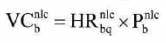
Where:
 : Variable price component adjusted according to fluctuations in the cost of the primary fuel of the power plant (VND/kWh);
 : Average heat rate of the primary fuel of the generating unit as specified in the power purchase agreement (kg/kWh, BTU/kWh, or kcal/kWh);
 : Primary fuel price, including transportation, storage, and regasification costs, where applicable (VND/kcal, VND/BTU, or VND/kg).
– The variable price component adjusted according to fluctuations in the cost of the auxiliary fuel of the power plant shall be determined using the following formula:
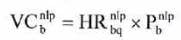
Where:
 : Variable price component adjusted according to fluctuations in the cost of the auxiliary fuel of the power plant (VND/kWh);
 : Average heat rate of the auxiliary fuel agreed upon in the power purchase agreement based on the equipment manufacturer’s specifications (kg/kWh);
 : Auxiliary fuel price, including transportation charges and other applicable fees (VND/kg).
– The average heat rate of the primary and auxiliary fuels shall be provided by the electricity purchasing unit and adjusted by the efficiency degradation factor. Where the heat rate specified in the power purchase agreement is the average heat rate over the entire project life, no adjustment shall be made by the efficiency degradation factor. Where the power purchase agreement specifies only the heat rate curve at different loading levels, the heat rate of the generating unit shall be determined at the loading level corresponding to the long-term average electricity output of the power plant specified in the power purchase agreement.
Where the thermal generating unit has no heat rate specified in the power purchase agreement, it shall be determined based on the heat rate of a reference power plant in the same group that has the same generation technology, installed capacity, and manufacturer. The power system and electricity market operation unit shall calculate the fuel consumption rate or heat rate of such reference power plant.
– The efficiency degradation factor of a thermal generating unit shall be the efficiency degradation factor specified in the power purchase agreement and provided by the electricity purchasing unit.
Where no efficiency degradation factor is specified in the power purchase agreement, the efficiency degradation factor of the reference power plant in the same group, as determined by the power system and electricity market operation unit, shall apply.
– The other variable price component of the power plant  (VND/kWh) shall be determined in accordance with the power purchase agreement.
b) Where no heat rate is specified in the executed power purchase agreement, the variable cost of the generating unit shall be determined based on the variable price for Year N (including the transportation cost of the primary fuel) specified in the power purchase agreement, updated to reflect factors affecting the variable price for Year N. For power plants that have not yet executed a power purchase agreement, the annual variable price shall be determined based on a power plant having an executed power purchase agreement with equivalent generation technology and installed capacity.
c) The basis for determining the price components and costs used in calculating the variable price or variable cost for Year N shall be as follows:
– Fuel prices applicable to Year N as announced by or determined in accordance with the guidance of the competent authority;
– Fuel prices applicable to Year N in accordance with the power purchase agreement and the fuel supply agreement. Where fuel prices depend on the fuel supply plan and/or fuel price indices, the generation unit and the fuel supply unit shall provide the electricity purchasing unit with the fuel supply plan and/or fuel price indices for consideration during the determination of the projected fuel price for Year N;
– Fuel prices based on electricity payment dossiers for the 3 most recent months preceding the time of submission of data for preparation of the operation plan for Year N, taking into account factors affecting fuel prices in Year N. Where, at the time of preparation of the operation plan for Year N, the electricity payment dossier reflecting the fully calculated fuel price for the most recent month is not yet available (because the payment dossier does not yet reflect the full fuel price under the fuel supply agreement), the average monthly fuel price calculated from invoices in accordance with the fuel supply agreement may be used;
– Where the variable cost or fuel consumption rate specified in the power purchase agreement is determined at different loading levels, the 85% loading level of the power plant shall be applied in calculating the projected variable price and variable cost for Year N.
4. Before October 25 each year, the power system and electricity market operation unit shall solicit comments from EVN, generation units, electricity wholesale units, and other relevant entities on the electricity market operation plan for the following year.
5. Before November 5 each year, the consulted entities shall provide comments on the electricity market operation plan for the following year to the power system and electricity market operation unit for finalization.
6. Before November 15 each year, based on the comments received, the power system and electricity market operation unit shall finalize the calculations and submit the electricity market operation plan for the following year (including calculation results, input data, and explanatory notes as prescribed in this Circular) to the Electricity Authority of Vietnam for appraisal.
7. Before December 10 each year, the Electricity Authority of Vietnam shall submit the electricity market operation plan for the following year to the Ministry of Industry and Trade of Vietnam for consideration and approval, including the following contents:
a) The generation output adjustment factor (factor a) applicable to thermal power plants during the period in which agreement on the contracted electricity output has not yet been reached;
b) The percentage of electricity output settled at the contract price (alpha factor) applicable during the period in which the parties have not yet negotiated and agreed on the contracted electricity output and the alpha factor;
c) The best new entrant;
d) The electricity market price cap for the following year;
dd) The market capacity price for the following year.
Article 20. Classification of hydropower plants
1. Hydropower plants in the electricity market shall be classified as follows:
a) Strategic multi-purpose hydropower plants;
b) Cascade hydropower groups;
c) Hydropower plants with reservoirs having a regulating capacity of 2 days or more;
d) Hydropower plants with reservoirs having a regulating capacity of less than 2 days.
For hydropower plants using water from irrigation reservoirs for electricity generation and subject to special requirements imposed by competent state authorities, the power system and electricity market operation unit shall report to the Ministry of Industry and Trade of Vietnam for consideration and decision on the form of participation of such power plants in the electricity market for that year.
2. Annually, the power system and electricity market operation unit shall classify and update the list of hydropower plants prescribed in Clause 1 of this Article.
Article 21. Electricity load demand forecasting for preparation of operation plans for the following year
1. The power system and electricity market operation unit shall forecast electricity load demand for preparation of the operation plan for the following year in accordance with the method prescribed in the regulations on dispatching, operation, switching operations, incident handling, black start, and restoration of the national power system promulgated by the Ministry of Industry and Trade of Vietnam. The forecast data for electricity load demand used for preparing the operation plan for the following year shall include:
a) Total electricity load demand of the national power system and the load demand of the Northern, Central, and Southern regions for the entire year and for each month of the year;
b) Electricity load curves of typical days for the Northern, Central, and Southern regional power systems and the entire national power system for each month of the year;
c) The maximum and minimum demand of the national power system load for each month.
2. Where the report on the calculation of the annual operation plan and operating mode of the national power system, approved by the Ministry of Industry and Trade of Vietnam, contains multiple electricity load demand forecast options or scenarios, the power system and electricity market operation unit shall calculate and select one forecast option for preparation of the electricity market operation plan for the following year in accordance with one of the following options:
a) The electricity load demand forecast option having a higher growth rate and being closest to the average electricity load growth rate over the preceding 3 years. In determining the average electricity load growth rate over the preceding 3 years, years with abnormal fluctuations caused by force majeure events (such as natural disasters or epidemics) may be excluded;
b) The electricity load demand forecast option based on consolidated forecasts from the power corporations, taking into account the impacts of distributed power sources such as small hydropower plants, rooftop solar power systems, and electricity traded under the direct power trading mechanism.
3. Electricity wholesale units shall forecast electricity load demand for the following year and submit the forecast to the power system and electricity market operation unit in accordance with the regulations on dispatching, operation, switching operations, incident handling, black start, and restoration of the national power system promulgated by the Ministry of Industry and Trade of Vietnam.
Article 22. Auxiliary services for operation plans for the following year
1. The types of auxiliary services for power system operation in the electricity market include:
a) Secondary frequency control;
b) Fast start;
c) Voltage control;
d) Black start;
dd) Must-run operating reserve.
2. The power system and electricity market operation unit shall determine the demand for auxiliary services in accordance with the regulations on electricity transmission systems, electricity distribution systems, and electricity metering and the regulations on dispatching, operation, switching operations, incident handling, black start, and restoration of the national power system, both promulgated by the Ministry of Industry and Trade of Vietnam.
Article 23. Classification of base-load, intermediate-load, and peak-load power plants for the following year
1. The power system and electricity market operation unit shall use the electricity market simulation model to determine the annual average load factor of power plants.
2. Based on the annual average load factor obtained from the simulation results, the power system and electricity market operation unit shall classify base-load, intermediate-load, and peak-load power plants into the following 3 groups:
a) Base-load power plants, including power plants having an annual average load factor of 60% or greater;
b) Intermediate-load power plants, including power plants having an annual average load factor greater than 25% but less than 60%;
c) Peak-load power plants, including power plants having an annual average load factor of 25% or less.
Article 24. Determination of offer price cap for thermal generating units
1. Where heat rate data are available
a) The offer price cap of a thermal generating unit shall be determined according to the following formula:

Where:
Ptr: Offer price cap of the thermal generating unit (VND/kWh);
KDC: Adjustment coefficient for the offer price cap based on the classification of thermal power plants. For base-load power plants, KDC = 0%; for intermediate-load power plants, KDC = 5%; for peak-load power plants, KDC = 20%;
PNLC: Primary fuel price (including transportation cost of the primary fuel) of the thermal generating unit (VND/kcal, VND/BTU, or VND/kg);
PNLP: Auxiliary fuel price of the thermal generating unit (VND/kcal, VND/BTU, or VND/kg);
Pbdkhac: Other variable price component adjusted for other changes as determined under the power purchase agreement (VND/kWh);
HRC: Heat rate of the primary fuel at the average loading level of the thermal generating unit (BTU/kWh, kcal/kWh, or kg/kWh);
HRP: Heat rate of the auxiliary fuel at the average loading level of the thermal generating unit (BTU/kWh, kcal/kWh, or kg/kWh).
b) Fuel price parameters of thermal generating units shall be determined in accordance with Clause 3 Article 19 of this Circular.
c) The primary fuel price shall be provided by the electricity purchasing unit to the power system and electricity market operation unit before September 1 of Year N-1.
2. Where no heat rate data are available in the power purchase agreement, or no suitable reference power plant exists in the same group:
a) The offer price cap of a thermal generating unit shall be determined according to the following formula:
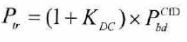
Where:
Ptr: Offer price cap of the thermal generating unit (VND/kWh);
KDC: Adjustment coefficient for the offer price cap based on the classification of thermal power plants. For base-load power plants, KDC = 0%; for intermediate-load power plants, KDC = 5%; for peak-load power plants, KDC = 20%;
 : Variable price (including transportation cost of the primary fuel) for Year N under the power purchase agreement of the power plant (VND/kWh).
b) The variable price (including transportation cost of the primary fuel) used for calculating the offer price cap shall be the projected variable price for Year N provided by the electricity purchasing unit to the power system and electricity market operation unit.
3. The power system and electricity market operation unit shall announce the input data and calculation results for the offer price cap of thermal generating units.
Article 25. Determination of electricity market price cap applicable to generation units
1. The power system and electricity market operation unit shall calculate at least 3 options for the electricity market price cap.
2. The electricity market price cap for Year N shall not exceed 115% of the highest offer price cap among thermal generating units directly submitting offers in the electricity market, and shall not be lower than the average variable cost of thermal generating units directly submitting offers in the electricity market, excluding generating units subject to dispatch constraints arising from take-or-pay obligations or fuel supply capability.
3. The option for the electricity market price cap applicable to Year N shall be selected in accordance with the following principles:
a) Ensuring the technical-economic optimization of the power system and the electricity market, while balancing the interests of the electricity purchaser and the electricity seller in the electricity market;
b) Ensuring consistency with the selection of the best new entrant for determining the market capacity price, with the objective of enabling full recovery of electricity generation costs and encouraging power plants to participate in the electricity market.
Article 26. Selection of the best new entrant;
1. The best new entrant for Year N shall be a power plant participating in the electricity market that satisfies all of the following criteria:
a) Commenced commercial operation of its entire installed capacity in Year N-1, except for the case specified in Clause 3 of this Article;
b) Classified as a base-load power plant in accordance with the criteria prescribed in Clause 2 Article 23 of this Circular;
c) Uses coal-fired thermal power generation technology or combined-cycle gas turbine technology;
d) Has the lowest average full generation cost per kWh.
2. The electricity purchasing unit shall prepare a list of power plants satisfying the criteria prescribed in Points a and c Clause 1 of this Article and provide the power system and electricity market operation unit with the power purchase agreement data of such power plants or the data agreed upon with the generation unit for determining the best new entrant. The information provided shall include:
a) The variable price for Year N;
b) The fixed price for Year N agreed in the power purchase agreement and applicable to settlement during Year N;
c) The agreed electricity output used for calculating the contract price.
3. Where fewer than 3 power plants satisfy the criteria prescribed in Points a, b, and c Clause 1 of this Article, the power system and electricity market operation unit shall supplement the list with the best new entrants selected for Year N-1, in order of the most recent commercial operation dates, until the list contains 3 power plants, and shall request the electricity purchasing unit to update and resubmit the information prescribed in Clause 2 of this Article for calculation and selection of the best new entrant for Year N.
4. The power system and electricity market operation unit shall calculate the average full generation cost of each power plant satisfying the criteria prescribed in Points a, b, and c Clause 1 of this Article using the following formula:
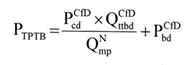
Where:
PTPTB: Average full generation cost of the power plant in Year N (VND/kWh);
 : Fixed price for Year N under the power purchase agreement of the power plant (VND/kWh);
 : Variable price for Year N under the power purchase agreement of the power plant (VND/kWh);
 : Agreed electricity output used for calculating the contract price for Year N of the power plant (kWh);
 : Projected electricity output in Year N of the power plant determined from the electricity market simulation model using the constrained scheduling method (kWh).
5. The list of best new entrants shall be ranked in ascending order of average full generation cost. The best new entrant selected for Year N shall be the power plant having the lowest average full generation cost as determined in accordance with Clause 4 of this Article.
Article 27. Principles for determining market capacity price
1. Ensure that the best new entrant fully recovers its electricity generation costs when participating in the electricity market.
2. Ensure that the market capacity price is proportional to the forecast load demand of the national power system for each trading interval.
Article 28. Procedure for determining market capacity price
The power system and electricity market operation unit shall determine the market capacity price in accordance with the following procedure:
1. Determination of the annual revenue shortfall of the best new entrant
a) Determine the projected market revenue of the best new entrant for Year N using the following formula:
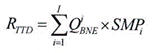
Where:
RTTD: Projected revenue from the market energy price of the best new entrant in Year N (VND);
i: Trading interval i in Year N;
I: Total number of trading intervals in Year N;
SMPi: Projected market energy price for trading interval i in Year N, determined from the electricity market simulation model using the unconstrained scheduling method (VND/kWh);
 : Projected electricity output at the metering point of the best new entrant during trading interval i in Year N, determined from the electricity market simulation model using the constrained scheduling method (kWh).
b) Determine the total annual electricity generation cost of the best new entrant using the following formula:
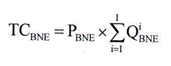
Where:
TCBNE: Total annual electricity generation cost of the best new entrant in Year N (VND);
PBNE: Average full generation cost per kWh of the best new entrant, determined in accordance with Clause 4 Article 26 of this Circular (VND/kWh);
 : Projected electricity output at the metering point of the best new entrant during trading interval i in Year N, determined from the electricity market simulation model using the constrained scheduling method (kWh);
i: Trading interval i in Year N;
I: Total number of trading intervals in Year N.
c) The annual revenue shortfall of the best new entrant shall be determined using the following formula:
AS = TCBNE – RTTD
Where:
AS: Annual revenue shortfall of the best new entrant in Year N (VND);
TCBNE: Total annual electricity generation cost of the best new entrant in Year N, determined under Point b of this Clause (VND);
RTTD: Projected revenue from the market energy price of the best new entrant in Year N, determined under Point a of this Clause (VND).
d) Where the calculated annual revenue shortfall is negative under the option with the lowest electricity market price cap, the power system and electricity market operation unit shall report to the Electricity Authority of Vietnam for selection of the next best new entrant in the list of new power plants prescribed in Article 26 of this Circular and recalculate the results, or review the list of power plants participating in the electricity market to determine an electricity market price cap consistent with this Circular.
2. Determination of the monthly revenue shortfall
The monthly revenue shortfall of the best new entrant shall be determined by allocating the annual revenue shortfall among the months of Year N using the following formula:
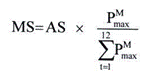
Where:
M: Month M of Year N;
MS: Monthly revenue shortfall of the best new entrant (VND);
AS: Annual revenue shortfall of the best new entrant in Year N (VND);
 : Peak system load in Month M (MW).
3. Determination of the market capacity price for each trading interval
a) Determine the average annual available capacity of the best new entrant using the following formula:
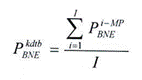
Where:
 : Average annual available capacity of the best new entrant in Year N (kW);
I: Total number of trading intervals in Year N;
i: Trading interval during which the best new entrant is projected to be dispatched;
 : Projected dispatched capacity of the best new entrant during trading interval i in Year N, determined from the electricity market simulation model using the constrained scheduling method and converted to the metering point (kW).
b) Determine the market capacity price for each trading interval in the following year using the following formula:
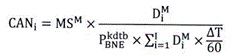
Where:
I: Total number of trading intervals in Month t;
i: Trading interval i in Month t;
CANi: Market capacity price for trading interval i (VND/kWh);
 : Average annual available capacity of the best new entrant in Year N (kW);
MSM: Monthly revenue shortfall of the best new entrant in Month M (VND);
 : Forecast system load for trading interval i according to the forecast typical day load curve for Month M (MW);
ΔT: Duration of 1 trading interval (minutes).
Article 29. Determination of minimum annual contracted electricity output and minimum monthly contracted electricity output of thermal power plants
1. Determination of the minimum annual contracted electricity output
a) The total minimum annual contracted electricity output of a thermal power plant shall be calculated using the following formula:
Qctt = a x α x GO
Where:
Qctt : Total minimum annual contracted electricity output for Year N (kWh);
GO: Long-term average electricity output of the power plant as specified in the power purchase agreement (kWh);
a: Annual generation output adjustment factor applicable separately to coal-fired thermal power plants and gas-fired thermal power plants, as prescribed by the Ministry of Industry and Trade of Vietnam after considering the proposal of the power system and electricity market operation unit and the opinions of relevant entities. The factor a shall be selected on the principle of ensuring consistency with the selected alpha factor, ensuring that the calculated total minimum contracted electricity output appropriately reflects primary fuel constraints, contributes to ensuring electricity supply, and balances the interests of the electricity purchaser and the electricity seller;
α: Percentage of electricity output settled at the contract price applicable to Year N (%).
b) For thermal power plants, offshore wind power plants, and new energy power plants eligible for the long-term minimum contracted electricity output mechanism under the regulations on power development planning, power supply network development plans, investment in construction of power projects, and bidding for selection of investors in electricity business projects, and the regulations on the development of renewable energy and new energy promulgated by the Government of Vietnam, together with the relevant amending, supplementing, or replacing legal documents, the following shall apply:
– The total minimum annual contracted electricity output for Year N shall be determined in accordance with Point a of this Clause;
– Where the total minimum annual contracted electricity output for Year N is lower than the long-term minimum contracted electricity output, the total minimum annual contracted electricity output for Year N shall be adjusted to the long-term minimum contracted electricity output specified in the power purchase agreement.
2. Determination of the minimum monthly contracted electricity output
The minimum monthly contracted electricity output of a thermal power plant shall be determined during the preparation of the operation plan for the following year as follows:
a) The electricity market simulation model prescribed in Clause 2 Article 19 of this Circular shall be used, applying the constrained scheduling method, to determine the projected monthly electricity output of the power plant;
b) The minimum monthly contracted electricity output shall be determined using the following formula:
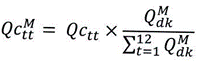
Where:
 : Minimum contracted electricity output of the power plant for Month M (kWh);
Qctt: Total minimum annual contracted electricity output of the power plant (kWh);
 : Total projected electricity output in Month M of thermal power plants under the operation plan for the following year approved by the Ministry of Industry and Trade of Vietnam (kWh).
Where the monthly available output of the power plant is insufficient to meet the minimum monthly contracted electricity output, the minimum monthly contracted electricity output shall be adjusted to equal the monthly available output. The power system and electricity market operation unit shall allocate the difference to the remaining months of the year, ensuring that the total minimum annual contracted electricity output remains unchanged.
c) For thermal power plants, offshore wind power plants, and new energy power plants eligible for the long-term minimum contracted electricity output mechanism under the regulations on power development planning, power supply network development plans, investment in construction of power projects, and bidding for selection of investors in electricity business projects, and the regulations on the development of renewable energy and new energy promulgated by the Government of Vietnam, together with the relevant amending, supplementing, or replacing legal documents, the following shall apply:
– The minimum monthly contracted electricity output for Month M in Year N shall be determined in accordance with Points a and b of this Clause;
– Where the total minimum contracted electricity output for Month M in Year N is lower than the long-term minimum contracted electricity output determined for Month M, the total minimum contracted electricity output for Month M in Year N shall be adjusted to the corresponding long-term minimum contracted electricity output specified in the power purchase agreement (if any).
3. For a new thermal power plant commencing participation in the electricity market during the middle of the current operating year, its minimum annual and minimum monthly contracted electricity output shall be determined in accordance with the principles prescribed in Clauses 1 and 2 of this Article once complete information under the power purchase agreement is available.
Article 30. Responsibilities for determining minimum annual contracted electricity output and minimum monthly contracted electricity output
1. The power system and electricity market operation unit shall:
a) Calculate the minimum annual and minimum monthly contracted electricity output of thermal power plants in accordance with Article 29 of this Circular;
b) Solicit comments on the Electricity Market Web Portal on the input data used for calculation and the preliminary calculation results of the minimum annual and minimum monthly contracted electricity output of electricity purchasing units and direct trading generation units for verification within 3 days after the electricity market operation plan for the following year has been approved by the Ministry of Industry and Trade of Vietnam.
2. For power plants having power purchase agreements with EVN, the generation units and the electricity purchasing units shall verify and cooperate with the power system and electricity market operation unit in resolving any discrepancies in the calculated minimum annual and minimum monthly contracted electricity output within 2 days after the power system and electricity market operation unit organizes the solicitation of comments on the Electricity Market Web Portal.
3. For power plants having power purchase agreements with an electricity wholesale unit, the generation unit and the electricity wholesale unit shall verify and cooperate with the power system and electricity market operation unit in resolving any discrepancies in the calculated minimum annual and minimum monthly contracted electricity output within 2 days after the power system and electricity market operation unit organizes the solicitation of comments on the Electricity Market Web Portal.
4. Within 1 day after receiving comments from the relevant entities, the power system and electricity market operation unit shall revise the calculation results (if necessary) and officially announce the minimum annual and minimum monthly contracted electricity output applicable to the relevant entities.
Article 31. Announcement of electricity market operation plans for the following year
1. After the electricity market operation plan for the following year has been approved in accordance with Article 19 of this Circular, the power system and electricity market operation unit shall announce on the Electricity Market Web Portal the input data and the results of the preparation of the electricity market operation plan for the following year for electricity market participants.
2. The announced information on the electricity market operation plan for the following year shall include:
a) Results of the calculations for the operation plan for the following year, including:
– Projected market energy price for each trading interval applicable to generation units and electricity wholesale units;
– Results of the selection of the best new entrant;
– Market capacity price for each trading interval;
– Electricity market price cap;
– Classification of thermal power plants.
b) Input parameters used in preparing the annual electricity market operation plan, including:
– Forecast load demand for the Northern, Central, and Southern regions and for the entire national power system in each trading interval;
– Hydrological data and operating constraints of hydropower reservoirs used in the electricity market simulation;
– Schedule for commissioning new power plants; technical parameters and operating constraints of the transmission grid;
– Projected electricity import and export schedules; annual maintenance and repair plans for power plants, the transmission grid, and major gas supply sources;
– Forecast load demand of electricity wholesale units for each trading interval;
– Take-or-pay obligations;
– Minimum gas flow required to prevent shutdown of gas production platforms and ensure the safety of gas fields;
– Source dispatch constraints required to ensure electricity supply and the minimum source configuration necessary for the safe operation of the transmission grid.
3. Information on the electricity market operation plan for the following year shall only be announced to direct trading generation units owning power plants directly related to such information (except EVN), including:
a) Total projected electricity generation output of the power plant for each month as determined in the electricity market simulation;
b) The water value of the hydropower plant;
c) The variable price data of the thermal power plant used in the simulation calculations.
Section 2. OPERATION PLAN FOR THE FOLLOWING MONTH
Article 32. Electricity load demand forecasting for preparation of operation plans for the following month
1. The power system and electricity market operation unit shall forecast electricity load demand for preparation of the operation plan for the following month in accordance with the method prescribed in the regulations on dispatching, operation, switching operations, incident handling, black start, and restoration of the national power system promulgated by the Ministry of Industry and Trade of Vietnam. The forecast data for electricity load demand used for preparing the operation plan for the following month shall include:
a) Total electricity load demand of the national power system and the load demand of the Northern, Central, and Southern regions for the entire month and for each trading interval of the month;
b) Electricity load curves of typical days for the Northern, Central, and Southern regions and the entire national power system during the month.
2. Before the 15th day of each month, each electricity wholesale unit shall forecast the electricity load demand for each trading interval of the following month and the remaining months of the year, and submit such forecast to the power system and electricity market operation unit for preparation of the operation plan for the following month and calculation of electricity purchase costs.
Article 33. Calculation of water value
The power system and electricity market operation unit shall calculate the water value for the weeks of the following month. The calculated water value results used for preparation of the operation plan for the following month shall include:
1. Projected electricity output of strategic multi-purpose hydropower plants.
2. Water value of hydropower plants in cascade hydropower groups.
3. Water value of hydropower plants with reservoirs having a regulating capacity of 2 days or more.
4. Weekly optimal water levels during the month for hydropower plants with reservoirs having a regulating capacity of 2 days or more.
Article 34. Classification of base-load, intermediate-load, and peak-load power plants for the following month
1. The power system and electricity market operation unit shall use the electricity market simulation model to determine the monthly average load factor of power plants for the following month.
2. Based on the monthly average load factor obtained from the simulation results, the power system and electricity market operation unit shall classify base-load, intermediate-load, and peak-load power plants for the following month into the following 3 groups:
a) Base-load power plants, including power plants having a monthly average load factor of 70% or greater;
b) Intermediate-load power plants, including power plants having a monthly average load factor greater than 25% but less than 70%;
c) Peak-load power plants, including power plants having a monthly average load factor of 25% or less.
Article 35. Adjustment of offer price cap for thermal generating units
1. The power system and electricity market operation unit shall calculate and adjust the offer price cap of thermal generating units for the following month in accordance with the method prescribed in Article 24 of this Circular, taking into account updated factors affecting the variable price for Month M in accordance with the method agreed in the power purchase agreement, based on the following:
a) Fuel prices for the following month and the remaining months of the year shall be determined as follows:
a1) Fuel prices used in preparing the operation plan for the following month (M+1) shall be determined based on:
– Fuel prices applicable to the following month as announced by or determined in accordance with the guidance of the competent authority;
– Fuel prices applicable to the following month under the power purchase agreement and the fuel supply agreement. Where fuel prices depend on the fuel procurement plan and/or fuel price indices, the generation unit and the fuel supply unit shall provide the electricity purchasing unit with the fuel supply plan and/or fuel price indices for consideration in determining the projected fuel prices for the following month and the remaining months of the year;
– Fuel prices stated in the electricity payment dossier for the month immediately preceding the submission of data for preparation of the operation plan for the following month.
a2) Fuel prices used in preparing the operation plan for the remaining months of the year (from Month M+2 to year-end) shall be determined as follows:
– Where forecast fuel price data for the period from Month M+2 to year-end are issued by a competent authority or a reputable forecasting consultancy, the fuel prices of power plants shall be determined based on such forecast data and the provisions of the fuel supply agreement;
– Where no forecast fuel price data are available, the fuel prices used in preparing the operation plan for the following month shall be applied;
– Fuel quantities shall be determined based on the most recently updated fuel supply plan for the period from Month M+2 to year-end provided by the generation unit and the fuel supply unit.
b) The electricity purchasing unit shall provide and update the power system and electricity market operation unit on changes in the variable price (including the transportation cost of the primary fuel) applicable to thermal power plants for the following month and the remaining months of the year.
c) The classification results of thermal power plants for the following month in accordance with Article 34 of this Circular.
2. The power system and electricity market operation unit shall announce the input data and the offer price cap results for thermal generating units for the following month.
Article 36. Secondary frequency control service in operation plans for the following month
1. The power system and electricity market operation unit shall determine the demand for secondary frequency control service of the power system for the following month in accordance with the regulations on electricity transmission systems, electricity distribution systems, and electricity metering and the regulations on dispatching, operation, switching operations, incident handling, black start, and restoration of the national power system, both promulgated by the Ministry of Industry and Trade of Vietnam.
2. The power system and electricity market operation unit shall prepare and announce the list of generating units eligible to provide secondary frequency control service for the following month in accordance with the regulations on electricity transmission systems, electricity distribution systems, and electricity metering and the regulations on dispatching, operation, switching operations, incident handling, black start, and restoration of the national power system, both promulgated by the Ministry of Industry and Trade of Vietnam.
Article 37. Adjustment of monthly contracted electricity output of power plants having power purchase agreements with EVN
1. The monthly contracted electricity output of a power plant shall be adjusted where the maintenance and repair schedule of the power plant for Month M+1 differs from the operation plan used for calculating the contracted electricity output due to:
a) A request from the power system and electricity market operation unit to ensure electricity supply, provided that such request is not attributable to causes arising from the power plant;
b) A request from a competent state authority and agreed upon by the power system and electricity market operation unit based on the actual operating conditions of the power system.
2. In the cases prescribed in Clause 1 of this Article, the power system and electricity market operation unit shall adjust the monthly contracted electricity output in accordance with the following principle: the portion of the monthly contracted electricity output corresponding to the rescheduled maintenance period shall be shifted between months, ensuring that the total contracted electricity output of the adjusted months remains unchanged in accordance with the settlement calculation procedures in the electricity market set out in Appendix III enclosed with this Circular.
3. Where the approved available output of the power plant for Month M+1 is insufficient to meet the monthly contracted electricity output, the monthly contracted electricity output shall be adjusted to equal the available output for that month. The generation unit shall provide the power system and electricity market operation unit, before the 20th day of Month M, with information on the fuel supply plan for the thermal power plant for the following month (confirmed by the fuel supply unit) as the basis for preparing the operation plan for the following month and, where necessary, considering adjustment of the contracted electricity output in such case.
4. Where there are significant fluctuations (changes exceeding 20%) in input fuel prices or force majeure events (such as natural disasters or epidemics) affecting the normal operation of the power system (including load shedding or the loss of a substantial amount of load, loss of or impacts on electricity transmission capability between regions, impacts on the normal operation of a substantial number of power plants, or spillway discharge from hydropower reservoirs as required by competent state authorities), the power system and electricity market operation unit shall update the relevant data, recalculate the electricity market operation plans for the remaining months of the quarter, and report to the Ministry of Industry and Trade of Vietnam for consideration and decision.
Article 38. Determination of contracted electricity output for each trading interval of power plants having power purchase agreements with EVN
The power system and electricity market operation unit shall determine the monthly contracted electricity output and the contracted electricity output for each trading interval of power plants having direct contracts with EVN for the following month in accordance with the following steps:
1. The monthly contracted electricity output of coal-fired thermal power plants shall be determined quarterly; the monthly contracted electricity output of gas turbine power plants shall be determined once every 6 months; and the contracted electricity output of offshore wind power plants and new energy power plants shall be determined monthly, specifically as follows:
QcM = Max {QcttM ; α x QdkM}
Where:
 : Monthly contracted electricity output of the power plant (kWh);
 : Monthly planned output of coal-fired thermal power plants under the updated power system operating mode for the first month of each quarter (January, April, July, and October), or of gas turbine power plants under the power system operating mode for January and July, or of offshore wind power plants and new energy power plants under the monthly power system operating mode, converted to the electricity delivery and receipt point (kWh);
QcttM : Minimum monthly contracted electricity output of the power plant (kWh), determined in accordance with Clause 2 Article 29 of this Circular;
α : Percentage of electricity output settled at the contract price applicable to Year N (%).
2. The monthly contracted electricity output of a hydropower plant with a reservoir having a regulating capacity of 2 days or more shall be determined as follows:
QcM = α x QdkM
Where:
 : Monthly contracted electricity output of the power plant (kWh);
 : Planned output of the power plant under the updated power system operating mode for the following month, converted to the electricity delivery and receipt point (kWh);
α: Percentage of electricity output settled at the contract price applicable to Year N (%).
3. The contracted electricity output of a power plant for each trading interval of the month shall be determined according to the following principles:
a) The contracted electricity output for each trading interval shall be proportional to the projected electricity output of the power plant for each trading interval of the month, as determined by the electricity market operation planning system using the constrained scheduling method, according to the following formula:
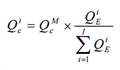
Where:
i: Trading interval i of the month;
I: Total number of trading intervals in the month;
 : Contracted electricity output of the power plant during trading interval i (kWh);
 : Projected electricity output of the power plant during trading interval i, determined from the electricity market simulation model using the constrained scheduling method (kWh);
 : Monthly contracted electricity output of the power plant, determined in accordance with Articles 29 and 37 of this Circular and Clauses 1 and 2 of this Article (kWh).
b) The contracted electricity output for each trading interval shall be adjusted to ensure consistency with the forecast load demand of the national power system, taking into account the impacts of renewable energy sources, the primary fuel supply capability of the generation unit, downstream water supply requirements applicable to hydropower plants, the operating capability and availability of power plants, and the demand of the power system.
4. The power system and electricity market operation unit shall allocate the total difference arising from the adjustment of the contracted electricity output under Clause 3 of this Article to other trading intervals of the month, on the principle of ensuring that the monthly contracted electricity output remains unchanged.
5. The power system and electricity market operation unit shall announce on the Electricity Market Web Portal the input data used for calculation and the preliminary calculation results of the monthly contracted electricity output for the electricity purchasing unit and direct trading generation units at least 5 days before the last day of Month M. The electricity purchasing unit and the generation units shall cooperate with the power system and electricity market operation unit in completing the verification of discrepancies in the calculated contracted electricity output for each trading interval of the following month at least 3 days before the last day of Month M. The power system and electricity market operation unit shall announce the official calculation results of the contracted electricity output for each trading interval of the month on the Electricity Market Web Portal for the electricity purchasing unit and direct trading generation units at least 3 days before the last day of Month M.
6. The electricity purchasing unit and direct trading generation units shall sign to confirm the monthly contracted electricity output adjusted in accordance with Article 39 of this Circular and the contracted electricity output for each trading interval based on the calculation results of the power system and electricity market operation unit.
Article 39. Adjustment of contracted electricity output for each trading interval of thermal power plants having power purchase agreements with EVN
1. Cases in which the contracted electricity output of a thermal power plant shall be adjusted:
a) Where a boiler of a multi-boiler thermal generating unit is shut down due to an incident, a generating unit is shut down due to an incident, or the power plant undergoes an unplanned emergency repair not included in the calculation of the contracted electricity output for each trading interval;
b) Where a boiler of a multi-boiler thermal generating unit or a generating unit of a thermal power plant requires a repair period longer than the approved maintenance and repair schedule used in calculating the contracted electricity output for each trading interval;
c) Where information on a shortage of gas fuel is announced in accordance with Clause 7 Article 56 of this Circular;
d) Where a coal-fired thermal power plant experiences a fuel shortage resulting in the total electricity output corresponding to the declared capacity in the power plant’s next trading interval offers being lower than the total contracted electricity output of the power plant for the operating day;
dd) Where the start-up time of a thermal generating unit, calculated from the commencement of start-up to synchronization with the grid, exceeds the start-up time prescribed in the power purchase agreement by more than 2 hours;
e) Where information is announced regarding a change in the gas system maintenance and repair plan compared with the gas system maintenance and repair plan used for allocating the contracted electricity output for each trading interval under the monthly plan.
2. Where there are sufficient grounds to confirm a case prescribed in Point a Clause 1 of this Article, the contracted electricity output for each trading interval shall be adjusted according to the following principles:
a) Where the incident duration is 72 hours or less, the contracted electricity output of the power plant shall not be adjusted;
b) Where the incident duration exceeds 72 hours
b1) From the time the incident occurs until the end of the trading interval marking the completion of the 72-hour period, the contracted electricity output allocated to the power plant shall remain unchanged;
b2) From the first trading interval after the end of the 72 -hour period until the generating unit has remedied the incident and becomes available:
– Where the actual electricity output at the electricity delivery and receipt point of the power plant is lower than the contracted electricity output of the power plant during this period, the contracted electricity output for each trading interval shall be adjusted to equal the actual electricity output at the electricity delivery and receipt point of the power plant;
– Where the actual electricity output at the electricity delivery and receipt point of the power plant is greater than or equal to the contracted electricity output of the power plant during this period, the contracted electricity output of the power plant shall not be adjusted.
c) Where an unplanned emergency repair schedule has been approved for a generating unit, the following adjustment principles shall apply during the trading intervals in which the generating unit undergoes such repair:
c1) From the commencement of the repair until the end of the trading interval marking the completion of the 72 -hour period, the contracted electricity output allocated to the power plant shall remain unchanged;
c2) From the first trading interval after the end of the 72 -hour period until the generating unit becomes available:
– Where the actual electricity output at the electricity delivery and receipt point of the power plant is lower than the contracted electricity output of the power plant during this period, the contracted electricity output for each trading interval shall be adjusted to equal the actual electricity output at the electricity delivery and receipt point of the power plant;
– Where the actual electricity output at the electricity delivery and receipt point of the power plant is greater than or equal to the contracted electricity output of the power plant during this period, the contracted electricity output of the power plant shall not be adjusted.
3. Where there are sufficient grounds to confirm a case prescribed in Point b Clause 1 of this Article, the contracted electricity output for each trading interval shall be adjusted according to the following principle:
During the trading intervals of the extended repair period, where the actual electricity output at the electricity delivery and receipt point of the power plant is lower than the contracted electricity output of the power plant, the contracted electricity output for such trading intervals shall be adjusted to equal the actual electricity output at the electricity delivery and receipt point of the power plant.
4. In the cases prescribed in Points c, d, and dd Clause 1 of this Article, the contracted electricity output of gas turbine power plants and coal-fired thermal power plants for the relevant trading intervals shall be adjusted according to the following principle: where the actual electricity output at the electricity delivery and receipt point of the power plant during a trading interval is lower than the contracted electricity output of the power plant, the contracted electricity output for such trading interval shall be adjusted to equal the actual electricity output at the electricity delivery and receipt point of the power plant.
5. The direct trading generation unit shall cooperate with the power system and electricity market operation unit in confirming the events prescribed in Clause 1 of this Article and provide the confirmation to the electricity purchasing unit and the direct trading generation unit as the basis for adjusting the contracted electricity output for each trading interval of the power plant. For confirmation of a boiler incident involving a multi-boiler coal-fired thermal generating unit:
a) Where sufficient data relating to the event are available from the distributed control system (DCS) or other equivalent control systems, the event shall be confirmed based on such data;
b) Where no data are available from the distributed control system (DCS) or other equivalent control systems, information and data from other sources shall be used on a case-by-case basis in accordance with the guidance in the settlement calculation procedures in the electricity market set out in Appendix III enclosed with this Circular to confirm the event.
6. The electricity purchasing unit and the direct trading generation unit shall re-sign to confirm the monthly contracted electricity output of the power plant as adjusted in accordance with Clauses 1, 2, and 3 of this Article and Clause 6 Article 17 of this Circular.
Article 40. Determination of contracted electricity output for each trading interval of power plants having power purchase agreements with electricity wholesale units, and power plants having power purchase agreements with EVN and allocated to electricity wholesale units
1. For power plants having power purchase agreements with electricity wholesale units:
a) The contracted electricity output of a power plant for each trading interval shall be determined as follows:
– Determine the monthly contracted electricity output of the power plant in accordance with Clause 1 Article 38 of this Circular;
– Determine and adjust the contracted electricity output of the power plant for each trading interval in accordance with Clause 3 Article 38 and Article 39 of this Circular.
b) Contracted electricity output for each trading interval between an electricity wholesale unit and a power plant having a power purchase agreement with such electricity wholesale unit
The power system and electricity market operation unit shall calculate such output using the following formula:
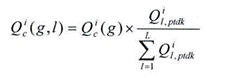
Where:
i: Trading interval i of the month;
 : Contracted electricity output between electricity wholesale unit l and power plant g during trading interval i (kWh);
 : Contracted electricity output of power plant g during trading interval i, determined and adjusted in accordance with Point a of this Clause (kWh);
 : Forecast electricity output delivered and received at the supply source of electricity wholesale unit l during trading interval i (kWh);
L: Total number of electricity wholesale units.
2. For power plants having power purchase agreements with EVN and allocated to electricity wholesale units:
a) The contracted electricity output for each trading interval between the power plant and EVN shall be determined as follows:
– Adjust the monthly contracted electricity output of the power plant in accordance with Clause 1 Article 38 of this Circular;
– Determine and adjust the contracted electricity output of the power plant for each trading interval in accordance with Clause 3 Article 38 and Article 39 of this Circular.
b) Contracted electricity output for each trading interval allocated by EVN to an electricity wholesale unit
The power system and electricity market operation unit shall calculate such output in the following sequence:
– Determine the monthly contracted electricity output allocated by EVN to an electricity wholesale unit using the following formula:
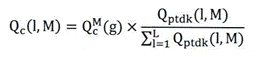
Where:
L: Total number of electricity wholesale units;
Qc(l,M): Contracted electricity output for Month M allocated by EVN to electricity wholesale unit l (kWh);
 : Monthly contracted electricity output between power plant g and EVN, determined in the monthly electricity market operation plan in accordance with Article 38 of this Circular (kWh);
Qptdk(l,M): Forecast electricity output at the supply source of electricity wholesale unit l in Month M (kWh).
– The contracted electricity output for each trading interval allocated by EVN to an electricity wholesale unit shall be determined using the following formula:
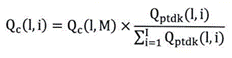
Where:
i: Trading interval i of the month;
I: Total number of trading intervals in the month;
Qc(l,i): Contracted electricity output during trading interval i allocated by EVN to electricity wholesale unit l (kWh);
Qc(l,M): Contracted electricity output for Month M allocated by EVN to electricity wholesale unit l (kWh);
Qptdk(l,i): Forecast electricity output at the supply source of electricity wholesale unit l during trading interval i (kWh).
Article 41. Review, approval, and announcement timeline for electricity market operation plans for the following month
1. The electricity market operation plan for the following month shall include input parameters and calculation explanations as prescribed in Appendix I enclosed with this Circular, with the following principal contents:
a) The water value and optimal water level for each week of the following month of hydropower plants in cascade hydropower groups and hydropower plants with reservoirs having a regulating capacity of 2 days or more;
b) The offer price cap for each thermal generating unit for the following month;
c) The average of the offer price caps of thermal generating units participating in the electricity market;
d) The contracted electricity output of power plants for each trading interval of the following month;
dd) The projected electricity generation output of power plants for each trading interval of the following month;
e) The percentage of electricity purchased at the spot electricity market price in each month of the following year, applicable to electricity wholesale units with respect to contract-allocated power plants, determined in accordance with Clause 2 Article 98 of this Circular;
g) The contracted electricity output for the subsequent 2 months, for coal-fired thermal power plants, in the electricity market operation plans for January, April, July, and October, and for the subsequent 5 months, for gas-fired thermal power plants, in the electricity market operation plans for January and July.
2. Before the 22nd day of each month, the power system and electricity market operation unit shall solicit comments from EVN and electricity market participants on the electricity market operation plan for the following month.
3. Before the 23rd day of each month, EVN and electricity market participants shall review and submit their written comments on the monthly electricity market operation plan to the power system and electricity market operation unit.
4. Before the 25th day of each month, the power system and electricity market operation unit shall submit the monthly electricity market operation plan to the Electricity Authority of Vietnam.
5. Before the 28th day of each month, the Electricity Authority of Vietnam shall appraise and approve the monthly electricity market operation plan.
6. After the monthly electricity market operation plan has been approved by the Electricity Authority of Vietnam, the power system and electricity market operation unit shall announce the electricity market operation plan for the following month on the Electricity Market Website.
Article 42. Announcement of information on electricity market operation plans for the following month
1. The power system and electricity market operation unit shall announce the following general information to electricity market participants:
a) Forecast electricity load demand for the following month for the Northern, Central, and Southern regions and for the entire national power system;
b) Total forecast electricity load demand of electricity wholesale units for each trading interval;
c) The electricity import and export plan for the following month;
d) The projected electricity output of each power plant for the following month;
dd) The list of generating units eligible to provide secondary frequency control service for the following month in accordance with the regulations on electricity transmission systems, electricity distribution systems, and electricity metering and the regulations on dispatching, operation, switching operations, incident handling, black start, and restoration of the national power system, both promulgated by the Ministry of Industry and Trade of Vietnam;
e) Warnings of any deterioration in the electricity supply adequacy of the power system;
g) Solutions to ensure the stable, safe, and reliable operation of the power system.
2. The power system and electricity market operation unit shall announce the following information separately to each generation unit and electricity wholesale unit:
a) Weekly reservoir water levels of hydropower plants for the following month;
b) The percentage of electricity purchased at the spot electricity market price for the following month, applicable to electricity wholesale units with respect to contract-allocated power plants, determined in accordance with Clause 2 Article 98 of this Circular;
c) The contracted electricity output of generating units for each trading interval, as calculated by the power system and electricity market operation unit;
d) The water value of hydropower plants;
dd) The offer price cap of thermal generating units for the following month;
e) Thermal power plant classification results;
g) The average of the offer price caps of thermal generating units participating in the electricity market under the monthly electricity market operation plan;
h) The generating unit dispatch plan for the following month;
i) The upstream water level of hydropower reservoirs on the last day of the following month;
k) The maintenance and repair plan for the power grid and power plants for the following month.
Section 3. OPERATION PLAN FOR THE FOLLOWING WEEK
Article 43. Preparation of operation plans for the following week
1. The power system and electricity market operation unit shall collect input data for calculating and preparing the electricity market operation plan for the following week, as provided by electricity market participants and relevant entities in accordance with Appendix I enclosed with this Circular.
2. The power system and electricity market operation unit shall calculate and announce the following results:
a) Forecast electricity load demand, including the load demand of the national power system and regional power systems;
b) Total projected electricity generation output of each power plant for the following week;
c) The water value and projected output for each trading interval of strategic multi-purpose hydropower plants;
d) The water value of hydropower plants in cascade hydropower groups and hydropower plants with reservoirs having a regulating capacity of 2 days or more;
dd) The highest water value among hydropower plants participating in the electricity market;
e) The projected output for each trading interval of hydropower plants with reservoirs having a regulating capacity of less than 2 days;
g) The weekly optimal water levels of hydropower reservoirs;
h) The weekly reservoir limit water levels of hydropower reservoirs having a regulating capacity of 2 days or more;
i) The maintenance and repair schedules for power sources and the power grid for the following week;
k) The demand for secondary frequency control service and the list of generating units expected to provide secondary frequency control service under the operation plan for the following week;
l) The projected operating capacity of Battery Energy Storage Systems (BESS) for each trading interval.
Article 44. Offer price cap of hydropower plants
1. Except for the cases prescribed in Clause 3 of this Article, the offer price cap of a hydropower plant with a reservoir having a regulating capacity of 2 days or more shall be determined based on the water value of such power plant for the following week, as announced in accordance with Article 43 of this Circular, specifically as follows:
a) The offer price cap shall be the highest value of:
– 120% of the water value of the hydropower plant;
– The average of the offer price caps of thermal generating units participating in the electricity market under the monthly operation plan.
b) Each month, the power system and electricity market operation unit shall announce to hydropower plants the average of the offer price caps of thermal generating units for the following month according to the same announcement schedule applicable to the offer price caps of thermal generating units for the following month.
2. Offer price cap of hydropower plants in special cases
a) The offer price cap of a hydropower plant in the cases prescribed in Points b and c of this Clause shall be determined using the following formula:
Ptr = 1,2 x max (Pgtn ; PDOmax)
Where:
Ptr: Offer price cap of the hydropower plant applicable in special cases (VND/kWh);
Pgtn: Water value of the hydropower plant (VND/kWh);
PDOmax: Variable cost of the most expensive DO oil-fired thermal generating unit in the power system (VND/kWh).
b) Where the reservoir water level of a hydropower plant is lower than the weekly reservoir limit water level, the offer price cap applicable to such hydropower plant for the following week shall be determined in accordance with Point a of this Clause. Once the reservoir water level is no longer lower than the weekly reservoir limit water level, the power plant shall resume application of the offer price cap prescribed in Clause 1 of this Article from Tuesday of the following week. Each month, the power system and electricity market operation unit shall announce the variable cost of the most expensive DO oil-fired thermal generating unit in the power system;
c) Where a hydropower plant is located in a region having an energy reserve margin of less than 5%, as announced in accordance with the regulations on medium-term and short-term electricity supply adequacy assessments under the regulations on dispatching, operation, switching operations, incident handling, black start, and restoration of the national power system promulgated by the Ministry of Industry and Trade of Vietnam, the offer price cap of hydropower plants in that region for the assessed week shall be determined in accordance with Point a of this Clause. Once the regional energy reserve margin reaches 5% or more, the power plants in that region shall resume application of the offer price cap prescribed in Clause 1 of this Article.
4. Each week, the power system and electricity market operation unit shall:
a) Calculate the offer price caps of hydropower generating units of hydropower plants participating in the electricity market in accordance with Clauses 1 and 2 of this Article;
b) Announce the calculation results of the offer price cap for each hydropower generating unit of hydropower plants participating in the electricity market applicable to the following week, together with the input parameters used for calculation, including the water value, the variable cost of the most expensive DO oil-fired thermal generating unit in the power system, and the average of the offer price caps of thermal generating units participating in the electricity market under the monthly operation plan.
5. Hydropower plants directly participating in the electricity market shall:
a) Submit offers in compliance with the regulations on the offer price cap and offer floor price;
b) Satisfy downstream water-use demand constraints and other hydrological constraints.
Article 45. Secondary frequency control service under operation plans for the following week
1. The power system and electricity market operation unit shall determine the demand for secondary frequency control service of the power system for the following week in accordance with the regulations on electricity transmission systems, electricity distribution systems, and electricity metering and the regulations on dispatching, operation, switching operations, incident handling, black start, and restoration of the national power system, both promulgated by the Ministry of Industry and Trade of Vietnam.
2. The power system and electricity market operation unit shall select, prepare, and announce the list of generating units of power plants expected to provide secondary frequency control service for the following week. The selected generating units shall provide secondary frequency control service at the request of the power system and electricity market operation unit, and in accordance with relevant laws.
3. The power system and electricity market operation unit shall prepare the operation plan for the following week in a manner that satisfies the constraints relating to secondary frequency control service.
Chapter V
OPERATION OF ELECTRICITY MARKET
Section 1. DAY-AHEAD ELECTRICITY MARKET OPERATION
Article 46. Information for day-ahead electricity market operation
Before 10:00 on Day D-1, the power system and electricity market operation unit shall determine, calculate, and announce the following information:
1. The forecast electricity load demand curves for Day D of the entire national power system and the Northern, Central, and Southern regions.
2. The projected or forecast dispatched capacity for each trading interval of the following day of power plants indirectly participating in the electricity market as prescribed in Clause 3 Article 4 of this Circular, rooftop solar power sources, and power plants that do not directly submit offers in the electricity market, taking into account take-or-pay obligations.
3. The projected or forecast dispatched capacity for each trading interval of the following day of the power plants prescribed in Article 11 of this Circular.
4. The total projected gas consumption for the following day of gas-fired thermal power plants using the same gas source.
5. Results of the short-term electricity supply adequacy assessment for Day D in accordance with the regulations on dispatching, operation, switching operations, incident handling, black start, and restoration of the national power system promulgated by the Ministry of Industry and Trade of Vietnam.
6. The projected dispatched capacity of hydropower plants with reservoirs having a regulating capacity of less than 2 days for each trading interval of the following day.
7. The projected operating capacity of Battery Energy Storage Systems (BESS).
Article 47. Price offers
1. A price offer shall comply with the following principles:
a) It shall comprise 10 pairs of offer prices (VND/kWh) and capacity levels (MW) for the generating unit for each trading interval of Day D;
b) The capacity specified in the price offer shall be the capacity measured at the generator terminals;
c) The capacity of each subsequent offer band shall not be lower than that of the immediately preceding offer band. The minimum offer increment shall be 3 MW;
d) It shall include information on the technical parameters of the generating unit, including:
– The declared capacity of the generating unit for Day D;
– The minimum stable generation capacity of the generating unit;
– The maximum ramp-up and ramp-down rates of the generating unit;
– Technical constraints applicable to the simultaneous operation of generating units;
– The fuel status of the thermal power plant;
– The spill status of the hydropower reservoir.
dd) The declared capacity of a generating unit in the offer for Day D shall not be lower than the declared capacity for Day D-2 under the regulations on medium-term and short-term electricity supply adequacy assessments prescribed in the regulations on dispatching, operation, switching operations, incident handling, black start, and restoration of the national power system promulgated by the Ministry of Industry and Trade of Vietnam, except in the case of an emergency shutdown for repair, which must be approved; a force majeure technical incident; capacity derating due to a low reservoir water level; or cooperated offering by hydropower plants in a cascade hydropower group to prevent spilling. The power plant shall update its declared capacity when its available capacity decreases. Where the start-up offer of a thermal generating unit is updated, the declared capacity shall correspond to the capacity available under normal operating conditions;
e) Under normal conditions, the first capacity band in the price offer of a thermal generating unit shall equal the minimum stable generation capacity of the generating unit. The final capacity band shall equal the declared capacity. During the start-up or shutdown of a thermal power plant, its price offer for the following trading interval may be updated with a capacity lower than the minimum stable generation capacity;
g) A hydropower plant may offer 0 MW for its first capacity bands in each trading interval. For a hydropower plant with a regulating capacity of 2 days or more, the final capacity band shall equal the declared capacity. Where the water level of the hydropower reservoir has fallen to the dead water level, the power plant may adjust its declared capacity to 0 MW;
h) The unit of the offer price shall be VND/kWh, with a minimum decimal precision of 0,1;
i) The offer price shall be between the offer floor price and the offer price cap of the generating unit and shall be non-decreasing as the offered capacity increases.
2. Price offers in special cases
a) The offer of a hydropower plant with a reservoir having a regulating capacity of less than 2 days shall be made as follows:
– The offer price shall be VND 0/kWh for all offered capacity bands;
– The offered capacity shall equal the projected generation capacity of the generating unit during the relevant trading interval. The generation unit owning, managing, or operating a hydropower plant with a reservoir having a regulating capacity of less than 2 days may submit a revised price offer, increasing the offered capacity according to the actual hydrological conditions of the power plant;
– A hydropower plant with a reservoir having a regulating capacity of less than 2 days may submit a revised price offer for the following trading interval, adjusting its offered capacity according to the actual hydrological conditions of the power plant.
b) Where the reservoir water level of a hydropower plant has remained below the reservoir limit water level for 2 consecutive weeks; where the reservoir water level has remained below the weekly reservoir limit water level for 1 week and the regional energy reserve margin for that week is less than 5%; or where the reservoir water level has remained below the weekly reservoir limit water level for 1 week and is lower than the upper limit of the reservoir operating water-level range for the dry season, if any, prescribed in the inter-reservoir operating procedures, the price offer shall be made as follows:
– The offer floor price shall be offered for the output corresponding to the lower of the downstream water discharge requirement imposed by the competent state authority and the discharge requirement under the inter-reservoir or single-reservoir operating procedures, except where the relevant unit is located in an area affected by storms or heavy rainfall, based on the assessment of the hydrometeorological forecasting unit, or where the reservoir water level must be lowered to ensure the flood-control storage level in accordance with the inter-reservoir or single-reservoir operating procedures or at the request of a competent state authority;
– The offer price cap shall be offered for the remaining output. The applicable offer price cap shall be determined in accordance with Point a Clause 2 Article 44 of this Circular.
c) The offer of a hydropower plant whose reservoir water level has remained below the weekly reservoir limit water level for 1 week and is lower than the minimum water level or the lower limit of the reservoir operating water-level range for the dry season prescribed in the inter-reservoir operating procedures shall be made by the offering unit according to the following principles:
– The offer floor price shall be offered for the output corresponding to the lower of the downstream water discharge requirement imposed by the competent state authority and the discharge requirement under the inter-reservoir or single-reservoir operating procedures, except where the relevant unit is located in an area affected by storms or heavy rainfall, based on the assessment of the hydrometeorological forecasting unit, or where the reservoir water level must be lowered to ensure the flood-control storage level in accordance with the inter-reservoir or single-reservoir operating procedures or at the request of a competent state authority;
– The offer price cap shall be offered for the remaining output;
– The applicable offer price cap (Ptr) shall be determined using the following formula:

Where:
 : The minimum water level or the lower limit of the reservoir operating water-level range for the dry season of the reservoir of hydropower plant i, as prescribed in the inter-reservoir operating procedures, at 24:00 on Sunday (m);
 : The water level of the reservoir of hydropower plant i at 24:00 on Sunday (m).
d) The offer of a thermal generating unit during start-up and shutdown shall be made as follows: the offered capacity may be lower than the minimum stable generation capacity, and the same capacity level shall apply to all 10 offer-price pairs;
dd) The price offer of a non-hydropower renewable energy power plant shall be made as follows:
– The offer price shall be VND 0/kWh for the entire offered capacity;
– The offered capacity shall equal the forecast capacity of the power plant. The generation unit shall submit the forecast capacity of the power plant for each trading interval of the following day to the power system and electricity market operation unit and comply with the regulations on forecasting the capacity and electricity output of renewable energy sources under the regulations on dispatching, operation, switching operations, incident handling, black start, and restoration of the national power system promulgated by the Ministry of Industry and Trade of Vietnam;
– Based on the forecast capacity data provided by the generation unit, the power system and electricity market operation unit shall compare and verify such data against forecast capacity values obtained from other forecasting sources and schedule the dispatch of such power plants on an equal basis with sources that autonomously control active power generation in accordance with the regulations on dispatching, operation, switching operations, incident handling, black start, and restoration of the national power system, while ensuring compliance with the regulations on electricity transmission systems, electricity distribution systems, and electricity metering promulgated by the Ministry of Industry and Trade of Vietnam. In the event of an overload or excess generation capacity, dispatch shall be carried out in the order prescribed in Article 18 of this Circular.
Article 48. Intra-day price offers
1. The offer prices specified in an intra-day price offer shall not be changed from those specified in the day-ahead price offer.
2. The capacity at the first offer level shall not be changed from that specified in the day-ahead price offer, except in the cases where revision of a price offer is permitted under Article 49 of this Circular. The capacity at the remaining offer levels may be changed from that specified in the day-ahead price offer, provided that the requirements of Article 47 of this Circular are complied with.
Article 49. Revision of price offers
1. Cases in which a price offer may be revised
A revised price offer submitted by an offering unit shall apply in the following cases:
a) Where a thermal generating unit is undergoing start-up, synchronization with the grid, or shutdown, the offering unit for such thermal generating unit may revise the offered capacity upward or downward and resubmit the price offer for that generating unit;
b) Where a thermal generating unit is synchronized with the grid earlier than scheduled at the request of the power system and electricity market operation unit, the offering unit may revise the declared capacity upward and resubmit the price offer for that thermal generating unit;
c) Where a generating unit experiences an incident resulting in shutdown or a reduction in available capacity, or undergoes an unplanned repair approved by the power system and electricity market operation unit in accordance with the regulations on dispatching, operation, switching operations, incident handling, black start, and restoration of the national power system promulgated by the Ministry of Industry and Trade of Vietnam, the offering unit may revise the declared capacity downward and resubmit the price offer for that generating unit;
d) For hydropower plants with reservoirs having a regulating capacity of less than 2 days, the offering unit may submit a revised price offer consistent with the actual operating conditions, including where high inflows require spilling or where the reservoir water level falls to the dead water level;
dd) For hydropower plants with reservoirs having a regulating capacity of 2 days or more, the offering unit may revise the price offer in the following cases:
– A downstream water supply requirement or reservoir operation order of a competent state authority is issued in writing after the close of offer submission;
– The hydropower plant is required to make a regulated discharge, excluding environmental flow discharge; the reservoir water level is higher than the level prescribed in the inter-reservoir or single-reservoir operating procedures; the reservoir reaches the spill threshold; or there is a risk that the reservoir will be required to spill;
– The hydropower plant is unable to satisfy the downstream water supply requirement on Day D because a generating unit of the power plant experiences an incident or a reduction in available capacity on Day D;
– The hydropower plant is unable to satisfy the downstream water supply requirement on Day D because an insufficient volume of its offers at the offer floor price was dispatched during preceding trading intervals for downstream water supply;
– The reservoir water level is below the dead water level, and the generating unit is incapable of operation;
– A hydropower plant required to apply a special price offer under Points b and c Clause 2 Article 47 of this Circular has fully satisfied the downstream water supply requirement for the day.
e) Where a power plant is required to postpone or reschedule its repair at the request of the power system and electricity market operation unit, completes its repair earlier than the approved schedule, or places a generating unit on reserve at a time different from that scheduled;
g) Non-hydropower renewable energy power plants directly participating in the electricity market may update their capacity in accordance with the selected forecast capacity of the power system and electricity market operation unit.
2. Principles for revision of price offers
a) For the cases prescribed in Points a, b, c, and e Clause 1 of this Article:
– A revised price offer shall not change the offer prices specified in the day-ahead price offer or intra-day price offer;
– In the case prescribed in Point a Clause 1 of this Article, all offered capacity bands in the revised price offer of the thermal generating unit shall be equal and shall correspond to the projected generation capacity during synchronization with the grid or shutdown;
– In the case prescribed in Point b Clause 1 of this Article, the revised price offer shall not change the capacity at capacity levels lower than or equal to the declared capacity for the following trading interval, except where the technical parameters specified in the offer cannot be satisfied;
– In the case prescribed in Point c Clause 1 of this Article, the revised price offer may reduce the declared capacity below the declared capacity for Day D-2;
– In the case prescribed in Point e Clause 1 of this Article, the revised price offer may adjust the declared capacity in accordance with the status of the generating unit and the repair schedule.
b) For the cases prescribed in Point dd Clause 1 of this Article:
– A revised price offer shall not change the offer prices specified in the day-ahead price offer or intra-day price offer;
– The generation unit may change only the capacity levels of the first offered capacity bands to satisfy the downstream water supply requirement for the operating day or to prevent spilling. Where the reservoir water level is below the dead water level and the generating unit is incapable of operation, the generation unit may update the declared capacity in accordance with the status of the generating unit;
– The generation unit shall submit to the power system and electricity market operation unit, through the information technology system serving electricity market operation, a revised price offer for the remaining trading intervals of Day D, clearly stating the reasons and providing the necessary information and data as the basis for the power system and electricity market operation unit to consider and approve the use of the revised price offer;
– The revised price offer shall comply with Article 47 of this Circular.
3. The offering unit may revise and resubmit the day-ahead price offer, intra-day price offer, or price offer for the remaining trading intervals of Day D to the power system and electricity market operation unit before the close of offer submission.
4. Upon receipt of a revised price offer from an offering unit, the power system and electricity market operation unit shall, based on the actual conditions of the power system, examine and confirm the validity of such revised price offer:
a) Where the revised price offer is invalid, the power system and electricity market operation unit shall notify the offering unit and the generation unit of the reasons;
b) Where the revised price offer is valid
– For revised price offers that increase capacity, except for the cases prescribed in Points d, dd, and g Clause 1 of this Article, the power system and electricity market operation unit shall use such revised price offers in electricity market operation where the announced day-ahead, intra-day, or following-trading-interval schedule contains a capacity shortage warning, or where necessary to ensure electricity supply;
– For the remaining cases, the power system and electricity market operation unit shall use such revised price offers in the course of electricity market operation.
Article 50. Offering by cascade hydropower groups
1. A cascade hydropower group shall submit a single consolidated price offer for the entire group and comply with the offer price limits prescribed in Clause 3 Article 15 of this Circular.
2. The power plants within a cascade hydropower group shall reach an agreement and jointly designate a representative offering unit. The representative offering unit of the cascade hydropower group shall submit a registration document, together with the agreement among the power plants in the group, to the power system and electricity market operation unit.
3. The representative offering unit shall comply with the offering regulations applicable to all power plants within the cascade hydropower group.
4. Where the power plants cannot agree on a representative offering unit and propose to submit their own offers, the respective generation units shall submit offers independently.
5. The water value of a cascade hydropower group shall be the water value of the largest hydropower reservoir in that cascade. The power system and electricity market operation unit shall identify the hydropower reservoir to be used for calculating the water value of the cascade hydropower group concurrently with the classification of hydropower plants under Article 20 of this Circular.
6. Where a cascade hydropower group includes a strategic multi-purpose hydropower plant:
a) The power system and electricity market operation unit shall announce the generation output of each power plant in the cascade hydropower group for each trading interval of the following week in accordance with Clause 2 Article 43 of this Circular;
b) Where the announced output of the strategic multi-purpose hydropower plant within the group is adjusted in accordance with Article 66 of this Circular, the power system and electricity market operation unit shall correspondingly adjust the announced output of downstream power plants in the cascade.
Article 51. Submission of price offers
1. Before 11:30 on Day D-1, the offering unit shall submit its price offer for Day D.
2. For each intra-day electricity market operation time frame, the offering unit shall submit its intra-day price offer at least 8 hours before the commencement of such time frame.
3. Offering units shall submit their price offers through the electricity market information system. Where the electricity market information system is unavailable due to an incident, the offering unit shall submit its price offer by email to the address designated by the power system and electricity market operation unit.
4. Offering units shall register their email addresses and contact details with the power system and electricity market operation unit.
Article 52. Verification of validity of price offers
1. Before 11:00 on Day D-1, the power system and electricity market operation unit shall verify the validity of the price offers received from offering units in accordance with Article 51 of this Circular. Where an offering unit submits multiple price offers, only the last received price offer shall be considered.
2. No later than 30 minutes before the close of intra-day offer submission, the power system and electricity market operation unit shall verify the validity of the intra-day price offers received from offering units in accordance with Article 51 of this Circular. Where an offering unit submits multiple price offers, only the last received price offer shall be considered.
3. Where a price offer is invalid, the power system and electricity market operation unit shall notify the offering unit and request it to resubmit the price offer no later than the close of offer submission.
4. Upon receipt of a notice from the power system and electricity market operation unit that its price offer is invalid, the offering unit shall revise and resubmit the price offer before the close of offer submission.
Article 53. Scheduling offers
1. After the close of offer submission, the power system and electricity market operation unit shall verify the validity of the last received price offers submitted in accordance with Article 51 of this Circular. The last valid price offer shall be used as the scheduling offer for day-ahead dispatch scheduling.
2. After the close of intra-day offer submission, the power system and electricity market operation unit shall verify the validity of the last received intra-day price offers submitted in accordance with Article 51 of this Circular. The last valid price offer shall be used as the intra-day scheduling offer for intra-day rolling dispatch scheduling.
3. Where the power system and electricity market operation unit does not receive a price offer, or where the last price offer submitted by an offering unit is invalid, the power system and electricity market operation unit may use the default offer of such offering unit as the scheduling offer. The offering unit shall prepare a set of default offers applicable to the generating unit for the following week and submit it to the power system and electricity market operation unit before 11:30 every Sunday.
4. Where the power system and electricity market operation unit does not receive a price offer for a generating unit, or where the default offer is inconsistent with the status of the generating unit, the default offers of power plants shall be determined as follows:
a) For a thermal power plant, the default offer shall be prepared based on the available capacity and the offer price cap of the generating unit at the time of application;
b) For a hydropower plant or cascade hydropower group, the default offer shall be determined as follows:
– The offer floor price shall apply to the output corresponding to the downstream water supply requirement;
– The offer price cap of the generating unit prescribed in Article 44 of this Circular shall apply to the remaining output.
c) For a hydropower plant with a reservoir having a regulating capacity of more than 2 days that is required to apply a price offer in special cases, the offer prices and offered output in its default offer shall comply with Points b and c Clause 2 Article 47 of this Circular;
d) For wind power, solar power, biomass power, and small hydropower plants participating in the electricity market, the default offer shall have an offer price of VND 0/kWh for all offer bands and an offered capacity equal to the forecast capacity.
5. Simulation of thermal power plants that do not directly submit day-ahead offers
a) A generation unit owning power plants that do not directly participate in offer submission shall declare their capacity on Day D-2 in accordance with the regulations on medium-term and short-term electricity supply adequacy assessments under the regulations on dispatching, operation, switching operations, incident handling, black start, and restoration of the national power system promulgated by the Ministry of Industry and Trade of Vietnam;
b) The power system and electricity market operation unit shall simulate generating units of thermal power plants that do not directly submit offers concurrently with power plants having submitted offers according to the following principles:
– Where a generating unit is dispatched according to the results announced under Clause 2 Article 46 of this Circular, it shall be simulated at the offer floor price for the portion corresponding to its minimum stable generation capacity and at its variable price for the remaining available capacity;
– Where a generating unit is not scheduled according to the results announced under Clause 2 Article 46 of this Circular, it shall be simulated at its variable price for its entire available capacity;
– The ramp-up and ramp-down rates used in the simulation shall comply with the power purchase agreement and the current condition of the electricity market infrastructure. Where the electricity market infrastructure is not yet capable of accommodating such rates, the ramp-up and ramp-down rates applicable at an 85% load level and consistent with the power purchase agreement shall be used.
c) Where a generating unit re-declares its available capacity, the power system and electricity market operation unit shall update the simulation in accordance with Point b Clause 5 of this Article.
Article 54. Data used for day-ahead dispatch scheduling
The power system and electricity market operation unit shall use the following data for day-ahead dispatch scheduling:
1. Daily load curves of the entire national power system and the Northern, Central, and Southern regions.
2. The scheduling offers of offering units.
3. Simulation results for generating units of thermal power plants that do not directly submit offers, concurrently with power plants having submitted offers, in accordance with Clause 5 Article 53 of this Circular. For rooftop solar power sources and other power plants that do not directly submit offers, the projected dispatched capacity for each trading interval prescribed in Clause 2 Article 46 of this Circular shall be used.
4. Announced output adjusted to reflect the actual operating conditions of the power plants and the power system for power plants that autonomously control active power generation in accordance with the regulations on dispatching, operation, switching operations, incident handling, black start, and restoration of the national power system, and small hydropower plants with reservoirs having a regulating capacity of less than 2 days that submit offers in the electricity market.
5. Day-ahead forecast capacity of non-hydropower renewable energy power plants.
6. Electricity export and import output prescribed in Articles 74 and 75 of this Circular.
7. Capacity of generating units of power plants providing auxiliary services.
8. Capacity requirement for secondary frequency control reserve service.
9. Information on the capability of generating units to provide secondary frequency control reserve service.
10. Maintenance and repair schedules for the transmission grid and generating units approved by the power system and electricity market operation unit.
11. Approved generating unit testing schedules.
12. Results of the short-term electricity supply adequacy assessment for Day D in accordance with the regulations on dispatching, operation, switching operations, incident handling, black start, and restoration of the national power system promulgated by the Ministry of Industry and Trade of Vietnam.
13. Updated information on the availability of the transmission grid and generating units obtained from the SCADA system or provided by the electricity transmission unit and generation units.
14. Take-or-pay obligations.
15. The projected operating capacity of Battery Energy Storage Systems (BESS).
16. Fuel supply capability.
Article 55. Day-ahead dispatch scheduling
The power system and electricity market operation unit shall prepare the day-ahead dispatch schedule in accordance with Appendix II enclosed with this Circular. The day-ahead dispatch schedule shall include the following principal contents:
1. The unconstrained dispatch schedule, including:
a) The projected market energy price for each trading interval of the following day;
b) The dispatch order of generating units for each trading interval of the following day.
2. The constrained dispatch schedule, including:
a) The projected dispatch profile of each generating unit for each trading interval of the following day and the regional marginal price for each trading interval of the following day;
b) The projected shutdown, start-up, and grid-connection status of each generating unit for the following day;
c) The projected operating mode and network configuration of the power system for each trading interval of the following day;
d) Warning information, if any;
dd) The capacity reserved by generating units for secondary frequency control reserve service.
3. Dispatch scheduling in the event of an overload or generation surplus: the power system and electricity market operation unit shall perform the relevant calculations in accordance with Article 18 of this Circular.
Article 56. Announcement of day-ahead dispatch schedules
Before 16:00 each day, the power system and electricity market operation unit shall announce the following information contained in the day-ahead dispatch schedule:
1. The projected dispatched capacity, including capacity dispatched for secondary frequency control reserve service, of generating units for each trading interval of the following day, and the regional marginal price for each trading interval of the following day.
2. The projected market energy price for each trading interval of the following day applicable to generation units and electricity wholesale units.
3. The list of generating units expected to increase or decrease their generation capacity during each trading interval of the following day.
4. Information on any capacity shortage warning for the following day, including:
a) The trading intervals in which a capacity shortage is expected;
b) The amount of the capacity shortage;
c) Electricity supply adequacy constraints that may not be satisfied.
5. Information on any surplus generation capacity warning for the following day, including:
a) The trading intervals in which surplus generation capacity is expected;
b) The generating units expected to cease generation.
6. Information on the provision of secondary frequency control service:
a) The capacity demand of the power system for secondary frequency control service;
b) The list of generating units providing secondary frequency control service;
c) The capacity reserved for secondary frequency control service by each generating unit on the list prescribed in Point b of this Clause.
7. Projected information on fuel shortages affecting thermal power plants of direct trading generation units during the following trading intervals.
8. Technical constraints applicable to the operation of power sources and the power grid.
9. Intervention measures taken by the power system and electricity market operation unit to ensure electricity supply.
10. Adjustments or interventions made by the power system and electricity market operation unit to the price offers of generation units in accordance with regulations.
11. Before 17:00 each day, based on the projected dispatch profile announced by the power system and electricity market operation unit, the dispatch authority having control over the power plants prescribed in Point b Clause 1 Article 4 of this Circular shall determine and announce:
a) The dispatched capacity of each generating unit for each trading interval of the following day based on the offers submitted by the relevant units, taking into account technical limitations of the power grid;
b) Technical constraints affecting the generation capacity of generating units.
Article 57. Synchronization of generating units with the grid
1. For a slow-start generating unit, the generation unit shall make the generating unit ready for synchronization with the grid in accordance with the day-ahead dispatch schedule announced by the power system and electricity market operation unit. Where the start-up time of the generating unit exceeds 24 hours, the generation unit shall synchronize the generating unit with the grid based on the results of the short-term electricity supply adequacy assessment announced by the power system and electricity market operation unit.
2. For a generating unit other than a slow-start generating unit, the generation unit shall make the generating unit ready for synchronization with the grid in accordance with the dispatch schedule for the following trading interval announced by the power system and electricity market operation unit.
3. During the synchronization of thermal generating units with the grid, the generation unit shall update the capacity for each trading interval in the price offer of the generating unit and submit it to the power system and electricity market operation unit in accordance with Article 49 of this Circular.
Article 58. Handling of capacity shortage warnings
1. The power system and electricity market operation unit may revise the declared capacity of strategic multi-purpose hydropower plants in accordance with Clause 2 Article 66 of this Circular and adjust the dispatched capacity of gas-fired thermal power plants through gas line-packing measures to prioritize dispatch of the highest possible capacity of such gas-fired thermal power plants during peak-load periods of the power system.
2. The power system and electricity market operation unit shall adjust and dispatch additional available capacity from Battery Energy Storage Systems (BESS).
3. The power system and electricity market operation unit shall use an offer that increases capacity as the scheduling offer for preparing the dispatch schedule for the following trading interval and calculating the electricity market price.
4. The power system and electricity market operation unit shall start up additional slow-start generating units and generating units providing auxiliary services.
5. The power system and electricity market operation unit shall announce on the Electricity Market Web Portal the expected capacity shortage and its expected duration.
Article 59. Handling of warnings of insufficient capacity for secondary frequency control service
1. The power system and electricity market operation unit shall prepare the dispatch schedule in a manner that satisfies the requirements for secondary frequency control service, except where there is insufficient capacity for such service.
2. The power system and electricity market operation unit may use an offer that increases capacity as the scheduling offer for preparing the day-ahead dispatch schedule.
3. The power system and electricity market operation unit may revise the declared capacity of power plants indirectly participating in the electricity market as prescribed in Article 46 of this Circular to satisfy the requirements for secondary frequency control service.
4. The power system and electricity market operation unit may adjust and dispatch additional available capacity from Battery Energy Storage Systems (BESS).
Section 2. INTRA-DAY ELECTRICITY MARKET OPERATION
Article 60. Data used for intra-day dispatch scheduling
The power system and electricity market operation unit shall use the following data for intra-day dispatch scheduling:
1. Load curves from the calculation interval to the end of the day for the entire national power system and the Northern, Central, and Southern regions.
2. Grid synchronization and shutdown plans for slow-start generating units in accordance with the announced day-ahead dispatch schedule.
3. The intra-day scheduling offers of offering units.
4. Simulation results for generating units of thermal power plants that do not directly submit offers, concurrently with power plants having submitted offers, in accordance with Clause 5 Article 53 of this Circular.
5. The projected dispatched output of hydropower plants indirectly participating in the electricity market during the scheduling period, calculated on the basis of projected reservoir inflows, the projected reservoir water level at the beginning of the scheduling period, and the end-of-day reservoir water level specified in the day-ahead scheduling results.
6. Announced output adjusted to reflect the actual operating conditions of the power plants and the power system for power plants that autonomously control active power generation in accordance with the regulations on dispatching, operation, switching operations, incident handling, black start, and restoration of the national power system, and small hydropower plants with reservoirs having a regulating capacity of less than 2 days that submit offers in the electricity market.
7. Forecast capacity from the calculation interval to the end of the day of non-hydropower renewable energy power plants.
8. Electricity export and import output prescribed in Articles 74 and 75 of this Circular.
9. Capacity of generating units of power plants providing auxiliary services.
10. Capacity requirement for secondary frequency control reserve service.
11. Information on the capability of generating units to provide secondary frequency control reserve service.
12. Maintenance and repair schedules for the transmission grid and generating units approved by the power system and electricity market operation unit.
13. Approved generating unit testing schedules.
14. Results of the short-term electricity supply adequacy assessment for Day D in accordance with the regulations on dispatching, operation, switching operations, incident handling, black start, and restoration of the national power system promulgated by the Ministry of Industry and Trade of Vietnam.
15. Updated information on the availability of the transmission grid and generating units obtained from the SCADA system or provided by the electricity transmission unit and generation units.
16. Take-or-pay obligations.
17. Hydrological parameters of hydropower reservoirs.
18. Parameters of Battery Energy Storage Systems (BESS).
19. Fuel supply capability.
Article 61. Intra-day dispatch scheduling
The power system and electricity market operation unit shall prepare dispatch schedules for intra-day operation time frames. The intra-day dispatch schedule shall include:
1. The unconstrained dispatch schedule, including:
a) The projected market energy price for each remaining trading interval of Day D;
b) The dispatch order of generating units for each remaining trading interval of Day D.
2. The constrained dispatch schedule, including:
a) The projected dispatch profile of each generating unit for each remaining trading interval of Day D, and the regional marginal price for each remaining trading interval of Day D;
b) Warning information, if any;
c) The capacity reserved by generating units for secondary frequency control reserve service.
3. Dispatch scheduling in the event of an overload or surplus generation: the power system and electricity market operation unit shall comply with Article 18 of this Circular.
Article 62. Announcement of intra-day dispatch schedules
No later than 2 hours before the commencement of an operation time frame, the power system and electricity market operation unit shall announce the following information contained in the intra-day dispatch schedule:
1. The projected dispatched capacity, including capacity dispatched for secondary frequency control reserve service, of generating units for each trading interval within the operation time frame, and the regional marginal price for each trading interval within such operation time frame.
2. The projected market energy price for each trading interval within the operation time frame applicable to generation units and the electricity wholesale unit.
3. The list of generating units expected to increase or decrease their generation capacity during each trading interval within the operation time frame.
4. Information on any capacity shortage warning for the trading intervals within the operation time frame, including:
a) The trading intervals in which a capacity shortage is expected;
b) The amount of the capacity shortage;
c) Electricity supply adequacy constraints that may not be satisfied.
5. Information on any surplus generation capacity warning for the trading intervals within the operation time frame, including:
a) The trading intervals in which surplus generation capacity is expected;
b) The generating units expected to cease generation.
6. Information on the provision of secondary frequency control service:
a) The capacity demand of the power system for secondary frequency control service;
b) The list of generating units providing secondary frequency control service;
c) The capacity reserved for secondary frequency control service by each generating unit on the list prescribed in Point b of this Clause.
7. Technical constraints applicable to the operation of power sources and the power grid.
8. Intervention measures taken by the power system and electricity market operation unit to ensure electricity supply.
9. Adjustments or interventions made by the power system and electricity market operation unit to the price offers of generation units in accordance with regulations.
10. No later than 1 hour before the commencement of the operation time frame, the dispatch authorities having control over the power plants prescribed in Point b Clause 1 Article 4 of this Circular shall determine and announce:
a) The dispatched capacity of each generating unit for each intra-day trading interval, based on the offers submitted by the relevant units and taking into account technical limitations of the power grid;
b) Technical constraints affecting the generation capacity of generating units.
Article 63. Handling of capacity shortage warnings
1. The power system and electricity market operation unit may revise the declared capacity of strategic multi-purpose hydropower plants in accordance with Clause 2 Article 66 of this Circular.
2. The power system and electricity market operation unit shall adjust and dispatch additional available capacity from Battery Energy Storage Systems (BESS).
3. The power system and electricity market operation unit shall use an offer that increases capacity as the scheduling offer for preparing the dispatch schedule for the following trading interval and calculating the electricity market price.
4. The power system and electricity market operation unit shall start up additional generating units providing auxiliary services.
5. The power system and electricity market operation unit shall announce on the Electricity Market Web Portal the expected capacity shortage and its expected duration.
Article 64. Handling of warnings of insufficient capacity for secondary frequency control service
1. The power system and electricity market operation unit shall prepare the dispatch schedule in a manner that satisfies the requirements for secondary frequency control service, except where there is insufficient capacity for such service.
2. The power system and electricity market operation unit may use an offer that increases capacity as the intra-day scheduling offer for preparing the intra-day dispatch schedule.
3. The power system and electricity market operation unit may revise the declared capacity of power plants indirectly participating in the electricity market as prescribed in Article 46 of this Circular to satisfy the requirements for secondary frequency control service.
4. The power system and electricity market operation unit may adjust and dispatch additional available capacity from Battery Energy Storage Systems (BESS).
Section 3. ELECTRICITY MARKET OPERATION FOR THE FOLLOWING TRADING INTERVAL
Article 65. Data used for dispatch scheduling for the following trading interval
The power system and electricity market operation unit shall use the following data to prepare the dispatch schedule for the following trading interval:
1. Forecast load curves of the entire national power system and the Northern, Central, and Southern regions for the following trading interval and the subsequent 7 trading intervals.
2. Grid synchronization and shutdown plans for slow-start generating units in accordance with the announced day-ahead dispatch schedule or intra-day dispatch schedule.
3. The scheduling offers of offering units for the following trading interval.
4. The declared capacity under the day-ahead dispatch schedule of power plants that do not directly submit offers in the electricity market, as announced by the power system and electricity market operation unit in accordance with Article 56 or Article 62 of this Circular.
5. Simulation results for generating units of thermal power plants that do not directly submit offers, concurrently with power plants having submitted offers, in accordance with Clause 5 Article 53 of this Circular. For other power plants that do not directly submit offers, the declared capacity under the day-ahead dispatch schedule or intra-day dispatch schedule prescribed in Article 56 or Article 62 of this Circular shall be used.
6. Forecast capacity for the following trading interval and the subsequent 7 trading intervals of non-hydropower renewable energy power plants and power plants operating under the avoided-cost mechanism.
7. The capacity demand of the power system for secondary frequency control service and the capability of generating units providing such service to provide secondary frequency control service.
8. The capacity of fast-start reserve service and must-run service required to ensure electricity supply for the following trading interval.
9. The updated list of generating units providing secondary frequency control service.
10. The availability of the transmission grid and generating units, as measured and calculated by the SCADA system or provided by the electricity transmission unit and generation units.
11. Other electricity supply adequacy constraints and technical requirements of the power system.
12. Maintenance, repair, and testing schedules for generating units approved by the power system and electricity market operation unit.
13. Electricity import output.
14. Take-or-pay obligations.
Article 66. Adjustment of announced output of power plants
Before preparing the dispatch schedule for the following trading interval, the power system and electricity market operation unit may adjust the output for the following trading interval of strategic multi-purpose hydropower plants and power plants that autonomously control active power generation in accordance with the regulations on dispatching, operation, switching operations, incident handling, black start, and restoration of the national power system promulgated by the Ministry of Industry and Trade of Vietnam, as announced under Clause 1 Article 56 of this Circular.
1. The output of a strategic multi-purpose hydropower plant for the following trading interval may be adjusted in any of the following cases:
a) Abnormal fluctuations in hydrological conditions, renewable energy forecasts, or load demand;
b) A capacity shortage warning under the day-ahead dispatch schedule;
c) A written direction from a competent state authority concerning the operation of the reservoir of a strategic multi-purpose hydropower plant for flood control or irrigation purposes;
d) Surplus generation capacity or a capacity shortage arises during the calculation of the dispatch schedule for the following trading interval.
2. In the cases prescribed in Points a and b Clause 1 of this Article, the adjustment range for the announced output of strategic multi-purpose hydropower plants shall be ±25% of the total installed capacity of such plants in the power system, excluding capacity reserved for secondary frequency control service.
3. For power plants that autonomously control active power generation in accordance with the regulations on dispatching, operation, switching operations, incident handling, black start, and restoration of the national power system promulgated by the Ministry of Industry and Trade of Vietnam, and rooftop solar power sources, the announced output shall be adjusted to reflect the actual operating conditions of the power plants and the power system.
Article 67. Dispatch scheduling for the following trading interval
1. The power system and electricity market operation unit shall prepare the dispatch schedule for generating units for the following trading interval using the constrained scheduling method and the unconstrained scheduling method prescribed in Appendix II enclosed with this Circular.
2. Dispatch scheduling for the following trading interval in the event of a capacity shortage:
a) The power system and electricity market operation unit shall schedule generating units according to the following principles:
– Use offers that increase capacity;
– Adjust and dispatch additional available capacity from Battery Energy Storage Systems (BESS);
– Adjust the dispatched capacity of gas-fired thermal power plants through gas line-packing measures to prioritize dispatch of the highest possible capacity of such plants during peak-load periods of the power system;
– Dispatch thermal power plants indirectly participating in the electricity market at their variable prices;
– Dispatch generating units providing fast-start reserve service to ensure electricity supply;
– Dispatch hydropower plants indirectly participating in the electricity market in descending order of the ratio of remaining reservoir volume to useful reservoir volume;
– Dispatch generating units providing must-run service to ensure electricity supply;
– Reduce the capacity reserved for secondary frequency control service to the minimum permissible level.
b) The power system and electricity market operation unit shall examine and determine the amount of load expected to be shed to ensure electricity supply.
3. Dispatch scheduling for the following trading interval in the event of an overload or surplus generation: the power system and electricity market operation unit shall adjust the dispatch schedule for the following trading interval by applying the measures prescribed in Article 18 of this Circular.
4. The power system and electricity market operation unit shall prepare the dispatch schedule for the following trading interval in a manner that satisfies the constraints relating to the demand for secondary frequency control service.
5. Dispatch scheduling for the following trading interval in the event of insufficient capacity for secondary frequency control service:
a) The power system and electricity market operation unit shall prepare the dispatch schedule in a manner that satisfies the requirements for secondary frequency control service, except where there is insufficient capacity;
b) The power system and electricity market operation unit may use an offer that increases capacity as the scheduling offer for preparing the dispatch schedule for the following trading interval;
c) The power system and electricity market operation unit may revise the declared capacity, as prescribed in Article 56 of this Circular, of power plants indirectly participating in the electricity market to satisfy the requirements for secondary frequency control service;
d) The power system and electricity market operation unit may adjust and dispatch additional available capacity from Battery Energy Storage Systems (BESS).
Article 68. Announcement of dispatch schedules for the following trading interval
The power system and electricity market operation unit shall announce the dispatch schedule for the following trading interval 10 minutes before the commencement of that trading interval, including the following information:
1. The forecast load for the following trading interval of the entire national power system and the Northern, Central, and Southern regions.
2. The dispatch schedules of generating units and the regional marginal prices for the Northern, Central, and Southern regions for the following trading interval and the subsequent 7 trading intervals, prepared in accordance with Article 67 of this Circular.
3. The projected market price for each trading interval of the following day applicable to generation units and the electricity wholesale unit.
4. Measures taken by the power system and electricity market operation unit in the event of a capacity shortage or surplus generation capacity.
5. Information on adjustments to the declared capacity of strategic multi-purpose hydropower plants in accordance with Article 66 of this Circular.
6. Information on adjustments to the dispatched capacity of hydropower plants indirectly participating in the electricity market, if any.
7. The projected load-shedding schedule, if any.
8. Information on the provision of secondary frequency control service:
a) The capacity demand of the power system for secondary frequency control service;
b) The list of generating units selected to provide secondary frequency control service;
c) The capacity reserved for secondary frequency control service by each generating unit on the list prescribed in Point b of this Clause.
9. Technical constraints applicable to power sources and the power grid during the following trading interval.
Section 4. REAL-TIME OPERATION
Article 69. Real-time power system dispatch
1. The power system and electricity market operation unit shall operate the power system in real time based on the announced dispatch schedule for the following trading interval and in compliance with the regulations on real-time power system operation under the regulations on dispatching, operation, switching operations, incident handling, black start, and restoration of the national power system promulgated by the Ministry of Industry and Trade of Vietnam. Where necessary, the power system and electricity market operation unit may intervene to satisfy the requirements of the power system for secondary frequency control service, except in force majeure events.
2. The dispatch authority having control over the power plants prescribed in Point b Clause 1 Article 4 of this Circular shall operate such power plants based on the announced dispatch schedule for the following trading interval and report to the power system and electricity market operation unit upon completion.
3. Generation units shall comply with dispatch instructions issued by the power system and electricity market operation unit and the dispatch authority having control over them.
4. A generation unit owning a hydropower plant shall comply with the weekly water level limits of the hydropower plant calculated and announced by the power system and electricity market operation unit in accordance with Clause 2 Article 43 of this Circular.
Article 70. Regulations applicable where reservoirs of hydropower plants are below weekly water level limits
1. The power system and electricity market operation unit shall issue a warning to a hydropower plant whose reservoir water level is below the weekly water level limit. The generation unit shall adjust its offer prices for the following days to ensure that the reservoir water level is not lower than the weekly water level limit for the following week.
2. In any of the following cases, commencing at 00:00 on Tuesday of the following week, the power system and electricity market operation unit shall schedule the relevant hydropower plant based on the default offer prescribed in Points b and c Clause 2 Article 47 of this Circular to restore the reservoir water level to the weekly water level limit: the reservoir of the hydropower plant has remained below the weekly water level limit for 2 consecutive weeks; the hydropower plant has remained below the weekly water level limit for 1 week and the regional energy reserve ratio for that week is less than 5%; the hydropower plant has remained below the weekly water level limit for 1 week and is below the upper limit of the water-level range for reservoir operation during the dry season, if any, prescribed in the inter-reservoir operating procedures; the hydropower plant has remained below the weekly water level limit for 1 week and is below the minimum water level or the lower limit of the water-level range for reservoir operation during the dry season prescribed in the inter-reservoir operating procedures.
3. Once the reservoir water level is no longer below the weekly water level limit, the hydropower plant shall resume submitting price offers in the following week.
4. Before 10:00 every Monday, the power system and electricity market operation unit shall notify the generation unit and the electricity purchasing unit of dispatch scheduling commencing on Tuesday in the following cases:
a) The hydropower plant is below the weekly reservoir water level limit for the first week or for the second week;
b) The hydropower plant has remained below the weekly water level limit for 1 week and the regional energy reserve ratio for that week is less than 5%;
c) The hydropower plant has remained below the weekly water level limit for 1 week and is below the upper limit of the water-level range for reservoir operation during the dry season, if any, prescribed in the inter-reservoir operating procedures;
d) The hydropower plant has remained below the weekly water level limit for 1 week and is below the minimum water level or the lower limit of the water-level range for reservoir operation during the dry season prescribed in the inter-reservoir operating procedures.
Article 71. Intervention in electricity market
1. The power system and electricity market operation unit may intervene in the electricity market in any of the following cases:
a) The power system is operating under an emergency operating condition prescribed in the regulations on electricity transmission systems, electricity distribution systems, and electricity metering and the regulations on dispatching, operation, switching operations, incident handling, black start, and restoration of the national power system promulgated by the Ministry of Industry and Trade of Vietnam;
b) Circumstances arise in which electricity supply cannot be ensured, based on the electricity supply adequacy assessment conducted by the power system and electricity market operation unit in accordance with the regulations on dispatching, operation, switching operations, incident handling, black start, and restoration of the national power system promulgated by the Ministry of Industry and Trade of Vietnam;
c) A dispatch schedule for the following trading interval cannot be produced by the commencement of that trading interval.
2. Where intervention in the electricity market occurs in the case prescribed in Point b Clause 1 of this Article, the power system and electricity market operation unit may adjust the dispatch profiles of power plants to ensure electricity supply. The power system and electricity market operation unit shall report the following information to the Ministry of Industry and Trade of Vietnam and the Electricity Authority of Vietnam:
a) The expected commencement and ending times;
b) Specific measures to be implemented to ensure the reasonable dispatch of different types of sources in the national power system, with the objectives of ensuring electricity supply and the safe, stable, and reliable operation of the national power system;
c) Outstanding issues or issues arising, if any.
3. During intervention in the electricity market, dispatched power sources shall satisfy the technical constraints necessary for the safe, stable, and reliable operation of the power system.
4. In the event of intervention in the electricity market, the power system and electricity market operation unit shall dispatch generating units to achieve the following objectives in order of priority:
a) Maintaining the balance between generation capacity and load;
b) Satisfying the requirements for secondary frequency control service;
c) Satisfying voltage quality requirements;
d) Maintaining the minimum generation configuration necessary to ensure the stability and inertia of the power system.
5. Announcement of information on intervention in the electricity market
a) When intervening in the electricity market, the power system and electricity market operation unit shall announce the following information:
– The reasons for the intervention in the electricity market;
– The trading intervals during which intervention in the electricity market is expected.
b) Within 24 hours after the intervention in the electricity market ends, the power system and electricity market operation unit shall announce the following information:
– The reasons for the intervention in the electricity market;
– The trading intervals during which the electricity market was subject to intervention;
– The measures applied by the power system and electricity market operation unit to intervene in the electricity market.
Article 72. Suspension of spot electricity market
1. The spot electricity market shall be suspended in any of the following cases:
a) An emergency arises due to a natural disaster or national defense and security requirements;
b) The power system and electricity market operation unit requests suspension of the spot electricity market in any of the following cases:
– The power system is operating under an extremely emergency operating condition prescribed in the regulations on electricity transmission systems, electricity distribution systems, and electricity metering and the regulations on dispatching, operation, switching operations, incident handling, black start, and restoration of the national power system promulgated by the Ministry of Industry and Trade of Vietnam;
– The power system operates under a supply-demand imbalance, where the total available capacity of power plants in the power system is lower than the forecast load, and the power system and electricity market operation unit must implement electricity supply curtailment measures to ensure the safe operation of the system for 48 consecutive trading intervals;
– The safe and continuous operation of the electricity market cannot be ensured.
c) Other cases at the request of a competent authority.
2. The Ministry of Industry and Trade of Vietnam shall consider and decide on the suspension of the spot electricity market in the cases prescribed in Points a and b Clause 1 of this Article and notify the power system and electricity market operation unit thereof.
3. The power system and electricity market operation unit shall notify electricity market participants of the decision of the Ministry of Industry and Trade of Vietnam to suspend the spot electricity market.
4. Operation of the power system during the suspension of the spot electricity market
a) The power system and electricity market operation unit shall dispatch and operate the power system according to the following principles:
– Ensuring the safe, stable, and reliable operation of the system at the lowest electricity purchase cost for the entire system;
– Ensuring compliance with output agreements under electricity export and import contracts and take-or-pay obligations;
– Ensuring compliance with downstream water supply requirements applicable to hydropower plants.
b) Generation units, the electricity transmission unit, and other relevant units shall comply with dispatch instructions issued by the power system and electricity market operation unit.
Article 73. Restoration of spot electricity market
1. Operation of the spot electricity market shall be restored when the following conditions are satisfied:
a) The causes leading to the suspension of the spot electricity market have been remedied;
b) The power system and electricity market operation unit confirms that the spot electricity market is capable of resuming operation.
2. The Ministry of Industry and Trade of Vietnam shall consider and decide on the restoration of the spot electricity market and notify the power system and electricity market operation unit thereof.
3. The power system and electricity market operation unit shall notify electricity market participants of the decision of the Ministry of Industry and Trade of Vietnam to restore the spot electricity market.
Section 5. ELECTRICITY EXPORTS AND IMPORTS IN ELECTRICITY MARKET OPERATION
Article 74. Treatment of exported electricity in dispatch scheduling
1. Before 10:00 on Day D-1, the power system and electricity market operation unit shall announce the projected exported electricity output for each trading interval of Day D.
2. Exported electricity output shall be treated as load at the export point and used for calculating the forecast electricity load demand of the system for day-ahead dispatch scheduling and dispatch scheduling for the following trading interval.
Article 75. Treatment of imported electricity in dispatch scheduling
1. Before 10:00 on Day D-1, the power system and electricity market operation unit shall announce the projected imported electricity output for each trading interval of Day D.
2. For dispatch scheduling purposes, imported electricity output shall be treated as a must-run source with a profile announced in advance for the following day.
Article 76. Payment for exported and imported electricity
Imported or exported electricity shall be paid for in accordance with the relevant import or export contract concluded between the parties.
Chapter VI
ELECTRICITY METERING IN ELECTRICITY MARKET
Article 77. Boundary metering locations in wholesale electricity market
1. In the wholesale electricity market, a boundary metering location shall define the boundary of wholesale electricity trading. Each such location shall be equipped with main and backup electricity metering systems to accurately measure electricity output purchased and sold, and delivered and received, between the relevant units.
2. Each boundary metering location in the wholesale electricity market shall be assigned a separate identifier in the database of the electricity metering data management system in accordance with uniform regulations applicable to electricity market participants, including:
a) A boundary metering location for electricity delivery and receipt between a power plant and the transmission grid;
b) A boundary metering location for the delivery and receipt of imported or exported electricity between the relevant connection and the transmission grid or distribution grid;
c) A boundary metering location for electricity delivery and receipt between the transmission grid and a distribution grid;
d) A boundary metering location for electricity delivery and receipt between a power plant and a distribution grid;
dd) A boundary metering location for electricity delivery and receipt on a distribution grid between electricity wholesale units.
Article 78. Electricity metering systems and systems for collecting, processing, and storing metering data
1. Electricity metering systems and systems for collecting, processing, and storing electricity metering data shall be designed in accordance with the boundary metering locations in the wholesale electricity market prescribed in Article 77 of this Circular.
2. Detailed requirements concerning minimum configuration, technical specifications, time synchronization, sealing and lead sealing, security, operation and maintenance, acceptance testing, handling of metering system incidents, verification, and auditing shall comply with the regulations on electricity transmission systems, electricity distribution systems, and electricity metering promulgated by the Ministry of Industry and Trade of Vietnam.
3. Responsibilities for agreeing on electricity metering locations and designing electricity metering systems, and responsibilities for investing in electricity metering systems and systems for collecting, processing, and storing electricity metering data, shall comply with the regulations on electricity transmission systems, electricity distribution systems, and electricity metering promulgated by the Ministry of Industry and Trade of Vietnam.
Article 79. Responsibilities for collecting and managing metering data in electricity market
1. The power system and electricity market operation unit shall fully collect metering data at the delivery and receipt boundary metering locations prescribed in Clause 2 Article 77 of this Circular. For boundary metering locations between power plants not participating in the electricity market and the distribution grid, collection shall be carried out in accordance with Clause 5 of this Article. Metering data collected and announced by the power system and electricity market operation unit shall be the data given priority for use in calculations and payments in the electricity market.
The power system and electricity market operation unit shall transmit to the shared metering data repository of EVN the metering data collected at the delivery and receipt boundary metering locations prescribed in Points a, b, and d Clause 2 Article 77 of this Circular and Point a Clause 5 of this Article.
2. Except for delivery and receipt metering locations connected to power plants, the electricity transmission unit shall collect delivery and receipt metering data within its management scope and transmit such data to the shared metering data repository of EVN and the power system and electricity market operation unit.
3. An electricity wholesale unit shall collect delivery and receipt metering data within its management scope, including the provision of rooftop solar power data, and transmit such data to the shared metering data repository of EVN and the power system and electricity market operation unit.
4. Power plants directly participating in the electricity market shall collect metering data within their management scope and transmit such data to the power system and electricity market operation unit for use as backup data, for comparison and reconciliation with the data set directly collected by the power system and electricity market operation unit, and for confirmation of the official metering data used for calculations and payments in the electricity market.
5. Other power plants that do not participate in the competitive wholesale electricity market:
a) For a renewable energy power plant that has entered into a contract with EVN, the power system and electricity market operation unit shall directly collect the metering data;
b) For a small hydropower plant, the electricity purchasing unit shall collect metering data from the power plant within its management scope and transmit such data to the power system and electricity market operation unit;
c) For other power plants indirectly participating in the electricity market as prescribed in Clause 4 Article 4 of this Circular and foreign power plants having a power purchase agreement with EVN, the power system and electricity market operation unit shall directly collect the metering data.
6. Where a delivery and receipt boundary metering location or the method of metering electricity delivered and received at such boundary is changed within its management scope, the generation unit, electricity transmission unit, or electricity purchasing unit, as applicable, shall promptly notify the relevant parties of and update them on such change for the collection and transmission of electricity metering data to the power system and electricity market operation unit.
7. Before 16:00 on the first day of each month, the power system and electricity market operation unit shall announce meter readings at the delivery and receipt boundary metering locations prescribed in Clause 2 Article 77 of this Circular and Point a Clause 5 of this Article.
Article 80. Storage of metering data
The power system and electricity market operation unit and units participating in the competitive wholesale electricity market as prescribed in Article 2 of this Circular shall retain electricity metering data and related records for at least 5 years.
Article 81. Methods and procedures for collecting metering data
1. Meter readings and transmission of meter data to the power system and electricity market operation unit shall be carried out daily through the following two parallel and independent methods:
a) Method 1: The power system and electricity market operation unit shall perform time synchronization and directly collect metering data from boundary meters in the wholesale electricity market in accordance with Article 79 of this Circular;
b) Method 2: The generation unit, electricity transmission unit, and electricity wholesale unit shall collect metering data from meters within their respective management scopes. Data collected by the electricity transmission unit and electricity wholesale unit shall be transmitted to the shared metering data repository of EVN and the power system and electricity market operation unit.
2. Metering data shall be collected according to the following schedule:
a) From 00:15 to 16:00 on Day D+1, the power system and electricity market operation unit, generation unit, electricity transmission unit, and electricity wholesale unit shall collect metering data for Day D within their respective management scopes;
b) Before 24:00 on Day D+1, the power system and electricity market operation unit shall announce metering data for metering data verification;
c) Before 12:00 on Day D+4, the electricity transmission unit, generation unit, and electricity purchasing unit shall verify and reconcile metering data, identify any issues or events resulting in output discrepancies, and submit to the power system and electricity market operation unit their feedback confirming the metering data reconciliation results. After this deadline, the power system and electricity market operation unit shall not accept feedback concerning issues related to the metering data for Day D. Where no feedback is submitted by the relevant units on the Electricity Market Web Portal before 12:00 on Day D+4, such units shall be deemed to have confirmed their agreement, and the power system and electricity market operation unit shall not be responsible for handling any subsequently arising feedback;
d) Before 12:00 on Day D+5, the power system and electricity market operation unit shall cooperate with the relevant units to inspect, verify, and correct discrepancies and estimate metering data;
dd) Before 16:00 on Day D+5, the power system and electricity market operation unit shall calculate and announce the official electricity metering and load data for Day D on the Electricity Market Web Portal;
e) Before 12:00 on Day D+6, the power system and electricity market operation unit shall reannounce the official electricity metering and load data for Day D where abnormalities or data discrepancies are identified after Day D+5;
g) Before the eighth working day after the end of the settlement cycle, the power system and electricity market operation unit shall announce the record finalizing the output discrepancy for the settlement cycle.
3. Requirements for collecting metering data
a) Metering data collected daily by the electricity metering data management unit shall include active and reactive energy values in both delivery and receipt directions for each 30-minute trading interval of the day, as recorded by the main and backup meters;
b) Metering data shall be openly shared after 24:00 on Day D+1 and fully updated throughout the process of verifying, determining, and estimating the data, so that electricity purchasing units and electricity selling units may access and fully verify such data within the scope of their electricity trading activities;
c) Data formats, data conversion methods, and procedures for verifying, determining, and estimating electricity metering data shall comply with the regulations on electricity transmission systems, electricity distribution systems, and electricity metering promulgated by the Ministry of Industry and Trade of Vietnam and the implementing procedures.
Article 82. Verification of metering data
1. The electricity metering data management unit shall verify the metering data collected at the metering data collection, processing, and storage center to ensure the accuracy and validity of such data.
2. Metering data verification and reconciliation shall be carried out according to the following principles:
a) Metering data from the backup metering system shall be used for comparison and reconciliation with data from the main metering system, after conversion to the same metering location, as a basis for confirming that the main metering system operates accurately and reliably with an error not exceeding 1%;
b) Meter data read by the electricity metering system operation management unit and transmitted to the electricity metering data management unit shall be compared and reconciled with the data directly read by the electricity metering data management unit as a basis for determining the reliability and accuracy of the metering data;
c) Electricity output data collected daily from the main and backup metering systems shall be announced and verified and confirmed by the relevant parties as a basis for payment calculations.
3. Where metering data is found to be abnormal or inaccurate, the electricity metering data management unit shall recollect such data, or request the electricity metering system operation management unit to recollect it, and repeat the metering data verification procedures prescribed in Clause 2 of this Article.
4. Where metering data cannot be collected, or where verification and reconciliation reveal discrepancies between meter data and data stored in the on-site computer or the metering database, the electricity metering data management unit shall take charge and cooperate with the relevant units in investigating the causes and correcting, estimating, and offsetting any discrepancies in accordance with the regulations on electricity transmission systems, electricity distribution systems, and electricity metering promulgated by the Ministry of Industry and Trade of Vietnam.
5. Where the units disagree with the announced metering data, they may request that their reservations be recorded, request an extraordinary audit, or lodge a complaint with a competent authority.
Article 83. Calculation of metered electricity output in wholesale electricity market
1. The electricity metering data of a generation unit shall be determined according to the electricity delivery and receipt formula applicable to that generation unit and prescribed in the electricity delivery and receipt arrangement.
2. The electricity metering data of an electricity wholesale unit for a trading interval shall be determined as follows:
a) By adding the following components:
– Electricity output received from the transmission grid;
– Total electricity output received from other electricity wholesale units;
– Total electricity output received from generation sources connected to the distribution grid;
– Total electricity output from imported generation sources connected to the distribution grid.
b) By subtracting the following components:
– Total electricity output delivered to the transmission grid;
– Total electricity output delivered to other electricity wholesale units.
Article 84. Estimation of metering data
1. Where accurate metering data for Day D cannot be collected in accordance with Articles 81, 82, and 83 of this Circular, the power system and electricity market operation unit shall estimate the metering data in accordance with the regulations on electricity transmission systems, electricity distribution systems, and electricity metering promulgated by the Ministry of Industry and Trade of Vietnam.
2. After electricity metering data has been estimated, the relevant units shall take measures to recollect and determine accurate metering data as a basis for collecting additional payments or making refunds for the periods in which estimated electricity metering data was applied.
3. Where accurate metering data cannot be determined, the estimated metering data shall be used as the official basis for electricity payment between the relevant units.
Article 85. Confirmation of electricity output based on final meter readings
Digital signatures shall be used to confirm the following metering data:
1. The total electricity output delivered and received at the upstream connection points of an electricity wholesale unit.
2. Electricity output purchased from the electricity market.
3. The difference between the electricity output determined from the final monthly meter readings and the aggregate electricity output for all trading intervals in the month.
4. The total electricity output collected for all trading intervals in the month.
Chapter VII
CALCULATION OF SPOT ELECTRICITY MARKET PRICES
Section 1. CALCULATION OF MARKET PRICES APPLICABLE TO GENERATION UNITS
Article 86. Determination of market energy price applicable to generation units
1. After Trading Day D, the power system and electricity market operation unit shall prepare the market energy price calculation schedule for each trading interval of Day D according to the following procedures:
a) Calculate the system load for the trading interval by converting metered electricity output to the generator terminals;
b) Prepare the market energy price calculation schedule using the unconstrained scheduling method according to the following sequence:
– Fix the actual generation output of power plants indirectly participating in the electricity market and power plants directly participating in the electricity market but excluded from the electricity market during the relevant trading interval below the base portion of the power system load curve;
– Arrange the capacity bands in the scheduling offers of direct trading generation units. The actual output of renewable energy power plants directly participating in the electricity market, converted to the generator terminals, shall be determined after the operating day on the basis of actual metering data;
– Thermal generating units shall not be included in the determination of the market energy price during trading intervals in which they are not synchronized with the grid.
2. The market energy price applicable to a generation unit shall equal the offer price of the final capacity band scheduled to meet the system load in the market energy price calculation schedule. Where the offer price of the final capacity band in such schedule exceeds the electricity market price cap, the market energy price shall equal the electricity market price cap.
Article 87. Full market price applicable to generation units
The full market price applicable to a generation unit for a trading interval shall be determined using the following formula:
FMP(i) = SMP(i) + CAN(i)
Where:
FMP(i): Full market price applicable to the generation unit for trading interval i (VND/kWh);
SMP(i): Market energy price applicable to the generation unit for trading interval i, determined in accordance with Article 86 of this Circular (VND/kWh);
CAN(i): Market capacity price applicable to the generation unit for trading interval i, determined in accordance with Article 28 of this Circular (VND/kWh).
Article 88. Determination of market energy price during intervention in electricity market
Where intervention in the electricity market occurs in accordance with Article 71 of this Circular, the power system and electricity market operation unit shall not calculate the market energy price for the period during which the electricity market is subject to intervention.
Section 2. SPOT ELECTRICITY MARKET PRICES APPLICABLE TO ELECTRICITY WHOLESALE UNITS
Article 89. Market energy price applicable to electricity wholesale units
The market energy price applicable to an electricity wholesale unit for trading interval i shall be calculated as follows:
1. The power system and electricity market operation unit shall calculate and announce the electricity-loss conversion factor for trading interval i using the following formula:
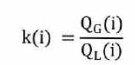
Where:
k(i): Electricity-loss conversion factor for trading interval i;
QG(i): Total electricity output during trading interval i of power plants connected to the transmission grid, imported power sources, and power plants connected to the distribution grid that participate in the electricity market or have entered into a power purchase agreement with EVN (kWh);
QL(i): Total electricity output delivered and received at the upstream connection points of electricity purchasing units during trading interval i, including electricity output delivered and received between an electricity purchasing unit, including an electricity exporting unit, and the transmission grid, and electricity output delivered and received between such unit and power plants connected to the distribution grid that participate in the electricity market or have entered into a power purchase agreement with EVN (kWh).
2. Calculation of the market energy price applicable to an electricity wholesale unit
CSMP(i) = k(i) x SMP(i)
Where:
CSMP(i): Market energy price applicable to the electricity wholesale unit for trading interval i (VND/kWh);
SMP(i): Market energy price applicable to a generation unit for trading interval i, calculated in accordance with Article 86 of this Circular (VND/kWh);
k(i): Electricity-loss conversion factor for trading interval i, determined in accordance with Clause 1 of this Article.
Article 90. Market capacity price applicable to electricity wholesale units
The market capacity price applicable to an electricity wholesale unit for trading interval i shall be calculated as follows:
CCAN(i) = k(i) x CAN(i)
Where:
CCAN(i): Market capacity price applicable to the electricity wholesale unit for trading interval i (VND/kWh);
CAN(i): Market capacity price applicable to a generation unit for trading interval i, calculated in accordance with Point b Clause 3 Article 28 of this Circular (VND/kWh);
k(i): Electricity-loss conversion factor for trading interval i, determined in accordance with Clause 1 Article 89 of this Circular.
Article 91. Full market price applicable to electricity wholesale units
The full market price applicable to an electricity wholesale unit for trading interval i shall be determined using the following formula:
CFMP(i) = CSMP(i) + CCAN(i)
Where:
CFMP(i): Full market price applicable to the electricity wholesale unit during trading interval i (VND/kWh);
CSMP(i): Market energy price applicable to the electricity wholesale unit for trading interval i (VND/kWh);
CCAN(i): Market capacity price applicable to the electricity wholesale unit for trading interval i (VND/kWh).
Article 92. Announcement of information on spot electricity market prices
1. Before 09:00 on Day D+2, the power system and electricity market operation unit shall announce the market energy price, market capacity price, and full market price applicable to generation units for each trading interval of Day D.
2. Before 16:00 on Day D+2, the power system and electricity market operation unit shall announce the provisional market energy price, market capacity price, and full market price applicable to electricity wholesale units for each trading interval of Day D.
3. Before 16:00 on Day D+5, the power system and electricity market operation unit shall announce the official market energy price, market capacity price, and full market price applicable to electricity wholesale units for each trading interval of Day D.
Chapter VIII
PAYMENTS
Section 1. PAYMENTS TO DIRECT TRADING GENERATION UNITS
Article 93. Electricity output of power plants used for payment in electricity market
1. The power system and electricity market operation unit shall calculate the following components of the electricity output of a power plant for each trading interval for payment purposes in the electricity market:
a) Electricity output paid at the offer price for a thermal power plant whose offer price exceeds the electricity market price cap (Qbp);
b) Incremental electricity output (Qcon). Qcon shall not apply to hydropower generating units with reservoirs having a regulating capacity of less than 2 days, wind power plants, or solar power plants;
c) Electricity output deviating from the output dispatched under dispatch instructions (Qdu). Qdu shall not apply to a power plant with an installed capacity of less than 30 MW, a wind power plant, or a solar power plant. For a cascade hydropower group submitting a common offer for the entire group, where the upstream cascade hydropower plant participates in frequency regulation, Qdu shall not apply to the downstream cascade hydropower plant;
d) Electricity output paid at the market energy price (Qsmp).
2. The electricity output of a power plant deviating from the output dispatched under dispatch instructions (Qdu) for a trading interval shall be determined according to the following procedures:
a) Determination of the output dispatched under dispatch instructions
The output dispatched under dispatch instructions means the electricity output at the generator terminals calculated on the basis of dispatch instructions issued by the power system and electricity market operation unit for the generating unit, taking into account the capacity specified in such dispatch instructions and the ramp-up and ramp-down rate of the generating unit. The output dispatched under dispatch instructions shall be determined using the following formula:
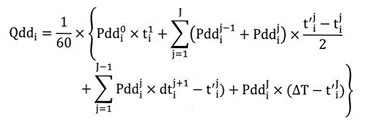
Where:
i: The i-th trading interval;
J: Number of changes to dispatch instructions during trading interval i;
 : The time at which the power system and electricity market operation unit issues the j-th dispatch instruction changing the capacity of the generating unit during trading interval i (minutes);
 : The time at which the generating unit reaches the capacity level specified in the dispatch instruction issued by the power system and electricity market operation unit at time
 (minutes);
ΔT: Duration of a trading interval (minutes);
Qddi: Output dispatched under dispatch instructions at the generator terminals for trading interval i (MWh);
 : Capacity specified by the power system and electricity market operation unit in the dispatch instruction issued to the generating unit at time
 (MW);
 : Capacity reached by the generating unit at time
 (MW).
The period from the time at which the dispatch instruction specifying capacity is issued at time  to time
 , when the generating unit reaches capacity
 , shall be determined as follows:
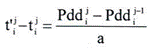
Where:
a: Ramp-up or ramp-down rate of the generating unit registered in the scheduling offer (MW/minute).
The ramp-up and ramp-down rate of the generating unit registered in the scheduling offer shall be consistent with the ramp-up and ramp-down rate prescribed in the power purchase agreement. Where the power purchase agreement does not specify a ramp-up and ramp-down rate, or where the rate specified in the agreement differs from actual performance, the generation unit shall determine such data based on test results or data compiled from the actual operation of the generating unit and enter into an addendum to the agreement concerning such technical characteristics with the electricity purchasing units as a basis for payment;
b) Conversion of the output dispatched under dispatch instructions  , as calculated in accordance with Point a of this Clause, to the metering location;
c) Calculation of the difference between metered electricity output and the output dispatched under dispatch instructions using the following formula:
ΔQi=Qmqi – Qddi
Where:
ΔQᵢ: Electricity output deviating from the output dispatched under dispatch instructions during trading interval i (kWh);
Qmqᵢ: Metered electricity output of the generating unit converted to the generator terminals during trading interval i (kWh);
Qddᵢ: Output dispatched under dispatch instructions for the generating unit during trading interval i, calculated in accordance with Point a of this Clause (kWh).
Where no dispatch instruction is issued during trading interval i, Qdd shall be determined using the following formula:
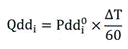
Where:
Qddᵢ: Output dispatched under dispatch instructions for the generating unit during trading interval i (kWh);
 : Capacity specified by the power system and electricity market operation unit in the dispatch instruction issued to the generating unit at time tp (MW);
ΔT: Duration of a trading interval (minutes).
d) Calculation of the electricity output of the generating unit deviating from dispatch instructions according to the following principles:
– Calculate the permissible deviation using the following formula:
+ For a generating unit with an installed capacity of less than 100 MW:

+ For a generating unit with an installed capacity of 100 MW or more:
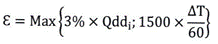
Where:
ε: Permissible deviation of the generating unit for each trading interval (kWh);
Qddi: Electricity output dispatched under dispatch instructions at the generator terminals (kWh);
ΔT: Duration of a trading interval (minutes).
– Calculate the electricity output of the generating unit deviating from dispatch instructions during the trading interval using the following formulas:
+ Where |ΔQi| ≤ ε: Qdui = 0
+ Where |ΔQi| > ε: Qdui = Qmqi – kqd x Qddi
Where:
Qdui: Electricity output of the generating unit deviating from dispatch instructions during trading interval i (kWh);
Qmqᵢ: Metered electricity output of the power plant during trading interval i (kWh);
Qddi: Output dispatched under dispatch instructions for the generating unit during trading interval i (kWh);
kqd: Output conversion factor from the generator terminals to the metering location.
– Calculate the electricity output of the power plant deviating from dispatch instructions during the trading interval using the following formula:
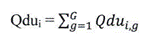
Where:
Qduᵢ: Electricity output of the power plant deviating from dispatch instructions during trading interval i (kWh);
Qdui,g : Electricity output of generating unit g of the power plant deviating from dispatch instructions during trading interval i (kWh);
G: Total number of generating units of the power plant.
dd) Where a generating unit or boiler of a thermal power plant is undergoing start-up or shutdown, other than due to an incident, the electricity output deviating from dispatch instructions during such period shall not be taken into account. Where such generating unit or boiler is subject to a technical constraint affecting the generation capacity of another generating unit of the power plant, the electricity output of the affected generating unit deviating from dispatch instructions shall not be taken into account;
e) The meter installed at the generator terminals and the meters installed at the auxiliary-load metering locations of the generating unit, if any, shall be given priority for determining the actual electricity output at the generator terminals for comparison with compliance with dispatch instructions recorded in the dispatch instruction management system.
3. The electricity output paid at the offer price for a thermal power plant whose offer price exceeds the electricity market price cap during a trading interval shall be determined as follows:
a) Identify the generating unit whose offer price exceeds the electricity market price cap and which is included in the market price calculation schedule for trading interval i, and identify the metering location of such generating unit;
b) Calculate the electricity output paid at the offer price at each metering location identified under Point a of this Clause using the following formula:
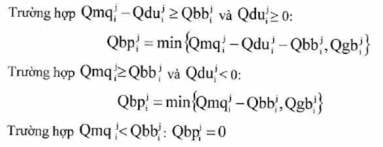
Where:
i: The i-th trading interval;
j: The j-th metering location of the thermal power plant, identified under Point a of this Clause;
 : Electricity output paid at the offer price at metering location j during trading interval i (kWh);
 : Metered electricity output at metering location j during trading interval i (kWh);
 : Electricity output corresponding to the capacity offered at a price lower than or equal to the electricity market price cap during trading interval i by the generating unit connected to metering location j, converted to such metering location (kWh);
 : Electricity output corresponding to the capacity offered at a price exceeding the electricity market price cap and included in the market price calculation schedule during trading interval i by the generating unit connected to metering location j, converted to such metering location (kWh);
 : Electricity output of the generating unit connected to metering location j deviating from the output dispatched under dispatch instructions, converted to such metering location (kWh).
c) Calculate the electricity output of the power plant paid at the offer price using the following formula:
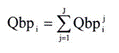
Where:
j: The j-th metering location of the thermal power plant, identified under Point a of this Clause;
J: Total number of metering locations of the power plant having generating units whose offer prices exceed the electricity market price cap and which are included in the market price calculation schedule;
Qbpi: Electricity output of the power plant paid at the offer price during trading interval i (kWh);
 : Electricity output paid at the offer price at metering location j during trading interval i (kWh).
4. The incremental electricity output of a power plant during a trading interval shall be determined according to the following procedures:
a) Calculation of the incremental electricity output during the trading interval at the generator terminals using the following formulas:
Where Qdu > 0:

Where Qdu ≤ 0:

Where:
 : Metered electricity output used for payment for the generating unit during trading interval i, converted to the generator terminals (kWh);
 : Electricity output of the generating unit deviating from the output dispatched under dispatch instructions, converted to the generator terminals (kWh);
 : Electricity output corresponding to the capacity of the generating unit included in the market energy price calculation schedule during trading interval i (kWh);
 : Electricity output corresponding to the dispatched capacity of the generating unit during the trading interval, determined using the following formula:
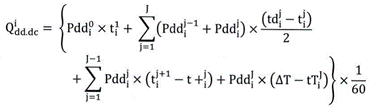
Where:
J: Number of changes to dispatch instructions due to constraints during trading interval i;
 : The time at which the power system and electricity market operation unit issues the j-th dispatch instruction changing the capacity of the generating unit due to a constraint during trading interval i (minutes). Where, at such time, the capacity of the generating unit is lower than the capacity included in the market energy price calculation schedule for the trading interval (
 ),
 shall be the time at which the generating unit reaches such scheduled capacity;
 : The time at which the generating unit reaches the capacity level specified in the dispatch instruction issued by the power system and electricity market operation unit at time
 (minutes). Where, at such time, the capacity of the generating unit is lower than the capacity included in the market energy price calculation schedule for trading interval I (), shall be the time at which the generating unit reaches such scheduled capacity;
ΔT: Duration of a trading interval (minutes);
 : Capacity specified by the power system and electricity market operation unit in the dispatch instruction issued to the generating unit at time
 . Where such capacity is lower than the capacity included in the market energy price calculation schedule for the trading interval (
 ), it shall be taken as the scheduled capacity (MW);
 : Capacity reached by the generating unit at time
 (MW);
 : The period from the time at which the dispatch instruction specifying capacity is issued at time to time
 , when the generating unit reaches capacity , determined as follows:
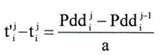
a: Ramp-up or ramp-down rate of the generating unit registered in the scheduling offer (MW/minute).
For a generating unit providing the secondary frequency control service during the trading interval through the AGC system, where data on the capacity levels specified in dispatch instructions issued by the power system and electricity market operation unit cannot be determined, such electricity output shall equal the metered electricity output of the generating unit during the trading interval, converted to the generator terminals.
Where a thermal generating unit is undergoing start-up or shutdown, other than due to an incident, the incremental electricity output of such generating unit during the trading interval shall equal 0.
c) Calculation of the incremental electricity output of the power plant during trading interval i using the following formula:
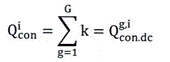
Where:
 : Total incremental electricity output of the power plant during trading interval i, converted to the metering location (kWh);
g: A generating unit of the power plant producing incremental electricity output during trading interval i;
G: Total number of generating units of the power plant producing incremental electricity output during trading interval i;
k: Output conversion factor from the generator terminals to the metering location;
 : Incremental electricity output of generating unit g during trading interval i at the generator terminals, calculated in accordance with Point a of this Clause (kWh).
d) The power system and electricity market operation unit shall announce the reasons for any incremental electricity output of the power plant arising from power system constraints.
5. The electricity output of the power plant paid at the market energy price during trading interval i shall be determined using the following formulas:
Where the electricity output deviating from the output dispatched under dispatch instructions is positive (Qduᵢ > 0):
Qsmpi = Qmqi – Qbpi – Qconi – Qdui
Where the electricity output deviating from the output dispatched under dispatch instructions is negative (Qduᵢ < 0):
Qsmpi = Qmqi – Qbpi– Qconi
Where:
Qsmpi : Electricity output of the power plant paid at the market energy price during trading interval i (kWh);
Qmqᵢ: Metered electricity output of the power plant during trading interval i (kWh);
Qbpi: Electricity output paid at the offer price during trading interval i for a thermal power plant whose offer price exceeds the electricity market price cap (kWh);
Qconi: Incremental electricity output of the power plant during trading interval i (kWh);
Qdui: Electricity output deviating from the output dispatched under dispatch instructions during trading interval i (kWh).
Article 94. Adjustment of electricity output of power plants for payment in electricity market
1. Electricity output used for payment in the electricity market shall be adjusted in the following cases:
a) During trading interval i, the metered electricity output of the power plant is less than or equal to the contracted electricity output for that trading interval ;
b) During trading interval i, the metered electricity output of the power plant is greater than the contracted electricity output of the power plant for that trading interval , while the electricity output of the power plant paid at the market energy price is less than the contracted electricity output for that trading interval
 .
2. The power system and electricity market operation unit shall recalculate and adjust the electricity output components used for payment in the electricity market during the trading intervals prescribed in Clause 1 of this Article, based on the following output components:
a) The contracted electricity output of the power plant for the trading interval , determined in accordance with Article 38 of this Circular;
b) The electricity output of the power plant paid at the market energy price (Qsmpᵢ) during trading interval i, determined in accoCrdance with Clause 5 Article 93 of this Circular;
c) The metered electricity output of the power plant during trading interval i (Qmqᵢ).
3. Adjustment principles
a) In the case prescribed in Point a Clause 1 of this Article, the incremental electricity output (Qconᵢ) and the electricity output paid at the offer price for a power plant whose offer price exceeds the electricity market price cap (Qbpᵢ) shall be adjusted to 0 for that trading interval (Qconi = 0; Qbpi = 0);
b) In the case prescribed in Point b Clause 1 of this Article, the electricity output used for payment in the electricity market shall be adjusted on the principle that the metered electricity output for that trading interval shall remain unchanged and in accordance with the payment calculation procedures in the electricity market prescribed in Appendix III enclosed with this Circular.
Article 95. Market energy payments
1. The power system and electricity market operation unit shall calculate the total market energy payments of a power plant, excluding wind power plants, solar power plants, biomass power plants, and small hydropower plants, for a settlement cycle using the following formula:
Rg = Rsmp + Rbp + Rcon + Rdu
Where:
Rg: Total market energy payments for the settlement cycle (VND);
Rsmp: Payment for the electricity output paid at the market energy price during the settlement cycle (VND);
Rbp: Payment for the electricity output paid at the offer price for a thermal power plant whose offer price exceeds the electricity market price cap during the settlement cycle (VND);
Rcon: Payment for incremental electricity output during the settlement cycle (VND);
Rdu: Payment for electricity output deviating from the output dispatched under dispatch instructions during the settlement cycle (VND).
2. Payment for the electricity output of a power plant paid at the market energy price during the settlement cycle shall be determined as follows:
a) Calculation for each trading interval i using the following formula:
Rsmpi = Qsmpi x SMPi
Where:
Rsmpᵢ: Payment for the electricity output of the power plant paid at the market energy price during trading interval i of the settlement cycle (VND);
SMPᵢ: Market energy price for trading interval i of the settlement cycle (VND/kWh);
Qsmpᵢ: Electricity output paid at the market energy price during trading interval i of the settlement cycle (kWh).
b) Calculation for the settlement cycle using the following formula:
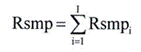
Where:
Rsmp: Payment for the electricity output of the power plant paid at the market energy price during the settlement cycle (VND);
i: The i-th trading interval of the settlement cycle;
I: Total number of trading intervals in the settlement cycle;
Rsmpᵢ: Payment for the electricity output of the power plant paid at the market energy price during trading interval i (VND).
3. Payment for the electricity output paid at the offer price for a thermal power plant whose offer price exceeds the electricity market price cap during the settlement cycle shall be determined as follows:
a) Calculation for each trading interval using the following formula:

Where:
Rbpᵢ: Payment for the electricity output of the power plant offered above the electricity market price cap during trading interval i (VND);
j: The j-th offer band in the offer of a generating unit of the thermal power plant whose offer price exceeds the electricity market price cap and which is arranged in the market energy price calculation schedule;
J: Total number of offer bands in the offer of the thermal power plant whose offer prices exceed the electricity market price cap and which are arranged in the market energy price calculation schedule;
 : Offer price corresponding to offer band j in the offer of generating unit g of the thermal power plant during trading interval i (VND/kWh);
 : Highest offer price among the offer bands of the thermal power plant arranged in the market energy price calculation schedule during trading interval i (VND/kWh);
 : Electricity output corresponding to the capacity offered at the offer price
 in the offer of the thermal power plant and dispatched during trading interval i, converted to the metering location (kWh);
Qbp: Electricity output of the thermal power plant offered above the electricity market price cap during trading interval i, converted to the metering location (kWh).
b) Calculation for the settlement cycle using the following formula:
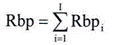
Where:
Rbp: Payment for the electricity output of the power plant offered above the electricity market price cap during the settlement cycle (VND);
i: A trading interval during which the power plant is dispatched at an offer price exceeding the electricity market price cap;
I: Total number of trading intervals during which the power plant is dispatched at an offer price exceeding the electricity market price cap;
Rbpᵢ: Payment for the electricity output of the power plant offered above the electricity market price cap during trading interval i (VND).
4. Payment for incremental electricity output of a power plant shall be determined as follows:
a) Calculation for each trading interval using the following formula:
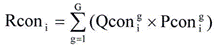
Where:
Rconᵢ: Payment for incremental electricity output during trading interval i (VND);
g: A generating unit of the power plant producing incremental electricity output during trading interval i;
G: Total number of generating units of the power plant producing incremental electricity output during trading interval i;
 : Incremental electricity output of generating unit g during trading interval i, converted to the metering location (kWh);
 : Highest offer price corresponding to the incremental capacity band of generating unit g during trading interval i (VND/kWh). For a hydropower plant, where this offer price exceeds the electricity market price cap, the electricity market price cap shall apply.
b) Calculation for the settlement cycle using the following formula:
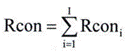
Where:
Rcon: Payment for incremental electricity output during the settlement cycle (VND);
i: The i-th trading interval of the settlement cycle during which the power plant is required to generate incremental output under dispatch instructions;
I: Total number of trading intervals in the settlement cycle during which the power plant is required to generate incremental output under dispatch instructions;
Rconᵢ: Payment for incremental electricity output during trading interval i (VND).
c) The power system and electricity market operation unit shall announce the reasons for any incremental electricity output of the power plant arising from power system constraints.
5. Where a hydropower plant is dispatched due to a must-run constraint and has an offer price exceeding the electricity market price cap, or is dispatched for a capacity band whose offer price exceeds the electricity market price cap, the corresponding electricity output generated during that trading interval shall be paid at the electricity market price cap.
6. Payment for electricity output of a power plant deviating from the output dispatched under dispatch instructions during a trading interval.
a) Calculation for each trading interval using the following formula:
– Where electricity output exceeds the output specified in dispatch instructions:
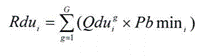
Where:
Rduᵢ: Payment for electricity output deviating from dispatch instructions during trading interval i (VND);
g: A generating unit of the power plant generating above the output specified in dispatch instructions during trading interval i;
G: Total number of generating units of the power plant generating above the output specified in dispatch instructions during trading interval i;
 : Electricity output of generating unit g generated above the output specified in dispatch instructions during trading interval i (kWh);
Pbminᵢ: Lowest offer price among all generating units during trading interval i (VND/kWh).
– Where electricity output is lower than the output specified in dispatch instructions:
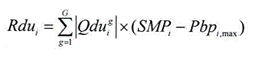
Where:
Rduᵢ: Payment for electricity output deviating from dispatch instructions during trading interval i (VND);
g: A generating unit of the power plant generating below the output specified in dispatch instructions during trading interval i;
G: Total number of generating units of the power plant generating below the output specified in dispatch instructions during trading interval i;
 : Electricity output of generating unit g generated below the output specified in dispatch instructions during trading interval i (kWh);
SMPᵢ: Market energy price during trading interval i (VND/kWh);
Pbpi,max: Energy price of the highest-priced generating unit paid during trading interval i (VND/kWh).
b) Calculation for the settlement cycle using the following formula:
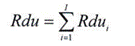
Where:
Rdu: Payment for electricity output deviating from dispatch instructions during the settlement cycle (VND);
i: The i-th trading interval of the settlement cycle during which the thermal power plant generates output deviating from dispatch instructions;
I: Total number of trading intervals in the settlement cycle during which the thermal power plant generates output deviating from dispatch instructions;
Rduᵢ: Payment for electricity output deviating from the output dispatched under dispatch instructions during trading interval i (VND).
7. The power system and electricity market operation unit shall calculate the market energy payment of a wind power plant, solar power plant, biomass power plant, or small hydropower plant during the settlement cycle using the following formula:
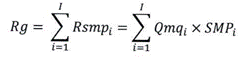
Where:
Rg: Market energy payment for the settlement cycle applicable to a renewable energy power plant (VND);
Rsmpᵢ: Payment for the electricity output of the power plant paid at the market energy price during trading interval i of the settlement cycle (VND);
SMPᵢ: Market energy price for trading interval i of the settlement cycle (VND/kWh);
Qmqᵢ: Metered electricity output of the power plant (kWh);
i: The i-th trading interval of the settlement cycle;
I: Total number of trading intervals in the settlement cycle.
Article 96. Market capacity payment
The power system and electricity market operation unit shall calculate the market capacity payment for a power plant during the settlement cycle according to the following procedures:
1. Calculation for each trading interval using the following formula:
Rcan (i) = CAN (i) x Qmq (i)
Where:
Rcan(i): Capacity payment for the power plant during trading interval i (VND);
CAN(i): Market capacity price during trading interval i (VND/kWh);
Qmq(i): Metered electricity output of the power plant during trading interval i (kWh).
2. Calculation for the settlement cycle using the following formula:
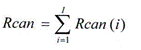
Where:
Rcan: Capacity payment for the power plant during the settlement cycle (VND);
i: The i-th trading interval of the settlement cycle;
I: Total number of trading intervals in the settlement cycle;
Rcanᵢ: Capacity payment for the power plant during trading interval i (VND).
Article 97. Contract-for-difference payment under power purchase agreement
Based on the market energy price and market capacity price announced by the power system and electricity market operation unit, the generation unit shall calculate the payment under the power purchase agreement and submit it to the electricity purchasing unit in accordance with Article 112 of this Circular for the settlement cycle according to the following procedures:
1. Calculation for each trading interval using the following formula:
Rc (i) = [Pc – FMP(i)] x Qc(i)
Where:
Rc(i): Contract-for-difference payment during trading interval i (VND);
Qc(i): Contracted electricity output during trading interval i (kWh);
Pc: Price under the power purchase agreement (VND/kWh);
FMP(i): Full market price applicable to the generation unit during trading interval i (VND/kWh).
2. Calculation for the settlement cycle using the following formula:
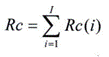
Where:
Rc: Contract-for-difference payment during the settlement cycle (VND);
i: The i-th trading interval of the settlement cycle;
I: Total number of trading intervals in the settlement cycle;
Rc(i): Contract-for-difference payment during trading interval i (VND).
Section 2
ELECTRICITY PAYMENTS APPLICABLE TO ELECTRICITY PURCHASING UNITS
Article 98. Calculation of electricity purchase costs at spot electricity market prices of electricity wholesale units during trading intervals
1. The electricity output delivered and received at the upstream connection points of electricity wholesale unit l during trading interval i shall be determined in accordance with Clause 2 Article 83 of this Circular.
2. The electricity output purchased at market prices by an electricity wholesale unit during a trading interval shall be determined as follows:
a) The power system and electricity market operation unit shall calculate and announce the proportion of electricity purchased from the spot electricity market by the relevant electricity wholesale unit from power plants having power purchase agreements with EVN and allocated to such electricity wholesale unit:
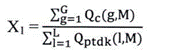
Where:
X1: Proportion of electricity purchased at spot electricity market prices by electricity wholesale unit l from power plants with allocated contracts (%);
Qc(g,M): Contracted electricity output for month M of power plant g, calculated in accordance with Articles 17, 37, and 38 of this Circular (kWh);
Qptdk(l,M): Forecast electricity output delivered and received at the upstream connection points for month M, provided by electricity wholesale unit l for preparation of the next-month operation plan (kWh);
G: Total number of power plants having power purchase agreements with EVN and allocated to the electricity wholesale unit;
L: Total number of electricity wholesale units.
b) The electricity output purchased at market prices by an electricity wholesale unit from power plants with allocated contracts during trading interval i shall be determined using the following formula:
Qm1(l,i)=X1 x Q(l, i)
Where:
Qm1(l,i): Electricity output purchased at market prices by electricity wholesale unit l from power plants with allocated contracts during trading interval i (kWh);
X1: Proportion of electricity purchased at spot electricity market prices by electricity wholesale unit l from power plants with allocated contracts, calculated and announced by the power system and electricity market operation unit in accordance with Point a of this Clause (%);
Q(l,i): Electricity output delivered and received at the upstream connection points of electricity wholesale unit l during trading interval i, determined in accordance with Clause 1 of this Article (kWh).
c) The electricity output purchased at market prices by electricity wholesale unit l during trading interval i from power plant g having a direct power purchase agreement shall be determined using the following formula:
Qm2(l,g,i) = X2(g, i) x Q(l,i)
Where:
Qm2(l,g,i): Electricity output purchased at market prices by electricity wholesale unit l during trading interval i from power plant g having a direct contract (kWh);
Q(l,i): Electricity output delivered and received at the upstream connection points of electricity wholesale unit l during trading interval i, determined in accordance with Clause 1 of this Article (kWh);
X2(g,i): Electricity output proportion (%), calculated using the following formula:
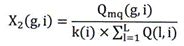
Where:
Qmq(g,i): Electricity output delivered at the delivery and receipt point during trading interval i by power plant g, which directly participates in the electricity market and has entered into a direct power purchase agreement with the electricity wholesale unit (kWh);
Q(l,i): Electricity output delivered and received at the upstream connection points of electricity wholesale unit l during trading interval i, determined in accordance with Clause 1 of this Article (kWh);
L: Total number of electricity wholesale units having direct power purchase agreements with power plant g;
k(i): Electricity-loss conversion factor for trading interval i, determined in accordance with Clause 1 Article 89 of this Circular.
d) The total electricity output purchased from the spot electricity market by an electricity wholesale unit during a trading interval shall be determined using the following formula:
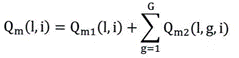
Where:
Qm(l,i): Total electricity output purchased from the spot electricity market by electricity wholesale unit l during trading interval i (kWh);
Qm1(l,i): Electricity output purchased at market prices by electricity wholesale unit l from power plants with allocated contracts during trading interval i (kWh);
Qm2(l,g,i): Electricity output purchased at market prices by electricity wholesale unit l during trading interval i from power plant g having a direct contract (kWh);
G: Total number of power plants having power purchase agreements with the electricity wholesale unit.
3. Electricity purchase costs at spot electricity market prices of an electricity wholesale unit during trading interval i shall be determined as follows:
a) The electricity purchase cost at spot electricity market prices of an electricity wholesale unit from power plants with allocated contracts during trading interval i shall be determined using the following formula:
Cm1(l,i) = CFMP(i) x Qm1(l,i)
Where:
Cm1(l,i): Electricity purchase cost at spot electricity market prices of electricity wholesale unit l from power plants with allocated contracts during trading interval i (VND);
CFMP(i): Full market price applicable to the electricity wholesale unit during trading interval i (VND/kWh);
Qm1(l,i): Total electricity output purchased at market prices by electricity wholesale unit l from power plants with allocated contracts during trading interval i, calculated in accordance with Point b Clause 2 of this Article (kWh).
b) The electricity purchase cost at spot electricity market prices of an electricity wholesale unit during trading interval i from power plant g having a power purchase agreement with such electricity wholesale unit shall be determined using the following formula:
Cm2(l,g,i) = CFMP(i) x Qm2(l,g,i)
Where:
g: A power plant having a power purchase agreement with the electricity wholesale unit;
Cm2 (l,g,i): Electricity purchase cost at spot electricity market prices of electricity wholesale unit l for power plant g during trading interval i (VND);
CFMP(i): Full market price applicable to the electricity wholesale unit during trading interval i (VND/kWh);
Qm2(l,g,i): Electricity output purchased at market prices by electricity wholesale unit l during trading interval i from power plant g, calculated in accordance with Point c Clause 2 of this Article (kWh).
c) The total electricity purchase cost from the spot electricity market of an electricity wholesale unit during a trading interval shall be determined using the following formula:
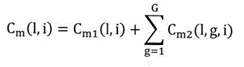
Where:
Cm(l,i): Total electricity purchase cost from the spot electricity market of electricity wholesale unit l during trading interval i (VND);
Cm1(l,i): Electricity purchase cost at spot electricity market prices of electricity wholesale unit l from power plants with allocated contracts during trading interval i (VND);
g: A power plant having a power purchase agreement with the electricity wholesale unit;
G: Total number of power plants having power purchase agreements with the electricity wholesale unit;
Cm2(l,g,i): Electricity purchase cost at spot electricity market prices of electricity wholesale unit l from power plant g during trading interval i (VND).
Article 99. Calculation of electricity purchase costs in spot electricity market of electricity wholesale units during settlement cycles
The electricity purchase costs in the spot electricity market of an electricity wholesale unit during a settlement cycle shall be determined as follows:
1. The electricity purchase cost in the spot electricity market of electricity wholesale unit l during settlement cycle M from power plants with allocated contracts shall be determined using the following formula:
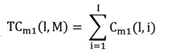
Where:
i: The i-th trading interval of the settlement cycle;
I: Total number of trading intervals in the settlement cycle;
TCm1(l,M): Electricity purchase cost in the spot electricity market of electricity wholesale unit l during settlement cycle M from power plants with allocated contracts (VND);
Cm1(l,i): Electricity purchase cost in the spot electricity market of electricity wholesale unit l during trading interval i from power plants with allocated contracts, determined under Point a Clause 3 Article 98 of this Circular (VND).
2. The electricity purchase cost in the spot electricity market of electricity wholesale unit l during the settlement cycle for power plant g having a power purchase agreement with the electricity wholesale unit shall be determined using the following formula:

Where:
i: The i-th trading interval of the settlement cycle;
I: Total number of trading intervals in the settlement cycle;
g: A power plant having a power purchase agreement with the electricity wholesale unit;
TCm2(l,g,M): Electricity purchase cost in the spot electricity market of electricity wholesale unit l during settlement cycle M from power plant g having a power purchase agreement with the electricity wholesale unit (VND);
Cm2(l,g,i): Total electricity purchase cost at spot electricity market prices of electricity wholesale unit l during trading interval i from power plant g having a power purchase agreement with the electricity wholesale unit (VND);
UpliftM(g): Spot electricity market price adjustment component applicable to the electricity wholesale unit for power plant g during settlement cycle M, calculated by the power system and electricity market operation unit on the basis of data provided by the generation unit after the operating month using the following formula:

Where:
g: A power plant having a power purchase agreement with the electricity wholesale unit;
i: The i-th trading interval of settlement cycle M;
I: Total number of trading intervals in settlement cycle M;
L: Total number of electricity wholesale units;
Rg(M): Total market energy payments during settlement cycle M of power plant g, as stated in the monthly electricity market payment statement issued by the power system and electricity market operation unit, determined in accordance with Article 95 of this Circular (VND);
Rgcan (M): Total revenue at the market capacity price during settlement cycle M of power plant g, as stated in the monthly electricity market payment statement issued by the power system and electricity market operation unit, determined in accordance with Article 96 of this Circular (VND);
Cm2(l,g,i): Electricity purchase cost at spot electricity market prices of electricity wholesale unit l during trading interval i from power plant g, determined under Point b Clause 3 Article 98 of this Circular (VND);
Qm2 (l,g,i): Electricity output purchased at market prices by electricity wholesale unit l during trading interval i from power plant g, determined in accordance with Point c Clause 2 Article 98 of this Circular (kWh).
3. The total electricity purchase costs of an electricity wholesale unit in the spot electricity market during the settlement cycle shall be determined using the following formula:
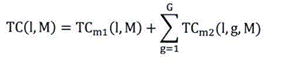
Where:
TC(l,M): Total electricity purchase costs of electricity wholesale unit l in the spot electricity market during settlement cycle M (VND);
TCm1(l,M): Electricity purchase cost in the spot electricity market of electricity wholesale unit l during settlement cycle M from power plants with allocated contracts, determined under Clause 1 of this Article (VND);
g: A power plant having a power purchase agreement with the electricity wholesale unit;
G: Total number of power plants having power purchase agreements with the electricity wholesale unit;
TCm2(l,g,M): Electricity purchase cost in the spot electricity market of electricity wholesale unit l during settlement cycle M from power plant g, determined under Clause 2 of this Article (VND).
Article 100. Calculation of contract-for-difference payments under power purchase agreements of electricity wholesale units
The electricity seller shall calculate the contract-for-difference payment under the power purchase agreement during the settlement cycle according to the following procedures:
1. Calculation for each trading interval using the following formula:
Rc(i) = [Pc – FMP(i)] x Qc(i)
Where:
Rc(i): Contract-for-difference payment during trading interval i (VND);
Qc(i): Contracted electricity output during trading interval i (kWh);
Pc: Price under the power purchase agreement (VND/kWh);
FMPi: Full market price applicable to the generation unit during trading interval i (VND/kWh).
2. Calculation for the settlement cycle using the following formula:
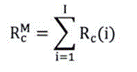
Where:
 : Contract-for-difference payment during settlement cycle M (VND);
i: The i-th trading interval of the settlement cycle;
I: Total number of trading intervals in the settlement cycle;
Rc(i): Contract-for-difference payment during trading interval i (VND).
Section 3. AUXILIARY SERVICE PAYMENTS AND OTHER PAYMENTS
Article 101. Payments for secondary frequency control services
The power system and electricity market operation unit shall calculate payments to a generation unit providing the secondary frequency control service, including:
1. For the metered electricity output of a power plant providing frequency regulation services during a trading interval, payments shall be calculated in accordance with Articles 95 and 96 of this Circular.
2. The payment at the CAN capacity price for the electricity output corresponding to the capacity provided for the secondary frequency control service shall be calculated as follows:
Rđt(i) = CAN(i) x Qđt(i)
Where:
Rđt(i): Payment at the CAN capacity price for the electricity output corresponding to the capacity provided for the secondary frequency control service during trading interval i (VND);
CAN(i): Market capacity price applicable to a generation unit during trading interval i (VND/kWh);
Qđt(i): Electricity output corresponding to the capacity provided by the generating unit for the secondary frequency control service during trading interval i, converted to the metering location (kWh), and determined using the following formula:
Qđt = Max{Min ([Qcb – Qmq], Qđtcb), 0}
Where:
Qđtcb: Electricity output corresponding to the capacity for provision of the secondary frequency control service announced for the next trading interval of the generating unit, converted to the metering location during trading interval i (kWh);
Qcb: Electricity output corresponding to the declared capacity of the generating unit in its scheduling offer, converted to the metering location during trading interval i (kWh);
Qmq: Metered electricity output of the power plant during trading interval i (kWh).
Where, during the actual trading interval, the generating unit does not participate in the secondary frequency control service or the generating unit experiences an incident, the electricity output corresponding to the capacity provided for the secondary frequency control service during that interval shall equal zero (Qđt = 0).
Article 102. Payments for fast-start reserve services, must-run services to ensure electricity supply, voltage regulation services, and black-start services
A unit providing fast-start reserve services, must-run services to ensure electricity supply (including regular must-run operation and operation of a gas turbine power plant in open-cycle mode, or operation using part or all of its backup fuel due to a shortage of primary fuel, under instructions from the power system and electricity market operation unit), voltage regulation services, or black-start services shall be paid under the relevant auxiliary service agreement in accordance with the regulations on methods for determining, and the procedures for approving, prices of power system auxiliary services and the principal contents of power system auxiliary service agreements promulgated by the Ministry of Industry and Trade of Vietnam.
Article 103. Payments to hydropower plants with reservoirs having regulating capacity of less than 2 days
Payments to a hydropower plant with a reservoir having a regulating capacity of less than 2 days that directly trades in the electricity market shall be calculated as follows:
1. Electricity market payments: Payments shall be made in accordance with Clauses 2 and 6 Article 95 and Article 96 of this Circular.
2. Contract-for-difference payment under the power purchase agreement
a) The contracted electricity output under the power purchase agreement for each trading interval of such power plant shall be calculated using the following formula:
Qc(i) = Qhc(i) x α
Where:
Qc(i): Contracted electricity output of the power plant during trading interval i (kWh);
α: Proportion of electricity output paid at the contract price applicable to a hydropower plant with a reservoir having a regulating capacity of less than 2 days, as prescribed by the Ministry of Industry and Trade of Vietnam;
Qhc(i): Adjusted electricity output during trading interval i (kWh), determined as follows:
– Where Qdu(i)> 0, Qhc(i) = Qm(i) – Qdu(i);
– Where Qdu(i) ≤ 0, Qhc(i) = Qm(i).
Qm(i): Electricity output at the metering location during trading interval i (kWh);
Qdu(i): Electricity output deviating from dispatch instructions during trading interval i (kWh).
b) The payment under the power purchase agreement of the power plant shall be calculated based on the contracted electricity output prescribed in Point a of this Clause and using the formula prescribed in Article 97 of this Circular.
Article 104. Payments to renewable energy power plants directly participating in electricity market
1. A renewable energy power plant having a power purchase agreement with a large electricity consumer participating in the direct power trading mechanism and choosing to sell electricity in the spot electricity market shall be paid in accordance with the regulations on the direct power trading mechanism issued by the Government of Vietnam.
2. A renewable energy power plant that does not participate in the direct power trading mechanism but chooses to participate directly in the electricity market shall receive the following payment components:
a) Electricity market payments: Payments shall be made in accordance with Clause 7 Article 95 and Article 96 of this Circular;
b) Payment under a contract-for-difference power purchase agreement:
The contracted electricity output under the power purchase agreement for each trading interval of such power plant shall be calculated using the following formula:
Qc(i) = Qmq(i) x α
Where:
Qc(i): Contracted electricity output of the power plant during trading interval i (kWh);
α: Proportion of electricity output paid at the contract price applicable to a renewable energy power plant, as prescribed by the Ministry of Industry and Trade of Vietnam;
Qmq(i): Electricity output at the metering location during trading interval i (kWh).
c) The payment under the power purchase agreement of the power plant shall be calculated based on the contracted electricity output prescribed in Point a of this Clause and using the formula prescribed in Article 97 of this Circular.
Article 105. Other payments to power plants having contracts with EVN
1. Where the monthly metered electricity output provided by the electricity metering data management unit in accordance with Clause 2 Article 83 of this Circular differs from the total daily metered electricity output for that month provided by the electricity metering data management unit in accordance with Clause 1 Article 83 of this Circular, the difference in electricity output shall be paid in accordance with the power purchase agreement entered into between EVN and the generation unit.
2. Where a thermal generating unit is required to shut down or to shut down one boiler to reduce its output in accordance with Clause 3 Article 67 of this Circular, or where a transmission line is under repair or construction, the start-up costs shall be paid as agreed in the power purchase agreement between EVN and the generation unit. The power system and electricity market operation unit shall confirm such event for the generating unit, as notified by the generation unit, so that the electricity purchasing unit may use such confirmation as the basis for paying the start-up costs.
3. Where a power plant has a generating unit undergoing testing, the entire power plant shall be excluded from the electricity market during the testing intervals. The entire electricity output delivered by the power plant to the grid during the testing intervals shall be paid in accordance with the power purchase agreement with EVN corresponding to the generating unit configuration and type of fuel used.
4. Where a generating unit has an approved outage schedule but is still required to generate electricity at the request of the power system and electricity market operation unit to ensure electricity supply, the entire power plant shall be excluded from the electricity market for the period during which it generates electricity at the request of the power system and electricity market operation unit. The entire electricity output delivered by the power plant to the grid during such period shall be paid in accordance with the power purchase agreement with EVN.
5. Where a power plant has a generating unit disconnected from the grid and operating in islanded mode at the request of the power system and electricity market operation unit, the entire electricity output of the power plant during the relevant trading intervals shall be paid in accordance with the power purchase agreement with EVN.
6. Where a power plant has a generating unit disconnected from the national power system and connected to a grid importing electricity from abroad, based on the results of the year-ahead power system operation calculations of the power system and electricity market operation unit, the participation of such power plant in the electricity market in the following year and payments to such power plant shall be regulated as follows:
a) Where a hydropower plant with a reservoir having a regulating capacity of less than 2 days is scheduled to connect to a grid importing electricity from abroad, the entire power plant shall be excluded from the electricity market and shall participate indirectly in the electricity market in the following year. The entire electricity output of the power plant in the following year shall be paid at the electricity price specified in the power purchase agreement entered into with EVN;
b) Except for the case prescribed in Point a of this Clause, where, during the operating year, a power plant has a generating unit connected to a grid importing electricity from abroad, the entire electricity output of the power plant on any trading day containing a trading interval during which such generating unit is connected to the grid importing electricity from abroad shall be paid at the electricity price specified in the power purchase agreement entered into with EVN.
7. Where a hydropower generating unit is required by the power system and electricity market operation unit, for reasons of ensuring electricity supply, to generate at a capacity greater than its declared capacity in the scheduling offer for the next trading interval, the entire electricity output delivered by the power plant to the grid during such period shall be paid in accordance with the power purchase agreement with EVN.
8. The power system and electricity market operation unit shall provide complete and timely information concerning the operation of BOT power plants, imported power plants, and power plants providing auxiliary services at EVN’s request, for payment purposes in accordance with the power purchase agreements between EVN and the relevant generation units. The information to be provided is specified in detail in Appendix III enclosed with this Circular.
Article 106. Other payments to power plants having direct contracts with electricity wholesale units
1. Other payments to a power plant having a direct contract with an electricity wholesale unit include:
a) The difference between the monthly metered electricity output provided by the electricity metering data management unit in accordance with Clause 2 Article 83 of this Circular and the total metered electricity output of all trading intervals in the month provided by the electricity metering data management unit in accordance with Clause 1 Article 83 of this Circular shall be paid as agreed in the power purchase agreement entered into between the electricity wholesale unit and the generation unit;
b) Where a thermal generating unit is required to shut down or to shut down one boiler to reduce its output in accordance with Clause 3 Article 67 of this Circular, or where a transmission line is under repair or construction, the start-up costs shall be paid as agreed in the power purchase agreement between the electricity wholesale unit and the generation unit. The power system and electricity market operation unit shall confirm such event for the generating unit, as notified by the generation unit, so that the electricity purchasing unit may use such confirmation as the basis for paying the start-up costs;
c) Where a power plant has a generating unit undergoing testing, the entire power plant shall be excluded from the electricity market during the testing intervals. The entire electricity output delivered by the power plant to the grid during the testing intervals shall be paid as agreed in the power purchase agreements with the electricity wholesale unit corresponding to the generating unit configuration and type of fuel used;
d) Where a power plant has a generating unit undergoing AGC system testing at the request of the power system and electricity market operation unit, the entire power plant shall be excluded from the electricity market, and the entire electricity output delivered by the power plant to the grid during the testing intervals shall be paid in accordance with the power purchase agreement with the electricity wholesale unit. Before December 1 of Year N−1, the power system and electricity market operation unit shall prepare and announce to the electricity market participants the list of generating units expected to undergo AGC system testing in Year N;
dd) Taxes and fees payable to a power plant having direct contracts with electricity wholesale units during the monthly settlement cycle M, including water resource tax, forest environmental service fees, environmental protection fees for industrial wastewater, payments for the use of sea areas for dumping dredged materials, land rent, and other taxes and fees, if any;
e) Where a generating unit has an approved outage schedule but is still required to generate electricity at the request of the power system and electricity market operation unit to ensure electricity supply, the entire power plant shall be excluded from the electricity market for the period during which it generates electricity at the request of the power system and electricity market operation unit. The entire electricity output delivered by the power plant to the grid during such period shall be paid as agreed in the power purchase agreement between the electricity wholesale unit and the generation unit;
g) Where a power plant has a generating unit disconnected from the grid and operating in islanded mode at the request of the power system and electricity market operation unit, the entire electricity output of the power plant during the relevant trading intervals shall be paid as agreed in the power purchase agreement between the electricity wholesale unit and the generation unit;
h) Where a power plant has a generating unit disconnected from the national power system and connected to a grid importing electricity from abroad, based on the results of the year-ahead power system operation calculations of the power system and electricity market operation unit, the participation of such power plant in the electricity market in the following year and payments to such power plant shall be regulated as follows:
– Where a hydropower plant with a reservoir having a regulating capacity of less than 2 days is scheduled to connect to a grid importing electricity from abroad, the entire power plant shall be excluded from the electricity market and shall participate indirectly in the electricity market in the following year. The entire electricity output of the power plant in the following year shall be paid at the electricity price specified in the power purchase agreement between the electricity wholesale unit and the generation unit;
– Except for the case prescribed in Point a of this Clause, where, during the operating year, a power plant has a generating unit connected to a grid importing electricity from abroad, the entire electricity output of the power plant on any trading day containing a trading interval during which such generating unit is connected to the grid importing electricity from abroad shall be paid at the electricity price specified in the power purchase agreement between the electricity wholesale unit and the generation unit.
i) Where a hydropower generating unit is required by the power system and electricity market operation unit, for reasons of ensuring electricity supply, to generate at a capacity greater than its declared capacity in the scheduling offer for the next trading interval, the entire electricity output delivered by the power plant to the grid during such period shall be paid as agreed in the power purchase agreement between the electricity wholesale unit and the generation unit.
2. The other payments prescribed in Points a, b, and dd Clause 1 of this Article shall be allocated among the electricity wholesale units in proportion to their electricity output delivered and received during the settlement cycle, as announced by the power system and electricity market operation unit, and determined using the following formula:
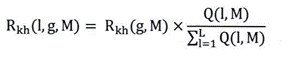
Where:
L: Total number of electricity wholesale units;
Rkh(l,g,M): Other payment allocated to electricity wholesale unit l from power plant g having a direct power purchase agreement during the monthly settlement cycle M, as agreed in the power purchase agreement between the two parties (VND);
Rkh(g,M): Total other payments prescribed in Clause 1 of this Article for power plant g having a direct power purchase agreement with an electricity wholesale unit during monthly settlement cycle M (VND);
Q(l,M): Electricity output delivered and received by electricity wholesale unit l during the monthly settlement cycle M (kWh).
3. The other payments prescribed in Points c and d Clause 1 of this Article shall be allocated among the electricity wholesale units in proportion to their electricity output delivered and received during the relevant trading interval, as announced by the power system and electricity market operation unit, and determined using the following formula:
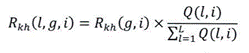
Where:
L: Total number of electricity wholesale units;
i: A trading interval within the period during which power plant g experiences an event prescribed in Point c or d Clause 1 of this Article;
Rkh (l, g, i): Other payment prescribed in Point c or d Clause 1 of this Article allocated to electricity wholesale unit l during trading interval i (VND);
Q(l, i): Electricity output delivered and received by electricity wholesale unit l during trading interval i (kWh).
Article 107. Payments during intervention in electricity market
1. Where an intervention in the electricity market occurs as prescribed in Article 71 of this Circular, the electricity purchasing unit shall make payments to a generation unit having a direct contract as agreed in the power purchase agreement. The power system and electricity market operation unit shall confirm the relevant event so that the generation unit may complete the payment dossier for submission to the electricity purchasing unit.
2. Where the dispatch schedules of power plants are adjusted to ensure electricity supply as prescribed in Clause 2 Article 71 of this Circular, the power system and electricity market operation unit, the electricity purchasing unit, and the generation unit shall calculate and make payments in accordance with Articles 95, 96, and 97 of this Circular.
Article 108. Payments during suspension of spot electricity market
During the suspension of the spot electricity market, the electricity purchasing unit shall make payments to a generation unit having a direct contract as agreed in the power purchase agreement. The power system and electricity market operation unit shall confirm the relevant event so that the generation unit may complete the payment dossier for submission to the electricity purchasing unit.
Article 109. Data used for electricity market payment calculations
Before 09:00 on Day D+2, the power system and electricity market operation unit shall compile and provide the electricity purchasing unit and the generation units with data used for calculating payments for each power plant.
Article 110. Electricity market payment statements for trading days
1. Before 16:00 on Day D+4, the power system and electricity market operation unit shall prepare and send the preliminary electricity market payment statement for Trading Day D to the generation units through the Electricity Market Web Portal, using Form No. 14 in Appendix VI enclosed with this Circular.
2. Before 16:00 on Day D+5, the power system and electricity market operation unit shall prepare and send the spot electricity market payment statement for Day D to the electricity purchasing units through the Electricity Market Web Portal, using Form No. 14 in Appendix VI enclosed with this Circular.
3. Before 12:00 on Day D+6, the direct trading generation units and the electricity purchasing units shall confirm the electricity market payment statement on the Electricity Market Web Portal in accordance with regulations and notify the power system and electricity market operation unit of any errors in the preliminary electricity market payment statement.
2. Before 16:00 on Day D+6, the power system and electricity market operation unit shall prepare and send the finalized electricity market payment statement for Day D to the electricity purchasing unit and the generation units through the Electricity Market Web Portal, using Form No. 14 in Appendix VI enclosed with this Circular. The generation unit shall issue the daily payment statement and include it in the payment dossier for the settlement cycle.
Article 111. Electricity market payment statements for settlement cycles
1. The power system and electricity market operation unit shall compile payment data for the trading days within the settlement cycle and verify and reconcile such data against the record summarizing electricity output provided by the electricity metering data management unit.
2. Within 10 working days from the last trading day of the settlement cycle, the power system and electricity market operation unit shall announce:
a) The record finalizing the output discrepancy between the total output in each trading interval and the finalized output for the settlement cycle;
b) The total electricity output delivered and received at the upstream connection points of each electricity wholesale unit and the proportion of electricity output delivered and received at the upstream connection points of the electricity wholesale unit, calculated in accordance with Clause 2 Article 106 of this Circular.
3. Within 13 working days from the last trading day of the settlement cycle, the power system and electricity market operation unit shall prepare and issue the electricity market payment statement for the settlement cycle to the electricity purchasing unit and the generation unit.
4. The electricity market payment statement for the settlement cycle shall include the summary tables made according to Forms No. 14 and No. 15 in Appendix VI enclosed with this Circular and the record confirming meter readings and electricity output.
3. Method of confirming payment statements and electricity market events: The direct trading generation units, the electricity purchasing units, and the power system and electricity market operation unit shall use digital signatures to confirm and issue electricity market payment statements and confirm electricity market events. Where a digital signature system experiences an incident, the electricity purchasing unit and the power system and electricity market operation unit shall directly confirm and issue the electricity market payment statements and confirm the electricity market events, and shall reconfirm them after the incident has been remedied.
Article 112. Payment dossier
1. A direct trading generation unit shall prepare and send electricity market payment documents to the electricity purchasing unit based on the electricity market payment statement for the settlement cycle.
2. A direct trading generation unit shall prepare and send documents for the contract-for-difference payment to the electricity purchasing unit in accordance with the agreement in the power purchase agreement concluded between the electricity purchasing unit and the generation unit.
3. A direct trading generation unit shall prepare and send a payment invoice to the electricity purchasing unit in accordance with the power purchase agreement. The payment invoice shall include electricity market payments and contract-for-difference payments for the settlement cycle.
Article 113. Payment dossiers for auxiliary service agreements and other payments
The generation unit shall prepare payment dossiers for auxiliary services and other payments in accordance with the agreements concluded between the generation unit and the electricity purchasing unit.
Article 114. Invoice adjustments
1. Where an invoice contains errors, the generation unit or the electricity purchasing unit may request that such errors be handled in accordance with the power purchase agreement and relevant regulations within 1 month from the date of issuance. The relevant parties shall cooperate in determining and agreeing on the adjustment payments.
2. The generation unit shall include the adjustment payment in the invoice for the following settlement cycle.
Article 115. Payment
1. The electricity purchasing unit shall make payment in accordance with the invoice issued by the generation unit. The payment deadline shall be determined in accordance with the power purchase agreement concluded between the two parties.
2. The generation unit and the electricity purchasing unit shall agree on the payment method in the electricity market in conformity with this Circular and relevant regulations.
3. By the 20th day of each month, where the generation unit has not received the electricity market payment statement for reasons not attributable to the generation unit, the generation unit may prepare and send a provisional dossier and payment invoice based on the generated electricity output and the electricity price specified in the concluded power purchase agreement. After the electricity market payment statement is issued, the difference between the provisional payment amount and the final settlement amount shall be offset in the following month.
4. Where the electricity purchasing unit fails to make payment by the payment deadline, interest shall accrue on the overdue electricity payment at the interest rate agreed by the two parties in the concluded power purchase agreement.
Article 116. Handling of payment errors
Where an overpayment or underpayment is made compared with the invoice, the relevant units shall handle such error in accordance with the concluded power purchase agreement or auxiliary service agreement.
Article 117. Payments under power purchase agreements between EVN and electricity wholesale units
Payments under the power purchase agreement between EVN and an electricity wholesale unit shall include:
1. The spot electricity market payment between EVN and the electricity wholesale unit for power plants with allocated contracts, as prescribed in Clause 1 Article 99 of this Circular.
2. The contract-for-difference payment under the power purchase agreement between EVN and the electricity wholesale unit for power plants with allocated contracts, calculated in accordance with Article 100 of this Circular.
3. Payment by EVN to the electricity wholesale unit at the wholesale electricity price for the remaining electricity output delivered and received at the upstream connection points after deducting the output paid in accordance with Article 98, Point c Clause 1 Article 106, Article 107, and Article 108 of this Circular.
4. Other payments as agreed in the power purchase agreement.
Chapter IX
INFORMATION TECHNOLOGY SYSTEM SERVING ELECTRICITY MARKET OPERATION
Article 118. Software for electricity market operation
1. Software for electricity market operation includes:
a) Market simulation software;
b) Water value calculation software;
c) Dispatch scheduling software;
d) Software serving payment calculations;
dd) Other software serving electricity market operation.
2. The power system and electricity market operation unit shall develop and operate software serving the electricity market.
Article 119. Requirements for software for electricity market operation
1. Software shall ensure accuracy, reliability, and security and satisfy the standards developed by the power system and electricity market operation unit.
2. Software shall be accompanied by complete technical instructions and operating procedures.
Article 120. Development of software for electricity market operation
1. Software for electricity market operation shall be developed to support the calculations and transactions prescribed in this Circular and the electricity market operating procedures.
2. The power system and electricity market operation unit shall:
a) Develop standards for software for electricity market operation;
b) Appraise and inspect the software’s compliance with the standards prescribed in Point a of this Clause before it is put into use;
c) Announce the list, algorithms, and procedures for using software for electricity market operation.
Article 121. Software audit
1. Software serving the electricity market shall be audited in the following cases:
a) Before the electricity market officially commences operation;
b) Before new software is put into use;
c) After modifications or upgrades that affect calculations;
d) Periodically.
2. The power system and electricity market operation unit shall propose a qualified independent audit unit to conduct the audit and report such matters to the Electricity Authority of Vietnam before the audit is conducted.
3. The power system and electricity market operation unit shall announce the audit results to the electricity market participants.
Article 122. Structure of electricity market information system
The electricity market information system includes the following basic components:
1. Hardware and software systems serving the management, exchange, and security of electricity market information.
2. Database and data storage systems.
3. The electronic information portal serving the electricity market, including the internal website and the public website.
Article 123. Management and operation of electricity market information system
1. The power system and electricity market operation unit shall manage and operate the electricity market information system.
2. The electricity market participants shall invest in equipment within their respective management scopes that satisfies the technical requirements prescribed by the power system and electricity market operation unit, thereby ensuring connection to the electricity market information system.
3. The electricity metering data management unit shall develop, manage, and operate the transmission network connecting the electricity market information system of the power system and electricity market operation unit with the equipment of the electricity market participants.
4. The power system and electricity market operation unit may only operate or modify the existing electricity market information system after it has been fully accepted and approved by the Electricity Authority of Vietnam.
5. The power system and electricity market operation unit shall equip the electricity market information system with backup equipment to ensure that market information can be collected, transmitted, and announced where the main electricity market information system experiences an incident or cannot be operated.
6. The power system and electricity market operation unit shall develop and manage an information security system to ensure the safety and confidentiality of electricity market information.
Article 124. Provision and announcement of electricity market information
1. The generation units, electricity wholesale units, transmission units, distribution units, and electricity metering data management units shall provide the power system and electricity market operation unit with information and data serving calculations of contracted electricity output allocation, annual load forecasting, operation planning, dispatch scheduling, and payment calculations in accordance with this Circular through the web portal of the electricity market information system.
2. The power system and electricity market operation unit shall provide and announce information, data, and electricity market operation reports to the electricity market participants in accordance with this Circular through the web portal of the electricity market information system.
3. Levels of access authorization shall be determined according to the functions of the units and prescribed in the procedures for management and operation of the information technology system for electricity market administration in Appendix V enclosed with this Circular.
4. The power system and electricity market operation unit shall announce the following information on the public website:
a) Information on the electricity market participants;
b) Load data for each region and the system;
c) Data on generation capacity by generation technology type and for the entire power system;
d) Statistical data on market prices;
dd) Other information prescribed in the procedures for management and operation of the information technology system for electricity market administration in Appendix V enclosed with this Circular.
Article 125. Responsibility for ensuring accuracy of electricity market information
1. An electricity market participant shall ensure the accuracy and completeness of electricity market information at the time of provision.
2. Where information already provided or announced is found to be inaccurate or incomplete, the electricity market participant shall correct such information and provide the accurate information again to the relevant unit.
Article 126. Confidentiality of electricity market information
1. The power system and electricity market operation unit shall not disclose information provided by an electricity market participant, including:
a) Information on power purchase agreements;
b) Price offers of a generation unit before the end of the trading day;
c) Other information beyond its authority to disclose.
2. An electricity market participant shall not disclose information beyond the scope that it is authorized to provide and announce.
Article 127. Exemptions from electricity market information confidentiality
1. Information may be provided at the request of the Electricity Authority of Vietnam or a competent authority in accordance with the law.
2. Information independently compiled and analyzed from information announced in the electricity market, provided that it was not improperly supplied by other electricity market participants in violation of Article 126 of this Circular.
Article 128. Retention of electricity market information
The power system and electricity market operation unit shall retain records of all information exchange activities conducted through the electricity market information system. Such information shall be retained for at least 5 years.
Chapter X
SUPERVISION OF ELECTRICITY MARKET OPERATION
Article 129. Responsibilities for electricity market supervision
1. The Electricity Authority of Vietnam shall conduct regular and periodic supervision of electricity market operations by compiling and assessing operational results based on collected data and on-site inspections of electricity market participants. Electricity market supervision shall include:
a) Results of electricity market operation;
b) Assessment of compliance by the electricity market participants with electricity market regulations.
2. The electricity market participants shall cooperate with the Electricity Authority of Vietnam in supervising the electricity market, and detect and report to the Electricity Authority of Vietnam any arising issues and acts showing signs of violations during electricity market operation.
Article 130. Announcement of electricity market operation information
The power system and electricity market operation unit shall periodically announce electricity market operation information in accordance with the procedures for management and operation of the information technology system for electricity market administration in Appendix V enclosed with this Circular, according to the following schedule:
1. Before 15:00 each day, announce the electricity market operation report for the preceding day.
2. Before 16:00 every Tuesday, announce the electricity market operation report for the preceding week.
3. Before the 20th day of each month, announce the electricity market operation report for the preceding month.
4. Before January 31 each year, announce the electricity market operation report for the preceding year.
Article 131. Provision of data serving supervision of electricity market operation
1. Provision of data serving supervision of electricity market operation:
a) The power system and electricity market operation unit shall provide the Electricity Authority of Vietnam with information and data on electricity market operation, including:
– Data and calculation results of annual, monthly, and weekly electricity market operation plans;
– Data and results of day-ahead, next-interval, and real-time electricity market operation and payment calculations;
– Other necessary information and data at the request of the Electricity Authority of Vietnam for electricity market supervision.
b) An electricity market participant shall provide information and data relating to its activities in the electricity market at the request of the Electricity Authority of Vietnam for electricity market supervision.
2. Methods of data provision
a) The power system and electricity market operation unit shall provide information to the Electricity Authority of Vietnam by the following methods:
– Automatic online synchronization between the electricity market database of the power system and electricity market operation unit and the electricity market supervision database of the Electricity Authority of Vietnam. The list of electricity market information and data to be synchronized shall be prescribed by the Electricity Authority of Vietnam;
– Where the method of data provision prescribed in the first indent of this Point cannot yet be applied, the power system and electricity market operation unit shall prepare and send electricity market data files in the formats, forms, and according to the schedule prescribed by the Electricity Authority of Vietnam.
b) An electricity market participant shall provide information and data in written form or as data files made according to the prescribed forms at the request of the Electricity Authority of Vietnam.
3. Data quality assurance
a) The power system and electricity market operation unit shall ensure the quality of data provided to the Electricity Authority of Vietnam, including daily reports, weekly reports, and the contents of the electricity market database;
b) An electricity market participant shall ensure the quality of data provided to the Electricity Authority of Vietnam for investigation purposes, and such data shall be certified as accurate by the data-providing unit.
Article 132. Electricity market operation reporting regulations
1. Monthly electricity market operation reporting regulations applicable to the power system and electricity market operation unit
a) Report title: Electricity Market Operation Report for Month M;
b) Report contents: According to Form No. 01 in Appendix VI enclosed with this Circular;
c) Reporting entity: The power system and electricity market operation unit;
d) Report recipient: The Electricity Authority of Vietnam;
dd) Method of report submission: Via the email system;
e) Report submission deadline: Before the 20th day of Month M+1, the report on electricity market operation for Month M shall be submitted;
g) Reporting frequency: Monthly.
2. Annual electricity market operation reporting regulations applicable to the power system and electricity market operation unit
a) Report title: Electricity Market Operation Report for Year N;
b) Report contents: According to Form No. 02 in Appendix VI enclosed with this Circular;
c) Reporting entity: The power system and electricity market operation unit;
d) Report recipient: The Electricity Authority of Vietnam;
dd) Method of report submission: The report shall be submitted to the report recipient by one of the following methods:
– Via the electronic office system (E-office);
– Via the email system;
– By postal service.
e) Report submission deadline: Before March 1 of Year N+1, the report on electricity market operation for Year N shall be submitted;
g) Reporting frequency: Annually.
3. Annual electricity market operation reporting regulations applicable to direct trading generation units
a) Report title: Electricity Market Operation Report for Year N;
b) Report contents: According to Form No. 03 in Appendix VI enclosed with this Circular;
c) Reporting entities: Direct trading generation units;
d) Report recipient: The Electricity Authority of Vietnam;
dd) Method of report submission: The report shall be submitted to the report recipient by one of the following methods:
– Via the email system;
– By postal service.
e) Report submission deadline: Before March 1 of Year N+1, the report on electricity market operation for Year N shall be submitted;
g) Reporting frequency: Annually.
4. Annual electricity market operation reporting regulations applicable to electricity purchasing units
a) Report title: Electricity Market Operation Report for Year N;
b) Report contents: According to Form No. 04 in Appendix VI enclosed with this Circular;
c) Reporting entities: Electricity purchasing units participating in the competitive wholesale electricity market;
d) Report recipient: The Electricity Authority of Vietnam;
dd) Method of report submission: The report shall be submitted to the report recipient by one of the following methods:
– Via the email system;
– By postal service.
e) Report submission deadline: Before March 1 of Year N+1, the report on electricity market operation for Year N shall be submitted;
g) Reporting frequency: Annually.
5. Ad hoc reports
a) Ad hoc report upon the occurrence of electricity market intervention
– Report title: Report on Electricity Market Intervention;
– Report contents upon the occurrence of electricity market intervention: A detailed report on the electricity market intervention event, including the time, causes, intervention measures, and assessment of impacts;
– Reporting entity: The power system and electricity market operation unit;
– Report recipient: The Electricity Authority of Vietnam;
– Method of report submission: Via the email system;
– Report submission deadline: Within 24 hours from the time of electricity market intervention.
b) The power system and electricity market operation unit, the generation units, and the electricity purchasing units shall submit ad hoc reports on electricity market operation at the request of the Electricity Authority of Vietnam.
Article 133. Audit of electricity market data and compliance
1. Periodic audit
Before March 31 each year, the power system and electricity market operation unit shall organize and complete the audit of electricity market data and compliance for the preceding year. The annual audit of data and the calculation process performed by the power system and electricity market operation unit in the electricity market shall include:
a) Data used for calculations in the electricity market;
b) Calculation steps;
c) Calculation results;
d) Compliance by the power system and electricity market operation unit with the procedures prescribed in this Circular.
2. Ad hoc audit
The Electricity Authority of Vietnam may require the power system and electricity market operation unit to organize an ad hoc audit with specific audit contents and scope in the following cases:
a) Where signs of abnormalities in electricity market operation are detected;
b) At the written request of an electricity market participant, clearly stating the contents of and reasonable grounds for requesting the ad hoc audit.
3. The power system and electricity market operation unit shall propose a qualified independent audit unit to perform the electricity market audit and submit such proposal to the Electricity Authority of Vietnam for approval.
4. The electricity market participants shall cooperate during the electricity market audit.
5. Audit costs
a) The power system and electricity market operation unit shall pay the audit costs in the cases prescribed in Clause 1 and Point a Clause 2 of this Article;
b) The unit requesting the audit shall pay the audit costs in the case prescribed in Point b Clause 2 of this Article.
6. Within 10 days from receipt of the audit report submitted by the audit unit, the power system and electricity market operation unit shall send it to the Electricity Authority of Vietnam and the relevant units.
Chapter XI
Article 134. Responsibilities of Electricity Authority of Vietnam
1. Disseminate, inspect, and supervise the implementation of this Circular.
2. Promulgate, or submit to the Ministry’s leadership for promulgation, documents guiding the implementation of power purchase agreements that were entered into or were under negotiation before this Circular takes effect.
3. Promulgate, or submit to the Ministry’s leadership for promulgation, documents providing guidance on newly arising matters and difficulties during implementation.
Article 135. Responsibilities of power system and electricity market operation unit
1. Invest in, develop, install, and upgrade the electricity market information system and software serving the electricity market in conformity with the requirements prescribed in this Circular.
2. Issue specific regulations on the tasks, entitlements, standards, working regulations, and working relationships applicable to the position of Electricity Market Trading Operation Engineer of the unit in conformity with Articles 136, 137, 138, and 139 of this Circular; and organize training, examinations, and recognition of such position for participation in electricity market trading operation.
3. Guide electricity market participants on the procedures for registering participation in the electricity market in accordance with this Circular and upgrade the Electricity Market Web Portal to enable generation units to apply for participation in the electricity market online.
4. Be responsible for compiling information provided by the units for input into the electricity market simulation model, calculation outputs, and information announced on the web portal serving the electricity market, ensuring accuracy, reliability, and a practical basis in accordance with this Circular.
5. Develop databases and provide and synchronize operational data between the power system and electricity market operation unit and the Electricity Authority of Vietnam to serve the supervision and assessment by the Electricity Authority of Vietnam of the power system and electricity market operation.
6. Equip itself with the tools and data necessary for operation planning, dispatch scheduling, and real-time operation, including weather, meteorological, and hydrological data for forecasting hydropower output based on inflows; renewable energy forecasts, including capacity, output, and relevant meteorological factors; and calculation and simulation data estimating real-time solar irradiance from sources such as satellite cloud imagery to serve the monitoring of rooftop solar power capacity.
Article 136. Tasks and entitlements of Electricity Market Trading Operation Engineers
1. Tasks
a) Ensure fair and transparent electricity market operation in compliance with regulations on power system and electricity market operation promulgated by the Ministry of Industry and Trade of Vietnam;
b) Forecast electricity load demand for electricity market operation planning and preparation of day-ahead, intra-day, and next-trading-interval power source dispatch schedules in compliance with regulations on power system and electricity market operation promulgated by the Ministry of Industry and Trade of Vietnam;
c) Prepare year-ahead and month-ahead electricity market operation plans, week-ahead power system and electricity market operation plans, and day-ahead, intra-day, and next-trading-interval power source dispatch schedules, including direct trading units and indirect trading units, in accordance with this Circular;
d) Notify generation units and fuel suppliers of forecast gas demand during the preparation of week-ahead operation plans and day-ahead, intra-day, and next-trading-interval dispatch schedules;
dd) Announce day-ahead, intra-day, and next-trading-interval dispatch information on the power system and electricity market website in accordance with regulations;
e) Calculate and assess the available generation capacity of the national power system and regional power systems, and cooperate with relevant units in implementing measures to ensure supply-demand balance and electricity supply;
g) Calculate payments for the electricity market participants in accordance with this Circular;
h) Perform other tasks specifically prescribed by the power system and electricity market operation unit, ensuring conformity with this Circular and other relevant laws.
2. Entitlements
a) Request the operation management unit and relevant units to provide information serving power system operation and electricity market administration in accordance with this Circular and other relevant laws;
b) Cooperate with national load dispatchers, on-duty renewable energy engineers, and regional load dispatchers in updating real-time operational information serving power source dispatch scheduling;
c) Recommend that the leadership of the power system and electricity market operation unit consider changing the operating mode where an incident occurs in the national power system or where the current operating mode is considered inappropriate. Any change in the operating mode shall comply with relevant regulations and shall not adversely affect the safe, stable, and reliable operation of and electricity supply by the power system and the electricity market;
d) Exercise other entitlements specifically prescribed by the power system and electricity market operation unit, ensuring conformity with this Circular and other relevant laws.
Article 137. Regulations on training for position of Electricity Market Trading Operation Engineer
1. Regulations on recruitment and training for the position of Electricity Market Trading Operation Engineer:
a) The power system and electricity market operation unit shall organize the recruitment and training of human resources serving electricity market operation. A person nominated for training shall fully satisfy the conditions prescribed in Article 138 of this Circular and other conditions prescribed by the power system and electricity market operation unit in conformity with the position and tasks to be assigned after completion of the training;
b) The power system and electricity market operation unit shall organize training, refresher training, and advanced training for Electricity Market Trading Operation Engineers and shall specifically prescribe the duration and contents of such training.
2. After the prescribed training contents and duration have been fully completed, the power system and electricity market operation unit shall organize an examination and issue an Operation Certificate to the Electricity Market Trading Operation Engineer according to the form prescribed in the regulations on standards and working regulations applicable to the position of Electricity Market Trading Operation Engineer.
3. After recognizing the position of the person nominated for training, the power system and electricity market operation unit shall notify the relevant units of the newly recognized position of such Electricity Market Trading Operation Engineer.
Article 138. Conditions applicable to persons nominated for training for position of Electricity Market Trading Operation Engineer
1. Be a Vietnamese citizen and reside in Vietnam.
2. Hold a full-time university degree classified as good or higher in a discipline relevant to the requirements of the power system and electricity market operation unit.
3. Have a clear personal record and not be subject to criminal prosecution, serving a criminal sentence, or labor disciplinary action.
4. Be no more than 30 years of age in the case of new recruitment, or no more than 40 years of age in other cases specifically prescribed by the power system and electricity market operation unit.
5. Meet the foreign-language and information-technology proficiency requirements prescribed by the power system and electricity market operation unit.
6. Be physically fit to work in shifts.
7. Satisfy other conditions prescribed by the power system and electricity market operation unit for each specific period.
Article 139. Working regulations and working relationships in power system operation and electricity market administration
1. Working regulations:
a) The assignment and organization of electricity market operation shifts and the calculation and preparation of power system and electricity market operation plans for Electricity Market Trading Operation Engineers shall ensure the continuous, safe, and efficient operation of the power system and electricity market and comply with regulations on power system and electricity market operation promulgated by the Ministry of Industry and Trade of Vietnam;
b) Depending on the level of development, design, and infrastructure of the electricity market and the requirements for calculation and preparation of power system and electricity market operation plans, the power system and electricity market operation unit shall specify the number of Electricity Market Trading Operation Engineers in each shift performing operation-planning calculations, which shall not be fewer than 2;
c) During an operating shift, the power system and electricity market operation unit shall assign 1 Electricity Market Trading Operation Engineer to supervise the other engineers in that shift;
d) The salary, bonuses, remuneration, and allowances of Electricity Market Trading Operation Engineers shall be graded according to the respective levels applicable to the highest operational position within the power system and electricity market operation unit.
2. Relationship between the leadership of the power system and electricity market operation unit and Electricity Market Trading Operation Engineers:
a) The leader directly responsible for electricity market operation within the power system and electricity market operation unit may instruct Electricity Market Trading Operation Engineers to perform relevant tasks during electricity market administration, provided that such instructions do not contravene this Circular or other relevant procedures and regulations;
b) Where an instruction of the leader directly responsible for electricity market operation contravenes this Circular or other relevant procedures and regulations, the Electricity Market Trading Operation Engineer may refuse to implement such instruction, except where human life or equipment safety is endangered. After implementing the leader’s instruction, the Electricity Market Trading Operation Engineer shall fully record the instruction in the operation log and shift handover log;
c) Where there are sufficient grounds to determine that an Electricity Market Trading Operation Engineer lacks the required operating capability, the leader directly responsible for electricity market operation may temporarily suspend that engineer from duty during the relevant shift and appoint another Electricity Market Trading Operation Engineer as a replacement. The suspended Electricity Market Trading Operation Engineer may leave the working position only after fully handing over the operating situation to the replacement.
Article 140. Responsibilities of relevant units
1. Electricity market participants shall complete their information equipment in conformity with the electricity market information system in accordance with this Circular.
2. A generation unit participating in the electricity market shall enter into a power purchase agreement in accordance with the regulations on methods for determining electricity generation service prices; principles for calculating electricity prices for implementation of power projects; and principal contents of power purchase agreements promulgated by the Ministry of Industry and Trade of Vietnam.
3. A large electricity consumer participating in the direct power trading mechanism shall comply with the regulations on the direct power trading mechanism and other relevant laws.
4. EVN or an electricity wholesale unit shall provide the power system and electricity market operation unit with take-or-pay data prescribed in Point a Clause 78 Article 3 of this Circular.
5. A generation unit and a fuel supplier shall provide the power system and electricity market operation unit with data on fuel supply capability, take-or-pay constraints, and technical constraints of the primary fuel supply system for calculation of the take-or-pay prescribed in Clause 78 Article 3 of this Circular, based on the fuel consumption rate specified in the power purchase agreement.
Article 141. Transitional provisions
1. The electricity market operation plan 2026, approved by the Ministry of Industry and Trade of Vietnam, and the monthly electricity market operation plans for 2026, approved by the Electricity Authority of Vietnam, before the effective date of this Circular, shall continue to apply. Where the power system and electricity market operation unit considers it necessary to recalculate and update the electricity market operation plan 2026 in accordance with this Circular, it shall report to the Ministry of Industry and Trade of Vietnam for consideration and decision.
2. Electricity wholesale units currently participating in the competitive wholesale electricity market shall continue to participate in accordance with this Circular.
Article 142. Entry into force
1. This Circular comes into force as of July 20, 2026.
2. Clause 2 Article 1 and Clause 51 Article 3 of this Circular shall take effect from the date of its signing and promulgation.
3. Circular No. 16/2025/TT-BCT dated February 1, 2025 of the Minister of Industry and Trade of Vietnam and Circular No. 36/2025/TT-BCT dated June 3, 2025 of the Minister of Industry and Trade of Vietnam are hereby annulled.
4. During implementation, arising difficulties shall be reported to the Ministry of Industry and Trade of Vietnam for implementation guidance or consideration of appropriate amendments and supplements.
|
PP. MINISTER Nguyen Hoang Long |

