


|
THE MINISTRY OF EDUCATION AND TRAINING OF VIETNAM |
THE SOCIALIST REPUBLIC OF VIETNAM |
|
No: 79/2026/TT-BGDDT |
Hanoi, September 25, 2026 |
CIRCULAR
ON ISSUANCE OF THE TRAINING REGULATIONS IN VOCATIONAL EDUCATION
Pursuant to Law on Vocational education No. 124/2025/QH15;
Pursuant to Decree No. 279/2026/ND-CP dated July 12, 2026, of the Government, on the functions, tasks, powers, and organizational structure of the Ministry of Education and Training;
Pursuant to Decision No. 38/2026/QD-TTg dated July 23, 2026 of the Prime Minister on national education system;
Pursuant to Decision No. 39/2026/QD-TTg dated July 23, 2026 of the Prime Minister on Vietnam Qualifications Framework
At the proposal of the Director General of the Department of Vocational Education and Continuing Education;
The Minister of Education and Training hereby issues the Training regulations in vocational education.
Article 1. The Training regulations in vocational education are issued together with this Circular.
Article 2. Effect
1. This Circular comes into force from November 10, 2026.
2. This Circular replaces Circular No. 42/2015/TT-BLDTBXH dated October 20, 2015, of the Minister of Labor, War Invalids and Social Affairs, on elementary-level training; Circular No. 43/2015/TT-BLDTBXH dated October 20, 2015, of the Minister of Labor, War Invalids and Social Affairs, on continuing training; Circular No. 33/2018/TT-BLDTBXH dated December 26, 2018, of the Minister of Labor, War Invalids and Social Affairs, on college-, intermediate-, and elementary-level training in the distance-learning and guided self-study modes; Circular No. 23/2018/TT-BLDTBXH dated December 6, 2018, of the Minister of Labor, War Invalids and Social Affairs, on records and registers in intermediate- and college-level training; and Circular No. 04/2022/TT-BLDTBXH dated March 30, 2022, of the Minister of Labor, War Invalids and Social Affairs, on organizing intermediate- and college-level training under the annual-system (year-based) mode or the module- or credit-accumulation mode.
3. Articles 1, 2, and 6 of Circular No. 34/2018/TT-BLDTBXH dated December 26, 2018, of the Minister of Labor, War Invalids and Social Affairs, amending Circular No. 42/2015/TT-BLDTBXH dated October 20, 2015, on elementary-level training; Circular No. 43/2015/TT-BLDTBXH dated October 20, 2015, on continuing training; Circular No. 07/2017/TT-BLDTBXH dated March 10, 2017, on the working policies for vocational education teachers; Circular No. 08/2017/TT-BLDTBXH dated March 10, 2017, on professional and pedagogical standards for vocational education teachers; Circular No. 10/2017/TT-BLDTBXH dated March 13, 2017, on the templates of intermediate and college graduation diplomas and the printing, management, issuance, revocation, and cancellation of such diplomas; and Circular No. 31/2017/TT-BLDTBXH dated December 28, 2017, on college-, intermediate-, and elementary-level training in the part-time (work-and-study) mode, cease to be effective from the effective date of this Circular.
Article 3. Responsibilities for implementation
1. The Chief of the Ministry Office, the Director General of the Department of Vocational Education and Continuing Education, the heads of relevant units under the Ministry of Education and Training; the Directors of Departments of Education and Training; the Principals of colleges, intermediate-level schools, and vocational secondary schools; the heads of institutions conducting vocational education activities; and relevant organizations and individuals are responsible for implementing this Circular.
2. Within 60 days from the effective date of this Circular, institutions conducting vocational education activities are responsible for reviewing, amending, and issuing the Training Regulations in Vocational Education and the institution’s internal regulations so as to ensure conformity with this Circular./.
|
PP. MINISTER Le Quan |
TRAINING REGULATIONS IN VOCATIONAL EDUCATION
(Attached to Circular No. 76/2026/TT-BGDDT dated September 25, 2026 of the Minister of Education and Training)
Chapter I
GENERAL REGULATIONS
Article 1. Scope and regulated entities
1. These Regulations prescribe the organization and management of training at the college level, intermediate level, elementary level, vocational secondary education, and other vocational training programs, including: programs and training duration; training locations; forms, modes, and methods of organizing training; learner management; testing, assessment, examinations, and graduation recognition; degrees, certificates, and certificates of learning results; recognition and conversion of learning results; online teaching, distance training, blended training, training at enterprises, and training in special disciplines and professions; records, data, digital transformation, and reporting regulations in training; and the compilation, appraisal, selection, and promulgation of elementary-level training programs and other vocational training programs, and other related matters under the Law on Vocational Education (hereinafter referred to as the “Regulations”).
2. These Regulations apply to institutions conducting vocational education activities (hereinafter collectively referred to as “training institutions”) that organize vocational education training programs to issue Vietnamese degrees and certificates; learners of vocational education training programs; and relevant agencies, organizations, and individuals.
3. Training institutions of vocational education programs in national defense and security shall comply with these Regulations and the specialized laws prescribed by the Ministry of National Defense and the Ministry of Public Security.
Article 2. Term interpretation
For the purpose of these Regulations, these terms below shall be construed as follows:
1. A subject or module refers to a component of a training program that contains a complete volume of knowledge and skills within a defined scope of competence; has a study volume determined by a certain number of credits or hours; and is taught, assessed in full, and recognized for learning results independently.
2. Annual-system (year-based) training refers to organization of training in relatively fixed classes for the subjects and modules of the training program throughout the course, allowing learners in the same class and cohort to follow the training institution’s unified study plan and timetable.
3. Credit-based training refers to organization of training by each subject/module class, allowing learners to accumulate credits for each subject or module and proactively build and implement a personal study plan consistent with the training institution’s general teaching plan.
4. Distance training refers to a mode of training in which the teacher and the learner are not at the same location; the learning process relies mainly on the learner’s self-study and self-research through paper or digital materials, under the guidance, support, and assessment of the training institution via an online learning management system.
5. Online teaching refers to a method of organizing teaching through the digital environment and the Internet, in which teaching, learning, and teacher–learner interaction are carried out remotely; it is applied to replace a prescribed proportion of in-person teaching time at the training institution.
6. Blended training refers to a mode that flexibly combines in-person training at the training institution with distance training in order to optimize learning effectiveness while still ensuring the learning outcomes of the subject, module, and training program.
Article 3. Principles of training organization and management
1. Ensure the correct implementation of the objectives and requirements of each training level and program; consistent with the Vietnamese National Qualifications Framework, training program standards, and relevant laws.
2. Ensure unity and articulation within the education system, creating conditions for learners to learn throughout life; recognize and convert accumulated learning results as prescribed.
3. Place the learner at the center, organizing training toward developing practical competence, professional qualities, creative thinking, and adaptability to the labor market; closely linking training with enterprises’ needs. Ensure the principle of equality in access to education, consistent with the learner’s abilities and learning conditions.
4. The content, methods, and forms of organizing training must be scientific and modern, harmoniously combining theory with practice and internships, and study at the training institution with internships at enterprises and in real working environments.
5. Ensure publicity, transparency, objectivity, and fairness; respect learners’ rights to study, accumulate, recognize, and convert learning results between levels, disciplines/professions, and training institutions as prescribed.
6. The training institution is accountable for learning outcomes, quality assurance conditions, the authenticity of assessment results and training data, and the lawful rights and interests of students.
Article 4. Training programs and training duration
1. Training programs
a) College-level, intermediate-level, and vocational secondary education programs must satisfy the regulations on vocational education training program standards; elementary-level and other vocational training programs must satisfy the requirements prescribed in Chapter IV of these Regulations.
b) The training institution must register information on the training program in the vocational education database before announcing admissions and organizing training as prescribed. Changes and adjustments to the training program must be publicly disclosed before application and must not adversely affect learners currently in training.
2. Training duration is the time needed for learners to complete the training program and be eligible for a degree as prescribed, consistent with the standard study duration under the Framework for the Structure of the National Education System or the minimum study volume for each level under the Vietnamese National Qualifications Framework. To be specific:
a) The training duration of the vocational secondary education program for persons holding a lower secondary school diploma is 3 academic years; the minimum study volume of the vocational secondary education program corresponding to Level 3 of the Vietnamese National Qualifications Framework is 90 credits; and corresponding to Level 4 is 100 credits.
b) The training duration of the intermediate level under the annual system is from 1 to 2 academic years depending on the discipline or profession; the minimum study volume is 45 credits for entrants who graduated from upper secondary school; 30 credits for entrants who graduated from the vocational secondary education program corresponding to Level 3; and 15 credits for entrants who graduated from the vocational secondary education program corresponding to Level 4.
c) The training duration of the college level under the annual system is from 2 to 3 academic years depending on the discipline or profession; the minimum study volume is 90 credits for entrants who graduated from upper secondary school; 60 credits for entrants from the vocational secondary program at Level 3; 45 credits for entrants from the vocational secondary program at Level 4; and 30 credits for entrants at the intermediate level.
d) The training duration of the college and intermediate levels under credit accumulation is determined by the total time needed for learners to complete the number of credits prescribed for each training program.
dd) The duration of distance training for each training level shall not be shorter than the training duration prescribed at Points a, b, c, d, and e of this Clause.
e) The training duration and minimum study volume of training programs for special disciplines/professions in arts are prescribed in the training program standards for special disciplines/professions issued by the Ministry of Education and Training, in which the minimum study volume of a special intermediate program is 60 to 80 credits (excluding the study volume of the general education program) under the Vietnamese National Qualifications Framework.
g) The training duration of the elementary level is from 3 months to 1 year.
h) The training duration of other vocational training programs shall be determined based on the objectives, knowledge and skill requirements, and level of autonomy and personal responsibility in the training program, consistent with the objectives prescribed at Point dd of Clause 2 of Article 6 of the Law on Vocational Education No. 124/2025/QH15 and the Vietnamese National Qualifications Framework.
3. Maximum time for learners to complete the program
a) The maximum time shall not exceed 2,0 times the training duration of the training program prescribed in Clause 2 of this Article.
b) The maximum time for the first training program is counted from the time of enrollment in the first program; the maximum time for the second training program is counted from the time of enrollment in the second program in accordance with the maximum time prescribed for each training program at Point a of this Clause.
c) The head of the training institution shall, based on actual circumstances, review and decide the extension of the maximum training time for learners holding a disability certificate under the Law on Persons with Disabilities.
d) For training programs of special disciplines/professions in arts, physical education and sports, and the armed forces, the maximum time for learners to complete the program shall be determined according to the training program standards, the training plan, and the training institution’s training regulations; where an extension is needed due to performance, competition, training camps, professional internships, injury, health, or other special professional reasons, the head of the training institution shall consider, decide, and take responsibility, ensuring learners’ rights and training quality.
4. Teaching and study time
Teaching and study time is arranged within the period from 06:00 to 22:00 daily (including Saturdays and Sundays depending on the training institution’s teaching plan). In particular, teaching and study time for the vocational secondary education program and the intermediate program for lower secondary school graduates is arranged within the time frame from 06:00 to 18:00, Monday to Saturday each week.
The prescribed period is the period within which teaching, study, practice, and internship activities may be arranged; it is not the continuous study time of the learner in a day. If training activities are organized outside the above period to meet the specific requirements of the training program, the training institution shall decide and must comply with laws on working hours, rest, and learner’s safety and health. The head of the training institution, ensuring the following limits, shall decide the detailed time prescribed in each institution’s training regulations:
a) Study time standards
One class hour for upper secondary school subjects within the vocational secondary education program and for vocational theory (hereinafter collectively “theory hours”) is 45 minutes; one class hour for practical, integrated, internship, laboratory, or discussion content (at school, at an enterprise, or at a production, business, or service establishment) is 60 minutes. Class hours for common subjects follow the regulations of the Ministry of Education and Training.
The study volume shall not exceed 8 hours/day and 40 hours/week, including time for theory, practice, integrated learning, internships, and other learning activities.
b) Timetable arrangement norms
For the vocational secondary education program and the intermediate and college levels, the training institution shall build timetables and training plans consistent with the training program and the conditions of facilities and educators, ensuring that the limits in Point a of Clause 4 of this Article are not exceeded.
c) Special activities and training at enterprises
For learning content of a special nature requiring teaching outside the above period, the training institution shall proactively arrange it based on the practical conditions but must strictly comply with laws on occupational safety and hygiene, especially the regulations for learners who are juveniles.
Teaching, practice, and internship time at enterprises shall comply with the contract or agreement between the training institution and the enterprise, ensuring learners’ rights and compliance with the laws on working hours, occupational safety and hygiene, and other law.
5. Study time for distance training programs
Learners shall proactively arrange study time suited to their personal conditions based on the whole-course training plan and study schedule issued by the training institution. The training institution shall continuously maintain the online learning system to support learners. Time spent in online learning, guided self-study, and learning through digital materials shall be included on the total study time of the program.
Article 5. Training locations
1. Training locations shall be as prescribed in Article 15 of the Law on Vocational Education No. 124/2025/QH15 and relevant laws.
2. Online teaching shall be carried out flexibly as to location as decided by the head of the training institution based on practical conditions but must satisfy the conditions for training to ensure quality as prescribed.
Article 6. Organization of annual-system and credit-based training
1. Organization of annual-system training
a) It is a method of organizing training in relatively fixed classes for all compulsory subjects and modules of the training program throughout the course, allowing learners in the same class to follow the standard study plan and a common timetable, except for elective or retake subjects and modules.
b) A learner assessed as meeting normal study progress shall continue to the next year under the standard study plan and apply to retake subjects and modules not yet passed as prescribed in the training program.
c) A learner assessed as not meeting normal study progress must make up the study to catch up, or study with the next cohort to retake subjects and modules not yet passed as prescribed in the training program.
d) The annual-system method is mandatory for the vocational secondary education program. For intermediate and college programs, the head of the training institution shall make the decision.
2. Organization of credit-based training
a) It is a method of organizing training by each subject/module class, allowing learners to accumulate credits for each subject and module and complete the training program according to a personal study plan, consistent with the training institution’s teaching plan.
b) A learner who fails a subject or module must retake it or take an equivalent subject or module as prescribed in the training program or take a substitute subject or module if the original is no longer available.
c) A learner who fails an elective subject or module must retake it or may choose another elective subject or module as prescribed in the training program.
Article 7. Forms and modes of organizing training
1. Full-time (regular) training
a) Training is organized by course, concentrated at the training institution, branch campus, or training location, according to the whole-course training plan and timetable prescribed by the training institution; learners shall study continuously and stably by course and class.
b) Teaching is organized under the annual system or credit accumulation prescribed in Article 6 of these Regulations; training shall be carried out mainly in person and may be combined with other modes and methods of training organization under these Regulations.
c) The training institution builds the plan and determines the schedule, time, and location of training for each course and class, consistent with the training program and actual conditions; ensuring full implementation of the content, study volume, and learning outcomes of the training program.
2. Continuing (part-time) training
a) This training applies to intermediate-level, college-level, vocational secondary education, elementary-level, and other vocational training programs to meet learners’ needs for continuing and lifelong learning; ensuring the same objectives, learning outcomes, and minimum study volume as the full-time form of the same training program.
b) Training is organized flexibly as to time, location, schedule, and mode; learners may choose and arrange study time and accumulate learning results by module and credit in line with their personal circumstances and the program’s requirements.
c) The training institution shall build and implement the training plan and arranges the time, location, and mode of training suited to the characteristics and conditions of learners and the training program, ensuring training quality and the program’s learning outcomes.
d) Testing, assessment, graduation recognition, and the issuance of degrees and certificates for the continuing form shall comply with the general regulations of these Regulations; the degrees and certificates have the same legal value as those of the full-time form.
dd) The head of the training institution shall issue specific regulations on organizing continuing training, consistent with these Regulations and relevant laws.
3. Modes of organizing training include: in-person, distance, and a combination of in-person and distance.
4. The training institution shall decide the forms and modes of organizing training suited to actual conditions and the specificity of each discipline or profession, ensuring learners meet the program’s learning outcomes.
5. For special disciplines/professions in arts, physical education, and sports, the training institution may organize training by aptitude classes, thematic groups, individual guidance, art projects, performance programs, film products, creative works, creative crews, teams, or professional activities consistent with learning outcomes and quality assurance conditions.
Article 8. Training plans and teaching plans
1. The training institution shall build, issue, and implement training plans and teaching plans consistent with the training program and the form, mode, and method of organizing training for each discipline/profession and training level.
2. The training plan shall be built for the whole course and elaborated by academic year and semester, ensuring scientific rigor and logic and include the following main content:
a) Training duration and training schedule of the disciplines/professions and training levels.
b) Study volume by semester or training stage.
c) Plan for organizing theory teaching, practice, internships, or training at enterprises.
d) Plan for testing and assessing results of subjects and modules, graduation internship results, and graduation recognition.
dd) Form, mode, and location of organizing training.
3. The academic-year plan must specify the start and end of the academic year, actual study time, time for testing, examinations, internships, summer break, public holiday breaks, and other content serving training activities. For intermediate and college programs, an academic year has 2 or 3 main semesters with a minimum total of 35 weeks of actual study; for the vocational secondary education program, Article 30 of these Regulations applies; for elementary-level and other vocational training programs, the head of the training institution shall decide the academic-year plan suited to the duration of each program. In addition to the main semesters, the training institution may organize additional (supplementary) semesters.
4. The timetable is built consistent with the conditions of the teaching staff, facilities, training equipment, and number of learners; ensuring scientific rigor, reasonableness, and convenience for teachers’ teaching and learners’ study.
5. The teacher’s teaching plan must be consistent with the training program, training schedule, and the training institution’s training plan; ensuring the content, duration, methods for teaching, testing, and assessment as prescribed for the assigned subject or module.
6. The training institution shall issue training regulations and publicly disclose the training plan, teaching plan, and timetable before organizing training so that learners, teachers, and relevant organizations and individuals know and comply.
Article 9. Class size
1. For theory classes and vocational secondary classes, the number of learners shall not exceed 45 students per class.
2. For practice, internship, and integrated classes: the number of learners shall not exceed 25 per class; for heavy, hazardous, and dangerous disciplines/professions on the list prescribed by the Ministry of Education and Training, the class size shall not exceed 15, and safety regulations in organizing training must be ensured. Where necessary, the training institution may reduce the class size to ensure safety and quality of the special training.
3. Based on facilities, training equipment, and the specificity of each discipline/profession, the head of the training institution decides the actual class size within a limit of no more than 10% above the class size prescribed in Clauses 1 and 2 of this Article, while ensuring safety, training quality, and the specific requirements of the discipline/profession.
4. Practice and internship classes shall be organized flexibly at the training institution or at enterprises and production or business establishments; the number of learners in each practice shift or crew must be compatible with job positions, the equipment list, and the instructor’s guidance capacity.
5. For practice, aptitude, performance, competition, composition, technical training, or occupational practice modules in special disciplines/professions the head of the training institution decides the class size, study group, or individual-guidance form suited to professional requirements, facilities, equipment, training, performance, and competition venues, and training quality requirements.
Article 10. Enrollment registration
1. Persons admitted to vocational education training programs must carry out enrollment procedures according to the time and guidance of the training institution.
2. When registering for enrollment, learners must submit the documents required under the Admission Regulations in Vocational Education. Documents submitted at enrollment shall be managed at the training institution or digitized for management by management software.
3. The training institution shall organize the receipt of enrollment dossiers; checking learners’ enrollment eligibility; assigning classes; and issuing a learner code linked to the learner’s personal identification number, ensured to be unique and consistent throughout the study process, used to connect and synchronize data with the vocational education database and the National Population Database. It manages learner records as prescribed and publicizes the training plan, training regulations, and learners’ rights and obligations before organizing training.
4. For the vocational secondary education program: the training institution shall organize and manage learners in stable classes throughout the course.
Article 11. Degrees, certificates, transcripts, and certificates of learning results
1. Degrees and certificates
a) A learner who completes the college-level training program and satisfies the prescribed conditions shall be granted a college diploma by the head of the training institution.
b) A learner who completes the intermediate-level training program and satisfies the prescribed conditions is granted an intermediate diploma by the head of the training institution.
c) A learner who completes the vocational secondary education program and satisfies the prescribed conditions may take the graduation examination; if the requirements are met, the head of the training institution grants a vocational secondary diploma; where the learner does not take the graduation examination or fails it, the head of the training institution grants a certificate of program completion. The certificate of program completion may be used to register for the examination to obtain the vocational secondary diploma or in specific cases prescribed by law.
d) A learner who completes the elementary-level training program and satisfies the prescribed conditions is granted an elementary certificate by the head of the training institution.
dd) A learner who completes another vocational training program and satisfies the program’s requirements shall be granted a training certificate by the head of the training institution.
e) Degrees and certificates shall be issued in accordance with the regulations on degrees and certificates of the national education system issued by the Ministry of Education and Training.
2. A whole-course transcript is issued with the graduation diploma, clearly stating: the training discipline/profession; the form of training; learning results of subjects and modules; subjects and modules exempted or credited/reserved (if any); the overall course grade point average; and the graduation classification.
3. A learner not yet recognized for graduation shall issued a certificate of learning results for the subjects and modules completed in the training program, clearly stating the form of training and the learner’s study status; a learner who so wishes and meets the prescribed conditions may be considered by the training institution for a training certificate.
4. The issuance of graduation diplomas, transcripts, and certificates, and training certificates shall be organized by the head of the training institution in accordance with the law, ensuring timeliness, accuracy, and publicity.
Chapter II
ORGANIZATION OF INTERMEDIATE-LEVEL AND COLLEGE-LEVEL TRAINING
Article 12. Changing training discipline/profession and studying two programs at the same time
1. Learners may be considered for changing their training discipline/profession, or studying two programs at the same time, when they satisfy the conditions of these Regulations and the training institution’s training regulations.
2. A change of training discipline/profession must satisfy the following requirements:
a) The learner submits a written request to change training discipline/profession.
b) The discipline/profession changed to is consistent with the admission conditions and program content and is at the same training level as the one the learner is studying.
c) Accumulated learning results, subjects, modules, or credits are considered for recognition and conversion as prescribed.
d) The training institution’s conditions for organizing training are ensured.
dd) The change does not affect the organization of training or the rights of other learners.
e) The learner is not in a period of suspension of the current program or study-progress adjustment, has not been disciplined by the school at the level of warning or above and is not under criminal prosecution.
g) For the vocational secondary education program, a change shall be made by academic year or semester; for the intermediate and college levels, the change must be made within the first semester of the program; for the elementary level and other vocational training programs, the change shall be made flexibly according to the nature of the program and the institution’s practical conditions.
3. The head of the training institution decides on the change of discipline/profession and on recognizing the learner’s accumulated learning results.
4. The maximum study time for a learner who changes discipline/profession to complete the program is as prescribed in Clause 3 of Article 4 of these Regulations and shall begin from the start of enrollment in the new discipline/profession.
5. Conditions for studying two programs at the same time
a) The learner must submit an application form for studying two programs at the same time.
b) The learner has completed the first semester for a program lasting one to two academic years, or the second semester for a program lasting more than two academic years. The results of each completed semester in the first program must be at “good” level or above.
c) The learner is not in a period of suspension of the current program, has not been disciplined at the level of warning or above, and is not under criminal prosecution.
6. The training institution shall specify the documentation, procedures, and timing for changing discipline/profession, studying two programs at the same time, and recognizing learners’ learning results as prescribed.
Article 13. Learning suspension and credit retention
1. Credit retention means that the training institution retains the results of subjects and modules the learner has completed to the required standard during the period the suspension of the training program. Retained credits of modules and subjects are included when assessing learning results and considering graduation recognition.
2. A learner may suspend their participation in the training program and have their credits retained in one of the following cases:
a) He/She is mobilized by a competent authority to perform military service; participates in natural disaster or epidemic management; or participates in international examinations or competitions.
b) He/She needs long-term medical treatment for health reasons, with confirmation from a competent health facility or a disability certificate as prescribed by law; or she is pregnant or gives birth during the learning period, if the learner so wishes.
c) He/She transfers to another training institution in the same discipline/profession but with a difference in training schedule.
d) He/She participates in a program or project to work abroad under a contract or due to special family circumstances.
dd) He/She is currently subject to disciplinary measure of definite learning suspension.
e) He/she is prosecuted for criminal liability but has yet to receive a conclusion from competent authorities, or has received a conclusion but is not subject to expulsion.
3. The maximum period of suspension of the training program and credit retention is 5 years from the time of suspension; this period is not included in the maximum time to complete the course prescribed in Clause 3 of Article 4 of these Regulations. If, after this period, the learner has not submitted an application form to resume his/her learning process, the training institution shall review and whether to expel him/her as prescribed. A learner who wishes to suspend their participant in the training program and retain their credits must submit an application form to the head of the training institution for review and approval. If their credits are retained but the training program, learning outcomes, or knowledge and skill requirements have changed, especially for disciplines/professions with rapid technological change, the training institution shall assess and supplement the learner’s knowledge and skills before recognizing the resumption of study.
Article 14. School transfer
1. Learners may transfer schools by decision of a competent state regulatory authority or at their own wish based on the agreement between the learner, the sending training institution, and the receiving training institution.
2. A learner may be considered for a transfer at their own wish when not in a period of study-progress adjustment, not under discipline at the level of warning or above, not under criminal prosecution, and not in the last semester of the course; and the receiving institution has the corresponding discipline/profession and training level and still has admission capacity.
3. The sending institution shall hand over and synchronizing the learner’s dossiers and learning data on the management software system to the receiving institution.
4. The receiving institution shall review and decide the acceptance of the learner; recognize and convert accumulated learning results of equivalent subjects, modules, and credits; and place the learner in an appropriate class.
5. The maximum time for the learner to complete the program begin from the time of enrollment at the sending institution.
6. The head of the training institution shall specify school transfers in the institution’s training regulations.
Article 15. Adjustment of study progress, academic warning, expulsion, and withdrawal at the learner’s request
1. Adjustment of study progress applies to annual-system training, except for the vocational secondary education program, which follows Clause 5 of Article 30 of these Regulations. A learner in a program lasting 18 months or more must have their study progress adjusted at the end of each semester or academic year if in one of the following cases:
a) Having an overall grade point average from 4,0 to below 5,0 on the 10-point scale.
b) Having an overall grade point average below 4,0 on the 10-point scale together with a disability certificate as prescribed by law, or due to illness, accident, or another objective cause.
The learner must complete the failed subjects and modules before continuing with new subjects and modules in the logical knowledge sequence. The time of study-progress adjustment shall be included in the maximum time to complete the training program.
2. Academic warnings apply to credit-accumulation training, to help learners with poor results be aware and make an appropriate study plan to improve. Academic warnings shall be issued each semester when:
a) The total failed subjects and modules in the semester exceed 50% of the study volume registered at the start of the semester.
b) The learner registers for less than two-thirds of the average study volume per semester.
c) The head of the training institution shall prescribe the number of academic warnings and the form of notifying learners.
3. A learner shall be expelled in one of the following cases:
a) At the end of a semester, having a semester GPA of 0, or at the end of an academic year, having a yearly GPA below 4,0 on the 10-point scale for annual-system learners, except learners in the vocational secondary education program and the case in Point b of Clause 1 of this Article.
b) At the end of a semester, having a cumulative GPA of 0 on the 4-point scale; not registering any study volume in the semester; or receive the number of academic warnings exceeding the prescribed number by the institution for credit-accumulation learners.
c) Reaching the maximum duration to complete the program without satisfying the graduation recognition conditions, except learners in the vocational secondary education program who follow Point c of Clause 1 of Article 11 of these Regulations.
d) Being disciplined at the level of expulsion under the regulations on student affairs.
4. A learner who is not subject to expulsion may be considered for withdrawal at his or her own request if:
a) They can no longer complete the program within the prescribed maximum time.
b) They have another legitimate reason, have submitted an application, and the head of the training institution approves such application.
5. The head of the training institution shall organize the exercise of learners’ rights and obligations under the Law on Education, the Law on Vocational Education, and relevant laws; and shall specify procedures for credit retention, adjustment to study progress, expulsion, and withdrawal at the learner’s request, ensuring publicity and transparency and promptly updating learner status changes in the institution’s management database.
Article 16. Homeroom tasks, learner management, and study support
1. The training institution shall organize homeroom tasks, learner management, and study support suited to each training level and the form and mode of training, to ensure training quality and enable learners to complete the program.
2. Homeroom tasks shall be carried out for annual-system classes or stable course classes, in which:
a) Each class is assigned 1 teacher as homeroom teacher.
b) The homeroom teacher shall manage the class; monitor the learning process and assess learners’ conduct; and cooperate with specialized units, enterprises, and learners’ families in organizing training.
c) The homeroom teacher has the right to be provided with information, to take part in assessment and in considering commendations and discipline, and to enjoy the benefits and policies under applicable regulations.
d) Assignment norm: each homeroom teacher is in charge of 1 class; in special cases due to the nature of the discipline/profession or small class size, the head of the training institution shall decide the assignment but must ensure the teacher’s working policies as prescribed.
3. For credit-based training, the training institution shall organize academic advising to guide learners in developing personal study plans; provide advice on subjects, modules, or credits; monitor study progress and issue timely academic warnings; and support learners in their study and personal development.
4. The training institution shall manage learners throughout their study, practice, internships, training at enterprises, and other educational activities in accordance with the law and the institution’s regulations.
5. Learner management must ensure publicity, transparency, and objectivity; respect learners’ right to study and their lawful rights and interests; suit the characteristics of each training level, learner group, and form of training; and apply information technology and build a digital data system to manage, monitor, and support learners with interoperable data following a roadmap suited to the institution’s conditions and consistent with Article 43 of these Regulations.
6. The training institution shall elaborate the organization of homeroom tasks and academic advising, the operational procedures of the digital learner-management data system, and study support measures suited to its practical conditions and these Regulations.
Article 17. Forms of assessment
1. Assessment by comments
a) Teachers use oral or written comments to assess learners’ conduct and learning results.
b) Assessment by comments shall be used in regular and periodic assessment suited to the nature of the subject or module. For a subject or module assessed by comments, the learner is rated “Pass” when meeting the requirements of the subject or module; otherwise “Not yet passed”.
2. Assessment by scores shall be used in regular assessment, periodic assessment, and end-of-subject/module examinations through forms of assessing learners’ performance of conduct and learning tasks suited to the nature of the subject or module.
3. Forms of assessment for subjects and modules
a) For a subject assessed by comments, the learner’s result is rated at one of two levels: Pass or Not passed.
b) For a subject or module assessed by scores, the 10-point scale shall be used. If another scale is used, the institution shall convert it to the 10-point scale. Scores are expressed as integers or decimals, rounded to one decimal place.
4. Graduation internships and assessment of graduation internship results shall be carried out as follows:
a) Graduation internships create conditions for learners to apply learned knowledge and skills to perform professional tasks in a real environment; the volume of the graduation internship follows the training program.
b) the training institution shall take charge and cooperate with the enterprise where the learner interns in conducting assessment of graduation internship results; grounds for assessment include the degree of completion of assigned tasks, products or the internship log, the enterprise’s comments, and the learner’s graduation internship report.
c) The content, criteria, and scale of assessment closely follow the program’s learning outcomes and job-position requirements, and are publicly disclosed by the institution before the internship is organized.
d) The graduation internship result is included in the learning results and is one of the conditions for graduation recognition under the training program and the institution’s regulations.
5. Assessment of vocational skills and competence in graduation internships shall be carried out as follows:
a) The institution shall establish a Vocational Competence Assessment Council to organize the assessment; at least 50% of members must be employers, professional associations, or experts with practical experience suited to the training discipline or profession. The establishment, duties, and operational principles of the Council are prescribed by the head of the institution. The state regulatory authority for vocational education shall participate in supervising the Council’s operations under inspection and supervision plans.
The assessment content shall be developed based on the program’s learning outcome standards and the vocational skill requirements of the discipline/profession; shall be carried out through practical assessments, integrated practice, or overall professional tasks, ensuring sufficient time and conditions to assess the learner’s ability to perform tasks.
c) The institution shall cooperate with enterprises in developing an assessment question bank; questions in assessment tests are selected from the bank, ensuring coverage of learning outcomes, equivalence across assessment sessions, and suitability to the practical conditions of the discipline/profession.
d) The assessment result shall be determined based on task completion, product quality, the work process, time of performance, and requirements on occupational safety and hygiene and professional conduct under the published criteria. The result shall be included in the graduation internship result in the training program.
dd) The institution shall prescribe and publish the plan, time, form, content, criteria, and process of assessment and the method of recognizing results; and archives dossiers, assessment results, and supporting products as prescribed.
Article 18. Regular tests and periodic tests
1. Regular tests and periodic tests are conducted during learners’ study for each subject and module to assess the degree of attainment of learning objectives.
2. The form, timing, number, and mode of testing shall be prescribed by the head of the training institution in the subject/module program and training regulations, ensuring each subject or module has at least 1 regular test score and 1 periodic test score.
3. Testing may be in person or online; online testing shall be conducted only when conditions on facilities, infrastructure, and IT equipment are ensured and accurate, objective assessment of learning results is guaranteed.
4. Regular and periodic test scores shall be graded on the 10-point scale, rounded to one decimal place.
Article 19. End-of-subject/module examinations
1. End-of-subject/module examinations shall be organized after learners complete the subject or module at the training institution, branch campus, joint-training location, or enterprise; they may be conducted in person or online when security and supervision conditions under the examination regulations are met.
2. The examination plan shall be publicly announced at least 4 weeks before the exam date; the lists of learners eligible and ineligible to sit the exam, and the exam venue, must be publicly announced at least 3 working days before the exam date.
3. Forms of end-of-subject/module examination include: written, oral, practical, major assignment, project, or other forms suited to the subject/module program. The duration of essay or multiple-choice tests shall be 60 to 120 minutes; the head of the institution according to the nature of the subject or module shall prescribe the duration of practical exams and other forms.
4. The invigilation must be strict, fair, and objective. For centralized written or multiple-choice exams, each exam room has no more than 45 candidates and at least 2 invigilators; if a room has fewer than 20 candidates, or for special rooms (computer rooms, workshop practice rooms), the institution shall specify suitable numbers of invigilators and supervisors to optimize resources while ensuring security and objectivity.
5. Online end-of-subject/module examinations shall be conducted when conditions on facilities, training equipment, infrastructure, and IT equipment are met. The head of the institution shall provide for the form and procedure of organizing the exam to ensure accurate, objective assessment and to prevent cheating. The proceedings of an online exam must be video- and audio-recorded, and exam results printed out for archiving as prescribed.
6. The head of the institution shall elaborate the procedures for issuance of exam questions, approving, securing them, invigilation, marking, re-examination, and storage of exam papers and results of end-of-subject/module examinations.
Article 20. Conditions for sitting for end-of-subject/module examinations
1. A learner may sit for the end-of-subject/module examination when satisfying the following conditions:
a) Attending at least 80% of the study time (excluding self-study time) of the subject or module and meeting other requirements of the subject/module program. For distance training, blended training, or online learning, the attendance rate shall be determined based on the duration and progress of completing learning activities on the learning management system under the institution’s regulations. Where the prescribed study time is not met due to a legitimate reason, the institution may consider organizing make-up classes within the prescribed time so that the learner becomes eligible to sit the exam.
b) Having an average of test scores of at least 5,0 on the 10-point scale for assessment by scores.
c) A learner holding a disability certificate under the law may be given priority in exam-eligibility conditions as decided by the head of the institution, but must still satisfy the condition in Point b of this Clause.
2. Number of attempts at end-of-subject/module examinations
a) A learner who satisfies Clause 1 of this Article may sit for the end-of-subject/module examination. If the learner did not sit for the first attempt for a legitimate reason, they will be scheduled for the next attempt. A learner whose subject or module score does not meet the requirement may retake the exam; the number of retakes is prescribed by the head of the institution.
b) A learner whose first-attempt score meets the requirement and who wishes to improve it may register for 1 improvement attempt at the next exam. The subject/module result is determined by the higher score between the first attempt and the improvement attempt. The improvement score shall not used for scholarships, commendations, or study incentives.
c) A learner absent from an end-of-subject/module exam without a legitimate reason receives a score of 0 for that attempt; this attempt counts toward the number of attempts.
Article 21. Repeating a failed subject or module and retaking an exam
1. A learner must repeat a subject or module and retake an exam of a subject or module if:
a) He/she is ineligible for participating in the exam;
b) He/she has used up the prescribed number of attempts at the end-of-subject/module exam while the subject or module score remains failing.
c) A credit-accumulation learner registers to retake the subject and exam to improve the score.
2. A learner who must retake the subject and exam does not retain the scores and study time of the previous attempt of the subject or module and must satisfy the exam conditions in Clause 1 of Article 20 of these Regulations.
3. If a subject or module no longer exists because the training program has changed, the head of the institution decides to select another subject or module consistent with the program’s objectives as a substitute.
Article 22. Issuing exam questions, marking end-of-subject/module exams, and announcing results
1. Issuing exam questions
a) Exam questions must suit the content of the subject or module; the head of the institution shall specify how exam questions are developed or selected to ensure standardization and security as prescribed; and ensure objectivity, scientific rigor, currency, and consistency with the program’s learning outcomes.
b) Exam questions for persons holding a disability certificate under the Law on Persons with Disabilities shall be decided by the head of the institution.
2. Marking
a) End-of-subject/module exam papers must be marked independently by at least 2 markers; online multiple-choice exams are marked automatically on the system, with results confirmed by the person in charge of organizing the online exam; online essay exams are marked as prescribed at this Point.
b) The exam score is the average of the markers’ scores; where markers’ scores differ by 1,0 point or more on the 10-point scale, re-marking must be organized. The re-marking and the decision on the exam score shall be prescribed by the head of the institution.
c) The organization of marking, re-examination marking, online exam marking, and storage of exam results shall be prescribed by the head of the institution, ensuring fairness, objectivity, and transparency.
3. Announcing exam scores
a) Exam results must be announced publicly and promptly to learners.
b) For oral and practical exams or internship report defenses, results are announced immediately after marking; for other forms, results are announced within no more than 10 working days from the exam date.
Article 23. Penalties for violations in tests and examinations
1. A learner who takes an exam for another person, or has another person take the exam for them, shall be handled as follows: for the first violation, learning suspension for 1 year; for the second violation, expulsion. The period of suspension shall be included in the total maximum time to complete the training program.
2. A learner who cheats in a test or exam, or uses or helps another use unauthorized means or devices, shall have a record prepared and be handled as prescribed; if the learner is suspended from the exam, the exam paper of that attempt is scored 0.
3. For violations against regulations on tests and exams not falling under Clauses 1 and 2 of this Article, the head of the institution shall elaborate the violating acts and corresponding handling for each form of test or exam in the institution’s regulations and internal rules on examination/test, appropriate to the nature and severity of the violation and consistent with Clauses 1 and 2 of this Article; ensuring fairness, objectivity, and publicity.
Article 24. Calculation of subject/module scores and the average scores of semesters, academic years, courses, and graduation scores
1. Subject and module scores
a) The subject or module score shall be calculated on the 10-point scale, comprising: the average of test scores with a weight of 0,4 and the end-of-subject/module exam score with a weight of 0,6.
b) The average of test scores is the weighted average of regular and periodic test scores, in which regular test scores have a coefficient of 1 and periodic test scores a coefficient of 2.
c) A subject or module is considered satisfactory if the score on a 10-point scale is at least 5,0; and the final exam score for the subject or module is at least 1,0.
2. Semester, academic-year, and course GPAs, and cumulative GPA
a) The semester, academic-year, and course GPAs and the cumulative GPA are calculated by the formula:
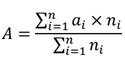
Where:
A: the grade point average
i: the ordinal number of the subject or module
aᵢ: the score of the i-th subject or module
nᵢ: the number of credits of the i-th subject or module
n: the total number of subjects and modules in the semester/academic year/course, or the number of subjects and modules accumulated.
b) The cumulative GPA is the average of the subjects and modules the learner has accumulated from the start of the course up to the point under consideration at the end of each semester.
c) Semester, academic-year, and course GPAs and the cumulative GPA include scores of reserved and exempted subjects and modules; they exclude scores of conditional subjects.
d) If a learner is allowed to defer a subject or module, the study volume of that subject or module is not counted during the deferral.
dd) Semester and academic-year GPAs and the cumulative GPA used for scholarships and commendations after each semester, academic year, or course shall be calculated using the first-attempt end-of-subject/module exam results; those used for adjusting study progress and dismissal are calculated using the attempt with the highest score.
3. For college, intermediate, elementary, and other vocational training programs, the graduation score is the course GPA; the graduation score of the vocational secondary program is prescribed in Article 34 of these Regulations.
4. Physical Education and National Defense–Security Education within the general subjects, and subjects whose final result is assessed by comments, are conditional subjects; their assessment results are not counted in the GPA but are one of the conditions for completing the training program and are recorded in the transcript.
Article 25. Conversion of subject/module scores and semester and cumulative GPAs to letter grades and the 4-point scale
Training institutions may convert scores from the 10-point scale to letter grades and the 4-point scale as follows:
1. Conversion to letter grades
a) Subject and module scores shall be assessed on the 10-point scale, rounded to one decimal place, and converted to letter grades as follows:
Grade A: 8,5 to 10
Grade B: 7,0 to under 8,5
Grade C: 5,5 to under 7,0
Grade D: 5,0 to under 5,5
Grade F: below 5,0
2. The letter grade of each subject or module shall be converted to the 4-point scale as follows:
A = 4
B = 3
C = 2
D = 1
F = 0
If a training institution uses an extended letter-grade scale, the head of the institution shall specify the details.
Article 26. Classification of learning results
1. The classification of learning results for semesters, academic years, and graduation shall base on the semester, academic-year, and graduation GPAs. Learners are classified as follows:
a) On the 10-point scale
Excellent: 9,0 to 10
Very good: 8,0 to under 9,0
Good: 7,0 to under 8,0
Average: 5,0 to under 7,0
Weak: below 5,0 (not applicable to graduation classification).
b) On the 4-point scale
Excellent: 3,50 to 4,00
Very good: 3,00 to under 3,49
Good: 2,50 to under 2,99
Average: 2,00 to under 2,49
Weak: below 2,00 (not applicable to graduation classification).
2. A learner whose learning results reach the very good level or above shall have the classification of that semester or academic year lowered by one level if in one or more of the following cases:
a) Being disciplined by the institution at the level of warning or above during the classified semester or academic year.
b) Having 1 subject or module in the semester or academic year that had to be retaken, for the excellent level; or 2 or more subjects or modules that had to be retaken, for the very good level (excluding conditional subjects and deferred or exempted subjects and modules).
3. A learner whose graduation classification is very good or above shall have it lowered by one level in one of the following cases:
a) The total credits that had to be retaken over the whole course exceed 10% of the total credits prescribed for the whole training program (excluding conditional subjects and deferred or exempted subjects and modules as prescribed).
b) He/She is disciplined by the institution at the level of warning or above during the training program.
Article 27. Graduation recognition
1. A learner is considered for graduation recognition when satisfying the following conditions:
a) Having accumulated the required credits of the training program, being classified at average or above, and achieving a passing graduation internship result.
dd) Not being disciplined at the level of a definite learning suspension at the time of graduation consideration.
c) Having completed all other compulsory content, criteria, and requirements under the applicable regulations of the training program and the school.
2. A learner who meets the graduation conditions shall be recognized as graduated by the head of the training institution and granted a graduation diploma under the applicable Regulations on degrees and certificates of the national education system, from the time the learner fully satisfies the graduation conditions and completes obligations under the law and the institution’s regulations.
3. Learners who do not graduate
a) Shall be issued a certificate of learning results for the subjects and modules accumulated in the training program under Clause 3 of Article 11 of these Regulations.
b) Shall be certified as having studied the subjects and modules in the institution’s training program.
4. The training institution’s regulations shall provide for:
a) Graduation consideration and recognition, and the timing and number of graduation considerations per year.
b) Reservation and recognition of accumulated learning results for learners not yet recognized as graduated.
c) Management and storage of study records and diplomas, and updating of learners’ diploma information on the vocational education database.
Chapter III
ORGANIZATION OF TRAINING AND GRADUATION EXAMINATION FOR THE VOCATIONAL SECONDARY EDUCATION PROGRAM
Article 28. Assessment of learners’ conduct results
1. Grounds for organization of assessing learners’ conduct results
a) Assessment of learners’ conduct results shall base on the required outcomes for core qualities and general competencies, at levels suited to the subjects and modules prescribed in the overall vocational secondary education program, and on the required outcomes for specific competencies prescribed in the subject and module programs of the vocational secondary education program.
b) Based on Point a of this Clause, the teaching teacher comments on and assesses the student’s conduct results, progress, outstanding strengths, and main limitations during their training and study of the subject or module.
c) Based on Point a of this Clause, the homeroom teacher shall monitor the student’s training and study; seek comments and assessments of teaching teachers and feedback from parents, the training institution, partner enterprises, and other relevant organizations and individuals in the student’s education; provide guidance for students on self-assessment; and on that basis provide comments on and assess the student’s conduct results at the levels prescribed in Clause 2 of this Article.
2. Students’ conduct results in each semester and the whole academic year: conduct results are assessed at 1 (one) of 4 (four) levels: Excellent, Good, Pass, Not passed.
a) Conduct results in each semester
Excellent: well meet the required outcomes for qualities prescribed in the vocational secondary education program and demonstrate many outstanding qualities.
Good: meets the required outcomes for qualities and demonstrate many outstanding qualities but does not reach the Excellent level.
Pass: meet the required outcomes for qualities prescribed in the program.
Not passed: not yet meet the required outcomes for qualities prescribed in the program.
b) Conduct results for the whole academic year
Excellent: Semester II is rated Excellent and Semester I is rated Good or above.
Good: Semester II is rated Good and Semester I is rated Pass or above; Semester II is rated Pass and Semester I is rated Excellent; Semester II is rated Excellent and Semester I is rated Pass or Not yet passed.
Pass: Semester II is rated Pass and Semester I is rated Good, Pass, or Not yet passed; Semester II is rated Good and Semester I is rated Not yet passed.
Not passed: all other cases.
Article 29. Assessment of learning results of students in the vocational secondary education program
1. Learning results of vocational-specialty subjects and modules are assessed under Articles 17, 18, 19, 20, 21, 22, 23 and Clause 1 of Article 24 of these Regulations; assessment of education results for the upper secondary knowledge portion shall follow Article 31 of these Regulations, ensuring accurate determination of the degree to which students meet the required outcomes for qualities and competencies, combining regular with periodic assessment and emphasizing the ability to apply knowledge in study and vocational practice.
2. Academic-performance classification for each semester and the whole academic year for students in the vocational secondary education program follow this Article; the classification of learning results in Article 26 does not apply. Students’ academic performance in each semester and the whole year is assessed at 1 of 4 levels: Excellent, Good, Pass, Not passed.
3. The academic performance in each semester shall be determined based on the semester GPA calculated under Article 24 hereof. To be specific:
a) Excellent: semester GPA of 8,0 or above on the 10-point scale; no score-assessed subject or module below 6.5; and no comment-assessed subject at Not passed.
b) Good: semester GPA from 6,5 to under 8,0; no score-assessed subject or module below 5,0; and no comment-assessed subject at Not passed.
c) Pass: semester GPA from 5,0 to below 6,5 and all subjects and modules meeting the requirements under Point c of Clause 1 of Article 24.
d) Not passed: all other cases.
4. Whole-year academic performance shall be determined by combining Semester I and II results under the corresponding principle in Point b of Clause 2 of Article 28 applied to conduct assessment.
5. The academic classification under this Article, combined with the conduct assessment under Article 28 hereof, is the basis for deciding promotion to the next grade under Clause 5 of Article 30 hereof for commendation and discipline, and for other benefits and policies for students.
Article 30. Organization of training of the vocational secondary education program
1. The vocational secondary education program shall be organized under the annual system, comprising three consecutive academic years (first, second, and third). Each academic year has 2 main semesters; the actual study time per year must be at least 35 weeks.
2. The first, second, and third years correspond to grades 10, 11, and 12 of upper secondary school.
3. Based on the upper secondary knowledge and vocational-specialty knowledge, the institution builds the whole-course training plan, determining content, study volume, schedule, and assessment timing for both portions, ensuring cognitive logic so that learners have the upper secondary foundation to absorb vocational knowledge well, and suited to the characteristics of the discipline/profession and students’ abilities.
4. In the third year, the institution arranges suitable learning content, creating conditions for students to develop vocational knowledge and skills and prepare for choices of further study, training, or entering the labor market after completing the program.
5. A learner is recognized as completing the academic year and continues to the next year when whole-year academic performance is Passed or above under Article 29 and whole-year conduct is Passed or above under Article 28; subjects and modules not yet passed shall be retaken and reassessed under Clause 6 of this Article. A learner whose whole-year conduct is Not passed must undertake supplementary training during summer break per the institution’s plan; a learner whose whole-year academic performance is Not passed shall retake and be reassessed in the subjects and modules not yet passed; if still not passing, must repeat that academic year.
6. A learner who has not met the requirements for a subject, module, or learning content shall register to retake and be reassessed under Article 21. Retaking and reassessment shall be organized consistent with the training plan and without affecting the learning content of the next academic year.
7. The institution shall develop the plan for assessment and end-of-subject/module examinations according to the whole-course and annual training plans, consistent with program progress; the scheduling must suit the progress of each subject or module and not affect the program’s content.
8. The organization of classes, assignment of homeroom teachers, and management of students by academic year follow Article 20 of the Charter of Vocational Secondary Schools and Articles 9 and 16 of these Regulations.
Article 31. Content, teaching organization, and recognition of learning results for the upper secondary knowledge
1. The upper secondary knowledge of the vocational secondary education program follows the regulations of the Ministry of Education and Training.
2. The institution shall teach this knowledge according to the training plan, ensuring full implementation of the content, required outcomes, and study volume as prescribed.
3. Teachers in charge of the knowledge of upper secondary program must meet the qualification and teacher professional standards prescribed and the Ministry of Education and Training’s regulations. If the institution lacks teachers for one or more subjects, it may contract visiting lecturers or partner with local upper secondary schools or vocational education – continuing education centers to teach, test, and assess; the partnership document must clearly state each party’s responsibilities for management, teaching assignment, exam setting, invigilation, marking, and quality assurance.
4. Regular assessment, periodic assessment, and end-of-subject examinations follow Articles 17 to 23 and Clause 1 of Article 24 of these Regulations.
5. Recognition and conversion of learning results of knowledge the upper secondary program:
a) Students transferring from upper secondary schools, vocational education – continuing education centers, or other general education institutions may have accumulated subject results recognized if the content and required outcomes are equivalent to the corresponding subject in the vocational secondary education program.
b) Students transferring between institutions offering the vocational secondary education program may have results accumulated at the sending institution recognized under Article 14 on school transfer.
c) The head of the institution decides on assessing, recognizing, and converting learning results case by case by comparing content, required outcomes, and study volume; recognition results are archived in the student’s study records and data.
6. Confirmation of completing the knowledge volume of the upper secondary program:
a) Students who complete the knowledge volume of this portion as prescribed have it recorded in the transcript by the institution; this is the basis for sitting for the vocational secondary graduation examination under Article 33, registering for the upper secondary examination at their wish under Clause 3 of Article 34, and articulating to a higher training level under Clause 1 of Article 37.
b) Students who do not complete this knowledge portion of the upper secondary program shall receive a certificate of learning results for the subjects completed.
Article 32. Plan and organization of graduation examination activities
1. The graduation examination plan must be develop, approved, and publicly announced at the institution no later than 4 weeks before the exam date.
2. Content, time, and form of the graduation examination
a) Examination subjects: Mathematics; Literature; career-oriented subjects; and vocational specialty.
b) Content of Mathematics, Literature, and career-oriented subjects closely follows the subject programs in the program of the student’s group of disciplines/professions.
c) Literature: essay format, 120 minutes.
d) Mathematics: multiple-choice format, 90 minutes.
dd) Career-oriented subjects: 2 subjects, examined by multiple-choice, essay, or a combination, in no more than 90 minutes; content closely follows the career-oriented subject program of the student’s group of professions/disciplines.
e) Vocational specialty: theory and practical exams. The theory exam is written, multiple-choice, or oral; written or multiple-choice no more than 90 minutes; oral no more than 30 minutes of preparation and 20 minutes of answering per candidate. The practical exam is performing an integrated skills task to complete a product, a service, or part of one; exam time is set by the head of the institution suited to learning outcomes and the profession/discipline.
3. Graduation Examination Council
a) The Council shall be established by decision of the head of the institution, with at least 5 members: Chairperson, Vice Chairperson, Secretary, and Members.
b) The Council shall comprehensively organize and direct examination activities and establish supporting boards as professionally required.
4. Issuance of question papers, invigilation, and marking for the graduation examination
a) Questions must suit the program’s content and requirements; each subject must have an official paper and a backup paper of equivalent difficulty.
b) Mathematics, Literature, and career-oriented subject papers are based on the graduation question bank issued by the Ministry of Education and Training; The training institution shall use the examination question bank issued by the Ministry of Education and Training as the basis for developing its official examination papers and backup examination papers. Pending the issuance by the Ministry of Education and Training of graduation examination question banks for Mathematics, Literature, and career-oriented subjects applicable to each group of training disciplines/professions, the training institution shall develop the examination papers itself.
c) Examination papers for occupational theory and occupational practice shall be independently developed by the training institution.
d) The organization of examination invigilation and marking shall be prescribed by the head of the training institution, ensuring seriousness, objectivity and fairness.
Article 33. Eligibility for and number of attempts at the graduation examination
1. A learner shall be eligible to take the graduation examination when all of the following conditions are satisfied:
a) The learner has a final score of at least 5,0 on a 10-point scale for all subjects and modules in the training program and satisfies the prescribed requirements for prerequisite subjects and subjects assessed by comments.
b) The learner is not currently serving any disciplinary sanction of learning suspension or a more severe disciplinary measure and is not subject to criminal prosecution.
c) The learner still has remaining examination attempts as prescribed in clause 2 of this Article and remains within the maximum period permitted for completion of the training program.
If a learner has not yet satisfied the condition prescribed in point a of this clause but remains within the permitted period for completion of the course, the learner may be considered and permitted to complete the subjects or modules that he/she has not yet passed in accordance with Article 21 of these Regulations in order to become eligible to take a subsequent graduation examination. If a learner has completed the disciplinary sanction or if a competent authority has issued an official conclusion that the learner is not subject to expulsion, the learner may be considered and permitted to take the graduation examination.
2. Number of attempts of the graduation examination
a) A learner who fails to meet the requirements for a graduation examination subject may register to retake that subject no more than 02 times within the maximum period permitted for completion of the training program.
b) A retake shall be organized during the next graduation examination or a supplementary examination organized by the training institution. The specific timing shall be prescribed by the head of the training institution to ensure adequate preparation and revision time for learners.
c) If a learner is unable to attend an examination for a legitimate reason or due to force majeure, the absence shall not be treated as an examination attempt and the learner shall be arranged to take the examination at another session. An absence without a legitimate reason shall still be treated as 01 examination attempt.
d) A learner with a disability who holds an unexpired disability certificate as prescribed shall be given priority by the head of the training institution regarding the number of examination attempts and specific examination support arrangements within the maximum period permitted for completion of the training program.
Article 34. Calculation of graduation score
1. The graduation score shall be calculated using the following formula:
ĐTN = (3 × ĐTB + 2 × ĐTNTH + ĐTNLT + ĐTNV + ĐTNT+ ĐTNĐH1 + ĐTNĐH2)/10
Where:
ĐTN: Graduation score
ĐTB: Overall course grade point average calculated in accordance with clause 2 Article 24 of these Regulations
ĐTNTH: Graduation examination score for occupational practice
ĐTNLT: Graduation examination score for occupational theory
ĐTNĐH1: Graduation examination score for the first career-oriented subject
ĐTNĐH2: Graduation examination score for the second career-oriented subject
ĐTNV: Graduation examination score for Literature
ĐTNT: Graduation examination score for Mathematics
2. A learner shall be recognized as having graduated when none of the component scores in the graduation score formula prescribed in clause 1 of this Article is below 5,0. If this requirement is not satisfied, the learner shall not be recognized as having graduated and may retake the examination in accordance with Article 33 of these Regulations.
3. A learner enrolled in a vocational secondary education program who wishes to do so and satisfies the prescribed conditions may register to take subjects in the upper secondary graduation examination. The examination results may be used to apply for admission to training programs at a higher level in accordance with the laws on admission and the regulations of the educational institution conducting the admission.
Chapter IV
ELEMENTARY-LEVEL TRAINING AND OTHER VOCATIONAL TRAINING PROGRAMS
Article 35. Requirements for elementary-level training programs and other vocational training programs
1. Requirements for elementary-level training programs
a) The program contents shall ensure that learners acquire the capacity to perform and deal with basic and predictable tasks of a profession; the ability to apply techniques and technologies to work; place emphasis on developing practical occupational skills and promoting learners’ activeness and self-discipline; and specify the knowledge and skill standards to be achieved by learners upon graduation.
b) Training programs shall ensure scientific, modern, systematic, practical and flexible characteristics in order to respond to changes in the labor market; provide for a reasonable allocation of time among knowledge and occupational skill components; and ensure articulation to intermediate-level and college-level training programs and vocational secondary education programs.
c) A training program shall specify its scope and content structure, training methods and forms, and methods of assessing learning outcomes for each subject and module.
2. Requirements for other vocational training programs
a) The contents of other vocational training programs shall be practical and enable learners to acquire the capacity to perform and deal with one or several simple tasks of a profession.
b) Training programs shall ensure scientific, modern, systematic, practical and flexible characteristics in order to respond to changes in the labor market and provide for a reasonable allocation of time among knowledge and occupational skill components.
c) A training program shall specify its scope and content structure, training methods and forms, and methods of assessing learning outcomes of the program.
3. Contents and structure of elementary-level training programs and other vocational training programs
a) Name of the training profession and training level.
b) Admission applicants.
c) Training objectives.
d) Knowledge and skill standards to be achieved by learners upon graduation, including practical and theoretical knowledge; cognitive skills, occupational practice skills, and communication and behavioral skills; and the level of autonomy and personal responsibility in applying knowledge and skills to perform professional tasks of the profession.
dd) Minimum learning volume, including the minimum actual learning time of the training program, theoretical learning time, practical training time and internship time, of which practical training and internship shall account for at least 70% of the actual learning time of the training program. For groups of disciplines/professions in information technology, accounting and auditing, finance, banking and insurance, services, office administration, and other disciplines/professions of a similar nature, practical training and internship shall account for at least 50% of the actual learning time of the training program, in conformity with the learning outcomes and characteristics of each training discipline/profession.
e) Training process and graduation requirements.
g) Assessment methods and grading scales.
h) Conditions and standards applicable to teachers, facilities and equipment for each subject.
i) Guidelines for use of the training program.
4. Organization of training, examination, assessment and recognition of training outcomes
The training institution shall organize training, examinations and assessment of learning outcomes, consider and recognize completion of programs, and issue certificates and certifications of learning outcomes for elementary-level training programs and other vocational training programs in accordance with the approved training programs and the law; shall specify the processes, contents and methods of examination and assessment; conditions for program completion; procedures for consideration and recognition of training outcomes; and issuance of certificates and certifications of learning outcomes, ensuring conformity with the objectives, contents, duration and learning outcomes of each program and ensuring openness, transparency and objectivity.
Article 36. Development, appraisal, selection, and issuance of elementary-level training programs and other vocational training programs
1. Process for development of a training program
a) Step 1: Identify learners’ vocational training needs and employers’ demand for elementary-level workers and workers possessing the knowledge and skills required to perform one or several simple tasks of a profession; on that basis, identify the training profession and training level for the development or selection of the training program.
b) Step 2: Design the training program, including determining the training objectives and learning outcomes; determining the list and duration of subjects and modules; and determining the sequence and relationships among subjects and modules in the training program.
c) Step 3: Develop the training program according to the identified contents and structure, elaborating each subject and module; conditions for implementation of each subject and module; and methods and contents of assessment.
d) Step 4: Finalize the draft training program.
dd) Step 5: Appraise and issue the training program.
e) Step 6: Assess and update the contents of the training program.
2. Organization of training program development
a) The head of the training institution shall issue a decision establishing a Training Program Development Committee.
b) The Committee shall consist of 5 to 7 members, depending on the workload involved in the training program to be developed, including educators, vocational education administrators, and scientific and technical personnel of enterprises. At least one-third of the members shall be educators currently teaching disciplines/professions within the corresponding group of disciplines/professions. The Committee shall have a Head, Deputy Head, Secretary and Members.
A member of the Committee shall: Possess at least an intermediate diploma; Have at least 3 years of experience in directly teaching or doing production and business activities in the field of the profession for which the program is to be developed.
The responsibilities and powers of the Committee and its members shall be prescribed by the head of the training institution.
3. Appraisal and issuance of training programs
a) The head of the training institution shall decide the establishment of the Training Program Appraisal Council.
The Training Program Appraisal Council shall consist of 5 to 7 members, depending on the workload involved in the training program to be appraised, including educators, vocational education administrators, and scientific and technical personnel of enterprises. The Council shall include at least one member representing an employer that employs graduates and at least one-third of its total members shall be educators currently teaching at elementary, intermediate or college level in the corresponding profession. The Council shall consist of a Chairperson, a Deputy Chairperson, a Secretary and Members.
A member of the Training Program Appraisal Council shall: Possess at least an intermediate diploma; Have at least 5 years of experience in directly teaching or doing production and business activities in the field of the profession to be appraised.
The tasks and powers of the Training Program Appraisal Council shall be prescribed by the head of the training institution.
b) Working principles of the Training Program Appraisal Council
The Training Program Appraisal Council shall operate under the direction of its Chairperson.
A meeting of the Training Program Appraisal Council shall be valid only when at least two-thirds of its members are present, including the Chairperson, Secretary and reviewers. Absent members shall submit their written comments and assessment of the program to the Council before the meeting date.
The Training Program Appraisal Council shall conduct open discussions. Each member shall provide analysis and assessment of the training program. Each matter shall be voted on and conclusions shall be adopted by majority vote, with the approval of at least two-thirds of the Council members.
A meeting of the Training Program Appraisal Council shall be recorded in detailed minutes, including the opinions of each member and voting results for each conclusion of the Council. The minutes shall be approved and signed by all attending Council members.
c) The Training Program Appraisal Council shall appraise the training program based on applicable regulations on training programs; requirements of the profession under the Vietnam Qualifications Framework; national occupational skill standards; and the determined objectives and learning outcomes.
d) The Training Program Appraisal Council shall clearly conclude one of the following: the training program is approved without requiring any amendment or supplementation; the training program is approved subject to amendment or supplementation, with the specific contents requiring amendment or supplementation clearly stated; or the training program is not approved, with reasons for non-approval clearly stated.
dd) The Chairperson of the Training Program Appraisal Council shall report the appraisal results, together with the minutes of the Council meeting and appraisal dossier, to the head of the training institution for consideration and issuance.
e) Based on the appraisal results of the Training Program Appraisal Council, the head of the training institution shall autonomously and on their own accountability approve and issue the training program for application at the institution.
4. Selection of training programs
The head of the training institution may select a training program of another establishment conducting vocational education activities, if the program is appraised in accordance with clause 3 of this Article before being approved for application at the institution.
5. Assessment and updating of training programs
a) At least once every 3 years, the head of the training institution shall organize an evaluation of the training program with respect to its responsiveness to the identified learning outcomes and employers’ requirements; changes in technology and production techniques relating to the training profession; changes in State regulations and the training institution’s regulations concerning training programs; consistency and connection among program contents, training methods, examination and assessment; and the expected impact of amendments and updates to the training program.
b) Draft amendments and updates to the training program shall be prepared and appraised in accordance with clause 3 of this Article.
6. The training institution shall publicly disclose the training program to learners at the time of admission by posting it at its headquarters or training locations, including it in admission announcements, publishing it on the institution’s website, or disclosing it through mass media. The information to be disclosed includes:
a) Information on the training program: name of the training program; admission applicants; admission period; training duration; training location; knowledge to be provided to learners; skills to be practiced; elementary certificate or training certificate; tuition fees payable; and support policies, if any.
b) Information on learning outcomes: the knowledge and skills learners are required to achieve; and occupational tasks or job positions that learners will be capable of performing after completion of the training program.
7. For elementary-level training programs, development, appraisal, selection and issuance shall comply with clauses 1, 2, 3 and 4 of this Article. For other vocational training programs, depending on the nature and level of the training program, the head of the training institution shall decide whether to apply the full or a simplified process and requirements for development, appraisal, selection and issuance prescribed in clauses 1, 2, 3 and 4 of this Article.
Chapter V
RECOGNITION AND CONVERSION OF LEARNING OUTCOMES
Article 37. Recognition of learning outcomes and exemption from learning contents
1. Recognition and conversion of learning outcomes accumulated from a training program shall be carried out in accordance with regulations of the Ministry of Education and Training on articulation among vocational secondary education, intermediate-level, college-level and higher education.
2. Learners who have accumulated occupational competence through occupational skill certificates, learning, employment, occupational practice or other appropriate forms may have their learning outcomes recognized for corresponding subjects or modules where they satisfy the requirements regarding the contents, objectives and learning outcomes of the training program.
a) Recognition of learning outcomes shall be carried out through assessment of learners’ actual occupational competence. The training institution shall establish an Occupational Competence Assessment Council to conduct the assessment, ensuring objectivity, fairness and conformity with the standardized learning outcomes of the subject or module under consideration for recognition. The Council shall comprise representatives of the training institution and enterprises. Members who are enterprise representatives must have experience in directly employing, managing or assessing workers in the field, discipline or profession being assessed.
b) The training institution shall develop, manage and update banks of questions, tests, practical tests and assessment instruments appropriate to the competency requirements of subjects and modules. Assessments may be organized at the training institution, an enterprise or another appropriate location that has adequate facilities, equipment and safety conditions for assessing learners’ occupational competence.
c) Based on the assessment results of the Council, the head of the training institution shall decide whether to recognize learners’ learning outcomes. Learners shall be exempted from learning, tests and examinations for subjects, modules or learning contents that have been recognized.
3. Learners shall be exempted from attendance and the final examination of the Physical Education subject where they are injured soldiers, sick soldiers, persons with disabilities resulting from injury, or persons with chronic illnesses for which medical instructions indicate limitations on motor functions; or if, during their studies, they win first, second or third prize or a medal in sporting competitions at provincial, ministerial, sectoral level or higher.
4. A learner holding a disability certificate in accordance with the Law on Persons with Disabilities may be exempted from or granted a reduction in learning contents that the learner is unable to meet due to physical conditions or personal capabilities in consideration and as decided by the head of the training institution, on the basis of ensuring equal access to education and training quality.
5. The training institution shall issue regulations on recognition and conversion of learning outcomes and assessment and recognition of learners’ accumulated occupational competence. Such regulations shall specify principles, criteria, conditions, methods, contents and implementation procedures; development and use of banks of questions, tests, practical tests and assessment instruments; organization of assessments at training institutions, enterprises or other appropriate locations; composition, tasks and working principles of the Occupational Competence Assessment Council; documentation and procedures; powers and responsibilities of relevant units and individuals; handling of petitions and complaints; revocation of recognition results; and accountability during implementation.
6. Recognition of learning outcomes, recognition of occupational competence and exemption from learning contents shall ensure openness, transparency, objectivity, proper authority and conformity with learners’ actual competence; shall not lower quality requirements or the learning outcomes of training programs; and shall protect the legitimate rights and interests of learners.
7. The training institution shall fully manage and store records/dossiers concerning recognition and conversion of learning outcomes, occupational competence assessment records, assessment results, decisions on recognition of learning outcomes, and relevant documents and evidence in accordance with the law on archives. Records shall be digitized and data updated in accordance with law, ensuring completeness, accuracy, retrievability, authenticity and information-sharing capability for management, inspection and examination purposes. Management, storage and use of data shall comply with laws on personal data protection, archives and other relevant laws.
Chapter VI
ONLINE TEACHING, DISTANCE TRAINING, BLENDED TRAINING, ENTERPRISE-BASED TRAINING AND TRAINING IN SPECIAL DISCIPLINES AND PROFESSIONS
Article 38. Application of online teaching in training organization
1. Principles for organization of online teaching
a) Online teaching is a method of organizing teaching applied within in-person training or blended training as prescribed in clause 3 Article 20 of the Law on Vocational Education No. 124/2025/QH15 and clause 5 Article 2 of these Regulations, and is not an independent training method. Its application shall ensure that the objectives, learning outcomes, program contents and training quality are equivalent to those of in-person teaching and fully satisfy the requirements of the training program at each level. Digital technologies and artificial intelligence shall serve only as supporting tools and shall not replace the professional responsibilities of the training institution, educators and learners.
b) Online teaching may be applied to theoretical contents, guided self-study, discussion, review, regular assessment and other appropriate contents according to the characteristics of each subject or module.
c) Occupational practice, internships, experiments, and operations involving equipment or machinery shall be organized in person at the training institution, enterprise or another lawful training location, except for simulated practice and digital occupational practice specified in point c clause 5 of this Article.
d) Based on the characteristics of the training program, quality requirements and practical conditions for online teaching, the head of the training institution shall determine the specific method and proportion of online teaching for each subject, module and training program, provided that the tiered limits prescribed in clause 5 of this Article are not exceeded and the required learning outcomes are ensured as prescribed.
2. Online teaching shall not be organized for practical training, internships, experiments or occupational operations, including simulated practice and digital occupational practice, in the following groups of disciplines/professions requiring stringent occupational safety conditions, advanced skills or special direct practice:
a) Disciplines/professions in health.
b) Disciplines/professions in arts and sports requiring advanced skills.
c) Disciplines/professions requiring training in the operation of equipment, machinery, chemicals, electricity, mechanics, construction or means of transport, or professions included in the list of occupations subject to strict occupational safety requirements prescribed by law.
d) Disciplines/professions relating to national defense and security and disciplines/professions involving state secrets.
dd) Disciplines/professions, list of subjects and modules for which online training is not allowed as prescribed by relevant regulatory authorities.
3. A training institution organizing online teaching shall satisfy the following conditions:
a) It shall have technical infrastructure, a learning management system (LMS) and stable connectivity meeting training operation, technical and technological requirements. The system shall provide, at a minimum, functions for learner identity authentication; management and tracking of the entire learning process; support for examination and assessment and prevention of cheating; data traceability, verification and accountability; information security, data confidentiality and personal data protection; and connectivity and interoperability with education systems and databases as prescribed.
b) It shall have digital learning resources, electronic lectures, and banks of examination and assessment questions that have been appraised in terms of content and quality and are appropriate for online teaching.
c) Educators and learning-support staff shall receive training and refresher training in digital competence, online teaching methods, and skills for operating and using training systems.
d) It shall issue regulations on organization of online teaching, clearly specifying the responsibilities of management units, educators, learners and relevant units for organization, implementation and supervision of the training process.
dd) Information on training programs, plans, forms of teaching organization, examination and assessment methods, and quality assurance conditions shall be publicly disclosed on the training institution’s website before admission and organization of training.
4. Examination and assessment in online teaching
a) Examination and assessment of learning outcomes in online teaching shall be specifically prescribed in the training regulations of the training institution and shall ensure objectivity, honesty and fairness and accurately reflect learners’ actual competence.
b) Regular and periodic assessments may be conducted online. For final examinations of subjects or modules, the training institution may organize online examinations where it fully satisfies requirements regarding technical infrastructure, proctoring arrangements, learner identification and strict control of examination procedures to prevent cheating.
c) Assessment of practical skills, experiments, internships and occupational operations shall be conducted in person at the training institution or another lawful training location in order to ensure achievement of the learning outcomes required by the training program. The use of artificial intelligence in examination and assessment shall be supportive and controlled, shall not replace the role of educators, and shall comply with regulations on academic integrity.
d) Learning outcomes achieved through online teaching shall be recognized as equivalent to those achieved through in-person teaching.
5. The head of the training institution shall determine the specific proportion of online teaching for each subject or module based on ensuring the learning outcomes, without exceeding the following maximum limits calculated according to the duration of the subject or module:
a) No more than 30% for practical subjects, practical modules and integrated modules.
b) No more than 70% for specialized theoretical subjects and general subjects, except National Defense and Security Education and Physical Education, which shall be organized in accordance with separate regulations of relevant regulatory authorities.
c) No more than 50% for practical subjects and modules in disciplines/professions in information technology, accounting and auditing, and finance, banking and insurance. Simulated practice and digital occupational practice may be organized online where suitable to the characteristics of the subject or module and where the required learning outcomes are ensured.
Article 39. Distance training
1. Principles for organization of training
a) Distance training shall be organized in accordance with clause 4 Article 2 of these Regulations and shall ensure the prescribed objectives, learning outcomes, program contents and training quality. Digital technologies and artificial intelligence shall serve only as supporting tools and shall not replace the professional responsibilities of the training institution, educators and learners.
b) Distance training shall not be applied to the entire contents of training programs in the groups of disciplines/professions specified in clause 2 Article 38 of these Regulations.
c) Occupational practice, experiments, internships, operation of equipment and machinery, and assessment of core skills shall be organized in person at the training institution, enterprise or another lawful training location, except for simulated practice and digital occupational practice prescribed in point c clause 5 Article 38 of these Regulations.
2. Training materials
a) Distance-training materials shall include core and supplementary learning materials, which shall be digitized and integrated into the training institution’s learning management system (LMS). Core learning materials are essential multimedia contents, including electronic learning materials, digital learning materials, textbooks, video lectures, interactive lectures, simulated practice modules, question banks, practical exercises, case studies and study guides, which provide sufficient knowledge and skills under the training program for learners to conduct self-study and independent research. Supplementary learning materials are detailed contents supporting learners in gaining a deeper and more comprehensive understanding of core learning materials, thereby consolidating, expanding and developing learners’ capacity to apply knowledge and skills.
b) Electronic learning materials shall be designed to enable self-study and independent research. The head of the training institution shall prescribe technical standards, including duration, format and structure, appropriate to the characteristics of each training program and ensuring effective delivery of contents.
c) Distance-training materials published online shall comply with laws on the management, provision and use of network services, intellectual property rights and personal data protection. All learning materials shall be appraised by the training institution in terms of contents, pedagogical quality and transparency of origin, and shall be regularly updated in line with practical requirements of the relevant discipline/profession. The use of digital technologies and artificial intelligence in the development, updating and use of learning materials shall ensure accuracy, transparency and quality control.
3. Conditions for organization and methods of interaction
a) The training institution shall meet the requirements regarding technical infrastructure and learning management systems (LMS) prescribed in point a clause 3 Article 38 of these Regulations.
b) Distance training shall be conducted through an LMS, E-Learning system, M-Learning system or other smart training technology platforms that enable learners to access and study learning materials anytime and anywhere, enable learners’ active management of their learning pathways, and ensure regular connection and support between educators and learners.
c) The training institution shall provide for official interaction channels, including forums, chat, online meetings and webinars, through which educators provide support, respond to questions and engage in discussions with learners. Interaction shall be a compulsory component of the training process. The head of the training institution shall issue regulations on methods and frequency of interaction and the responsibilities of relevant parties, ensuring a civilized, safe and lawful online learning environment.
d) The training institution shall maintain and update information in the learning environment and ensure that such information is accurate, accessible and convenient for learners.
4. Assessment of training outcomes
a) The training institution shall determine the form of tests and final examinations for subjects and modules, whether in person or online. If examinations are conducted online, the institution shall fully satisfy requirements regarding technical infrastructure, proctoring arrangements, learner identification and strict control of examination procedures to prevent cheating. The use of artificial intelligence in examination and assessment shall be supportive and controlled, shall not replace the role of educators, and shall comply with regulations on academic integrity. Examination papers and tests must be developed, appraised and approved in accordance with the professional procedures of the training institution.
b) Assessment of practical skills, experiments, internships and occupational operations shall be conducted in person at the training institution or another lawful training location in order to ensure achievement of the learning outcomes required by the training program.
Article 40. Blended training
1. Principles for organization of training
a) Blended training combining in-person and distance training shall be deliberately designed to ensure full achievement of the objectives and learning outcomes of the training program and to ensure the prescribed quality, learning volume, occupational skills and training duration applicable to each training level and program. Digital technologies and artificial intelligence shall serve only as supporting tools and shall not replace the role of educators.
b) Theoretical contents, discussions, guided self-study and regular assessment may be organized through distance training. Practical contents, experiments, internships, occupational skill assessment and contents requiring the use of specialized equipment, machinery or materials shall be organized in person at the training institution, enterprise or another lawful training location, except for simulated practice and digital occupational practice prescribed in point c clause 5 Article 38 of these Regulations.
c) The proportion of distance-training time for each subject or module shall be determined by the head of the training institution based on the characteristics of the training program and quality assurance conditions. Practical contents, experiments and internships requiring direct operations shall be organized in person.
d) Blended training shall protect learners’ rights and interests and provide flexibility in terms of time and location while maintaining requirements for regular interaction, support, examination and supervision throughout the learning process.
2. Programs, learning materials and training environment
a) A blended training program shall be the training program for the relevant discipline/profession applied by the training institution to formal training; shall clearly identify the structure and list of contents to be delivered in person and through distance training, examination and assessment methods, and learning outcome requirements for each subject and module.
b) Learning materials used for blended training shall include materials for in-person teaching and digital learning resources, including electronic lectures, interactive lectures and multimedia learning materials. Digital learning resources shall ensure scientific and pedagogical quality and shall be synchronously integrated into the learning management system in order to optimize learners’ self-study and independent research capacity.
c) The training institution shall establish, maintain and operate an LMS or learning content management system (LCMS) meeting the requirements prescribed in point a clause 3 Article 38 of these Regulations and shall store and manage data on learning pathways, participation duration, assessment results and the history of interactions between educators and learners.
d) Technical infrastructure, management systems and digital learning resources operating in the online environment shall satisfy technical standards for information security and personal data confidentiality and strictly comply with laws on intellectual property, cybersecurity and management of information in cyberspace.
3. Teaching organization and training management
a) The training institution shall proactively develop training plans and blended teaching schedules combining in-person and distance training for each discipline/profession and training level. Such plans shall specify the structure of time allocation, learning schedules, teaching organization methods, including synchronous and asynchronous methods, examination and assessment procedures, and systems of measures supporting learners in the digital environment.
b) Educators participating in blended teaching shall fully meet professional competence and pedagogical standards prescribed by law and shall also possess digital competence, skills in designing digital learning materials, and the ability to proficiently use and operate the functions of the LMS for effective organization and management of classes.
c) The training institution shall apply digital technologies to authenticate learner information, track, supervise and automatically record learners’ learning progress, and ensure safe and complete storage of learning data, assessment results and relevant electronic evidence for quality management and accreditation.
d) Learners participating in blended training shall fully complete learning tasks according to the prescribed pathway; strictly comply with LMS operating regulations and codes of conduct in cyberspace; and uphold academic integrity throughout learning, testing and examinations.
dd) The head of the training institution shall issue detailed regulations on the processes for organization, management and quality control of blended training in accordance with the institution’s technological infrastructure capacity, practical conditions and applicable laws.
4. Examination, assessment and recognition of learning outcomes
a) Examination and assessment of learning outcomes in blended training shall be conducted in accordance with regulations of the training program and the training institution, ensuring a close and scientifically sound combination of continuous assessment conducted through the LMS and final examinations for subjects and modules.
b) The training institution shall determine the forms of tests and final examinations for subjects and modules based on technology solutions ensuring objectivity, fairness and transparency, accurate learner identity verification and accurate assessment of learning outcomes. The use of artificial intelligence in examination and assessment shall be supportive and controlled, shall not replace the role of educators, and shall comply with regulations on academic integrity.
c) For assessment of occupational practical skills, occupational operational competence, occupational internships or subjects and modules requiring direct operation of special equipment and machinery, tests, examinations and assessment shall be conducted in person.
d) Learners who complete a blended training program shall be considered for recognition of graduation and issuance of degrees/diplomas in accordance with applicable regulations.
dd) Records, learning data, test and examination results, and records of issuance of degrees/diplomas and certificates shall be digitized and securely stored in the training institution’s data system in accordance with applicable laws.
Article 41. Enterprise-based training
1. Principles for organization of enterprise-based training
a) Enterprise-based training shall ensure full achievement of the objectives, learning outcomes, knowledge volume and occupational skills prescribed in the training program for each level, discipline/profession.
b) Contents of enterprise-based training shall be closely linked with the relevant list of training disciplines/professions, job positions, occupational skill standards and actual technological conditions of the enterprise cooperating in training.
c) Enterprise-based training shall strictly comply with laws on occupational safety and health, environmental protection, fire and explosion safety, and conditions protecting learners’ health and legitimate rights and interests throughout learning, practical training and internships.
d) Learners participating in enterprise-based training shall receive guidance and supervision and have their learning outcomes assessed fairly and objectively, and shall be fully guaranteed their legitimate rights and interests in accordance with law and the training association contract between the training institution and the enterprise.
dd) For certain disciplines/professions performed in digital working environments, time spent by learners participating in actual enterprise projects that are assigned and assessed remotely, including virtual internships, may be counted toward the duration of enterprise-based training.
e) For special disciplines/professions in culture, arts, physical education and sports, enterprise-based training includes training, practical training and internships at enterprises, public service providers, professional organizations, performance venues, competition venues, creative facilities, production establishments, training facilities, museums, libraries, theaters, art troupes, film studios, studios, clubs, federations, associations or other lawful occupational practice locations consistent with the learning outcomes of the training program.
2. Conditions for organization of enterprise-based training
a) An enterprise participating in training cooperation shall have juridical personality and production or business activities appropriate to the relevant training discipline/profession; possess facilities, equipment, technological processes and a working environment meeting the practical competency requirements of the training program; and ensure learner safety.
b) The enterprise shall have vocational instructors meeting standards prescribed by the Minister of Education and Training and appropriate to the assigned training contents.
c) A lawful training association contract or cooperation agreement shall be entered into between the training institution and the enterprise, clearly specifying the responsibilities and rights of the parties regarding training costs, organization of teaching, learner management, examination and assessment of learning outcomes, support policies and safety insurance for learners.
d) There shall be a detailed training plan, teaching schedule and time-allocation structure for each discipline/profession, subject and module organized at the enterprise, appraised and approved by the training institution before implementation.
3. Contents and duration of enterprise-based training
a) Enterprise-based training shall focus on advanced occupational practice skills, actual production experience, digital skills, technological adaptability, industrial working style and corporate culture consistent with the learning outcomes of the training program.
b) The duration of enterprise-based training shall be determined by the head of the training institution based on the characteristics of the training program and skill requirements of each discipline/profession and training level and in accordance with applicable regulations.
c) Enterprise-based training may be flexibly organized in concentrated phases, under a dual training model, or on an alternating basis consistent with the training institution’s teaching schedule and the enterprise’s production plan.
4. Responsibilities of the training institution
a) Take the lead in developing plans, contents and methods for organization of enterprise-based training consistent with the learning outcomes of the training program for each training level, including vocational secondary education programs.
b) Establish connection mechanisms and apply digital tools to cooperate with enterprises in managing, guiding, examining and supervising learners’ progress and controlling the quality of learners’ learning.
c) Assign competent educators or professional staff to cooperate with the enterprise, closely monitor learners’ learning process and assist in resolving professional issues arising during enterprise-based training.
d) Take the lead and cooperate with the enterprise in promptly addressing issues concerning learners’ rights, obligations and safety throughout the training period.
5. Responsibilities of enterprises participating in training
a) Arrange workspaces and production areas, provide technological equipment, and assign personnel with adequate competence and practical experience to guide learners in accordance with the agreed cooperation plan.
b) Enable learners to have direct access to technological processes and participate in practical training and production internships appropriate to the training program.
c) Closely cooperate with the training institution in managing, commenting on and assessing learners’ learning and training outcomes through electronic logbook systems or shared digital platforms.
d) Ensure occupational safety and health conditions; provide personal protective equipment; and pay salaries or wages to learners who participate in labor producing products at rates agreed by the parties, particularly students enrolled in vocational secondary education programs, in accordance with law.
6. Examination, assessment and recognition of learning outcomes
a) Examination and assessment of learning outcomes at enterprises shall be conducted seriously in accordance with the training program and the regulations of the training institution and shall ensure a close and scientifically sound combination of continuous assessment and final assessment of subjects and modules.
b) Assessment results shall be determined through direct cooperation between educators of the training institution and vocational instructors of the enterprise. Assessment criteria and processes shall be clearly quantified using competency checklists and publicly disclosed before implementation; encourage the use of digital competency portfolios to provide a dynamic and substantive record of learners’ skill development.
c) All data regarding the results, assessment records and electronic evidence relating to enterprise-based training shall be digitized and securely stored by the training institution, ensuring data integrity and compliance with applicable laws.
Article 42. Training in special disciplines/professions in arts and sports and in arduous, hazardous and dangerous disciplines/professions
1. Scope and regulated entities
a) Training in special disciplines/professions means organization of training for disciplines/professions subject to specific requirements regarding admission conditions, training programs, training duration, methods of training organization, practical training, internships, examination, assessment and quality assurance conditions in accordance with specialized laws and regulations of competent authorities.
b) Special training programs shall be organized to identify, nuture and develop talents and advanced professional competence and to respond to labor-market requirements, professional occupational activities and international integration.
2. Principles for organization of training in special disciplines/professions
a) Training in special disciplines/professions must ensure the objectives, learning outcomes, requirements regarding knowledge and occupational skills, and levels of autonomy and responsibility prescribed in the Vietnam Qualifications Framework, training program standards applicable to special disciplines/professions, and relevant specialized regulations (if any)
b) Training programs shall be designed according to flexible accumulation pathways suitable for identifying, nurturing and developing talent. Training duration of these programs may be longer than that of conventional training programs at the same training level.
c) Training contents shall ensure a balance among theoretical knowledge, occupational practice, occupational internships and training in special professional skills. For programs requiring the development of performance, competition, creativity or occupational practice competence, practical subjects and modules, internships and specialized talent subjects shall play a principal role. The specific proportion shall be determined in the training program standards and training programs for each discipline/profession.
d) Training organization shall be linked with performances, competitions, creative activities, occupational practice or other actual professional activities appropriate to the characteristics of each training discipline/profession.
dd) Learners participating in special training programs shall meet requirements regarding talent, physical fitness, skills or other special conditions specified in the training program and admission regulations.
3. Training programs and training duration for special disciplines/professions
a) Training programs for special disciplines/professions shall be developed based on training program standards and shall conform to qualification-level descriptions in the Vietnam Qualifications Framework, standards applicable to special training programs, and professional requirements of each training discipline and field.
b) Training duration shall be determined according to the characteristics of each discipline/profession. Training may be organized continuously, accumulated in stages, or combine general education with specialized talent training.
c) For advanced disciplines/professions in arts, high-performance sports, and disciplines/professions requiring special talent development, training institutions may organize admission from lower secondary level or an equivalent level in accordance with law.
d) Learners at advanced arts training institutions may simultaneously study general education programs and vocational training programs in accordance with the training plan of the training institution.
dd) Learners who complete the training program and the prescribed volume of general education knowledge shall be awarded degrees/diplomas or certificates or have an equivalent qualification recognized in accordance with law.
4. Examination, assessment and recognition of learning outcomes
a) Examination, assessment and consideration for graduation recognition in special disciplines/professions shall be conducted by methods appropriate to the occupational characteristics, including practical examinations, performances, competitions, demonstrations, product defenses, assignments, projects, occupational portfolios or assessment by a professional council. Assessment criteria shall be disclosed in advance, supported by retained evidence, and capable of assessing the learning outcomes of the training program.
b) Examination and assessment in special discipline/profession training shall be appropriate to the characteristics of each training discipline/profession and shall combine assessment of professional knowledge, occupational skills, practical competence, performance, competition or occupational creativity.
c) A training institution may recognize learners’ prior learning outcomes based on competition achievements, professional awards, occupational experience, performance or creative results, or other lawful occupational evidence, for consideration of exemption, reduction or credit transfer in accordance with the regulations of the training institution.
d) Recognition of prior learning outcomes shall ensure objectivity, transparency, fairness and verifiability. The training institution shall be responsible for recognition of learning outcomes.
5. Organization and management of training in special disciplines/professions
a) The training institution shall develop and issue detailed regulations on admission, training organization, examination, assessment, recognition of learning outcomes and issuance of degrees/diplomas and certificates for special disciplines/professions in accordance with law.
b) Training organization shall ensure appropriate facilities, training equipment, locations for practice, training, performances and competitions, and a contingent of educators, coaches, artists and experts with appropriate professional qualifications.
c) The training institution shall implement quality assurance, self-assessment and accreditation of training programs in accordance with law.
d) Relevant ministries and competent state regulatory authorities shall provide guidance and conduct inspection, examination and supervision of training in special disciplines/professions in accordance with law.
6. For training programs in arts, physical education and sports that are not in groups of special disciplines/professions, training shall be provided in accordance with general laws on vocational education and relevant laws.
7. Training in arduous, hazardous and dangerous disciplines/professions
a) Training in arduous, hazardous and dangerous disciplines/professions included in the list prescribed by the Minister of Education and Training shall ensure occupational safety and health, and comply with laws on labor, occupational safety and health, and relevant laws.
b) The training institution shall specify the contents and measures for ensuring learner safety in its training plan, including: jobs, modules, subjects, practical contents involving arduous, hazardous or dangerous factors; conditions regarding facilities, training equipment and personal protective equipment; occupational safety and health measures; conditions for practical training and internship at enterprises, and production, business and service establishments.
c) Before learners participate in practical training or internship involving arduous, hazardous or dangerous work, the training institution shall provide information and guidelines, and organize appropriate occupational safety and health training corresponding to the training contents and the work to be performed by learners. Training involving learners under 18 years of age shall comply with labor laws applicable to minors.
d) Practical training and internship at enterprises, and production, business and service establishments shall comply with the prescribed training contents, practical and internship conditions, occupational safety and health, and legitimate rights and interests of learners in accordance with the laws and agreements between the training institution and the enterprise.
dd) A training institution shall not assign learners under 18 years of age to perform work at workplaces included in the list of jobs and workplaces prohibited for minors as prescribed in labor laws.
Chapter VII
DOSSIERS, DATA, DIGITAL TRANSFORMATION AND REPORTING REGULATIONS
Article 43. Training management dossiers and data of training institutions
1. Training management dossiers and data of training institutions shall primarily be established and operated on the institution’s centralized training management information system. Where information technology infrastructure is not yet adequate, paper dossiers may be used, if an appropriate digital transformation plan and roadmap are implemented in accordance with the laws.
2. The core digital training management data system shall include the following principal information modules:
a) Training program data: training objectives, learning outcomes, content structure, list of subjects, modules, learning volume, methods of training and assessment of learning outcomes.
b) Training plan and progress data: whole-course training plans, academic-year plans, semester plans; progress of program implementation; schedules for teaching, learning and other training activities.
c) Timetable and teaching data: class schedules, teaching assignments of educators, allocation of classes, classrooms, practical workshops, equipment and other conditions required for training.
d) Learner and class data: personal information, admission history, class placement, commendations, disciplinary actions, applicable policies and changes occurring during the learner’s study.
dd) Learning process, assessment and learning outcome data: attendance monitoring, teaching contents, regular assessment results, periodic assessment results, final subject and module examination scores, cumulative grade point average, and conduct assessment results.
e) Enterprise-based cooperative training data: plans, contents, logs and progress of practical training and production internships at enterprises; and results of joint assessment by enterprises and training institutions.
g) Degree/diploma and certificate data: graduation requirements, decisions on recognition of graduation, decisions on issuance of degrees/diplomas and certificates, serial numbers, numbers recorded in the master register of degrees/diplomas and certificates, learner identification numbers, personal identification numbers of recipients, and information required for public verification of degrees/diplomas and certificates.
h) Other dossiers and data arising in the course of training management.
3. Training management dossiers and data shall be retained for periods prescribed by the Ministry of Education and Training regarding retention periods for education and training dossiers and documents, and in accordance with the laws on archives. The retention period for each type of dossier or document shall not be shorter than the prescribed minimum retention period.
Article 44. Teaching dossiers and data of educators
1. Teaching dossiers and data of educators shall be maintained in digital form or in paper form. Training institutions shall establish a roadmap for digitization and integration, and aim for complete digital management and use synchronized with the institution’s training management information system. Electronic dossiers may replace paper dossiers according to the roadmap appropriate to the conditions of the training institution and shall have legal validity equivalent to paper dossiers where they satisfy the conditions prescribed by the laws.
2. Teaching dossiers and data shall include at least the following groups of information:
a) Teaching plan: implementation progress, time allocation and detailed contents of subjects and modules by semester or academic year.
b) Lesson plans or teaching plans: design of teaching and learning activities for each lesson or topic in theoretical, practical, integrated or other appropriate forms, integrating instruments for examination and assessment of learners.
c) Teaching logbook or data for monitoring teaching and learner assessment: records of teaching time, contents delivered, attendance and continuous assessment scores of learners.
d) Teaching materials: textbooks, electronic lectures, digital learning materials and reference materials serving the assigned subject or module.
3. Teaching dossiers and data shall be promptly and fully updated during the teaching process and shall truthfully reflect the contents and results of teaching and learning activities.
4. Teaching dossiers and data shall serve as grounds for organizing and administering teaching activities; reviewing and assessing teaching quality of educators; assessing learners’ learning outcomes; and conducting inspection and examination in accordance with the laws.
5. Educators shall be responsible for creating, updating and managing assigned teaching dossiers and data, and shall be accountable to the law and the head of the training institution for the accuracy and truthfulness of the information and data provided.
Article 45. Requirements for and operation of digital training record and data management systems
1. A training institution shall have autonomy to select, invest in and develop software systems or digital platforms for management of training dossiers and data. The use of a single uniform software system shall not be mandatory, but the institution shall comply with data architecture standards and common data catalogs prescribed by the Ministry of Education and Training and competent state management authorities, and shall ensure connectivity with the vocational education database and other databases at the request of competent authorities.
2. A digital training dossier and data management system shall satisfy the following minimum technical and governance requirements:
a) Synchronously manage all groups of training dossiers and data modules specified in Articles 43 and 44 of these Regulations and support online supervision of the entire training process.
b) Allow access, use and processing of data according to detailed authorization assigned to each unit and individual; protect the confidentiality and integrity of information.
c) Strictly control data-editing rights; automatically record and retain users’ histories of data updates and corrections in system logs in order to ensure objectivity and prevent unauthorized intervention and falsification of assessment data and learning outcomes.
d) Be capable of extracting and printing electronic dossiers and forms, including functions for integration of digital signatures, or producing paper documents for management and inspection purposes.
dd) Establish mechanisms for automatic and periodic data backup, ensure cybersecurity and information security, and maintain contingency and data recovery plans in the event of technical incidents.
3. The training dossier and data management system shall be standardized in design, have built-in connection gateways, and ensure interoperability, sharing and automatic synchronization of data with sectoral databases for reporting, statistics and state management purposes in accordance with the laws.
4. Records, transcripts, system logs and evidence of assignment submissions on the LMS bearing digital signatures or authenticated through mechanisms of the training institution may be used for training management, inspection and post-inspection. The legal validity of data messages and digital signatures shall comply with the laws on electronic transactions.
5. The head of the training institution shall regulate:
a) The selection, deployment, management and operation of software systems and digital platforms for training-data management at the institution in an efficient and safe manner.
b) The systems of electronic forms, procedures for record creation, authority for electronic approval, retention periods, and digital data security measures supporting internal administration and management of the training institution.
Article 46. Reporting regulations, dossier retention and public disclosure of information
1. The training institution shall fully and promptly update training data and shall be responsible for its accuracy and truthfulness. Before December 31 annually, it shall automatically synchronize the following data with the sectoral database system: newly admitted learners; current learners; learners who have withdrawn; graduates; expected graduates in the following year; and the percentage of graduates employed within 12 months classified by discipline/profession and training level.
2. The training institution shall retain and preserve documents related to training activities in accordance with regulations issued by the Ministry of Education and Training, and laws on archives.
a) Admission decisions, master transcripts, decisions on recognition of graduation and master registers of graduation degrees/diplomas issued to learners shall be permanently retained by the training institution.
b) Other documents related to admission and training shall be retained and preserved for the periods prescribed in clause 3, Article 43 of these Regulations.
c) Destruction of admission- and training-related documents of which retention period has expired shall comply with applicable laws.
3. The training institution shall publicly disclose the following information on its website within 45 days before the training:
a) The institution’s regulations and relevant training management regulations.
b) Decisions on issuance of training programs and vocational education operation licenses for disciplines/professions.
c) Quality assurance conditions in accordance with applicable regulations of the Ministry of Education and Training.
d) Evidence that training programs satisfy standards promulgated by the Ministry of Education and Training.
dd) Admission announcement in accordance with applicable admission regulations.
e) Evidence of compliance with minimum requirements for training association prescribed by the Minister of Education and Training regarding vocational education training association and cooperation.
4. The training institution shall disclose the following information on its website: documents guiding learners in exercising their right to fair treatment during their studies at the institution, including the right to lodge complaints where their rights and interests are infringed in graduation consideration, assessment of subjects or modules, or disciplinary proceedings.
5. The training institution shall be accountable to state management authorities, its supervisory authority, learners and society for all activities related to training, management and quality in accordance with the Law on Vocational Education.
Chapter VIII
IMPLEMENTATION
Article 47. Development and implementation of regulations of training institutions
1. Based on these Regulations and relevant laws, the head of the training institution shall issue the institution’s vocational education training regulations and regulations on formal training and continuing training in accordance with the requirements of these Regulations and relevant laws.
2. The training institution shall disseminate and provide guidelines to learners on its training regulations and relevant laws at the beginning of the training course and shall disclose the contents in accordance with these Regulations ensuring convenient access for learners throughout the training process.
3. The head of the training institution shall inspect and supervise the implementation of teaching plans, training programs, and management regulations.
Article 48. Transitional provision
Training courses for which learners were admitted before the effective date of this Circular shall continue to be implemented in accordance with the vocational education training regulations applicable at the time of admission until completion of the training course, unless otherwise prescribed by laws./.

