


|
THE GOVERNMENT OF VIETNAM |
SOCIALIST REPUBLIC OF VIETNAM |
|
No. 193/2025/ND-CP |
Hanoi, July 02, 2025 |
ELABORATING THE LAW ON GEOLOGY AND MINERALS
Pursuant to the Law on Government Organization dated February 18, 2025;
Pursuant to the Law on Tax Administration dated June 13, 2019;
Pursuant to the Law on Property Auction dated November 16, 2016; the law on amendment to the Law on Property Auction dated June 27, 2024;
Pursuant to the Law on Geology and Minerals dated November 29, 2024;
At request of the Minister of Agriculture and Environment;
The Government promulgates Decree elaborating the Law on Geology and Minerals.
This Decree elaborates Clause 3 Article 4, Clause 2 Article 6, Clause 3 Article 8, Clause 5 Article 12, Clause 4 Article 22, Clause 4 Article 23, Clause 5 Article 26, Clause 2 Article 27, Clause 3 Article 29, Clause 2 Article 30, Clause 10 Article 33, Clause 5 Article 37, Clause 2 Article 38, Article 39, Clause 4 Article 40, Clause 3 Article 42, Clause 4 Article 43, Clause 5 Article 44, Clause 2 Article 45, Clause 4 Article 46, Clause 5 Article 47, Clause 3 Article 48, Clause 5 Article 49, Clause 5 Article 50, Clause 3 Article 51, Clause 5 Article 52, Clause 4 Article 53, Clause 5 Article 54, Clause 3 Article 55, Clause 2 Article 57, Clause 4 Article 58, Clause 3 Article 59, Clause 9 Article 60, Clause 5 Article 61, Clause 6 Article 62, Clause 5 Article 64; Clause 3 Article 65, Clause 6 Article 66, Clause 3 Article 67, Clause 2 Article 69, Clause 3 Article 70, Clause 5 Article 71, Clause 5 Article 73, Clause 2 Article 74, Clause 6 Article 75, Clause 3 Article 78, Clause 7 Article 83, Clause 4 Article 84, Clause 4 Article 86, Clause 5 Article 87, Clause 3 Article 88, Clause 5 Article 89, Clause 4 Article 90, Clause 3 Article 92, Clause 7 Article 94, Clause 4 Article 96, Clause 4 Article 97, Clause 5 Article 99, Clause 5 Article 100, Clause 3 Article 101, Clause 5 Article 102, Clause 3 Article 103, Clause 5 Article 105, Clause 5 Article 107, Clause 4 Article 108, Point c Clause 2 Article 111 of the Law on Geology and Minerals; and implementation of the Law on Geology and Minerals.
This Decree applies to agencies, organizations, local communities, households, and individuals engaged in geological reconnaissance, geological survey, mining operations, mineral recovery, and other operations related to geology and minerals within the territory of the Socialist Republic of Vietnam.
1. Safe techniques in mineral production means a system of technical solutions; equipment, means; technology adopted and arranged for production in order to assure safety for humans and equipment in mineral production.
2. Mining spoil means rock, soil, clay, and other minerals discarded in the process of mineral production, stored and preserved in storage units and/or waste dumps or buried in a manner satisfactory to environmental safety and protection requirements.
3. Tailings mean materials discarded during mineral production process in sludge form, consisting of solid and liquid components wherein solid components are fine particulates that remain after valuable minerals are recovered and the liquid components are mixtures of wastewater and dissolved substances following mineral processing.
4. Waste dump means an area for storage of spoils and other impurities during mineral production and processing.
5. Mine boundary means the furthest point to which mineral production structures can be developed under specific economic – technical conditions.
6. Auction of mineral production right means determination of organizations and individuals eligible to the right to mineral exploration and production via auction in accordance with principles, conditions, procedures under this Decree, the Law on Geology and Minerals, and the Law on Property Auction.
7. Persons entitled to putting mineral production right up for auction are the Minister of Agriculture and Environment, Chairpersons of People’s Committees of provinces and central-affiliated cities in accordance with mineral production licensing entitlement.
8. Geological certainty of mineral reserve means evaluation of estimated probability or certainty in percentage (%) of mineral reserve (increase or decrease) on the basis of geological and mineral data collected during exploration process.
Article 4. List of mineral groups
1. Lists of group I, group II, group III, and group IV minerals are provided under Appendix I attached hereto.
2. On the basis of mineral exploration results and economic value of minerals, the Ministry of Agriculture and Environment shall take charge and cooperate with the Ministry of Industry and Trade and the Ministry of Construction in amending the lists of minerals under Clause 1 of this Article; deciding on sub-groups in respect of minerals with multiple uses.
Article 5. Regulations on responsibility for contribution of organizations and individuals engaged in mineral production for upgrade, maintenance, construction of technical infrastructures and environmental protection structures
1. Based on local mining operations, People’s Councils of provinces (hereinafter referred to as “provincial People’s Councils”) shall consider and decide whether or not to collect contributions made by organizations and individuals engaged in mineral production. Where contributions made by organizations and individuals are collected, the contributions shall be determined on the basis of:
a) Contributions are determined on the basis of a unit of raw mineral and in each group, type of mineral and do not exceed 1% of the prices on which severance tax is calculated for each group, type of mineral produced in the area;
b) Contributions are determined on an annual basis based on contribution rate and estimated production.
2. Structure works of which upgrade and maintenance are funded by contributions:
a) Traffic technical infrastructures, clean water supply system;
b) Environmental protection structures: Wastewater treatment structures, solid waste treatment structures;
c) Structures under Point a and Point b of this Clause in areas where active mineral production takes place, affected directly by mineral production activities, and not within investment scope of mineral production projects.
3. Provincial People’s Councils shall decide on assignment of agencies for collection and use of contributions appropriate to administrative divisions where mineral production takes place.
Agencies assigned to manage collection and use of contributions have the responsibility to develop regulations on management, use, and supervision of use of contributions in accordance with the Law on State Budget, investment laws, construction laws, and other relevant laws.
Article 6. Geological reconnaissance and mineral survey planning; mineral planning; geological and mineral management plans in provincial planning
1. Preparation, inspection, approval, amendment via simplified procedures, declaration, and implementation of geological reconnaissance and mineral survey planning, group I mineral planning, and group II mineral planning shall conform to Article 12 and Article 13 of the Law on Geology and Minerals and planning laws.
2. The Ministry of Agriculture and Environment shall develop and request the Prime Minister to approve geological reconnaissance and mineral survey planning; take charge and cooperate with the Ministry of Industry and Trade and the Ministry of Construction in developing and requesting the Prime Minister to approve group I mineral planning and group II mineral planning.
3. Geological and mineral management plans under Clause 2 Article 12 of the Law on Geology and Minerals include:
a) Zoning of area of geological reconnaissance and geological survey for minerals identified under geological reconnaissance and mineral survey planning;
b) Zoning of area for exploration and production of group I minerals and group II minerals identified under mineral planning in the province;
c) Geological reconnaissance plans, group III mineral and group IV mineral survey solutions shall be implemented by People’s Committees of provinces and central-affiliated cities (hereinafter referred to as “provincial People’s Committees”);
d) Zoning of group III mineral exploration and production area;
dd) Zoning of group I and group II mineral exploration and production area with scattered minerals;
e) Zoning of mineral salvaging area, group IV mineral production area (if any).
Article 7. Periodic reports on mining operations, reports on governance of geological and mining operations
1. Periodic reports on results of mining operations consist of:
a) Periodic reports on results of mineral exploration;
b) Periodic reports on results of mineral exploration and mineral salvaging.
2. Reports on governance of geology and minerals consist of:
a) Reports on governance of geology and minerals within provinces and central-affiliated cities;
b) Reports on governance of geology and minerals on nationwide scale.
3. The Ministry of Agriculture and Environment shall prescribe regulations, means for submission, form of report under Clause 1 and Clause 2 of this Article.
GEOLOGICAL RECONNAISSANCE AND GEOLOGICAL SURVEY FOR MINERALS
Section 1. PARTICIPATION IN GEOLOGICAL SURVEY FOR MINERALS
Article 8. Eligibility, rights, and obligations of organizations and individuals engaged in geological survey for minerals
1. Organizations and individuals engaged in geological survey for minerals shall satisfy eligibility below:
a) Organizations are established in accordance with the Law on Enterprises, the Law on Cooperatives; foreign enterprises have representative offices or branches in Vietnam; individuals voluntarily participate in geological survey for minerals;
b) Possess financial capability which is proven via audited financial instruments or equivalent documents;
c) Possess technical specialties appropriate to requirements of geological survey schemes;
d) Commit to fulfill expenditure and responsibilities related to schemes;
dd) Are not prohibited from engaging in geological survey as per the law.
2. Organizations and individuals engaged in geological survey for minerals shall exercise rights under Clause 2 Article 22 of the Law on Geology and Minerals.
3. Organizations and individuals engaged in geological survey for minerals have the obligations to comply with contracts in accordance with Clause 3 Article 22 of the Law on Geology and Minerals. Such contracts shall contain:
a) Survey contents, expenditure, and schedule;
b) Requirements pertaining to confidentiality of information and geological survey data unless permitted by state authorities for declaration;
c) Commitment to not request a refund where eligibility for exploration license is not met or further exploration is not needed;
d) Requirements pertaining to occupational safety and environmental protection.
Article 9. Selection of organizations and individuals for geological survey for minerals
1. Selection of organizations and individuals for geological survey for minerals shall conform to Article 22 of the Law on Geology and Minerals and Clause 2, Clause 3 of this Article.
2. Declaration and reception of documents
a) The Ministry of Agriculture and Environment shall declare lists of schemes for geological survey for minerals that organizations and individuals are encouraged to participate and notice of selection of organizations and individuals engaged in geological survey for minerals on website of local governments of administrative divisions where areas for geological survey for minerals are located for at least 30 days. Notice of selection consists of: Scope, objectives, tasks, primary type of minerals, primary technical requirements, estimated expenditure, implementation period, application deadline, and location of application;
b) Organizations and individuals shall submit application in-person or line or via post service to the Vietnam Department of Geology and Minerals in accordance with Point a of this Clause. Application consists of: Presentation of scheme for geological survey for minerals; documents and files proving financial capability; documents proving experience in mineral survey, exploration, and production.
3. Selection procedures:
Within 30 days from the date on which activities detailed under Clause 2 of this Article end, the Vietnam Department of Geology and Minerals shall:
a) examine adequacy and legitimacy of the applications;
b) establish and arrangement meetings of Council for assessment of application for participation in geological survey for minerals. Applications shall be assessed on the basis of: Feasibility and quality of presentation of scheme for geological survey for minerals; financial capability of applicants; experience and qualifications;
c) publicize assessment results on website of the Ministry of Agriculture and Environment and website of local governments of administrative divisions where the scheme takes place;
d) request the Ministry of Agriculture and Environment to approve selection results of organizations and individuals engaged in geological survey for minerals;
dd) inform selected organizations and individuals to sign contracts for implementation of scheme for geological survey for minerals after obtaining approval from the Ministry of Agriculture and Environment.
4. Assessment score based on criteria:
a) Technical scores (accounting for 60% of total scores): How detail and feasible plans for geological survey for minerals is; qualifications of technical staff;
b) Financial scores (accounting for 30% of total scores): Financial commitment for implementation of the entire scheme; transparency and adequacy of documents proving financial capability;
c) Experience scores (accounting for 10% of total scores): Quantity, scale, experience in managing, implementing mineral survey, exploration, and production.
5. The Ministry of Agriculture and Environment shall promulgate regulations on operation of Council for assessment of application for participation in geological survey for minerals.
Section 2. APPLICATION FOR GEOLOGICAL RECONNAISSANCE AND GEOLOGICAL SURVEY FOR MINERALS
Article 10. Application for geological reconnaissance and geological survey for minerals
1. Organizations implementing schemes, projects, or tasks of geological reconnaissance, geological survey for minerals have the responsibility to send notice of registration for geological reconnaissance, geological survey for minerals to the Vietnam Department of Geology and Minerals, Departments of Agriculture and Environment of provinces where relevant schemes, projects, or tasks are located.
2. Written notice consists of:
a) Name of organization implementing the schemes, projects, or tasks;
b) Decision on approval or written approval for scheme, project, task implementation;
c) Objectives, tasks, coordinates, area, primary technical solutions, and construction plans (time, human resources, equipment).
Article 11. Registration of addition and amendment to geological reconnaissance and geological survey for minerals
Organizations implementing schemes, projects, and tasks of geological reconnaissance and geological survey for minerals shall register addition and amendment in accordance with Clause 2 Article 23 of the Law on Geology and Minerals and proceed as follows:
1. Organizations implementing schemes, projects, and tasks of geological reconnaissance and geological survey for minerals shall file registration for addition or amendments after competent authorities approve addition or amendment to the schemes, projects, or tasks.
Written registration for addition or amendment shall include changes to the written application under Clause 2 Article 10 hereof.
2. Submission of registration for addition or amendment shall conform to Clause 1 Article 10 hereof.
Section 1. SITES WHERE MINING OPERATIONS ARE PROHIBITED, SITES WHERE MINING OPERATIONS ARE TEMPORARILY SUSPENDED
Article 12. Documents, procedures for zoning, amending zoning of sites where mining operations are prohibited and sites where mining operations are temporarily suspended
1. Departments of Agriculture and Environment have the responsibility to file documents under Clause 3 of this Article to provincial People’s Committees to seek feedback of the Ministry of National Defense, the Ministry of Public Security, the Ministry of Culture, Sports and Tourism, the Ministry of Ethnic and Religious Affairs, the Ministry of Agriculture and Environment, the Ministry of Construction, the Ministry of Industry and Trade, and the Ministry of Finance pertaining to results of zoning and amended zoning of sites where mining operations are prohibited and sites where mining operations are temporarily suspended.
2. Within 15 days from the date on which consulted authorities receive request for feedback pertaining to zoning and amended zoning results of sites where mining operations are prohibited and sites where mining operations are temporarily suspended, the consulted authorities shall provide written feedback relevant to their governance field. Where consulted authorities do not respond within the provided time limit, they shall be considered to have agreed by default.
3. Written request for feedback sent to authorities under Clause 1 of this Article consists of:
a) Documents sent by provincial People’s Committees to relevant authorities;
b) Reports on results of zoning and amended zoning of sites where mining operations are prohibited and sites where mining operations are temporarily suspended;
c) Maps of sites where mining operations are prohibited, sites where mining operations are temporarily suspended.
4. Reports on results of zoning and amended zoning of sites where mining operations are prohibited and sites where mining operations are temporarily suspended under Point b Clause 3 of this Article consist of:
a) Legal documents and documents serving as the basis for zoning and amended zoning;
b) Principles and methods for zoning, amending zoning;
c) Results of zoning, amended zoning;
d) Consolidated list of sites where mining operations are prohibited, sites where mining operations are temporarily suspended (each site shall be accompanied by coordinates compliant with VN-2000 coordinate system except for areas classified as state secret in accordance with state secrete protection laws);
dd) Appendices detailing information of each zoned site.
5. Maps of sites where mining operations are prohibited, sites where mining operations are temporarily suspended under Point c Clause 3 of this Article shall be prepared on topography maps using VN-2000 coordinate system and of a scale of 1:50.000 to 1:25.000. Maps depicting complicated areas involving subjects of protection shall be of a scale of 1:10.000 to 1:5.000 or higher.
Article 13. Request for approval of zoning, amended zoning of sites where mining operations are prohibited, sites where mining operations are temporarily suspended
1. Departments of Agriculture and Environment shall, within 15 days from the date on which they receive request and provide presentation in accordance with feedback of authorities under Clause 1 and Clause 2 Article 12 hereof, file request for approval of zoning and amended zoning of sites where mining operations are prohibited, sites where mining operations are temporarily suspended to Chairpersons of provincial People’s Committees. The written request consists of:
a) Written request for approval of zoning, amended zoning of sites where mining operations are prohibited, sites where mining operations are temporarily suspended;
b) Consolidated spreadsheet regarding reception and presentation of feedback of agencies;
c) Reports on results of zoning and amended zoning of sites where mining operations are prohibited and sites where mining operations are temporarily suspended;
d) Maps of sites where mining operations are prohibited, sites where mining operations are temporarily suspended.
dd) Draft decision approving establishment and amendments to sites where mining operations are prohibited, sites where mining operations are temporarily suspended.
2. Within 5 working days from the date on which Chairpersons of provincial People’s Committees receive adequate documents under Clause 1 of this Article, Chairpersons of provincial People’s Committees shall approve establishment and amendment to sites where mining operations are prohibited, sites where mining operations are temporarily suspended.
Decision approving establishment and amendment to sites where mining operations are prohibited, sites where mining operations are temporarily suspended shall be submitted to the Ministry of Agriculture and Environment for monitoring and cooperation in management.
Article 14. Approval for mineral exploration and production at sites where mining operations are prohibited, sites where mining operations are temporarily suspended
1. Entitlement to approval for mineral exploration and production at sites where mining operations are prohibited, sites where mining operations are temporarily suspended:
a) The Minister of Agriculture and Environment shall approve mineral exploration and production at sites where mining operations are prohibited, sites where mining operations are temporarily suspended for group I minerals under Clause 3 Article 26 of the Law on Geology and Minerals;
b) Chairpersons of provincial People’s Committees shall approve mineral exploration and production at sites where mining operations are prohibited, sites where mining operations are temporarily suspended for group II, group III, and group IV minerals under Clause 3 Article 26 of the Law on Geology and Minerals.
2. Where mineral exploration and production is requested at sites where mining operations are prohibited, sites where mining operations are temporarily suspended, applicants for mineral exploration license and mineral production license in accordance with Clause 2 Article 43, Clause 2 Article 55 of the Law on Geology and Minerals shall develop and submit plans for evaluating level of impact on protected subjects at sites where mining operations are prohibited, sites where mining operations are temporarily suspended under Clause 3 of this Article to regulatory authorities under Clause 1 of this Article for approval before submitting application for mineral exploration license, mineral production license.
3. Details of plans for evaluating level of impact on protected subjects include:
a) Type of minerals and boundary of areas subject to mineral exploration license or mineral production license that is being applied for (depicted on maps with appropriate scale);
b) Level of geological reconnaissance; level of necessity of mining operations;
c) Identification, quantity, and distribution of protected subjects at sites where mining operations are prohibited, sites where mining operations are temporarily suspended. Specify governing authorities of protected subjects;
d) Factors that affect protected subjects at sites where mining operations are prohibited, sites where mining operations are temporarily suspended during mineral exploration and mineral production;
dd) Proposed solutions and technologies to be adopted in mineral exploration and mineral production; proposed solutions for minimizing negative impact on protected subjects;
e) Evaluation of economic effectiveness upon mineral exploration and mineral production in sites subject to mineral exploration license or mineral production license that is being applied for.
4. Within 10 days from the date on which competent authorities entitled to issuance of mineral exploration license and mineral production license receive application, competent authorities shall send request for feedback to relevant authorities and provincial People’s Committees (for cases under Point a Clause 1 of this Article) pertaining to evaluation of level of impact.
Within 15 days from the date on which consulted authorities receive written request, consulted authorities shall provide written feedback pertaining to level of impact on protected subjects at sites where mining operations are prohibited, sites where mining operations are temporarily suspended and approval for mineral exploration and production at sites where mining operations are prohibited, sites where mining operations are temporarily suspended. Where consulted authorities do not respond within the time limit, they shall be considered to have permitted mineral exploration and production at sites where mining operations are prohibited, sites where mining operations are temporarily suspended by default.
5. Within 15 days from the date on which activities under Clause 4 of this Article are done, Vietnam Department of Geology and Minerals (for cases under Point a Clause 1 of this Article) and Departments of Agriculture and Environment (for cases under Point b Clause 1 of this Article) shall consolidate applications in accordance with Clause 6 or Clause 7 of this Article and request regulatory authorities to approve.
6. Application for approval of mineral exploration at sites where mining operations are prohibited, sites where mining operations are temporarily suspended consists of:
a) Written request for mineral exploration at sites where mining operations are prohibited, sites where mining operations are temporarily suspended;
b) Plans for evaluating level of impact on protected subjects under Clause 3 of this Article.
7. Application for approval of mineral production at sites where mining operations are prohibited, sites where mining operations are temporarily suspended consists of:
a) Written request for mineral production at sites where mining operations are prohibited, sites where mining operations are temporarily suspended;
b) Plans for evaluating level of impact on protected subjects under Clause 3 of this Article;
c) Reports on current mineral production in case the applicants are conducting mineral production in sites adjacent to or adjoining sites subject to subject to mineral production license that is being applied for at sites where mining operations are prohibited, sites where mining operations are temporarily suspended (if any).
8. Where approval for mineral exploration and mineral production at sites where mining operations are prohibited, sites where mining operations are temporarily suspended have been approved, licensing of mineral exploration and mineral production shall conform to this Decree.
Article 15. Compensations in case sites of mining operations are, in part or in whole, declared sites where mining operations are prohibited, sites where mining operations are temporarily suspended
Holders of mineral exploration, production license or mineral salvaging license shall, upon having mining operation area declared in part or in whole sites where mining operations are prohibited, sites where mining operations are temporarily suspended, be eligible for any of the following compensation plans:
1. Where the holders are subject to land expropriation for national defense, security purposes; socio-economic development for national interest or public interest in accordance with land laws, compensations shall conform to land laws.
2. Where the holders do not fall under cases detailed under Clause 1 of this Article and have their license revoked as a result of declaration of sites where mining operations are prohibited or sites where mining operations are temporarily suspended, compensation shall be made in form of payments in accordance with agreements between provincial People’s Committees of administrative divisions where mineral exploration, mineral production license and mineral salvaging license are revoked and the holders of revoked license on the basis of expenditure incurred by investors determined in accordance with investment, construction, and financial laws.
Expenditure on compensation shall be arranged and provided for by provincial government budget.
Section 2. SITES OF SCATTERED MINERALS
Article 16. Mineral resource and reserve size for determination of sites of scattered minerals
1. Size of resource and reserve of scattered minerals is prescribed under Appendix II attached hereto.
2. On the basis of local conditions, resource and reserve size under Clause 1 of this Article, provincial People’s Committees shall request the Ministry of Agriculture and Environment to zone and declare sites of scattered minerals.
3. In respect of areas with minerals zoned and defined as sites of scattered minerals, Chairpersons of provincial People’s Committees shall issue mineral exploration license, recognize mineral exploration results, and issue mineral production license regardless of sizes of mineral resources and reserves.
Article 17. Procedures for zoning sites of scattered minerals
1. On the basis of geology-related documents under Clause 1 Article 27 of the Law on Geology and Minerals, provincial People’s Committees shall file request for zoning sites of scattered minerals to the Ministry of Agriculture and Environment. Request for zoning sites of scattered minerals consists of:
a) Written request for zoning sites of scattered minerals, which includes: Administrative division, coordinate, area; type of minerals; mineral distribution, resource, and reserve sizes;
b) 1:10.000 or 1:5.000 map of area where sites of scattered minerals are requested to be zoned;
c) Documents related to sites where mining operations are prohibited or sites where mining operations are temporarily suspended.
2. Procedures for inspecting and declaring sites of scattered minerals:
a) Within 30 days from the date on which the Ministry of Agriculture and Environment receives documents under Clause 1 of this Article, the Ministry of Agriculture and Environment shall inspect details pertaining to overlap with planning for minerals, sites of national mineral reservation, level of research, certainty of geology-related documents, mineral distribution, mineral resource and reserve sizes, and other relevant issues;
b) Within 10 days from the date on which activities under Point b of this Clause are completed, the Ministry of Agriculture and Environment shall consider and issue decision approving zoning results of sites of scattered minerals. The Ministry of Agriculture and Environment shall inform provincial People’s Committees in writing should they do not issue the decision and state reasons.
3. In respect of areas where geological reconnaissance or geological survey for minerals has been conducted without determining data pertaining to relevant resources (level 333), the Ministry of Agriculture and Environment shall decide whether or not to evaluate mineral potentials before zoning and declaring sites of scattered minerals.
4. Zoning results of sites of scattered minerals shall be publicized on website of the Ministry of Agriculture and Environment and website of local governments of administrative divisions where sites of scattered minerals are located.
Article 3. SITES OF NATIONAL MINERAL RESERVATION
Article 18. Request and procedures for zoning and declaration of sites of national mineral reservation
1. Request for zoning sites of national mineral reservation consists of:
a) Written request for approval of sites of national mineral reservation;
b) Reports on mineral survey, assessment, or exploration results;
c) (1:25.000 scale or higher) map of mineral sites clearly defining boundaries of sites of national mineral reservation and relevant information;
d) Draft plans for protection and management of sites of mineral reservation;
dd) Other relevant documents (if any).
2. Vietnam Department of Geology and Minerals shall zone, request approval, and declare sites of national mineral reservation as follows:
a) Arrange examination, assessment, and preparation of documents on zoning of sites of national mineral reservation under Clause 1 of this Article;
b) Consult relevant agencies and organizations for document completion;
c) Establish Council for assessment of documents on zoning of sites of national mineral reservation. Composition of the Council includes representatives of state authorities, experts, Scientists, and relevant organizations for consideration of documents on zoning of sites of national natural reservation;
d) Finalize the documents and request the Minister of Agriculture and Environment to consider and approve sites of national mineral reservation;
dd) Publicize list of sites of national mineral reservation after approval.
Article 19. Documents and procedures for amending sites of national mineral reservation
1. Request for approval of amendment to sites of national mineral reservation consists of:
a) Written request submitted to the Minister of Agriculture and Environment for amendment to sites of national mineral reservation which states legal basis and practical basis for amendment, evaluation reports on impact of amendment to national mineral reservation goals, socio-economic development goals, national defense and security goals, and environmental protection goals;
b) Written proposal or feedback of relevant ministries and provincial People’s Committees of administrative divisions where mineral reserves are located;
c) Maps of national mineral reservation before and after amendments, in appropriate scale;
d) Draft decisions approving amendment to sites of national mineral reservation.
2. Vietnam Department of Geology and Minerals shall arrange amendment, request approval, and declare sites of national mineral reservation as follows:
a) Evaluate, prepare documents on amendment to sites of national mineral reservation at request of ministries, ministerial agencies, and provincial People’s Committees;
b) Establish Council for assessment of request for approval of amendment to sites of national mineral reservation. Composition of the Council includes representatives of state authorities, experts, Scientists, and relevant organizations for consideration of documents on zoning of sites of national natural reservation;
c) Finalize and submit documents to the Minister of Agriculture and Environment for approval of amendment to sites of national mineral reservation;
d) publicize list of sites of national mineral reservation after amendments of which are approved.
Article 20. Composition of written assessment of impact on mineral reserves upon implementing investment projects at sites of national mineral reserves
1. Organizations and individuals implementing investment projects at sites of national mineral reservation shall prepare written assessment of impact on reserved minerals, including:
a) Written request for implementation of investment projects at sites of national mineral reservation;
b) Assessment reports on impact on reserved minerals of which contents are compliant with Clause 3 Article 33 of the Law on Geology and Minerals;
c) Map of sites where investment projects take place depicting boundaries and location of work items that may affect reserved minerals, at least 1:10.000 in scale;
d) Legal documents relating to investment projects, including: Pre-feasibility study or reports proposing investment guidelines, decisions approving planning related to investment projects (if any).
2. Organizations and individuals implementing investment projects at sites of national mineral reservation shall prepare and send documents under Clause 1 of this Article to the Ministry of Agriculture and Environment.
Article 21. Approval of impact assessment of investment projects at sites of national mineral reservation
1. Within 10 days from the date on which the Ministry of Agriculture and Environment receives written assessment of impact on reserved minerals caused by investment projects at sites of national mineral reservation, the Ministry of Agriculture and Environment shall inspect impact assessment report, consult relevant ministries, central departments, and provincial People’s Committees.
2. Within 5 working days from the date on which the Ministry of Agriculture and Environment receives feedback, the Ministry of Agriculture and Environment shall provide written remarks for information under Clause 3 Article 33 of the Law on Geology and Minerals.
3. Organizations and individuals that have been granted approval to conduct investment projects at sites of national mineral reservation have the responsibility to monitor, supervise, and file periodic reports on impact of the projects on reserved minerals to the Ministry of Agriculture and Environment and provincial People’s Committees.
Article 22. Recovery of minerals under national reservation during project implementation
1. Recovery of minerals reserved at sites of national mineral reservation shall conform to Clauses 6, 7, 8, and 9 Article 33 of the Law on Geology and Minerals and Clauses 2, 3, and 4 of this Article.
2. Chairpersons of provincial People’s Committees shall consider and decide on plans for mineral recovery in the same manner applicable to group I minerals under Clause 2 Article 96 hereof.
3. Where group I minerals that are not reserved minerals are discovered, organizations and individuals implementing investment projects shall immediately report to the Ministry of Agriculture and Environment and provincial People’s Committees.
4. Documents and procedures for verifying mineral recovery registration shall conform to Clause 1 and Clause 2 Article 98 hereof.
MINING OPERATIONS, MINERAL RECOVERY, MINERAL PROCESSING
Section 1. GENERAL PROVISIONS PERTAINING TO PROCESSING OF ADMINISTRATIVE PROCEDURES RELATING TO MINING OPERATIONS
Article 23. General provisions pertaining to processing of administrative procedures in mining operations and mineral recovery
1. Document submission, reception, handling, and result notification of request for administrative procedures in mining operations, recognition of mineral exploration results, mineral recovery shall be done in-person, via post service, or via online public service system depending on demands of applicants and compliant with regulations of the law Government on single-window system and connected single-window in administrative procedures.
Applicants are encouraged to submit request for administrative procedures via online public service systems.
2. The Minister of Agriculture and Environment and Chairpersons of provincial People’s Committees shall assign agencies to receive request for administrative procedures in mining operations and mineral recovery.
3. Applicants shall be required to revise their applications during processing of administrative procedures as follows:
a) Where applications must be revised during inspection and processing of administrative procedures, inspecting agencies shall request applicants to revise and specify where revision is needed. Request for revision of applications shall only be made once. Where revised applications do not satisfy requirements under initial request for revision, request can be repeated for the same revision details as long as no further revisions are requested;
b) Where applications are still unsatisfactory after repeated revision, inspecting agencies shall stop inspecting and waive the applications.
4. Where applicants wish to apply for both renewal and amendment to mineral exploration license or mineral production license, competent authorities shall guide the applicants to combine multiple administrative procedures into one and proceed as follows:
a) Application for renewal and amendment to mineral exploration license or mineral production license of organizations, individuals conducting mineral exploration and mineral production;
b) Requirements and components of applications shall conform to this Decree. Application contents shall not be repeated;
c) Time limit for handling applications for combined administrative procedures shall equal time limit for administrative procedures for renewal and amendment to mineral exploration license, mineral production license with the longest effective period.
5. The time that it takes applicants to amend applications shall not be included in time limit for inspection of applications for issuance, renewal, re-issuance, amendment, waiver of mineral exploration license or mineral production license, transfer of mineral exploration right, and transfer of mineral production right.
6. Applicants shall be legally responsible for accuracy and truthfulness of information, data, and documents in application for administrative divisions in mining operations and recognition of mineral exploration, mineral recovery results.
Article 24. General provisions pertaining to processing of procedures for inspection and recognition of mineral exploration results
1. Application submission, reception, processing, and result notification of administrative procedures for inspection, recognition of mineral exploration results shall conform to Clauses 1, 2, and 3 Article 23 hereof.
2. Time periods below shall be excluded from time limit for inspection and recognition of mineral exploration results:
a) Time it takes applicants to amend and finalize applications for recognition of mineral exploration results on-demand;
b) Time it takes applicants to add more exploratory works at request of competent authorities.
Article 25. Inspecting agencies of applications for administrative procedures in mining operations, recognition of mineral exploration, mineral recovery results
1. Inspecting agencies of applications for administrative procedures in mining operations:
a) Vietnam Department of Geology and Minerals in case of mining operations where the Ministry of Agriculture and Environment is entitled to issuance of mining operation license;
b) Departments of Agriculture and Environment in case of mining operations where Chairpersons of provincial People’s Committees are entitled to issuance of mining operation license;
2. Agencies assisting in inspection of application for recognition of mineral exploration results:
a) National Mineral Reserve Assessment Council in case of applications for recognition of mineral exploration results in which the Ministry of Agriculture and Environment is entitled to issuance of mineral exploration license;
b) Departments of Agriculture and Environment in case of applications for recognition of mineral exploration results in which Chairpersons of provincial People’s Committees are entitled to issuance of mineral exploration license.
3. Agencies inspecting written verification for mineral recovery registration:
a) Departments of Agriculture and Environment where Chairpersons of provincial People’s Committees are entitled to issuance of verification of mineral recovery registration;
b) Specialized authorities assigned by Chairpersons of commune-level People’s Committees for cases detailed under Point d Clause 1 Article 75 of the Law on Geology and Minerals.
Section 2. GROUP I, II, AND III MINERAL EXPLORATION
Article 26. Financial capability requirements for implementation of mineral exploration schemes
1. Organizations and individuals conducting mineral exploration shall be required to have equity or bank security capable of covering 100% of total estimates of mineral exploration schemes and proof of financial capability in accordance with Clauses 2, 3, and 4 of this Article.
2. Enterprises that are established in the same year shall submit documents and proof of financial capability which include original copies or photocopies or electronic copies of any of the following documents:
a) Record of delivery of assets contributed as capital;
b) Certificate of capital contribution made by company members, member registration record in case of companies limited of two members or more;
c) Shareholder registry, payment instruments for share subscription of founding shareholders in case of joint-stock companies;
d) Certificate of capital contribution made by company members;
dd) Decision on capital allocation of owners in case of single-member companies limited of which owners are organizations or proof of capital contribution made by company owners;
e) Written proof of capital of owners of private enterprises.
3. Cooperatives and joint cooperatives that are established in the same year shall submit documents and proof of financial capability, which consist of original copies or photocopies or electronic copies of any of the following documents:
a) Certificate of capital contribution of members and partner cooperatives
b) Written receipt of allowances and fundings provided by the Government, domestic and foreign organizations and individuals; donations, bequeathments, and other lawful revenues as per the law.
4. Enterprises, cooperatives, and joint cooperatives that are established in the year that precedes the year in which they apply shall include audited financial statements of the latest year.
5. Applicants for mineral exploration license shall be legally responsible for accuracy and truthfulness of proof of financial capability.
Article 27. Standards of personnel responsible for technical aspects of mineral exploration
1. In respect of group I and group II mineral exploration schemes, personnel responsible for technical aspects in mineral exploration include directors of exploration schemes and specialized technical personnel.
2. Directors of mineral exploration schemes shall be required to satisfy Point b Clause 1 Article 38 of the Law on Geology and Minerals and regulations below:
a) They must be Vietnamese nationals or foreigners holding work permit in Vietnam in accordance with labor laws;
b) They must hold undergraduate degree in geology, minerals (in geology exploration major, geology engineering major or equivalent); or hydrogeology – structural geology major in respect of mineral water or natural hydrothermal spring exploration schemes; certificate of director of mineral exploration scheme issued by training facilities specializing in mineral exploration majors or majors equivalent to secondary geological mineral exploration major;
c) In respect of group I or group II mineral exploration schemes, they must have at least 5 years’ experience in implementing mineral survey or mineral exploration schemes wherein their roles match majors specified under degrees specified under Point b of this Clause. Directors of toxic mineral exploration schemes must have participated in at least 1 other toxic mineral exploration scheme as an geology engineering personnel or at least 1 other mineral exploration scheme as director wherein they are in charge of stages from preparation of the scheme to preparation of exploration reports which are approved by competent authorities;
d) In respect of group III mineral exploration schemes, they must have participated in at least 1 other mineral exploration scheme as an geology engineering personnel.
3. Directors of mineral exploration scheme shall only exercise their duties where organizations and individuals permitted to conduct mineral exploration or mineral exploration service providers issue decision on task assignment.
4. A director of mineral exploration scheme shall only be in charge of at most 2 mineral exploration schemes at any given time. Directors of mineral exploration schemes shall be required to coordinate field work for at least 25% of the total duration of mineral exploration scheme according to mineral exploration license upon preparing mineral exploration reports.
5. Specialized technical personnel shall satisfy qualifications and experience requirements below:
a) In respect of toxic mineral exploration schemes, they must have at least 5 years’ experience in executing geological survey, mineral exploration schemes in case they have intermediate vocational education level or 3 years’ experience in executing geological survey, mineral exploration schemes in case they have undergraduate education level of which 1 year’s experience in executing geological survey or mineral exploration schemes involving toxic minerals;
b) In respect of group I or group II mineral exploration schemes, they must have at least 3 years’ experience in executing geological survey or mineral exploration schemes in case they have intermediate vocational education level or 2 years’ experience in executing geological survey or mineral exploration schemes in case they have undergraduate education level;
c) In respect of group III mineral exploration schemes, they must have at least 2 years’ experience in executing geological survey or mineral exploration schemes in case they have intermediate vocational education level or 1 year’s experience in executing geological survey or mineral exploration schemes in case they have undergraduate education level.
Article 28. Requirements pertaining to specialized equipment for construction of mineral exploration works
1. Specialized equipment (owned or hired from other organizations, individuals) for construction of mineral exploration works shall satisfy quantity, quality, and technical functionality requirements satisfactory to work items and tasks under mineral exploration schemes.
2. In addition to Clause 1 of this Article, in case of radioactive mineral exploration or rare earth exploration, specialized equipment satisfactory to radiation protection requirements in accordance with atomic energy laws shall be required.
Article 29. Mineral exploration service dossiers
1. Mineral exploration service providers shall prepare mineral exploration service dossiers satisfactory to Article 27 and Article 28 hereof.
2. Mineral exploration service dossiers under Clause 1 of this Article shall be managed and kept at holders of mineral exploration license and mineral exploration service providers.
3. Mineral exploration service providers shall be responsible for adequacy and truthfulness of mineral exploration service dossiers.
Article 30. Selection of organizations, individuals for consideration for mineral exploration license at sites where mineral production right is not auctioned
1. In respect of zoned mineral sites where mineral production right is not auctioned due to reasons provided under Clause 1 Article 143 hereof, selection of organizations and individuals for consideration for mineral exploration license shall conform to order of priority below:
a) Select organizations and individuals identified under decisions approving sites where mineral production right is not auctioned as project developers of mineral production projects;
b) Select organizations and individuals eligible for mineral exploration license for sites that do not fall under cases detailed in Point a of this Clause in accordance with Clause 3, Clause 4 of this Article and Article 31 hereof.
2. In respect of zoned mineral sites where mineral production right is not auctioned due to reasons provided under Clause 2 Article 143 hereof, only enterprises that are domestic investors in accordance with investment laws shall be selected for mineral exploration license in accordance with Clause 3, Clause 4 of this Article and Article 31 hereof. State authorities entitled to issuance of mineral exploration license have the responsibility to request written approval of agencies in charge of national border administration and protection in accordance with Vietnamese border defense laws.
3. Selection of organizations and individuals for mineral exploration license for cases detailed under Point b Clause 1, Clause 2 of this Article and Clause 8 Article 143 hereof shall be carried out as follows:
a) Where only 1 applicant applies for mineral exploration license after time limit under Clause 2 Article 31 hereof expires, the applicant shall be considered for mineral exploration license;
b) Where 2 or more applicants apply for mineral exploration after time limit under Clause 2 Article 31 hereof expires, the applicants shall be selected for consideration for mineral exploration license in accordance with Clause 4 of this Article.
4. Selection of organizations and individuals for mineral exploration for cases detailed under Point b Clause 3 of this Article shall be carried out in the following order of priority:
a) Organizations and individuals with the highest equity and satisfactory to criteria under Article 26 hereof;
b) Organizations and individuals that have been fulfilling financial obligations in mining operations where they are conducting mineral production.
Article 31. Procedures for selecting organizations and individuals for consideration for mineral exploration license at sites where mineral production right is not auctioned and project developers have not been identified
Procedures for selecting organizations and individuals for consideration for mineral exploration license for cases under Clause 3 Article 30 hereof:
1. Applicants shall submit applications consisting of documents under Points a, b, c, and dd Clause 3 Article 36 hereof to receiving agencies of state authorities entitled to issuance of mineral exploration license.
2. Within 3 working days from the date on which receiving agencies receive applications of the first applicants, receiving agencies shall publicize name of the applicant, name of minerals, and sites where mineral exploration is applied for at headquarters and websites of authorities entitled to issuance of mineral exploration license.
Notice shall stay posted for 10 days from the date on which receiving agencies receive applications from the first applicants.
3. Within the notice duration under Clause 2 of this Article, receiving agencies shall receive additional application for mineral exploration license of other applicants (if any) and publicize the applicants’ name at headquarters and websites of authorities entitled to issuance of exploration license for the rest of the 10-day period following the date on which the first notice is issued.
4. Within 10 days from the date on which activities under Clause 2 and Clause 3 of this Article end, receiving agencies stop receiving applications and transfer received applications to inspection agencies which will select organizations and individuals for mineral exploration license in accordance with Clause 3 Article 30 hereof.
5. Within 7 working days from the date on which activities under Clause 4 of this Article end, inspection agencies shall request competent regulatory authorities to send notice of selection results to selected applicants.
Applicants that are not selected for consideration for mineral exploration license shall be notified by competent regulatory authorities in writing pertaining to reasons for which they are not selected.
6. Receiving agencies shall publicize selection results on website of competent regulatory authorities entitled to issuance of mineral exploration license.
7. Applicants selected for consideration for mineral exploration license have the responsibility to submit additional documents according to Clause 3 Article 36 hereof to competent regulatory authorities entitled to issuance of mineral exploration license.
8. Procedures for inspecting application for mineral exploration license shall conform to Article 42 hereof.
Article 32. Field survey and soil sampling to select area for mineral exploration schemes
1. Soil sampling shall conform to Clause 1 and Clause 2 Article 40 of the Law on Geology and Minerals and regulations below:
a) Depending on subject and goals of exploration, organizations and individuals shall collect the following types of sample: Placer sample, metallic samples, lithological samples, mineralogical samples, channel samples taken at the outcrop, including channel samples in the outcrop, the mineral survey and exploratory works which have been executed earlier (if any);
b) The number of each type of sample does not exceed 50 samples. 01 channel sample does not exceed 15 kg in weight; stone slab sample does not exceed 0,4 m3 in volume;
c) Duration of soil surveying and sampling shall not exceed 1 month.
2. Organizations and individuals shall, at least 7 working days prior to the date on which surveying and sampling take place, send surveying and sampling plans to provincial People’s Committees of administrative divisions where mineral exploration takes place.
3. Written notice of soil surveying and sampling for choosing area for mineral exploration schemes shall consist of:
a) Applicants for soil survey;
b) Scope of survey and assessment;
c) Technical solutions and measures;
d) Implementation duration.
4. The Minister of Agriculture and Environment shall prescribe form of notice of soil surveying and sampling plan.
Article 33. Mineral exploration license issuance principles
Issuance of mineral exploration license shall conform to principles under Article 43 of the Law on Geology and Minerals and requirements below:
1. Areas where mineral exploration licensing is granted are located in zones defined under mineral planning. In respect of exploration sites of natural mineral water and natural hydrothermal spring, where planning area consists of at least 3 closing points, drilling locations for exploration shall be situated within planning area; where the planning only consists of a coordinate of drilling location instead of an area, drilling locations for exploration shall be within a 30 m radius from drilling location in the planning;
2. Where exploration depth has been defined in mineral planning, mineral exploration licensing shall not permit exceeding the exploration depth under mineral planning.
3. Issuance of mineral exploration license involving sites with active mining operations in accordance with Point g Clause 1 Article 43 of the Law on Geology and Minerals shall be implemented on the principles where installation and arrangement of exploratory works shall maintain safety of
4. Issuance of mineral exploration license at sites where mining operations are prohibited and sites where mining operations are temporarily suspended shall conform to Article 14 hereof.
5. Compliance with land laws, forestry laws, cultural heritage laws, and other relevant laws shall be required.
Article 34. Addition of exploration workload in case mineral exploration license has expired
1. Where organizations and individuals have adequately implemented exploration workload according to exploration schemes and additional exploration workload is requested by regulatory authorities after mineral exploration license has expired, organizations and individuals conducting mineral exploration have the responsibility to develop and submit construction plans for additional exploration workload which specify additional workload, starting time, and ending time to regulatory authorities entitled to issuance of mineral exploration license or approval prior to execution.
2. Within 15 days from the date on which additional construction plans of organizations and individuals, regulatory authorities entitled to issuance of mineral exploration license shall consider and issue written approval. Competent authorities shall guide organizations and individuals to amend where necessary before issuing written approval.
3. Value equivalent to the additional exploration workload shall be added to total estimates of exploration schemes.
4. Prior to implementation, organizations and individuals shall send plans for additional exploration workload to commune-level People’s Committees of administrative divisions where mineral exploration is conducted. In respect of mineral exploration license which the Ministry of Agriculture and Environment is entitled to issuance of, notice on additional workload shall also be sent to Departments of Agriculture and Environment of provinces for cooperation in management.
5. The Minister of Agriculture and Environment shall prescribe form of construction plans for additional mineral exploration.
Article 35. Deep exploration and expansion for organizations and individuals conducting lawful mineral exploration
1. Sites of minerals considered for license for deep exploration and expansion under under Point dd Clause 2 Article 4 of the Law on Geology and Minerals shall be required to satisfy requirements below:
a) Conform to Clause 3 Article 12 of the Law on Geology and Minerals;
b) Organizations and individuals conducting mineral productions have fulfilled obligations under Points a, i, and k Clause 2 Article 59 of the Law on Geology and Minerals as of the date on which they apply for deep exploration and expansion;
c) Sites of minerals of which license for deep exploration and expansion is applied for satisfy criteria under Clause 2 of this Article.
2. Sites of minerals shall be considered for deep exploration and expansion license where criteria below are met:
a) Sites of minerals of which deep exploration and expansion is applied for shall be adjacent to mineral production sites to which mineral production license has been issued and shall not be within areas planned for mineral exploration and production for other independent projects; shall benefit from convenient traffic, geography connection to effectively utilize existing structures of mineral production and processing projects;
b) Type of minerals subject to deep exploration and expansion must be same type of minerals to which mineral production license is issued;
c) Explore wide and deep to thoroughly zone ore body, ensure economic effectiveness and safety in expanding or deep exploration, production.
3. Where sites of deep exploration and expansion are contained between mineral production sites of 2 or more organizations and individuals, issuance of deep exploration and expansion shall conform to principles below:
a) Sites of deep exploration and expansion must satisfy criteria under Clause 2 of this Article;
b) Area and boundaries based on which license for deep exploration and expansion is issued to organizations and individuals are defined on the basis of written agreements between organizations and individuals conducting mineral production and must ensure technical safety requirements in mineral exploration, production and environmental protection.
c) Issuance of deep exploration and expansion license shall conform to Clause 3, Clause 4 Article 33; Article 36; Article 42 hereof.
4. In respect of mineral sites zoned and declared as sites of scattered minerals, provincial People’s Committees shall request the Ministry of Agriculture and Environment in writing to provide feedback before considering, issuing deep exploration and expansion license and only issue the license after the Ministry of Agriculture and Environment issues written approval.
Article 36. Issuance of mineral exploration license
1. Organizations and individuals under Clause 1 and Clause 2 Article 37 of the Law on Geology and Minerals shall be eligible for mineral exploration license where:
a) They win mineral exploration right via auction;
b) They have been selected by competent regulatory authorities for mineral exploration right without participating in auction in accordance with Article 30 hereof;
c) They have participated in geological survey for minerals in accordance with Article 22 of the Law on Geology and Minerals and Article 9 hereof.
d) They satisfy requirements and eligibility under Article 35 hereof;
dd) They are project developers or executing contractors of projects, structures of national importance, emergency public investment projects, structures, work items under national target programs in which mineral exploration has been proposed at areas zoned as sites where mineral production right is not auctioned in accordance with Clause 5 Article 143 hereof;
e) They are approved by the Prime Minister for mineral exploration at sites zoned as sites where mineral production right is not auctioned in accordance with Clause 6, Clause 7 Article 143 hereof;
g) They have been approved for mineral exploration at sites where mining operations are prohibited, sites where mining operations are temporarily suspended in accordance with Article 14 hereof.
2. Organizations and individuals under Clause 1 of this Article shall be eligible for mineral exploration license where:
a) They satisfy financial capability requirements under Article 26 hereof;
b) They are eligible for provision of mineral exploration services in accordance with this Decree where they exercise mineral exploration at their discretion or enter into contracts with eligible mineral exploration service providers under Article 27, Article 28 hereof for execution of mineral exploration schemes;
c) They have been permitted to established representative offices or branches in Vietnam by competent regulatory authorities in case they are foreign enterprises;
d) They have received written remarks from competent regulatory authorities pertaining to assessment results of safety assessment reports in accordance with atomic energy laws in case of radioactive mineral exploration request is made.
3. Application for mineral exploration license consists of:
a) Written applications for mineral exploration license (original copies);
b) Map of mineral exploration site (original copies);
c) Mineral exploration schemes and attached drawings (original copies);
d) Proof of financial capability under Article 26 hereof (photocopies);
dd) Contracts signed with mineral exploration service providers for mineral exploration in accordance with mineral exploration license in case applicants for mineral exploration license do not directly implement mineral exploration schemes (photocopies).
4. The Minister of Agriculture and Environment shall prescribe form of applications for mineral exploration license and mineral exploration scheme.
Article 37. Renewal of mineral exploration license
1. Renewal of mineral exploration license shall be implemented in order to extend exploration duration where mineral exploration license expires before exploration workload according to exploration scheme is completed and compliant with Point a Clause 4 Article 44 of the Law on Geology and Minerals.
2. Applicants for renewal of mineral exploration license shall be considered for extension where:
a) Mineral exploration license has at least 45 days of remaining effective period as of the date on which competent regulatory authorities receive applications for renewal;
Where remaining effective period of mineral exploration license is less than 45 days, competent regulatory authorities shall impose administrative penalties, except for force majeure reasons, before renewing mineral exploration license.
b) Applicants must have fulfilled at least 50% of mineral exploration scheme estimates as of the date on which renewal is granted; where a second renewal is required, applicants must have fulfilled at least 50% of the remaining mineral exploration scheme estimates since the previous renewal.
3. Where mineral exploration license expires while application for renewal is under inspection of regulatory authorities, organizations and individuals that conduct mineral exploration shall cease all active work, manage and protect property, exploration works, and protect unextracted minerals until renewal is granted.
4. Application for renewal of mineral exploration license consists of:
a) Written applications for renewal of mineral exploration license (original copies);
b) Reports on attained exploration results as of the date on which application is filed and further exploration plans (original copies).
5. Competent regulatory authorities entitled to issuance of mineral exploration license have the responsibility to consider renewal of mineral exploration license where applicants satisfy all requirements under Clause 1 of this Article included the case where mineral exploration license expires during the processing of application for renewal.
6. The Minister of Agriculture and Environment shall prescribe form of documents within application for renewal of mineral exploration license.
Article 38. Re-issuance of mineral exploration license
1. Re-issuance of mineral exploration license shall be implemented in case of situations under Point b Clause 4 Article 44 of the Law on Geology and Minerals.
2. Organizations and individuals shall be considered for re-issuance of mineral exploration license where the following requirements are met:
a) Mineral exploration license has at least 45 days of remaining effective period (including renewal period) as of the date on which competent regulatory authorities receive applications for re-issuance;
Where remaining effective period of mineral exploration license is less than 45 days, competent regulatory authorities shall impose administrative penalties, except for force majeure reasons, before re-issuing mineral exploration license.
b) Holders of exploration license have been fulfilling obligations under Points a, b, c, d, and dd Clause 2 Article 47 of the Law on Geology and Minerals and under mineral exploration license until the date on which the license is re-issued together with proof of obligation fulfillment;
c) Provincial People’s Committees confirm fulfillment of obligations under Point b of this Clause until the date on which application for re-issuance is filed in case of mineral exploration license which the Ministry of Agriculture and Environment is entitled to issuance of.
3. Where mineral exploration license (including renewal period) expires while application for re-issuance of mineral exploration license is being inspected by regulatory authorities, organizations and individuals conducting mineral exploration must temporarily suspend exploration work, manage, protect property, exploration structures, and protect unextracted minerals until mineral exploration license is re-issued.
4. Where competent regulatory authorities do not re-issue mineral exploration license, organizations and individuals conducting mineral exploration shall carry out activities that are required upon expiry of mineral exploration in accordance with Clause 3 Article 52 of the Law on Geology and Minerals.
5. Application for re-issuance of mineral exploration license consists of:
a) Written application for re-issuance of mineral exploration license (original copies);
b) Reports on results of mineral exploration work that has been conducted as of the date on which application is filed, including plans for further exploration work (original copies);
c) Map of mineral exploration site (original copies);
6. Competent regulatory authorities entitled to issuance of mineral exploration license have the responsibility to re-issue mineral exploration license where organizations and individuals have satisfied requirements under Clause 1 of this Article even when previous mineral exploration license has expired.
7. The Minister of Agriculture and Environment shall prescribe form of documents within application for re-issuance of mineral exploration license.
Article 39. Amendment to mineral exploration license
1. Mineral exploration license shall be amended where:
a) A part of mineral exploration sites is relinquished;
b) A part of mineral exploration sites is declared sites where mining operations are prohibited or sites where mining operations are temporarily suspended;
c) Organizations and individuals to which mineral exploration license is issued change name.
2. Mineral exploration license shall have at least 45 days of remaining effective period for cases under Point a Clause 1 of this Article or 15 days of remaining effective period for cases under Point c Clause 1 of this Article as of the date on which competent regulatory authorities receive application for amendment to mineral exploration license.
Where remaining effective period of mineral exploration license is lower than the time limits under this Clause, competent regulatory authorities shall impose administrative penalties, except for force majeure, before amending or amending and renewing mineral exploration license.
3. For cases under Point b Clause 1 of this Article, amendment to mineral exploration license shall be carried out as follows:
a) Organizations and individuals are not required to file applications for amendment to mineral exploration license; have responsibility to manage, protect property, exploration structures, and protect unextracted minerals as per the law;
b) Within 15 days from the date on which exploration sites are declared sites where mining operations are prohibited and sites where mining operations are temporarily suspended, competent regulatory authorities shall amend mineral exploration license.
4. Application for amendment of mineral exploration license for cases under Point a Clause 1 of this Article consists of:
a) Written application for amendment to mineral exploration license (original copies);
b) Map of mineral exploration sites depicting specific coordinates and area of sites for which amendment application is filed (original copies);
c) Reports of executed mineral exploration results as of the date on which amendment application is field (original copies).
5. Application for amendment of mineral exploration license for cases under Point c Clause 1 of this Article consists of:
a) Written application for amendment to mineral exploration license (original copies);
b) Documents related to change to name, organizational structure of enterprises (original copies or photocopies).
6. Competent regulatory authorities have the responsibility to amend mineral exploration where the applicants satisfy requirements under Clauses 2, 3, 4, and 5 of this Article; amend and renew mineral exploration license in case mineral exploration license expires during processing of application for amendment to mineral exploration license.
7. The Minister of Agriculture and Environment shall prescribe form of documents within application for amendment to mineral exploration license.
Article 40. Transfer of mineral exploration right
1. Organizations and individuals applying for transfer of mineral exploration right shall be permitted to make the transfer where all requirements below are met:
a) Requirements under Clause 1 Article 46 of the Law on Geology and Minerals are met;
b) Valid mineral exploration license has at least 6 months left of effective period from the date on which receiving agencies receive application for transfer;
c) Receiving organizations and individuals satisfy all requirements under Clauses 1, 2, and 3 Article 37 of the Law on Geology and Minerals and Article 26 hereof.
d) Requesting organizations and individuals have fulfilled obligations under Points a, b, c, d, and dd Clause 2 Article 47 of the Law on Geology and Minerals and regulations under mineral exploration license as of the date on which the transfer occurs together with documentation proof of obligation fulfillment;
dd) Provincial People’s Committees verify performance of obligations under Point d of this Clause as of the date on which application for transfer is filed in case of mineral exploration license issued by the Ministry of Agriculture and Environment;
e) Receiving organizations and individuals have been permitted by competent regulatory authorities to establish representative offices or branches in Vietnam in case they are foreign enterprises.
2. Application for transfer of mineral exploration right consists of:
a) Written application for transfer of mineral exploration right (original copies);
b) Reports on mineral survey and fulfillment of obligations according to mineral exploration license as of the date on which mineral exploration right is transferred of requesting organizations and individuals (original copies);
c) Contracts for transfer of mineral exploration right (photocopies);
d) Proof of financial capability under Article 26 hereof of receiving organizations and individuals (photocopies);
dd) Contracts signed with mineral exploration service providers for mineral exploration in accordance with mineral exploration license in case organizations and individuals receiving mineral exploration right do not directly implement mineral exploration schemes (photocopies).
3. Transfer of mineral exploration right shall be conveyed via contracts between the transferring parties and the receiving parties. Transfer contracts shall depict quantity and load of work, exploration expenditure implemented as of the date on which the transfer is implemented; value of transfer and responsibilities of the parties for the purpose of task implementation and obligations after transfer; quantity and load of work, exploration estimates that have not been implemented; obligations for continued implementation of exploration schemes following the transfer.
Where application for transfer is rejected by competent authorities, applicants shall proceed in accordance with mineral exploration license until its expiry or apply for waiver of mineral exploration license in accordance with Article 41 hereof.
4. Organizations and individuals receiving the transferred mineral exploration right shall inherit rights and obligations of organizations and individuals under mineral exploration license and conform to regulations of the law.
5. The Minister of Agriculture and Environment shall prescribe form of documents under application for transfer of mineral exploration right.
Article 41. Waiver of mineral exploration license
1. Mineral exploration license shall be waived where license holders are incapable of implementing or continuing exploration work while the license is still effective.
2. Application for waiver of mineral exploration license in case license holders have not implemented any exploration work consists of: Written application for waiver of mineral exploration license (original copies); mineral exploration license (original copies).
3. Application for waiver of mineral exploration license in case license holders have implemented some exploration work:
a) Written application for waiver of mineral exploration license (original copies);
b) Mineral exploration license (original copies);
c) Map of mineral exploration site (original copies);
d) Reports on results of mineral exploration work as of the date on which the application is filed (original copies or photocopies).
4. The Minister of Agriculture and Environment shall prescribe form of documents within application for waiver of mineral exploration license.
Article 42. Procedures for issuance of mineral exploration license
1. Reception, inspection, and issuance of mineral exploration and notice of processing results of application for mineral exploration license shall conform to Clauses 2, 3, 4, 5, and 6 of this Article, Article 23, and Article 25 hereof.
2. Application reception:
a) Applicants shall submit applications under Clause 3 Article 36 hereof to competent regulatory authorities entitled to issuance of mineral exploration license;
b) Within 3 working days, receiving agencies have the responsibility to examine and inspect adequacy of the applications. Where applications are adequate, receiving agencies shall file receipt and transfer the applications to inspecting agencies which inspect the applications.
Where applications are inadequate, receiving agencies shall return the applications and inform the applicants.
3. Application inspection:
Within 70 days (other than cases under Clause 6 of this Article 6), inspecting agencies shall:
a) inspect contents of the applications;
b) request relevant agencies to provide feedback pertaining to areas where mineral exploration license is applied for; send mineral exploration license to review committee and geology, mineral authorities and experts (when necessary) to gather feedback pertaining to details of mineral exploration scheme. Within 15 days from the date on which consulted agencies receive request for feedback sent by inspecting agencies, consulted agencies shall respond to relevant issues in writing. Where consulted agencies do not respond in writing within the aforementioned time limit, they shall be considered to have agreed by default;
c) inspect coordinates and area of sites where mineral exploration license is applied for; inspect applications for mineral exploration license;
d) conduct physical inspection;
dd) arrange meetings of Council for inspection of mineral exploration schemes in accordance with 43 hereof where Council for inspection is established. Where revision is required to finalize mineral exploration schemes, inspecting agencies shall send notice pertaining to reasons for which the schemes have not been approved or additional details necessary together with meeting minutes of the Council and feedback of council members;
e) consolidate and submit applications to competent regulatory authorities for consideration and issuance of mineral exploration license.
4. Issuance of mineral exploration license:
Within 5 working days from the date on which competent authorities receive applications sent by inspecting agencies, competent regulatory authorities shall decide whether or not to issue mineral exploration license. Where competent authorities decide to not issue mineral exploration license, they shall provide written response and reasons.
5. Notice of processing results of application for mineral exploration license:
Within 2 working days from the date on which receiving agencies receive processing results of application for mineral exploration license from competent regulatory authorities, receiving agencies shall inform the applicants to receive the results.
6. Where application is inadequate or requires amendment as per the inspection process under Clause 3 of this Article, application inspection shall proceed as follows:
a) Where the application is inadequate, inspecting agencies shall return the application and provide the reasons in writing;
b) Where application requires amendment, inspecting agencies shall inform and request applicants to amend the applications.
Receiving agencies shall only send guidelines and request for amendment to applications once unless applicants fail to amend the applications accordingly. Where application is adequate, continue to inspect the applications. Remaining inspection period after receiving amending documents of applicants shall be increased by 25 days.
Article 43. Council for inspection of mineral exploration schemes
1. In respect of mineral exploration schemes in which the Ministry of Agriculture and Environment is entitled to issuance of mineral exploration license, the Minister of Agriculture and Environment shall establish Council for inspection of mineral exploration schemes and proceed as follows:
a) Council for inspection of mineral exploration schemes consists of at least 9 members of which Chairperson of the Council, Vice Chairperson of the Council, and other council members among which are 2 review members specializing in geology and mineral and a council secretary;
b) Review members shall have undergraduate education or higher in geology majors (geology exploration major, geology engineering major or equivalent; in case of mineral water, natural hydrothermal spring exploration schemes, hydrogeology – structural geology major).
2. In respect of mineral exploration schemes in which Chairpersons of provincial People’s Committees are entitled to issuance of mineral exploration license, Chairpersons of provincial People’s Committees shall, when needed, decide to establish Council for inspection of which members are representatives of relevant authorities and satisfactory experts such as review members under Point b Clause 1 of this Article in order to inspect mineral exploration schemes before issuing mineral exploration license.
3. The Minister of Agriculture and Environment and Chairpersons of provincial People’s Committees shall promulgate regulations on operation of Council for inspection of mineral exploration schemes within their powers.
Article 44. Procedures for re-issuance, renewal, amendment, waiver of mineral exploration license, and transfer of mineral exploration right
1. Reception and inspection of application for re-issuance, renewal, amendment, waiver of mineral exploration license, and transfer of mineral exploration right shall conform to Article 23, Article 25 , and Clauses 2, 3, 4, 5, 6, and 7 of this Article.
2. Application reception:
a) Applicants shall submit application for re-issuance, renewal, amendment, and waiver of mineral exploration license, transfer of mineral exploration right as per the law to competent regulatory authorities entitled to issuance of mineral exploration license;
b) Within 3 working days, receiving agencies have the responsibility to examine and inspect adequacy of the applications. Where applications are adequate, receiving agencies shall file receipt and transfer the applications to inspecting agencies which inspect the applications.
Where applications are inadequate, receiving agencies shall waive the applications and inform the applicants.
3. Application inspection:
Within 30 days for application for mineral exploration license or 20 days for application for renewal, amendment, and waiver of mineral exploration license or transfer of mineral exploration right (except for cases under Clause 6 and Clause 7 of this Article), inspecting agencies shall:
a) send request for feedback to relevant agencies. Within 10 days from the date on which consulted agencies receive request for feedback sent by inspecting agencies, consulted agencies shall respond to relevant issues in writing. Where consulted agencies do not respond in writing within the aforementioned time limit, they shall be considered to have agreed by default;
In addition to feedback pertaining to relevant issues, provincial People’s Committees have the responsibility to verify fulfillment of obligations in accordance with Point c Clause 2 Article 38 or Point dd Clause 1 Article 40 hereof in respect of mineral exploration license of which the Ministry of Agriculture and Environment is entitled to issuance.
b) Inspect coordinate and area of sites to which application for re-issuance, renewal, amendment, waiver of mineral exploration license, transfer of mineral exploration right apply; inspect components of applications and other details related to application for re-issuance, renewal, amendment, waiver of mineral exploration license, and transfer of mineral exploration right; conduct physical inspection. When necessary, inspecting agencies shall consult experts and field-specific agencies pertaining to results of mineral exploration schemes without exceeding the total time limit under this Clause;
c) finalize and submit application for re-issuance, renewal, amendment, waiver of mineral exploration license, and transfer of mineral exploration right to competent regulatory authorities entitled to issuance of mineral exploration license.
4. Within 5 working days from the date on which competent authorities receive applications from inspecting agencies, competent regulatory authorities entitled to issuance of mineral exploration license shall decide on re-issuance, renewal, amendment, waiver of mineral exploration license, and transfer of mineral exploration right. Where the applications are rejected, competent authorities shall respond in writing and provide reasons.
5. Notice of processing results of application for re-issuance, renewal, amendment, waiver of mineral exploration license, and transfer of mineral exploration right:
Within 2 working days from the date on which receiving agencies receive processing results of application for re-issuance, renewal, amendment, waiver of mineral exploration license, and transfer of mineral exploration right, receiving agencies shall inform the applicants to receive the results and fulfill relevant obligations as per the law.
6. Procedures for amending mineral exploration license in case of changes to name of organizations, individuals conducting mineral exploration
a) Applicants shall submit application for amendment to mineral exploration license and document proof of name change as per the law;
b) Competent authorities entitled to mineral exploration license issuance shall amend mineral exploration license within 15 days from the date on which they receive documents under Point a of this Clause;
c) Notice of processing results of application shall conform to Clause 5 of this Article.
7. Where application is inadequate or requires amendment as per the inspection process under Clause 3 of this Article, application inspection shall proceed as follows:
a) Where the application is inadequate, inspecting agencies shall return the application and provide the reasons in writing;
b) Where application requires amendment, inspecting agencies shall inform and request applicants to amend the applications. Receiving agencies shall only send guidelines and request for amendment to applications once unless applicants fail to amend the applications accordingly. Where application is adequate, continue to inspect the applications. Remaining inspection period after receiving amending documents of applicants shall be increased by 25 days.
Article 45. Supervision of mineral exploration, approval for changes to mineral exploration schemes
1. Mineral exploration schemes, written approval for exploration workload, additional exploration plans shall be subject to supervision in accordance with the Ministry of Agriculture and Environment.
2. Exploration work that exceeds the depth defined under exploration schemes:
a) Except for cases under Point b of this Clause, in the process of mineral exploration schemes, organizations and individuals may exceed the design depth of the schemes in order to fully cover ore body permitted for exploration and in a manner compliant with Clause 2 Article 41 and Clause 1 Article 43 of the Law on Geology and Minerals;
b) Where exploration work exceeds the defined depth under exploration schemes and potentially affects other deeper structures within the vicinity of exploration area, license holders must report to competent regulatory authorities for consideration and decision.
3. Where additional work load or construction work is required as per practical demands during mineral exploration schemes, organizations and individuals shall report to competent competent regulatory authorities for consideration and approval in writing prior to implementation where:
a) Number of technology samples or test production pits is increased;
b) Exploration methods are amended; exploration work is reduced in a manner that reduces more than 10% of total estimates of exploration schemes;
c) Exploration methods and exploration workload are added in order to evaluate quality, reserve, and resources of other newly discovered minerals during exploration process.
4. Holders of mineral exploration license shall submit applications for approval of amendment to mineral exploration schemes together reports on amendments under Point b Clause 2 and Clause 3 of this Article to competent regulatory authorities entitled to issuance of mineral exploration license.
5. Within 30 days from the date on which competent authorities receive documents under Clause 3 of this Article, competent regulatory authorities entitled to issuance of mineral exploration license have the responsibility to review and approve in writing. In case of rejection, competent authorities shall issue written response stating reason for rejection.
6. Written approval for mineral exploration schemes shall be inseparable from mineral exploration license issued to organizations.
7. The Minister of Agriculture and Environment shall prescribe form of application for approval of amendments to mineral exploration schemes; elaborate Clause 1 of this Article, and technical economic norms of mineral exploration supervision.
Article 46. Privilege in application for mineral exploration license of organizations and individuals to which mineral exploration license is issued
1. Organizations and individuals to which mineral exploration license is issued shall have privilege in applying for mineral exploration license in accordance with Clause 1 and Clause 2 Article 48 of the Law on Geology and Minerals and Clause 2 of this Article.
2. Organizations and individuals may exercise their privilege in applying for mineral exploration license after their privilege duration has expired when:
a) Force majeure applies in accordance with the Civil Code;
b) Competent regulatory authorities decide to temporarily suspend or restrict issuance of mineral exploration license;
c) License holders are waiting for test, research results in respect of projects with complicated production conditions or requiring selection of appropriate production technology at request of competent regulatory authorities;
d) Organizations and individuals have submitted adequate application for approval or acceptance of investment guidelines in a timely manner or proceeded with procedures for inspection and approval of inspection results of environmental impact assessment report or procedures for inspection and approval of fundamental design of investment projects for mineral production at which point competent regulatory authorities fail to process where the organizations and individuals are not at fault.
Article 47. Mineral exploration funded by state budget
1. Principles in using state budget for mineral exploration:
a) State budget shall only be used for mineral exploration tasks which involve strategic, important, highly economic, or highly demanded minerals in accordance with Clause 1 Article 49 of the Law on Geology and Minerals;
b) Transparency, effectiveness, and compliance with regulations of the law pertaining to state budget and bidding are assured;
c) Priority is given to areas with high potentials, satisfies socio-economic development, and serves national security.
2. Develop and approve list of mineral exploration sites using state budget:
a) The Ministry of Agriculture and Environment shall take charge and cooperate with relevant ministries, central departments, and provincial People’s Committees in developing lists of mineral exploration sites funded by state budget within licensing authority of relevant ministries in order to organize implementation;
b) Provincial People’s Committees shall prepare list of mineral exploration sites within their licensing authority and request provincial People’s Councils to approve before deciding;
c) Approved lists of mineral exploration sites shall be made public on websites of approving agencies and sent to the Ministry of Agriculture and Environment for monitoring and management unless they are subject to state secret protection laws.
3. Organizations conducting mineral exploration:
a) Mineral exploration schemes funded by state budget shall be implemented via contractor selection in accordance with bidding laws;
b) Competent regulatory authorities under Article 108 of the Law on Geology and Minerals have the responsibility to arrange bidding, sign contracts, and supervise implementation of mineral exploration schemes;
c) Selected organizations must satisfy qualifications, experience requirements and undertake to comply with schedule.
4. Details and requirements for mineral exploration schemes:
a) Mineral exploration schemes must meet technical aspects, scope of exploration, exploration methods , and expenditure estimates appropriate to approved goals;
b) Exploration results must be examined, inspected for acceptance, and stored in accordance with geology, mineral, and state secret protection laws.
5. Management, use, and publishing of mineral exploration results:
a) Mineral exploration results are under ownership of the state and management of competent authorities;
b) Access and use of exploration results must adhere to regulations of the law pertaining to management of geology, mineral information and data and state secrete protection;
c) Exploration results can be used as the basis for bidding of mineral production right or other purposes as per the law.
Article 48. Applications and procedures for revoking mineral exploration license
1. Application for revocation of mineral exploration license consists of:
a) Documents of geology and mineral inspecting, examining authorities, authorities exercising mineral governance functions, or competent regulatory authorities requesting revocation of mineral exploration license;
b) Documents of organizations and individuals conducting mineral exploration that request revocation of mineral exploration license (if any);
c) Copies of decisions approving sites where mining operations are prohibited and sites where mining operations are temporarily suspended for cases under Point c Clause 1 Article 52 of the Law on Geology and Minerals;
d) Copies of land expropriation decision issued by regulatory authorities for cases under Point d Clause 1 Article 52 of the Law on Geology and Minerals;
dd) Reports on fulfillment results of responsibilities and obligations in mineral exploration of license holders;
e) Reports on examination results of documents and files requesting revocation of mineral exploration license together with documents verifying, clarifying request for revocation of mineral exploration license.
2. Procedures for revoking mineral exploration license:
a) Geology and mineral inspecting, examining authorities, authorities exercising mineral governance functions, competent regulatory authorities, or organizations, individuals conducting mineral exploration shall send written request for revocation of mineral exploration and documentation proof to competent regulatory authorities entitled to issuance of relevant mineral exploration license;
b) Within 20 days, inspecting agencies shall send notice to license holders informing revocation of mineral exploration license and request reports on fulfillment of responsibilities and obligations in mineral exploration according to mineral exploration license together with proposition, recommendations pertaining to revocation of mineral exploration license (if any);
c) Within 30 days from the date on which inspecting agencies receive reports of license holders, inspecting agencies have the responsibility to seek written feedback of and cooperate with relevant agencies in clarifying and verifying details of application for revocation of mineral exploration license, conducting physical inspection; work directly with license holders.
Within 20 days from the date on which consulted agencies receive request for feedback sent by inspecting agencies, consulted agencies shall respond to relevant issues in writing. The time that it takes consulted agencies to respond shall not be included in time limit for application inspection:
d) Within 10 days from the date on which tasks under Point c of this Clause are completed, inspecting agencies have the responsibility to consolidate application for revocation of mineral exploration license in accordance with Clause 1 of this Article, draft decision on revocation of mineral exploration license or response pertaining to decision to not revoke mineral exploration license, and request competent regulatory authorities to decide whether or not to revoke mineral exploration license;
dd) Within 7 working days from the date on which competent authorities entitled to issuance of license receive application for mineral exploration license from inspecting agencies, competent regulatory authorities shall decide whether or not to revoke mineral exploration license. Where competent regulatory authorities decide to not issue mineral exploration license, they shall provide written response and reasons;
e) Within 5 working days from the date on which decision on revocation of mineral exploration license is issued, inspecting agencies have the responsibility to send decisions and written notice to license holders to surrender their license and fulfill relevant obligations as per the law while provincial People’s Committees of administrative divisions where mineral exploration takes place have the responsibility to supervise implementation.
3. The Minister of Agriculture and Environment shall prescribe form of decision on revocation of mineral exploration license.
Section 3. INSPECTION, RECOGNITION OF MINERAL EXPLORATION RESULTS
Article 49. Application for recognition of mineral exploration results
1. Application consists of original copies of the following documents:
a) Written application for recognition of mineral exploration results;
b) Reports on mineral exploration results or reports on results of additional exploration for reserve improvement;
c) Appendices, drawings, and relevant documents; documents elaborating reserve calculation criteria;
d) Record of quality and workload inspection results of mineral exploration structures of organizations, individuals.
2. Where organizations and individuals submit physical applications, digital copies of documents under Points b and c Clause 1 of this Article shall be stored on storage devices (USB) and sent as attachments.
Article 50. Procedures for inspecting, recognizing mineral exploration results where the Ministry of Agriculture and Environment is entitled to issuance of mineral exploration license
1. Reception and inspection of application for recognition of mineral exploration results and result notice of applications for recognition of mineral exploration results shall conform to Articles 23, 24, and 25 and Clauses 2, 3, and 4 of this Article.
2. Within 90 days, application for recognition of mineral exploration results shall be accepted, inspected, and sent to National council for mineral reserve assessment in the following order:
a) Receive application;
b) Examine legitimacy of application. Where the application does not meet legitimacy requirements, temporarily suspend application inspection and inform receiving agencies to return application to applicants. Receiving agencies shall only send guidelines and request for amendment to applications once unless applicants fail to amend the applications accordingly. Where application is adequate, continue to inspect the applications;
c) Gather feedback of experts pertaining to relevant details in reports on mineral exploration results;
d) Consolidate and submit documents to National council for reserve assessment for consideration and recognition of mineral exploration results.
Where application is inadequate as per the law during consolidation of expert feedback and application inspection, agencies that provide assistance in application inspection shall request applicants to provide explanation and amend the applications. Submit additional applications at receiving agencies.
3. Inspect the application and recognize mineral exploration results:
Within 25 days from the date on which activities under Clause 2 of this Article are fulfilled, agencies providing assistance in application inspection shall file reports to Chairpersons of National council for reserve assessment in order to arrange meetings for inspection and recognition of mineral exploration results in the following order:
a) Summon council members, arrange meetings for assessment of mineral exploration results. After the meetings conclude, inspecting agencies shall send conclusion of Chairpersons of the Council and meeting minutes to applicants.
Applicants can apply for recognition of additional exploration results and finalize mineral exploration reports within 30 days from the date on which they receive notice of the Council;
b) Inspecting agencies shall submit application for recognition of mineral exploration results to Chairpersons of the Council for consideration and signing of decision on recognition.
4. Notice of recognition of mineral exploration results
Within 5 working days from the date on which receiving agencies receive written recognition of mineral exploration results from competent authorities, receiving agencies shall inform applicants to receive recognition results.
Article 51. Inspection of reports on mineral exploration results, application for recognition of mineral exploration results
1. Mineral exploration results shall be compiled under reports on mineral exploration results.
2. Inspection of mineral exploration results consists of:
a) Legal basis, prelude to reports on mineral exploration results;
b) Results of workload of exploration structures; reserve calculation criteria; methods for delineating and calculating mineral reserve;
c) Reliability pertaining to reserve, quality, and technology of minerals;
d) Reliability pertaining to hydrogeology, structural geology, and gas mine conditions related to feasibility study of mineral production;
dd) Reliability of surveying and geophysics documents relating to calculation of area, coordinates, and mineral reserve calculation results.
3. Recognition of mineral exploration results consists of:
a) Name of minerals; location, area, coordinates of exploration sites where application for recognition of mineral exploration results is submitted;
b) Reserve and resources of primary minerals, accompanying minerals and beneficial components (if any); tolerance in reserve calculation;
c) Scope of use of reports on exploration results.
4. The Minister of Agriculture and Environment shall prescribe form of reports on mineral exploration results; form of decisions recognizing mineral exploration results.
Article 52. Procedures for submitting reports on mineral exploration results
1. Organizations and individuals conducting mineral exploration within licensing entitlement of the Ministry of Agriculture and Environment shall submit reports on mineral exploration results and written recognition of mineral exploration results to the Ministry of Agriculture and Environment.
2. Organizations and individuals conducting mineral exploration where Chairpersons of provincial People’s Committees are entitled to issuance of mineral exploration license shall submit reports on mineral exploration results and written recognition of mineral exploration results to provincial People’s Committees.
3. The Minister of Agriculture and Environment shall elaborate procedures for submitting reports on mineral exploration results.
Article 53. National council for mineral reserve assessment
1. National council for mineral reserve assessment is an interdisciplinary cooperating organization established by the Prime Minister and tasked with inspecting, recognizing mineral exploration results where the Ministry of Agriculture and Environment is entitled to issuance of mineral exploration license. Chairperson of the National council shall be the Minister of Agriculture and Environment; Vice Chairpersons are Deputy Ministers of Agriculture and Environment; council members are heads of the Ministry of Industry and Trade, the Ministry of Construction, the Ministry of Finance, the Ministry of Science and Technology, and other members depending on recommendations of the Ministry of Agriculture and Environment.
National council for mineral reserve assessment is responsible for consistency between recognized reserves and resources of minerals with application for recognition mineral exploration results and regulations of the law on mineral reserve and resource classification on the date of recognition.
National council for mineral reserve assessment operates via council meeting summoned by Chairperson of the National council for mineral reserve assessment. Council members work in a part-time manner and in accordance with Operating regulations promulgated by Chairperson of the Council.
2. Office of National council for mineral reserve assessment is located at Ministry of Agriculture and Environment, assists National council for mineral reserve assessment in examining, inspecting application for recognition of mineral exploration results where the Ministry of Agriculture and Environment is entitled to issuance of mineral exploration license.
Chairperson of National council for mineral reserve assessment shall prescribe functions, tasks, powers, and organizational structures of Office of National council for mineral reserve assessment.
Article 54. Recognition of exploration results where provincial People’s Committees are entitled to issuance of mineral exploration license
1. Chairpersons of provincial People’s Committees have the responsibility to recognize mineral exploration results within their powers; list of mineral reserves approved or recognized.
2. Departments of Agriculture and Environment shall assist Chairpersons of provincial People’s Committees in examining, inspecting application for recognition of mineral exploration results and request Chairpersons of provincial People’s Committees to recognize.
When necessary, Chairpersons of provincial People’s Committees shall establish Technical Advisory Council of which members are representatives of relevant state authorities of provinces and experts specializing in mineral exploration to inspect reports on mineral exploration results before recognizing mineral exploration results.
3. Time limit for inspection and recognition of mineral exploration results shall be 60 days for group I, group II scattered minerals and 45 days for group III minerals from the date on which adequate applications for recognition of mineral exploration results are received.
4. Provincial People’s Committees shall elaborate procedures for inspecting and recognizing mineral exploration results within their powers.
Section 4. GROUP I, GROUP II, AND GROUP III MINERAL PRODUCTION
Article 55. Requirements pertaining to financial capability for implementation of mineral production projects
1. Organizations and individuals conducting mineral exploration must at least equal to 30% of total estimates of mineral production projects and be in possession of proof of financial capability in accordance with Clauses 2, 3, and 4 of this Article.
2. Enterprises that are established in the same year shall submit documents and proof of financial capability which include original copies or photocopies or electronic copies of any of the following documents:
a) Record of delivery of assets contributed as capital;
b) Certificate of capital contribution made by company members, member registration record in case of companies limited of two members or more;
c) Shareholder registry, payment instruments for share subscription of founding shareholders in case of joint-stock companies;
d) Certificate of capital contribution made by company members;
dd) Decision on capital allocation of owners in case of single-member companies limited of which owners are organizations or proof of capital contribution made by company owners;
e) Written proof of capital of owners of private enterprises.
3. Cooperatives and joint cooperatives that are established in the same year shall submit documents and proof of financial capability, which consist of original copies or photocopies or electronic copies of any of the following documents:
a) Certificate of capital contribution of members and partner cooperatives;
b) Written receipt of allowances and fundings provided by the Government, domestic and foreign organizations and individuals; donations, bequeathments, and other lawful revenues as per the law.
4. Enterprises, cooperatives, and joint cooperatives that are established in the year that precedes the year in which they apply shall include audited financial statements of the latest year.
5. Applicants for mineral production license shall be legally responsible for accuracy and truthfulness of proof of financial capability.
Article 56. Boundary of mineral production sites
1. Boundary of mineral production sites shall be compliant with principles under Clause 2 Article 54 of the Law on Geology and Minerals and defined in 3 dimensional space.
2. Mineral production sites for mineral water or natural hydrothermal spring shall be surface area limited by straight lines connecting closing points; surface area shall be determined on the basis of maintaining safety of production structures and water hygiene at drilled wells or naturally exposed veins depicted in mineral production investment projects.
Article 57. Principles of mineral production license issuance
Issuance of mineral production license shall conform to principles under Article 55 of the Law on Geology and Minerals and requirements below:
1. Compliance with Article 56 hereof must be ensured.
2. Issuance of mineral production license for mineral production at sites with active mining operations in accordance with Point e Clause 1 Article 55 of the Law on Geology and Minerals shall be implemented as follows:
a) Spaces to which mineral production license is issued must not overlap spaces to which valid mineral exploration license, mineral production license is issued except for cases under Clause 3 of this Article;
b) Production methods and technologies must ensure safety for mining operations in accordance with valid mineral exploration license, mineral production license.
3. Spaces to which mineral production license is issued may overlap spaces to which valid mineral production license is issued in case remaining mineral reserves under the former license have been mobilized into new projects in which case organizations and individuals have the responsibility to adequately comply with regulations on inventorying and examining mineral reserves, mine closure in respect of issued mineral production license.
Article 58. Rights and obligations of organizations, individuals conducting mineral production
1. Organizations and individuals holding mineral production license shall exercise rights and obligations under Article 59 of the Law on Geology and Minerals.
2. Recovery of minerals within perimeter of mineral production investment projects (and outside of mineral production area) during capital construction of mines and other activities serving mine production shall conform to Article 97 hereof.
3. Organizations and individuals may build work items that directly serve mineral production and processing investment projects in areas that have been included in existing exploration results on the basis of recovering minerals as much as possible before commencing construction.
4. The use of mining spoils and tailings for restoration and improvement of environment, structures serving projects and other purposes shall conform to Article 69 hereof.
5. Additional exploration for upgrade of reserve and resources of primary minerals or determination of secondary minerals shall conform to Article 68 hereof.
6. Production of secondary minerals shall conform to Article 70 hereof.
7. Operation of information and data system pertaining to mining operations and connection to information and data system pertaining to mining operations shall be implemented before January 1, 2030.
Article 59. Inventory and examination of mineral reserve and quantity
1. Organizations and individuals conducting mineral production have the responsibility to inventory reserves and quantities of annually produced minerals in accordance with Clause 2 Article 64 of the Law on Geology and Minerals and requirements below:
a) Inventory of produced minerals including produced minerals every year and since the beginning of production process until December 31 of the inventorying year. Annual inventory shall cover from January 1 to December 31 each year. Inventory of mineral reserves produced in the first production year shall be determined from the date on which mineral production license enters into force until December 31 of the same year;
b) Inventory documents consist of: Inventory reports on mineral reserve (integrated with periodic reports on mining operations); logbooks, instruments, and documents on monitoring, controlling mineral production in accordance with regulations of the Minister of Agriculture and Environment;
c) Organizations and individuals have the responsibility to send inventory documents and periodic reports on mining operations to: Vietnam Department of Geology and Minerals and provincial People’s Committees in respect of mineral production license which the Ministry of Agriculture and Environment is entitled to issuance of; or Departments of Agriculture and Environment and regional tax authorities in respect of mineral production license which Chairpersons of provincial People’s Committees are entitled to issuance of.
2. Organizations and individuals conducting mineral production have the responsibility to file inventory reports on mineral reserves remaining on the date on which applications for renewal, amendment, waiver of mineral production license, transfer of mineral production right, and mine closure in accordance with Clause 3 Article 64 of the Law on Geology and Minerals, Clause 6, and Clause 7 hereof.
3. Reserves and quantities of produced minerals shall be determined on the basis of records, documents, and reports in the following order of priority:
a) Logbooks and inventory records of raw mineral quantities, spoil quantities (if any), mineral quantities to be processed, and mineral quantities after processing according to mineral production projects;
b) Logbooks of contents and percentage of beneficial minerals in produced raw minerals, in concentrates or products retrieved after processing mineral in accordance with mineral production projects;
c) Calculation results of quantities and reserves in accordance with reserve maps, cross-sectional maps of mineral production sites except for production of river, lake, coastal sand, gravels; peat; mineral mud; mineral water, geothermal spring.
4. Organizations and individuals conducting mineral production shall install, maintain, and use weighing equipment or measuring instruments in order to control mineral production for inventory purposes as follows:
a) In respect of mineral production projects that do not consist of mineral processing works, raw mineral reserves shall be controlled via weighing equipment or measuring instruments before being removed from sites of mineral production projects;
In respect of mineral production projects that consist of mineral processing works, raw mineral reserves shall be controlled via weighing equipment or measuring instruments before being introduced to processing and upon being removed from sites of mineral production projects.
5. Weighing equipment and measuring instruments serving control of reserves and quantities of produced minerals:
a) Weighing equipment consists of weighing stations or other weighing equipment used for all minerals except for cases under Point b of this Clause;
b) Measuring instruments are used for: natural mineral water, geothermal spring; stone slabs; sand and gravel in river bed, lake bed, coastal areas; other minerals subject to volumetric production rate regulations under mineral production license;
c) Weighing equipment, measuring instruments, tracking devices must be capable of connecting, analyzing, sharing data automatically with information and data pertaining to mining operations.
6. Responsibility to inventory production quantities, declare, report, and keep documents and files pertaining to minerals recovered in sites of mineral production investment projects of organizations and individuals as follows:
a) Quantities of minerals recovered must be controlled by weighing equipment or measuring instruments under Clause 4 and Clause 5 of this Article, including raw minerals and processed minerals (if any) before being transported out of sites of mineral production investment projects;
b) Produce documents and files pertaining to recovered minerals via readings of weighing equipment or measuring instruments; written declaration regarding settlement and submission of severance tax; documents on commissioning earthwork quantities within project sites;
c) Store and keep (physical and digital) documents relating to mineral quantities recovered from the date on which recovery operation is permitted by competent regulatory authorities to the date on which recovery operation is concluded.
7. Responsibilities of relevant entities:
a) On an annual basis, Departments of Agriculture and Environment have the responsibility to consolidate information and data, inventory mineral reserves and quantities on the basis of periodic reports on mining operations, inventory documents on mineral reserves and quantities of organizations and individuals conducting mineral production and report to provincial People’s Committees in order to control, supervise, and develop reports on governance of geological and mining operations in their jurisdiction;
b) Vietnam Department of Geology and Minerals has the responsibility to consolidate information and data on inventory of mineral reserves and quantities on the basis of reports on governance of geological and mining operations in jurisdiction of provincial People’s Committees and submit reports on nationwide governance of geological and mining operations to the Ministry of Agriculture and Environment.
8. The Minister of Agriculture and Environment shall prescribe form of documents under this Article.
Article 60. Organizations considered for production license for toxic and radioactive minerals
Organizations shall be under consideration for production license for toxic and radioactive minerals where they satisfy requirements below:
1. They are enterprises established in accordance with the Law on Enterprises.
2. They satisfy financial capability requirements under Clauses 1, 2, and 4 Article 55 hereof.
3. They plan to use advanced production technologies, equipment, and methods appropriate to the type of toxic, radioactive minerals depicted under feasibility study or equivalent documents of mineral production investment projects approved in accordance with investment laws and under environmental impact assessment study approved by competent regulatory authorities.
Article 61. Mineral production license
1. Organizations and individuals shall be under consideration for mineral production license where they satisfy requirements under Clause 1 and Clause 2 Article 53 of the Law on Geology and Minerals and requirements below:
a) They have the lawful right to access mineral exploration information and results;
b) They have proof of financial capability for execution of mineral production investment projects in accordance with Article 55 hereof;
c) They have investment guidelines decided or approved for mineral production investment projects as per the law;
d) Their environmental impact assessment study has been approved by competent regulatory authorities or they have been issued environment license by competent regulatory authorities in accordance with environmental protection laws;
dd) Competent regulatory authorities have provided written feedback pertaining to their inspection results for safety assessment report in accordance with atomic energy laws where they apply for production of radioactive minerals or minerals with secondary radioactive products.
2. Application for mineral production license shall be compiled into a set of documents consisting of:
a) Written application for mineral production license (original copies);
b) Map of mineral production sites, relevant maps, cross-sectional maps, and drawings (original copies);
c) Feasibility study or equivalent documents of mineral production projects (copies);
d) Environmental impact assessment with approved inspection results or written proposal for environment license with issued environment license as per the law (copies).
Article 62. Renewal of mineral production license
1. Organizations and individuals shall be under consideration for renewal of mineral production license where all requirements below are met:
a) Renewal of mineral production license is implemented in order to extend production period of remaining reserves in case mineral production license expires;
b) Mineral production license which has at least 30 days of remaining effective period as of the date on which competent regulatory authorities receive applications for renewal.
Where remaining effective period of mineral production license is less than 30 days, competent regulatory authorities shall impose administrative penalties, except for force majeure reasons, before renewing mineral production license.
2. Application for renewal of mineral production license:
a) Written application for renewal of mineral production license (original copies);
b) Maps of production areas on the date on which application for renewal is filed, cross-sectional maps updated as of the date on which application for renewal is filed (original copies);
c) Reports on mineral production results since the date on which mineral production license is issued until the date on which application for renewal is filed (original copies or photocopies).
3. Where mineral production license expires while application for renewal of mineral production license is being processed by regulatory authorities, organizations and individuals shall immediately suspend production process and assume responsibility to manage, protect property, production structures, and unextracted minerals until mineral production license is renewed.
4. Competent regulatory authorities entitled to issuance of mineral production license have the responsibility to renew mineral production license where organizations and individuals satisfy requirements under Clause 1 of this Article; renew mineral production license even when mineral production license has expired.
Article 63. Re-issuance of mineral production license
1. Organizations and individuals shall be under consideration for re-issuance of mineral production license where all requirements below are met:
a) They fall under cases detailed in Point b Clause 4 Article 56 of the Law on Geology and Minerals;
b) They have fulfilled obligations under Points a, d, dd, g, h, i, and k Clause 2 Article 59 of the Law on Geology and Minerals in respect of previously issued mineral production license;
c) Their environmental impact assessment study has been approved by competent regulatory authorities or they have been issued environment license by competent authorities in accordance with environmental protection laws;
d) Provincial People’s Committees confirm fulfillment of obligations under Point b of this Clause until the date on which application for re-issuance is filed in case of mineral production license which the Ministry of Agriculture and Environment is entitled to issuance of;
dd) They have obtained written approval from regulatory authorities for amended fundamental design, amended mine design.
2. Application for re-issuance of mineral production license:
a) Written application for re-issuance of mineral production license (original copies);
b) Maps of mineral production sites (original copies);
c) Reports on results of mineral production from the date on which mineral production license is issued to the date on which production period under issued license expires which updates sites of mineral production until the date on which application for re-issuance is filed (original copies of photocopies);
d) Environmental impact assessment with approved inspection results or written proposal for environment license where environment license has been issued in accordance with environmental protection laws (original copies or photocopies).
3. Competent regulatory authorities entitled to issuance of mineral production license have the responsibility to re-issue mineral production license where organizations and individuals satisfy requirements under Clause 1 of this Article; re-issue mineral production license even when mineral production license has expired.
Article 64. Amendment to mineral production license
1. Organizations and individuals shall be under consideration for amendment to mineral production license where:
a) Mineral reserves permitted for production are amended;
b) Production productivity is increased or decreased;
c) Production methods are revised or added;
d) Organizations and individuals conducting mineral production change their name;
dd) A part of mineral production sites is relinquished;
e) A part of the area is declared sites where mining operations are prohibited or sites where mining operations are temporarily suspended;
g) Coordinates of closing points of mining sites are adjusted due to deviations in translation of geography coordinate system or other objective causes that do not lead to change of approved, recognized mineral reserves;
h) Production of secondary minerals is included.
2. Requirements to be considered for amendment to mineral production license in cases detailed under Points b and c Clause 1 of this Article:
a) Competent regulatory authorities approve inspection results of amended environmental impact assessment report of mineral production investment projects or issue environment license in accordance with environmental protection license (if any);
b) They have obtained written approval from competent regulatory authorities for amended fundamental design, amended mine design;
c) In case productivity is decreased and production period is extended relative to mineral production license, amended production period (including fundamental construction and production time prior) must not exceed production time limit under Point a Clause 4 Article 56 of the Law on Geology and Minerals.
3. Application for amendment to mineral production license for cases under Points a, b, c, and h Clause 1 of this Article consists of:
a) Written application for amendment to mineral production license (original copies);
b) Maps of production areas, cross-sectional maps together with approved investment projects (original copies);
c) Reports on mineral production from the date on which mineral production license is issued to the date on which application for amendment to mineral production license is submitted (original copies or photocopies);
d) Environmental impact assessment with approved inspection results or written proposal for environment license where environment license has been issued in accordance with environmental protection laws (original copies or photocopies).
4. Application for amendment of mineral production license for cases under Point d Clause 1 of this Article consists of:
a) Written application for amendment to mineral production license (original copies);
b) Documents related to change to name, organizational structure of organizations (original copies or photocopies).
5. Application for amendment of mineral production license for cases under Point dd Clause 1 of this Article consists of:
a) Written application for amendment to mineral production license (original copies);
b) Maps of production sites on the date on which application for waiver is filed, maps of production sites for area of ongoing production (original copies);
c) Reports on mineral production results from the date on which production license is issued to the date on which application for waiver is filed (original copies);
d) Plans for mine closure of production sites to be waived (original copies or photocopies).
6. Application for amendment of mineral production license for cases under Point e Clause 1 of this Article consists of:
a) Written application for amendment to area of mineral production sites;
b) Maps of production sites on the date on which application for amendment to production area, maps of production sites for sites of ongoing production provided by organizations and individuals (original copies).
7. For cases under Point e Clause 1 of this Article, amendment to mineral production license shall be carried out as follows:
a) Organizations and individuals conducting mineral production are not required to file application for amendment to mineral production license; have the responsibility to prepare maps of production sites in accordance with Point b Clause 6 of this Article, manage, protect property, exploration structures, and protect unextracted minerals as per the law;
b) Within 30 days from the date on which a part of exploration sites is declared sites where mining operations are prohibited and sites where mining operations are temporarily suspended, competent regulatory authorities shall amend mineral production license.
8. Application for amendment of mineral production license for cases under Point g Clause 1 of this Article consists of:
a) Written application of license holders (original copies);
b) Reports on review and comparison results between original maps and coordinate maps on the date on which license is issued and on present days of organizations and individuals (original copies or photocopies).
9. Competent regulatory authorities entitled to issuance of mineral production license have the responsibility to amend mineral production license where applicants satisfy requirements under this Article. Where mineral production license expires before the mineral production license is amended, competent regulatory authorities shall renew and amend mineral production license at request of organizations and individuals conducting mineral production.
Article 65. Waiver of mineral production license
1. Organizations and individuals shall be under consideration for waiver of mineral production license where all requirements below are met:
a) They no longer wish to continue mineral production;
b) They have submitted adequate applications for waiver in accordance with Clause 2 of this Article.
2. Other than cases detailed under Clause 3 of this Article, application for waiver of mineral production license consists of:
a) Written application for waiver of mineral production license (original copies);
b) Mineral production license (original copies);
c) Maps of production areas on the date on which application for waiver is submitted (original copies);
d) Schemes for mine closure or plans for mine closure at production sites (original copies);
dd) Reports on mineral production from the date on which mineral production license is issued to the date on which application for waiver is submitted (original copies or photocopies);
e) Documents and proof of obligation fulfillment of organizations and individuals conducting mineral production as per the law from the date on which application for mineral production license is submitted (original copies or photocopies).
3. Application for waiver of mineral production license for cases detailed under Point c Clause 4 Article 82 of the Law on Geology and Minerals consists of:
a) Written applications for waiver of mineral production license which states reasons for failure to conduct mineral production (original copies);
b) Mineral production license (original copies).
Article 66. Transfer of mineral production right
1. Requirements for transfer of mineral production right:
a) Compliance with Clause 1 and Clause 2 Article 58 of the Law on Geology and Minerals is assured;
b) Transferring organizations and individuals have fulfilled obligations under Points a, d, dd, g, h, i, and k Clause 2 Article 59 of the Law on Geology and Minerals and documentation proof;
c) Provincial People’s Committees confirm fulfillment of obligations under Point b of this Article in respect of mineral exploration license which the Ministry of Agriculture and Environment is entitled to issuance of;
d) Remaining effective period of mineral production license is at least 6 months on the date on which application is submitted.
2. Transfer of mineral production right shall be presented in contracts between the transferring parties and the receiving parties which contain primary details below:
a) Current quantities, workload, and value of production structures, technical infrastructures invested and built; value of the transfer; fulfillment of financial obligations of transferring organizations and individuals until the date on which transfer contracts are signed;
b) Responsibilities of receiving organizations and individuals regarding continuation of unfinished tasks and obligations of transferring organizations and individuals until the date on which the transfer takes place;
c) Other relevant rights and obligations of transferring organizations and individuals and receiving organizations and individuals as per the law.
3. Composition of application for transfer of mineral production right
a) Written application for transfer of mineral production right (original copies);
b) Maps of mineral production areas and cross-sectional maps, drawings of production sites (original copies);
c) Contracts for transfer of mineral production right and declaration of transferred property value (photocopies);
d) Reports on mineral production results from the date on which mineral production license enters into force until the date on which mineral production right transfer takes place (photocopies).
4. Where application for transfer is not approved by competent licensing authorities, transferring organizations and individuals shall continue to exercise mineral production license or waive mineral production license.
5. Organizations and individuals receiving the transferred mineral production right shall inherit rights and obligations of organizations and individuals under mineral production license and conform to regulations of the law.
6. Organizations and individuals transferring and receiving mineral production right shall fulfill financial obligations where revenues are generated as per the law.
Article 67. Procedures for issuance, re-issuance, renewal, amendment, waiver of mineral production license, transfer of mineral production right
1. Reception and inspection of application for issuance, re-issuance, renewal, amendment, waiver of mineral production license, transfer of mineral production right shall conform to Article 23, Article 25, and Clauses 2, 3, 4, 5, 6, 7, and 8 of this Article.
2. Application reception:
a) Organizations and individuals shall submit application for issuance, re-issuance, renewal, amendment, waiver of mineral production license, transfer of mineral production right as per the law to competent regulatory authorities entitled to issuance of mineral production license;
b) Within 3 working days, receiving agencies have the responsibility to examine and inspect adequacy of the applications. Where applications are adequate, receiving agencies shall file receipt and transfer the applications to inspecting agencies which inspect the applications.
Where the applications are inadequate, receiving agencies shall return the applications and state reasons.
3. Application inspection:
Within 60 days for application for issuance and re-issuance of mineral production license and within 30 days for application renewal, amendment, waiver of mineral production license, transfer of mineral production right (except for cases under Clause 7 and Clause 8 of this Article), inspecting agencies shall:
a) inspect contents of the applications;
b) send written request for feedback to relevant agencies pertaining to sites where applications for issuance, re-issuance, renewal, amendment, waiver of mineral production license apply. Within 20 days from the date on which consulted agencies receive request for feedback sent by inspecting agencies, consulted agencies shall respond to relevant issues in writing. Where consulted agencies do not respond in writing within the aforementioned time limit, they shall be considered to have agreed by default;
In addition to feedback pertaining to relevant issues, provincial People’s Committees have the responsibility to verify obligation fulfillment in accordance with Point d Clause 1 Article 63 or Point c Clause 1 Article 66 hereof in respect of mineral production license of which the Ministry of Agriculture and Environment is entitled to issuance;
c) inspect coordinate and area of sites of which mineral production license re-issuance, renewal, amendment, transfer, waiver is applied for; inspect documents, files and consolidate feedback pertaining to re-issuance, renewal, amendment, transfer, and waiver of mineral production license;
d) conduct physical inspection;
dd) consolidate documents and submit request for mineral production license to regulatory authorities.
4. Issuance, re-issuance, renewal, amendment, waiver of mineral production license, and transfer of mineral production right:
Within 5 working days from the date on which competent authorities entitled to license issuance receive request filed by inspecting agencies, competent regulatory authorities shall decide whether or not to approve the issuance, re-issuance, renewal, amendment, transfer, and waiver of mineral production license (except for cases under Clause 7 of this Article). In case of rejection, competent authorities shall respond in writing and state reasons.
5. Competent regulatory authorities entitled to issuance, renewal, re-issuance, amendment, receipt of mineral production license, and mineral production right transfer shall, when necessary during inspection process under Clause 3 of this Article, establish Council for technical counseling of which members are representatives of relevant authorities and experts specializing in mineral production in order to inspect applications before requesting competent regulatory authorities to decide whether to issue, renew, re-issue, amend, and return mineral production license.
6. Notice of processing results of applications for issuance, re-issuance, renewal, amendment, and waiver of mineral production license, and transfer of mineral production right:
Within 2 working days from the date on which receiving agencies receive processing results from competent regulatory authorities entitled to license issuance, receiving agencies shall inform applicants for issuance, renewal, re-issuance, amendment, transfer, waiver of mineral production license in order to receive processing results and fulfill relevant obligations as per the law.
7. Procedures for amending mineral production license for cases under Point d and Point g Clause 1 Article 64 hereof:
a) Organizations and individuals shall submit application for amendment to mineral production license under Clause 4 or Clause 8 Article 64 to competent authorities entitled to issuance of mineral production license;
b) Within 15 days from the date on which competent authorities entitled to issuance of mineral production license receive application for amendment to mineral production license, competent authorities shall decide on amendment to mineral production license as per the law;
c) Notice of processing results of application for amendment to mineral production license shall conform to Clause 6 of this Article.
8. Where application is inadequate or requires amendment as per the inspection process under Clause 3 of this Article, application inspection shall proceed as follows:
a) Where the application is inadequate, inspecting agencies shall return the application and provide the reasons in writing;
b) Where application requires amendment, inspecting agencies shall inform and request applicants to amend the applications. Receiving agencies shall only send guidelines and request for amendment to applications once unless applicants fail to amend the applications accordingly. Remaining inspection period after receiving amending documents of applicants shall be increased by 25 days.
Article 68. Additional exploration for mineral resource and reserve upgrade
1. Organizations and individuals holding mineral production license shall, upon conducting additional exploration to upgrade from resource grade to reserve grade, or upgrade of low-reliability reserve to high-reliability reserve or additional exploration to determine reserves, quality of secondary minerals or newly discovered ore bodies in sites where mineral production is permitted, not be required to apply for mineral exploration license. Prior to implementation, organizations and individuals have the responsibility to:
a) prepare schemes for additional exploration to upgrade mineral resource and reserve and determine secondary minerals;
b) submit reports to competent regulatory authorities entitled to issuance of mineral production license and schemes for additional exploration to upgrade mineral resource, reserve and determine secondary minerals.
2. Within 30 days from the date on which inspecting agencies and competent authorities entitled to issuance of mineral production license, receive documents under Clause 1 of this Article of organizations and individuals, inspecting agencies and competent authorities entitled to issuance of mineral production license shall proceed as follows:
a) Within 5 working days from the date on which inspecting agencies receive adequate applications for additional exploration, inspecting agencies shall send schemes for additional exploration to agencies and experts specializing in mineral exploration for feedback;
b) Within 10 days from the date on which consulted agencies and experts receive request for feedback and review attached to schemes for additional exploration from inspecting agencies, consulted agencies and experts shall provide written feedback and review pertaining to technical aspects of the attached schemes;
C) Within 10 days from the date on which inspecting agencies receive adequate feedback and review of consulted agencies and experts, inspecting agencies shall consolidate and file reports to competent authorities entitled to issuance of mineral production license for consideration and approval;
d) Within 5 working days from the date on which competent authorities entitled to issuance of mineral production license receive reports and documents from inspecting agencies, the competent authorities shall issue written approval to enable organizations and individuals to implement. In case of rejection, competent authorities shall respond in writing, state reasons, and provide guidelines on completion.
3. Where organizations and individuals permitted to conduct mineral production are ineligible to conduct mineral exploration, organizations and individuals shall enter into contracts with eligible organizations and individuals in accordance with Clause 1 Article 38 of the Law on Geology and Minerals, Article 27, and Article 28 hereof for additional exploration work.
4. Organizations and individuals permitted to conduct mineral production shall send reports on mineral exploration results to regulatory authorities under Article 51 of the Law on Geology and Minerals in order to recognize additionally explored mineral resource and reserves after additional exploration concludes in order to upgrade mineral resources and reserves, and determine secondary minerals.
5. The Minister of Agriculture and Environment shall prescribe form of documents under this Article.
Article 69. Use of spoils and tailings produced by group I, group II, and group III mineral production and process
Organizations and individuals conducting mineral production may use spoils and tailings produced by mineral production and process of active mines as follows:
1. Spoils shall:
a) be prioritized for use in environmental renovation and remediation in accordance with approved environmental renovation and remediation plans in accordance with environmental protection laws;
b) be used directly for foundation leveling and construction of structures within the premise of mineral production projects;
c) be used in traffic structures, construction structures or other socio-economic development goals;
d) used to enable maximum recovery of economically viable minerals in spoils in accordance with circular economy criteria under environmental protection laws.
2. Tailings shall:
a) be used to enable maximum recovery of economically viable minerals in accordance with circular economy criteria under environmental protection laws;
b) be used for purposes under Clause 1 of this Article where mineral recovery under Point a of this Article is not feasibly.
3. Organizations and individuals conducting mineral production shall register land expropriation, spoil and tailing recovery and obtain written verification of recovery registration issued by competent authorities before recovery and use except for cases under Clause 4 of this Article. Composition of applications and procedures for applying for spoil recovery and use shall conform to Section 9 Chapter IV hereof.
4. Organizations and individuals recovering spoils and tailings for direct use in construction of structures in the same mineral production projects without registering recovery and use of spoils, tailings where:
a) Quantity of spoils and tailings under environmental dossiers approved by competent regulatory authorities or issued environment license in accordance with environmental protection laws;
b) Quantity of spoils and tailings determined under approved mineral production projects in accordance with investment laws.
5. In addition to regulations under Clauses 1, 2, 3, and 4 of this Article, the use of spoils and tailings produced from production and processing of radioactive minerals or minerals containing radioactive substances shall also adhere to atomic energy laws.
Article 70. Secondary mineral exploration and production
1. Exploration, production, and use of secondary minerals shall conform to principles below:
a) Where secondary minerals are spoils of active mines or tailings, exploration, production, and use of the secondary minerals shall conform to Article 69 hereof;
b) Exploration, production, and use of secondary minerals under group I, group II, group III and minerals not mentioned under Article 69 hereof shall conform to Clauses 2, 3, 4, 5, 6, and 7 of this Article;
c) Issuance and amendment to production license of secondary minerals that are group IV minerals and not specified under Article 69 hereof shall conform to to Clause 7 of this Article.
2. In respect of secondary minerals with approved and recognized reserves, organizations and individuals conducting mineral production shall apply for amendment to mineral production license in accordance with Article 64 hereof before production.
3. Where organizations and individuals permitted to conduct mineral production wish to produce secondary minerals discovered during exploration but not recognized under reports on exploration results or secondary minerals discovered during production process, the organizations and individuals shall proceed as follows:
a) Where available documents are adequate, organizations and individuals shall file reports on calculation of additional secondary mineral reserve to competent authorities for recognition as per the law;
b) Where available documents are inadequate, organizations and individuals shall submit application for additional exploration to upgrade mineral resource and reserve or determination of secondary mineral resource and reserve in accordance with Article 68 hereof.
4. Organizations and individuals shall apply for amendment to mineral production license in accordance with Article 64 hereof before commencing production. Organizations and individuals that do not have use for minerals have the responsibility to arrange storage and protection of the minerals as per the law.
5. In respect of mineral production license issued by the Ministry of Agriculture and Environment, the Ministry of Agriculture and Environment shall amend mineral production license for primary and secondary minerals that are group I, group II, group III, or group IV minerals.
6. In respect of mineral exploration license and mineral production license issued by Chairpersons of provincial People’s Committees, where secondary group I and group II minerals are found during mineral exploration and production (other than minerals reserved in sites of national mineral reserve), provincial People’s Committees shall seek feedback of the Ministry of Agriculture and Environment before recognizing mineral exploration results, issuing and amending mineral production license.
7. Issuance and amendment to mineral production license (including primary and secondary minerals) shall conform to Article 61 and Article 64 hereof.
Article 71. Revocation of mineral production license
1. Mineral production license shall be revoked for cases detailed under Points a, b, and c Clause 1 Article 66 of the Law on Geology and Minerals and Clause 2 of this Article.
2. Organizations and individuals conducting mineral production that have been met with administrative penalties at the highest severity with multiple aggravating circumstances imposed by regulatory authorities or have their mineral production license revoked in accordance with administrative penalty laws, geology and mineral administrative penalty laws and fail to adequately rectify in accordance with decisions on penalties.
Article 72. Application and procedures for revoking mineral production license
1. Application for revocation of mineral production license consists of:
a) Request of geology and mineral inspecting, examining authorities or authorities exercising mineral governance functions or competent regulatory authorities for revocation of mineral production license for cases detailed under Points a, b, and c Clause 1 Article 66 of the Law on Geology and Minerals and Clause 2 Article 71 hereof;
b) Written notice of organizations and individuals conducting mineral production that request revocation of mineral production license (if any);
c) Copies of decisions approving sites where mining operations are prohibited and sites where mining operations are temporarily suspended for cases under Point b Clause 1 Article 66 of the Law on Geology and Minerals;
d) Copies of land expropriation decision issued by regulatory authorities for cases under Point c Clause 1 Article 66 of the Law on Geology and Minerals;
dd) Reports on fulfillment of responsibilities and obligations in mineral production of holders of mineral production license;
e) Reports on review and inspection results of documents and files requesting revocation of mineral production license together with documents verifying, clarifying request for revocation of mineral production license.
2. Procedures for revoking mineral production license:
a) Geology and mineral inspecting, examining authorities, authorities exercising mineral governance functions, competent regulatory authorities, or organizations, individuals conducting mineral exploration shall send written request for revocation of mineral production license and documentation proof to regulatory authorities entitled to issuance of relevant mineral production license;
b) Within 20 days, inspecting agencies shall send notice to license holders informing revocation of mineral production license in order to request reports on fulfillment of responsibilities and obligations in mineral production in accordance with issued mineral production license together with proposition and recommendations pertaining to revocation of mineral production license (if any);
c) Within 30 days from the date on which inspecting agencies receive reports of license holders, inspecting agencies have the responsibility to seek written feedback of and cooperate with relevant agencies in clarifying and verifying details of application for revocation of mineral production license, conducting physical inspection; work directly with license holders.
Within 20 days from the date on which consulted agencies receive request for feedback sent by inspecting agencies, consulted agencies shall respond to relevant issues in writing. The time that it takes consulted agencies to respond shall not be included in time limit for application inspection:
d) Within 10 days from the date on which tasks under Point c of this Clause are completed, inspecting agencies have the responsibility to consolidate application for revocation of mineral production license in accordance with Clause 1 of this Article, draft decision on revocation of mineral production license or response pertaining to decision to not revoke mineral production license, and request competent regulatory authorities to decide whether or not to revoke mineral production license;
dd) Within 7 working days from the date on which competent regulatory authorities entitled to issuance of mineral production license receive request for revocation of mineral production license sent by inspecting agencies, competent regulatory authorities shall decide whether or not to revoke mineral production license. Where competent authorities decide to not revoke mineral production license, they shall provide written response and reasons;
e) Within 5 working days from the date on which decisions on revocation of mineral production license are issued, inspecting agencies have the responsibility to send the decisions and written notice to request organizations and individuals permitted to conduct mineral production to surrender their license; notify performance of mine closure obligation and relevant obligations as per the law at which point provincial People’s Committees of administrative divisions where mineral production takes place have the responsibility to supervise implementation.
3. The Minister of Agriculture and Environment shall prescribe form of decision on revocation of mineral production license.
Section 5. OCCUPATIONAL SAFETY AND HYGIENE, AND SAFETY TECHNIQUES IN MINERAL PRODUCTION
Article 73. Mine directors, managerial and operating personnel in mineral production
1. Mineral production shall require mine directors or mine operating personnel in accordance with Article 62 of the Law on Geology and Minerals.
2. Standards of mine directors:
a) Directors of underground mine must have undergraduate degree or equivalent degree in mine engineering, mine construction and at least 5 years’ experience in working at underground mine and conducting work related to mine engineering;
b) Directors of open-cast mines must have undergraduate degree or equivalent degree in mine engineering, mine construction and at least 3 years’ experience in conducting work directly related to open-cast mine production engineering; or in case of directors of open-cast mines with undergraduate degree or equivalent degree in geological engineering, undergo training and advanced training pertaining to mine production management and coordination and have at least 5 years’ experience in conducting work related to open-cast mine production engineering.
3. Mine operating personnel under Clause 4 Article 62 of the Law on Geology and Minerals must have intermediate-level education in mine production or higher and at least 1 year’s experience in conducting work related to mine production engineering; or in case of mine operating personnel with intermediate-level education in geological survey or higher, undergo training pertaining to mine production management and operation and have 2 years’ experience in conducting work related to mine engineering.
4. Holders of mineral production license have the responsibility to examine qualifications and experience of mine directors, mine operating personnel before assigning and assume legal responsibility for assignment of mine directors and mine operating personnel.
5. Depending on scale and characteristics of mineral production, production technology, and production methods, organizations and individuals conducting mineral production shall, in addition to personnel under Clause 1 of this Article, assign the following personnel:
a) Safety personnel;
b) Directors of departments or units specializing in production safety, engineering, electromechanics, transportation, ventilation, geology, geological survey;
c) Wardens or directors of construction sites or equivalent;
d) Shift managers or equivalent.
6. Mine directors and personnel under Clause 5 of this Article must undergo safe technical training in mineral production as follows:
a) In respect of open-cast mines, organizations and individuals conducting mineral production shall compile training documents and arrange training for entities under their management.
b) In respect of underground mine, organizations and individuals conducting mineral production shall compile training documents, arrange training for entities under their management, and request the Ministry of Industry and Trade to examine and issue certificate of technical safety training to trained personnel.
7. The Ministry of Industry and Trade shall elaborate standards of managerial and operating titles under Clause 5 of this Article; elaborate training and issuance of certificate of technical safety training for mineral production.
Article 74. Equipment and instruments in mineral production
1. Equipment and instruments used in mineral production for cases detailed under Clause 2 Article 60 of the Law on Geology and Minerals must satisfy requirements below:
a) They must satisfy requirements under Point b Clause 2 Article 60 of the Law on Geology and Minerals;
b) Equipment and instruments used in underground mine operation shall be examined and approved by competent regulatory authorities entitled to management of safety techniques in mineral production before being used for the first time in mines. Organizations and individuals conducting mineral production shall conduct periodic inspection of equipment and instruments used in mineral production and undergo mine hazard ranking conducted by competent regulatory authorities based on risks caused by methane gas.
2. The Ministry of Industry and Trade shall elaborate Point b Clause 1 of this Article.
Article 75. Semi-specialized emergency response teams in mineral production
1. Organizations and individuals conducting mineral production under Clause 2 Article 60 of the Law on Geology and Minerals shall be required to arrange semi-specialized emergency response teams to deal with on-site emergencies which undergo specialized and professional trainings once every two years.
a) In respect of open-cast mine production, organizations and individuals conducting mineral production have the responsibility to compile documents appropriate to mine conditions; arrange training for semi-specialized emergency response teams under their management;
b) In respect of underground mind production, organizations and individuals conducting mineral production shall request entities specializing in emergency, natural disaster response, search and rescue in mineral production in accordance with regulations of the Government to compile training documents appropriate to mine conditions; provide training for semi-specialized emergency response teams under their management.
2. The Ministry of Industry and Trade shall elaborate details of training under Clause 1 of this Article.
Article 76. Reports on occupational accidents, occupational safety, and occupational hygiene in mineral production
1. Organizations and individuals conducting mineral production shall file reports on occupational accidents, occupational safety, occupational hygiene in mineral production in accordance with occupational safety and hygiene laws.
2. In respect of serious emergencies that cause lethal occupational accidents; cause structural collapse that bury or trap people; cause fire or explosion in mines; cause water or mudge irruption that buries and traps people, causes occupational safety violation, organizations and individuals conducting mineral production shall promptly inform the Ministry of Industry and Trade, the Ministry of Agriculture and Environment, and provincial People’s Committees.
Section 6. FUNDAMENTAL DESIGN, MINE DESIGN
Article 77. Fundamental design, mine design
1. Organizations and individuals conducting mineral production shall exercise regulations on fundamental design and mine design of mineral production projects in accordance with Article 61 of the Law on Geology and Minerals.
2. Decision approving mine design shall be submitted to:
a) Provincial People’s Committees in respect of mineral production license issued by provincial People’s Committees. Mineral production license which the Ministry of Agriculture and Environment is entitled to issuance of shall be submitted to the Ministry of Agriculture and Environment;
b) Competent regulatory authorities shall inspect fundamental design of mineral production projects and authorities specializing in safe techniques in mineral production.
3. Mine design and decision approving mine design shall be sent to competent regulatory authorities entitled to approval for fundamental design of mineral production projects and authorities specializing in safe techniques in mineral production.
Article 78. Entities where fundamental design and mine design are required
1. Mineral production projects, including salvaging projects shall be required to have fundamental design and mine design except for mineral production projects where only financial technical reports are required in accordance with construction laws and other relevant law provisions.
2. In respect of mineral salvaging projects, mine design shall be required in the following cases:
a) Waste dump with a minimum height of 100 m;
b) Waste dump with a height between 50 m and less than 100 m and adjoining concentrated residential areas; historical – cultural heritages, natural scenery ranked or zoned for protection in accordance with cultural heritage laws or natural heritages in accordance with environmental protection laws; separation margin of national defense structures and military zones; separation margin of traffic, irrigation, hydroelectricity, embankment structures, water supply system, water drainage system, waste treatment system; energy, petroleum, post, telecommunication, information technology infrastructures.
Article 79. Issuance of mineral salvaging license
1. Organizations and individuals shall be under consideration for issuance of mineral salvaging license where all requirements below are met:
a) Organizations and individuals are awarded with mineral production right via auction or selected by competent regulatory authorities for mineral salvaging license at sites where mineral production right is not auctioned in accordance with Clause 2 of this Article;
b) They have proof of financial capability for execution of mineral production investment projects in accordance with Article 55 hereof;
c) They have investment guidelines decided or approved for mineral salvaging investment projects as per the law;
d) Their environmental impact assessment study has been approved by competent regulatory authorities or they have been issued environment license by competent regulatory authorities in accordance with environmental protection laws;
dd) Competent regulatory authorities have provided written feedback pertaining to their inspection results for safety assessment report in accordance with atomic energy laws where they apply for salvaging of radioactive minerals or minerals with secondary radioactive products.
2. Selection of organizations and individuals for consideration for mineral salvaging license shall conform to the following order of priority:
a) Select organizations and individuals identified under decisions approving sites where mineral production right is not auctioned as project developers of mineral production projects;
b) For cases other than those detailed under Point a of this Clause and conforming to criteria provided under Clauses 2, 5, and 8 Article 143 hereof, Chairpersons of provincial People’s Committees shall select organizations and individuals for consideration for mineral salvaging license on the basis of criteria under Clause 4 Article 30 hereof.
3. Application for mineral salvaging license consists of:
a) Written application for mineral salvaging license (original copies);
b) Maps of mineral salvaging sites (original copies);
c) Feasibility study or equivalent documents of mineral salvaging projects (copies);
d) Environmental impact assessment with approved inspection results or written proposal for environment license with issued environment license as per the law (copies).
Article 80. Renewal of mineral salvaging license
1. Organizations and individuals shall be under consideration for renewal of mineral salvaging license where all requirements below are met:
a) Renewal of mineral salvaging license is implemented in order to extend production period of remaining reserves in case mineral salvaging license expires;
b) Mineral salvaging license which has at least 30 days of remaining effective period as of the date on which competent regulatory authorities receive applications for renewal.
Where remaining effective period of mineral salvaging license is less than 30 days, competent regulatory authorities shall impose administrative penalties, except for force majeure reasons, before renewing mineral exploration license.
2. Application for renewal of mineral salvaging license:
a) Written application for renewal of mineral production license (original copies);
b) Maps of mineral salvaging sites on the date on which application for renewal is submitted (original copies);
c) Reports on mineral production results since the date on which mineral production license is issued until the date on which application for renewal is filed (original copies or photocopies).
3. Competent regulatory authorities entitled to issuance of mineral salvaging license have the responsibility to renew mineral salvaging license where organizations and individuals satisfy requirements under Clause 1 of this Article; renew mineral salvaging license even when mineral salvaging license has expired.
Article 81. Amendment to mineral salvaging license
1. Organizations and individuals shall be under consideration for amendment to mineral salvaging license where:
a) Adjustment is made to mineral quantities;
b) Production productivity is increased or decreased;
c) Name of organizations, individuals is changed;
d) A part of mineral production sites is relinquished;
dd) A part of the area is declared sites where mining operations are prohibited or sites where mining operations are temporarily suspended;
e) Production of secondary minerals is added.
2. Organizations and individuals shall be under consideration for amendment to mineral salvaging license where all requirements below are met:
a) Competent regulatory authorities approve inspection results of amended environmental impact assessment report of mineral production investment projects or issue environment license in accordance with environmental protection license (if any);
b) They have obtained written approval from regulatory authorities for amended fundamental design, amended mine design;
c) In case productivity is decreased and production period is extended relative to mineral salvaging license, amended production period (including fundamental construction and production time prior) must not exceed production time limit under Point a Clause 2 Article 68 of the Law on Geology and Minerals.
3. Application for amendment to mineral salvaging license (except for cases detailed under Clause 4 of this Article) includes:
a) Written application for amendment to mineral salvaging license (original copies);
b) Maps of mineral salvaging sites, maps depicting conditions of mineral salvaging sites, and related cross-sectional maps (original copies);
c) Amended salvaging plans attached to approving decisions (original copies or photocopies);
d) Reports on mineral salvaging results as of the date on which application for amendment to mineral salvaging license is submitted (original copies or photocopies);
dd) Mine closure plans for a part of mineral salvaging sites for cases detailed under Point d Clause 1 of this Article.
4. Application for amendment to mineral salvaging license in case of adjustment to name of organizations and individuals:
a) Written application for amendment to mineral salvaging license (original copies);
b) Maps of mineral salvaging sites, maps depicting conditions of mineral salvaging sites, and related cross-sectional maps (original copies);
c) Documents and files related to adjustment to name, organizational structures (photocopies).
5. Competent regulatory authorities entitled to issuance of mineral salvaging license have the responsibility to amend mineral salvaging license where applicants satisfy requirements under Clause 1 of this Article. Where mineral salvaging license expires before the mineral salvaging license is amended, competent regulatory authorities shall renew and amend mineral salvaging license at request of organizations and individuals conducting mineral production.
Article 82. Waiver of mineral salvaging license
1. Organizations and individuals shall be under consideration for waiver of mineral salvaging license where all requirements below are met:
a) They no longer wish to continue mineral production;
b) They have submitted adequate applications for waiver in accordance with Clause 2 of this Article.
2. Other than cases detailed under Clause 3 of this Article, application for waiver of mineral salvaging license consists of:
a) Written application for waiver of mineral salvaging license (original copies);
b) Mineral salvaging license (original copies);
c) Maps of conditions of mineral salvaging sites on the date on which the license is waived (original copies);
d) Reports on mineral salvaging results from the date on which mineral salvaging license is issued to the date on which application for waiver is submitted (original copies or photocopies);
dd) Mine closure schemes or mine closure plans of mineral salvaging sites (original copies);
e) Documents and proof of obligation fulfillment of organizations and individuals conducting mineral salvaging as per the law from the date on which application for waiver of mineral salvaging license is submitted (original copies or photocopies).
3. Application for waiver of mineral salvaging license for cases detailed under Point c Clause 4 Article 82 of the Law on Geology and Minerals consists of:
a) Written applications for waiver of mineral production license which states reasons for failure to conduct mineral production (original copies);
b) Mineral production license (original copies).
Article 83. Transfer of mineral salvaging right
1. Requirements for transfer of mineral salvaging right:
a) Compliance with Clause 1 and Clause 2 Article 67 of the Law on Geology and Minerals is assured;
b) Obligations under Points a, d, dd, e, g, h, i, and k Clause 2 Article 70 of the Law on Geology and Minerals have been fulfilled;
c) On the date of transfer, there are no disputes pertaining to rights and obligations related to mineral production;
d) Adequate applications for transfer of mineral salvaging right under Clause 2 of this Article have been submitted; remaining effective period of mineral salvaging license is at least 6 months as of the date on which applications are submitted;
dd) Organizations and individuals receiving transferred mineral salvaging right must be eligible for mineral salvaging license in accordance with this Decree.
2. Transfer of mineral salvaging right shall be presented in contracts between the transferring parties and the receiving parties which contain primary details below:
a) Current quantities, workload, and value of production structures, technical infrastructures invested and built; value of the transfer; fulfillment of financial obligations of transferring organizations and individuals until the date on which transfer contracts are signed;
b) Responsibilities of receiving organizations and individuals regarding continuation of unfinished tasks and obligations of transferring organizations and individuals until the date on which the transfer takes place;
c) Other relevant rights and obligations of transferring organizations and individuals and receiving organizations and individuals as per the law.
3. Composition of applications for transfer of mineral salvaging right
a) Written application for transfer of mineral salvaging right (original copies);
c) Contracts for transfer of mineral salvaging right and declaration of transferred property value (photocopies);
c) Maps of mineral production sites, maps depicting conditions of mineral salvaging sites, cross-sectional maps depicting site conditions until the date on which applications for transfer are submitted (original copies or photocopies);
d) Reports on mineral salvaging results from the date on which license enters into force to the date on which applications for transfer of mineral salvaging right are submitted (original copies);
dd) Documents and files proving fulfillment of obligations under Point b Clause 1 of this Article and Article 85 of transferring parties as of the date on which the transfer takes place (original copies or photocopies);
e) Documents and files proving eligibility of receiving parties for mineral salvaging license.
4. Where application for transfer is not approved by competent licensing authorities, transferring organizations and individuals shall continue to exercise mineral salvaging license or waive mineral salvaging license.
5. Organizations and individuals receiving the transferred mineral salvaging right shall inherit rights and obligations of organizations and individuals under mineral salvaging license and conform to regulations of the law.
6. Organizations and individuals transferring and receiving mineral salvaging right shall fulfill financial obligations where revenues are generated as per the law.
Article 84. Procedures for issuance, re-issuance, renewal, amendment, waiver of mineral salvaging license, transfer of mineral salvaging right
1. Reception, inspection, issuance, amendment of license in respect of application for issuance, renewal, amendment, waiver of mineral salvaging license, transfer of mineral salvaging right shall conform to Article 23, Article 25, Clauses 2, 3, 4, 5, 6, 7, and 8 of this Article.
2. Application reception:
a) Organizations and individuals shall submit application for issuance, re-issuance, renewal, amendment, waiver of mineral salvaging license, transfer of mineral salvaging right as per the law to competent regulatory authorities entitled to issuance of mineral salvaging license;
b) Within 3 working days, receiving agencies have the responsibility to examine and inspect adequacy of the applications. Where applications are adequate, receiving agencies shall file receipt and transfer the applications to inspecting agencies which inspect the applications.
Where applications are inadequate, receiving agencies shall return the applications and inform the applicants.
3. Application inspection:
Within 20 days in case of applications for mineral salvaging license and within 10 days in case of applications for renewal, amendment, waiver of mineral salvaging license, transfer of mineral salvaging right (other than cases detailed under Clause 7 and Clause 8 of this Article), inspecting agencies shall:
a) inspect contents of the applications;
b) send request for feedback to relevant agencies pertaining to sites to which application for issuance, renewal, re-issuance, waiver of mineral salvaging license, transfer of mineral salvaging license apply. Within 10 days from the date on which consulted agencies receive request for feedback sent by inspecting agencies, consulted agencies shall respond to relevant issues in writing. Where consulted agencies do not respond in writing within the aforementioned time limit, they shall be considered to have agreed by default;
c) inspect coordinate and area of sites to which application for issuance, renewal, re-issuance, waiver of mineral salvaging license, transfer of mineral salvaging license apply; inspect documents, consolidate feedback of agencies relating to the renewal, amendment, waiver of mineral salvaging license, transfer of mineral salvaging right;
d) conduct physical inspection;
dd) consolidate documents and submit request for mineral salvaging license to competent regulatory authorities.
4. Issuance, renewal, amendment, and waiver of mineral salvaging license, transfer of mineral salvaging right:
Within 5 working days from the date on which Chairpersons of provincial People’s Committees receive documents from inspecting agencies in respect of application for mineral salvaging license and within 3 working days from the date on which Chairpersons of provincial People’s Committees receive documents from inspecting agencies in respect of application for renewal, amendment, waiver of mineral salvaging license or transfer of mineral salvaging right, Chairpersons of provincial People’s Committees shall decide whether or not to permit issuance, renewal, amendment, waiver of mineral salvaging license, and transfer of mineral salvaging license (except for cases under Clause 7 of this Article). Where applications are rejected, reasons must be provided.
5. Competent regulatory authorities entitled to issuance, renewal, re-issuance, amendment, receipt of mineral salvaging license, and mineral salvaging right transfer shall, when necessary during inspection process under Clause 3 of this Article, establish Council for technical counseling of which members are representatives of relevant authorities and experts specializing in mineral production in order to inspect applications before requesting competent regulatory authorities to decide whether or not to issue, renew, re-issue, amend, return mineral salvaging license, and transfer mineral salvaging right.
6. Notice of processing results of applications for issuance, re-issuance, renewal, amendment, waiver of mineral salvaging license, and transfer of mineral salvaging right:
Within 2 working days from the date on which receiving agencies receive written approval from Chairpersons of provincial People’s Committees for licensing, receiving agencies shall inform applicants for issuance, renewal, amendment, waiver of mineral salvaging license, transfer of mineral salvaging license to receive processing results.
7. Procedures for amending mineral salvaging license in case of adjustment to name of organizations and individuals conducting mineral salvaging:
a) Applicants shall submit application for amendment to mineral salvaging license together with proof of name change in accordance with Clause 4 Article 81 hereof;
b) Competent authorities entitled to issuance of mineral salvaging license shall amend mineral salvaging license within 7 working days from the date on which they receive documents under Point a of this Clause;
c) Notice of processing results of application for amendment to mineral salvaging license shall conform to Clause 6 of this Article.
8. Where application is inadequate or requires amendment as per the inspection process under Clause 3 of this Article, application inspection shall proceed as follows:
a) Where the application is inadequate, inspecting agencies shall return the application and provide the reasons in writing;
b) Where application requires amendment, inspecting agencies shall inform and request applicants to amend the applications. Receiving agencies shall only send guidelines and request for amendment to applications once unless applicants fail to amend the applications accordingly.
Remaining time limit after receiving revised applications from applicants shall be increased by an additional 10 days in respect of application for mineral salvaging license and 5 working days in respect of application for renewal, amendment, waiver of mineral salvaging license, and transfer of mineral salvaging right.
Article 85. Rights and obligations of organizations, individuals conducting mineral salvaging
1. Holders of mineral salvaging license shall exercise rights and obligations under Clause 1 and Clause 2 Article 70 of the Law on Geology and Minerals.
2. Recovery of minerals within perimeter of mineral salvaging investment projects (and outside of mineral production area) during capital construction of mines and other activities serving mineral production shall conform to Article 97 hereof.
3. The use of mining spoils and tailings for restoration and improvement of environment, structures serving projects and other purposes shall conform to Article 69 hereof.
4. Where secondary minerals are found during production, procedures for amendment to mineral salvaging license shall be adhered to in accordance with Article 81 hereof.
5. Inventory, management, storage, and use of data pertaining to actual production quantities shall conform to Article 59 hereof.
6. Operation of information and data system pertaining to mining operations and connection to information and data systems pertaining to mining operations of competent regulatory authorities entitled to license issuance shall be implemented before January 1, 2030.
Article 86. Revocation of mineral salvaging license
1. Mineral salvaging license shall be revoked for cases detailed under Points a, b, and c Clause 1 Article 71 of the Law on Geology and Minerals and Clause 2 of this Article.
2. Organizations and individuals conducting mineral production that have been met with administrative penalties at the highest severity or have their mineral production license revoked by regulatory authorities in accordance with administrative penalty laws, geology and mineral administrative penalty laws and fail to adequately rectify in accordance with decisions on penalties.
Article 87. Application and procedures for revoking mineral salvaging license
1. Application for revocation of mineral salvaging license consists of:
a) Documents of mineral inspecting, examining authorities, authorities exercising mineral governance functions, or competent regulatory authorities requesting revocation of mineral salvaging license for cases detailed under Points a, b, and c Clause 1 Article 71 of the Law on Geology and Minerals and Clause 2 Article 86 hereof;
b) Written notice of organizations and individuals that conduct mineral salvaging requesting revocation of mineral production license (if any);
c) Copies of decisions approving sites where mining operations are prohibited and sites where mining operations are temporarily suspended for cases under Point b Clause 1 Article 71 of the Law on Geology and Minerals;
d) Copies of land expropriation decision issued by regulatory authorities for cases under Point c Clause 1 Article 71 of the Law on Geology and Minerals;
dd) Reports on fulfillment of responsibilities and obligations in mineral salvaging of holders of mineral salvaging license;
e) Reports on review and examination results of documents and files requesting revocation of mineral salvaging license together with documents verifying, clarifying request for revocation of mineral salvaging license.
2. Procedures for revoking mineral salvaging license:
a) Geology and mineral inspecting, examining authorities, authorities exercising mineral governance functions, competent regulatory authorities, or organizations, individuals conducting mineral exploration shall send written request for revocation of mineral salvaging license and documentation proof to regulatory authorities entitled to issuance of relevant mineral salvaging license;
b) Within 15 days, inspecting agencies shall send notice to license holders informing revocation of mineral salvaging license in order to request reports on fulfillment of responsibilities and obligations in mineral salvaging in accordance with issued mineral salvaging license together with proposition and recommendations pertaining to revocation of mineral salvaging license (if any);
c) Within 20 days from the date on which inspecting agencies receive reports of license holders, inspecting agencies have the responsibility to seek written feedback of and cooperate with relevant agencies in clarifying and verifying details of application for revocation of mineral salvaging license, conducting physical inspection; work directly with license holders.
Within 15 days from the date on which consulted agencies receive request for feedback sent by inspecting agencies, consulted agencies shall respond to relevant issues in writing. The time that it takes consulted agencies to respond shall not be included in time limit for application inspection:
d) Within 07 days from the date on which tasks under Point c of this Clause are completed, inspecting agencies have the responsibility to consolidate application for revocation of mineral salvaging license in accordance with Clause 1 of this Article, draft decision on revocation of mineral salvaging license or response pertaining to decision to not revoke mineral salvaging license, and request competent regulatory authorities to decide whether or not to revoke mineral salvaging license;
dd) Within 5 working days from the date on which competent authorities entitled to license issuance receive request for revocation of mineral salvaging license sent by inspecting agencies, competent regulatory authorities shall decide whether or not to revoke mineral salvaging license. Where competent regulatory authorities decide to not revoke mineral salvaging license, they shall provide written response and reasons;
e) Within 5 working days from the date on which decisions on revocation of mineral salvaging license are issued, inspecting agencies have the responsibility to send the decisions and written notice requesting organizations and individuals permitted to conduct mineral salvaging to surrender their license; notify performance of mine closure obligation and relevant obligations as per the law at which point provincial People’s Committees have the responsibility to supervise implementation.
Section 8. GROUP IV MINERAL PRODUCTION
Article 88. Effective period of group IV mineral production license
1. Maximum effective period of group IV mineral production license issued to organizations and individuals under Clause 1 Article 72 of the Law on Geology and Minerals shall be 10 years and include fundamental construction period and production period defined in accordance with mineral production projects. Group IV mineral production license can be renewed multiple times in accordance with Article 90 hereof where the total renewed effective period must not exceed 5 years.
2. Maximum effective period of group IV mineral production license issued to organizations under Clause 2 Article 72 of the Law on Geology and Minerals shall equal construction period of projects, structures, work items, emergency mobilization solutions under Point a and Point b Clause 2 Article 72 of the Law on Geology and Minerals utilizing group IV minerals and shall be specified under group IV mineral production license (hereinafter referred to as “mineral-utilizing projects and structures”). Group IV mineral production license can be renewed multiple times in accordance with Article 90 hereof where time limit for issuance and renewal do not exceed construction period (including renewed and amended effective period) of mineral-utilizing projects and structures under group IV mineral production license.
Article 89. Issuance of group IV mineral production license
1. Organizations and individuals shall be eligible for group IV mineral production license in accordance with Clause 1 Article 72 of the Law on Geology and Minerals where:
a) Investment guidelines of mineral production projects have been decided or approved by regulatory authorities for cases in which decision or approval for investment guidelines is required in accordance with investment laws;
b) Approval for inspection results of environmental impact assessment or issuance of environment license of mineral production projects have been implemented by competent regulatory authorities for cases in which environmental impact assessment or environmental license is required in accordance with environmental protection laws;
c) Compliance with mineral production principles under Clause 2 Article 73 of the Law on Geology and Minerals;
d) Surveying results, general evaluation results for group IV minerals, or mineral exploration results of sites to which applications for mineral production apply have been verified, recognized, or approved by competent authorities.
2. Organizations under Clause 2 Article 72 of the Law on Geology and Minerals shall be under consideration for group IV mineral production license where they satisfy requirements under Point c and Point d Clause 1 of this Article.
3. Application for group IV mineral production license shall be submitted to receiving agencies. The application consists of:
a) In respect of organizations and individuals under Clause 1 Article 72 of the Law on Geology and Minerals: Original copies of application for group IV mineral production license; photocopies or digital copies of: Approved feasibility study or equivalent documents of mineral production projects as per the law; reports on general survey results pertaining to group IV minerals or reports on recognized mineral exploration results;
b) In respect of organizations under Clause 2 Article 72 of the Law on Geology and Minerals: Original copies of application for group IV mineral production license, group IV mineral production plans; photocopies or digital copies of written approval or selection of construction contractor; reports on general survey results pertaining to group IV minerals or reports on recognized mineral exploration results.
4. Procedures for issuing group IV mineral production license to organizations and individuals under Clause 1 Article 72 of the Law on Geology and Minerals:
a) Within 15 days from the date on which inspecting agencies receive applications, inspecting agencies have the responsibility to examine, review documents, applications, and details related to issuance of group IV mineral production license; conduct physical inspection; when necessary, send request for feedback to relevant agencies affiliated to provincial People’s Committees pertaining to sites where mining operations are prohibited, sites where mining operations are temporarily suspended, and information relating to issuance of group IV mineral production license.
The date on which physical inspection is conducted shall be decided by inspecting agencies as long as physical inspection is finished before applications for group IV mineral production license are submitted to provincial People’s Committees;
b) Within 5 working days from the date on which inspecting agencies send request for feedback in accordance with Point a of this Clause, consulted agencies have the responsibility to respond to relevant issues in writing. Where consulted agencies do not respond within the aforementioned time limit, they shall be considered to have agreed by default and held accountable for relevant details under applications for group IV mineral production license;
c) Within 3 working days from the date on which activities under Point a and Point b of this Clause are concluded, inspecting agencies must have finished inspecting: coordinate, area, depth, quantities of minerals, production capacity, production duration under application for group IV mineral production license and other details relating to issuance of group IV mineral production license; determine mineral production licensing fee; submit applications for group IV mineral production license and approval for mineral licensing fee to provincial People’s Committees;
d) Within 3 working days from the date on which Chairpersons of provincial People’s Committees receive applications for group IV mineral production license, Chairpersons of provincial People’s Committees shall decide whether or not to issue group IV mineral production license. Where competent authorities decide to not issue group IV mineral production license, they shall provide written response and reasons;
dd) Within 2 working days from the date on which Chairpersons of provincial People’s Committees decide whether or not to issue group IV mineral production license, receiving agencies shall inform applicants for group IV mineral production license to receive processing results and fulfill relevant obligations as per the law;
e) Where applicants are issued group IV mineral production license, within 2 working days from the date on which receiving agencies receive adequate documents and proof of fulfillment of relevant financial obligations, receiving agencies shall transfer group IV mineral production license to applicants.
5. Procedures for issuing group IV mineral production license to organizations under Clause 2 Article 72 of the Law on Geology and Minerals:
a) Within 07 working days from the date on which inspecting agencies receive applications, inspecting agencies have the responsibility to examine, review documents, applications, and details related to issuance of group IV mineral production license; conduct physical inspection; when necessary, send request for feedback to relevant agencies affiliated to provincial People’s Committees pertaining to sites where mining operations are prohibited, sites where mining operations are temporarily suspended, and information relating to issuance of group IV mineral production license.
The date on which physical inspection is conducted shall be decided by inspecting agencies as long as physical inspection is finished before applications for group IV mineral production license are submitted to provincial People’s Committees;
b) Within 3 working days from the date on which inspecting agencies send request for feedback in accordance with Point a of this Clause, consulted agencies have the responsibility to respond to relevant issues in writing. Where consulted agencies do not respond within the aforementioned time limit, they shall be considered to have agreed by default and held accountable for relevant details under applications for group IV mineral production license;
c) Within 2 working days from the date on which activities under Point a and Point b of this Clause are concluded, inspecting agencies must have finished inspecting: coordinate, area, depth, quantities of minerals, production capacity, production duration under application for group IV mineral production license and other details relating to issuance of group IV mineral production license; determine mineral production licensing fee; submit applications for group IV mineral production license and approval for mineral licensing fee to provincial People’s Committees;
d) Within 2 working days from the date on which Chairpersons of provincial People’s Committees receive applications for group IV mineral production license, Chairpersons of provincial People’s Committees shall decide whether or not to issue group IV mineral production license. Where competent authorities decide to not issue group IV mineral production license, they shall provide written response and reasons;
dd) Within 1 working day from the date on which Chairpersons of provincial People’s Committees decide whether or not to issue group IV mineral production license, receiving agencies shall inform applicants for group IV mineral production license to receive processing results and fulfill relevant obligations as per the law;
e) Where applications for group IV mineral production license are approved, receiving agencies shall transfer group IV mineral production license to applicants as soon as they receive documents and proof of relevant financial obligations.
6. Where application is inadequate or requires amendment as per the inspection process under Clause 4 and Clause 5 of this Article, application inspection shall proceed as follows:
a) Where the application is inadequate, inspecting agencies shall return the application and provide the reasons in writing;
b) Where application requires amendment, inspecting agencies shall inform and request applicants to amend the applications. Receiving agencies shall only send guidelines and request for amendment to applications once unless applicants fail to amend the applications accordingly. Remaining inspection duration shall be increased by an additional 5 working days after receiving revised applications for cases under Clause 4 of this Article and 3 working days after receiving revised applications for cases under Clause 5 of this Article.
Article 90. Renewal of group IV mineral production license
1. Group IV mineral production license issued to organizations and individuals under Clause 1 Article 72 of the Law on Geology and Minerals shall be renewed where requirements below are met:
a) Renewal of mineral production license is implemented in order to extend production period of remaining reserves in case mineral production license expires;
b) Remaining effective period of mineral production license is at least 25 days as of the date on which applications for renewal are submitted.
Where remaining effective period of mineral production license is less than 25 days, competent regulatory authorities shall impose administrative penalties, except for force majeure reasons, before renewing mineral salvaging license.
2. Group IV mineral production license issued to organizations under Clause 2 Article 72 of the Law on Geology and Minerals shall be renewed where requirements below are met:
a) Requirements under Point a Clause 1 of this Article are met;
b) Remaining effective period of mineral production license is at least 25 days as of the date on which applications for renewal are submitted;
c) Construction period (including renewed and amended period) of mineral-utilizing projects and structures under group IV mineral production license has not expired.
3. Application for renewal of group IV mineral production license shall be submitted to receiving agencies. The application consists of:
a) Original copies of: Written applications for renewal of group IV mineral production license; maps depicting conditions of mineral production sites as of the date on which applications for renewal of mineral production license are submitted; reports on mineral production results until the date on which applications for renewal of group IV mineral production license are submitted; plans for subsequent mineral production;
b) Original copies or photocopies or digital copies of: Documents on extension of implementation period of mineral-utilizing projects and structures under group IV mineral production license for cases detailed under Clause 2 Article 72 of the Law on Geology and Minerals.
4. Procedures for renewing group IV mineral production license of organizations and individuals under Clause 1 Article 72 of the Law on Geology and Minerals:
a) Within 10 days from the date on which inspecting agencies receive the applications, inspecting agencies have the responsibility to examine, review documents and files related to renewal of group IV mineral production license; conduct physical inspection; when necessary, send request to relevant agencies affiliated to provincial People’s Committees for feedback pertaining to renewal of group IV mineral production license.
The date on which physical inspection is conducted shall be decided by inspecting agencies as long as physical inspection is finished before applications for renewal of group IV mineral production license are submitted to provincial People’s Committees;
b) Within 5 working days from the date on which inspecting agencies send request for feedback in accordance with Point a of this Clause, consulted agencies have the responsibility to respond to relevant issues in writing. Where consulted agencies do not respond within the aforementioned time limit, they shall be considered to have agreed by default and held accountable for relevant details under applications for renewal of group IV mineral production license;
c) Within 3 working days from the date on which activities under Point a and Point b of this Clause are concluded, inspecting agencies must have finished inspecting documents, files, renewal period, and other details related to renewal of group IV mineral production license; submit applications for renewal of group IV mineral production license to Chairpersons of provincial People’s Committees;
d) Within 3 working days from the date on which Chairpersons of provincial People’s Committees receives applications for renewal of group IV mineral production license, Chairpersons of provincial People’s Committees shall decide whether or not to renew group IV mineral production license. Where competent authorities decide to not renew group IV mineral production license, they shall provide written response and reasons;
dd) Within 2 working days from the date on which Chairpersons of provincial People’s Committees decide whether or not to renew group IV mineral production license, receiving agencies shall inform applicants for renewal of group IV mineral production license to receive processing results and fulfill relevant obligations as per the law;
e) Where group IV mineral production license is renewed, within 2 working days from the date on which receiving agencies receive adequate documents and proof of fulfillment of relevant financial obligations, receiving agencies shall transfer renewed group IV mineral production license to applicants.
5. Procedures for renewing group IV mineral production license of organizations under Clause 2 Article 72 of the Law on Geology and Minerals:
a) Within 5 working days from the date on which inspecting agencies receive applications, inspecting agencies have the responsibility to examine, review documents, files, and details related to renewal of group IV mineral production license; conduct physical inspection; when necessary, send request to project developers of mineral-utilizing projects and structures for feedback pertaining to renewal of group IV mineral production license.
The date on which physical inspection is conducted shall be decided by inspecting agencies as long as physical inspection is finished before applications for renewal of group IV mineral production license are submitted to provincial People’s Committees;
b) Within 3 working days from the date on which inspecting agencies send request for feedback in accordance with Point a of this Clause, consulted agencies have the responsibility to respond to relevant issues in writing. Where consulted agencies do not respond within the aforementioned time limit, they shall be considered to have agreed by default and held accountable for relevant details under applications for renewal of group IV mineral production license;
c) Within 2 working days from the date on which activities under Point a and Point b of this Clause are concluded, inspecting agencies must have finished inspecting documents, files, renewal period, and other details related to renewal of group IV mineral production license; submit applications for renewal of group IV mineral production license to Chairpersons of provincial People’s Committees;
d) Within 2 working days from the date on which Chairpersons of provincial People’s Committees receives applications for renewal of group IV mineral production license, Chairpersons of provincial People’s Committees shall decide whether or not to renew group IV mineral production license. Where competent authorities decide to not renew group IV mineral production license, they shall provide written response and reasons.
dd) Within 1 working day from the date on which Chairpersons of provincial People’s Committees decide whether or not to renew group IV mineral production license, receiving agencies shall inform applicants for renewal of group IV mineral production license to receive processing results and fulfill relevant obligations as per the law;
e) Where group IV mineral production license is renewed, receiving agencies shall transfer renewed group IV mineral production license to applicants as soon as they receive documents and proof of relevant financial obligations.
6. Where application is inadequate or requires amendment as per the inspection process under Clause 4 and Clause 5 of this Article, application inspection shall proceed as follows:
a) Where the application is inadequate, inspecting agencies shall return the application and provide the reasons in writing;
b) Where application requires amendment, inspecting agencies shall inform and request applicants to amend the applications. Receiving agencies shall only send guidelines and request for amendment to applications once unless applicants fail to amend the applications accordingly. Remaining inspection duration shall be increased by an additional 5 working days after receiving revised applications for cases under Clause 4 of this Article and 3 working days after receiving revised applications for cases under Clause 5 of this Article.
7. Competent regulatory authorities entitled to issuance of mineral production license have the responsibility to renew mineral production license where organizations and individuals satisfy requirements under Clause 1 of this Article; renew mineral production license even when mineral production license has expired.
8. The Minister of Agriculture and Environment shall prescribe form of documents under this Article.
Article 91. Amendment to group IV mineral production license
1. Organizations and individuals conducting mineral production shall be required to amend group IV mineral production license where:
a) Mineral quantities (reserves) under the license are changed;
b) Mineral production area is increased; mineral production depth is changed;
c) A part of mineral production sites is relinquished;
d) Mineral production capacity is increased;
dd) Organizations and individuals to which group IV mineral production license change their name;
e) A part of mineral production sites is declared sites where mining operations are prohibited or sites where mining operations are temporarily suspended;
g) Group IV mineral production capacity under Clause 7 of this Article is adjusted.
2. Amendment to group IV mineral production license for cases under Point a and Point b Clause 1 of this Article for license of organizations and individuals under Clause 1 Article 72 of the Law on Geology and Minerals shall only be implemented after general survey and assessment results pertaining to group IV minerals in the expanded or deepened sections of production sites.
3. Group IV mineral production license issued to organizations under Clause 2 Article 72 shall be eligible for amendment where all requirements below are met:
a) Requirements under Clause 2 of this Article are met;
b) In respect of amendment to group IV mineral production license accompanied by amendment to production duration, construction period (including extended and amended) of mineral-utilizing projects and structures under group IV mineral production license is not expired;
c) In respect of cases under Point g Clause 1 of this Article, organizations holding group IV mineral production license act as construction contractors of mineral-utilizing projects and structures of which applications for amendment or addition to group IV mineral production license are submitted.
4. Application for amendment to group IV mineral production license shall be submitted to receiving agencies. The application consists of:
a) Original copies of: Application for amendment to group IV mineral production license; maps depicting conditions of mineral production sites as of the date on which applications for amendment to group IV mineral production license are submitted, except for cases detailed under Point dd Clause 1 of this Article; reports on mineral production results until the date on which applications for amendment to group IV mineral production license are submitted, except for cases detailed under Point d Clause 1 of this Article; plans for subsequent mineral production, except for cases detailed under Point dd Clause 1 of this Article;
For cases detailed under Point c and Point e Clause 1 of this Article, organizations and individuals conducting group IV mineral production shall file reports on mine closure results and reports on mineral production results until the date on which applications for amendment to group IV mineral production license are submitted.
b) Mineral production projects approved for amendment as per the law for cases under Clause 1 Article 72 of the Law on Geology and Minerals, except for cases detailed under Point dd Clause 1 of this Article; written approval or selection of contractors for mineral-utilizing projects and structures in case of amendment to group IV mineral production license under Point g Clause 1 of this Article; documents and files related to name change for cases under Point dd Clause 1 of this Article.
5. Procedures for amending group IV mineral production license of organizations and individuals under Clause 1 Article 72 of the Law on Geology and Minerals:
a) Within 10 days from the date on which inspecting agencies receive applications, inspecting agencies have the responsibility to examine, review documents, files, and details related to amendment to group IV mineral production license; conduct physical inspection for cases detailed under Point b, Point c, and Point e Clause 1 of this Article. When necessary, send request to relevant agencies affiliated to provincial People’s Committees for feedback pertaining to sites where mining operations are prohibited, sites where mining operations are temporarily suspended, and details related to amendment to group IV mineral production license for cases detailed under Point b Clause 1 of this Article; consult construction authorities affiliated to provincial People’s Committees pertaining to amendments to group IV mineral production license for cases detailed under Point a, Point b, and Point d Clause 1 of this Article.
The date on which physical inspection is conducted shall be decided by inspecting agencies as long as physical inspection is finished before applications for amendment to group IV mineral production license are submitted to provincial People’s Committees;
b) Within 5 working days from the date on which inspecting agencies send request for feedback in accordance with Point a of this Clause, consulted agencies have the responsibility to respond to relevant issues in writing. Where consulted agencies do not respond within the aforementioned time limit, they shall be considered to have agreed by default and held accountable for relevant details under applications for amendment to group IV mineral production license;
c) Within 3 working days from the date on which activities under Point a and Point b of this Clause are concluded, inspecting agencies must have finished inspection of documents, files, details to be amended, and other details related to amendment to group IV mineral production license, determination of amended mineral production licensing fee (if any); submit applications for group IV mineral production license (and decision on mine closure of a part of mineral production sites for cases detailed under Point c and Point e Clause 1 of this Article), applications for approval for amendment to mineral production licensing fees (if any) to Chairpersons of provincial People’s Committees;
d) Within 3 working days from the date on which Chairpersons of provincial People’s Committees receive applications for amendment to group IV mineral production license, Chairpersons of provincial People’s Committees shall decide whether or not to amend group IV mineral production license. Where competent authorities decide to not amend group IV mineral production license, they shall provide written response and reasons;
dd) Within 2 working days from the date on which Chairpersons of provincial People’s Committees decide whether or not to to amend group IV mineral production license, receiving agencies shall take charge, cooperate with inspecting agencies in informing applicants for amendment to group IV mineral production license to receive processing results and fulfill relevant obligations as per the law;
e) Where group IV mineral production license is amended, within 2 working days from the date on which receiving agencies receive adequate documents and proof of fulfillment of relevant financial obligations, receiving agencies shall transfer decision on amendment to group IV mineral production license to applicants.
6. Other than cases detailed under Clause 7 of this Article, procedures for amending group IV mineral production license of organizations under Clause 2 Article 72 of the Law on Geology and Minerals shall be as follows:
a) Within 5 working days from the date on which inspecting agencies receive applications, inspecting agencies have the responsibility to examine, review documents, files, and details related to amendment to group IV mineral production license; conduct physical inspection for cases detailed under Point b, Point c, and Point e Clause 1 of this Article. When necessary, send request to relevant agencies affiliated to provincial People’s Committees for feedback pertaining to sites where mining operations are restricted, sites where mining operations are temporarily suspended, and details related to amendment to group IV mineral production license for cases detailed under Point b Clause 1 of this Article.
The date on which physical inspection is conducted shall be decided by inspecting agencies as long as physical inspection is finished before applications for amendment to group IV mineral production license are submitted to provincial People’s Committees;
b) Within 3 working days from the date on which inspecting agencies send request for feedback, consulted agencies have the responsibility to respond in writing pertaining to relevant issues. Where consulted agencies do not respond within the aforementioned time limit, they shall be considered to have agreed by default and held accountable for relevant details under applications for amendment to group IV mineral production license;
c) Within 2 working days from the date on which activities under Point a and Point b of this Clause are concluded, inspecting agencies must have finished inspection of documents, files, details to be amended, and other details related to amendment to group IV mineral production license, determination of amended mineral production licensing fee (if any); submit applications for group IV mineral production license (and decision on mine closure of a part of mineral production sites for cases detailed under Point c and Point e Clause 1 of this Article), applications for approval for amendment to mineral production licensing fees (if any) to Chairpersons of provincial People’s Committees;
d) Within 2 working days from the date on which Chairpersons of provincial People’s Committees receive applications for amendment to group IV mineral production license, Chairpersons of provincial People’s Committees shall decide whether or not to amend group IV mineral production license. Where competent authorities decide to not amend group IV mineral production license, they shall provide written response and reasons;
dd) Within 1 working day from the date on which Chairpersons of provincial People’s Committees decide whether or not to to amend group IV mineral production license, receiving agencies shall take charge, cooperate with inspecting agencies in informing applicants for amendment to group IV mineral production license to receive processing results and fulfill relevant obligations as per the law;
e) Where group IV mineral production license is amended, receiving agencies shall transfer decision on amendment to group IV mineral production license to applicants as soon as they receive documents and proof of relevant financial obligations.
7. Adjustment to group IV mineral production capacity under Point g Clause 1 of this Article in respect of mines with effective group IV mineral production license for projects and structures of national importance, emergency investment projects, structures and work items under national target programs in accordance with public investment laws shall be implemented as follows:
a) Production capacity is increased (without increasing licensed reserves or quantities) depending on demand of projects, structures;
b) Organizations and individuals conducting mineral production prepare and submit application for increase of production capacity to provincial People’s Committees before implementation;
c) Within 5 working days from the date on which inspecting agencies receive applications, inspecting agencies inspect and submit to Chairpersons of provincial People’s Committees for consideration for amendment to group IV mineral production license.
8. Where group IV mineral production license expires during inspection and consideration for amendment:
a) Organizations and individuals conducting mineral production must cease mineral production until group IV mineral production license is amended (including amendments involving production time limit). Where group IV mineral production license is not amended, organizations and individuals conducting mineral production shall fulfill legitimate obligations upon expiry of group IV mineral production license;
b) Inspecting agencies shall continue inspecting and request Chairpersons of provincial People‘s Committees to amend group IV mineral production license if applications for amendment to group IV mineral production license are adequate in accordance with Clauses 2, 3, and 4 of this Article.
9. The Minister of Agriculture and Environment shall prescribe form of documents under this Article.
Article 92. Waiver of group IV mineral production license
1. Group IV mineral production license can be waived where eligible license holders submit applications under Clause 2 of this Article before the expiry of group IV mineral production license.
2. Application for waiver of group IV mineral production license shall be submitted to receiving agencies. The application consists of:
a) Written application for waiver of group IV mineral production license (original copies);
b) Maps depicting conditions of mineral production sites as of the date on which applications for waiver of group IV mineral production license are submitted (original copies);
c) Reports on mineral production results and mine closure results until the date on which applications for waiver of group IV mineral production license are submitted (original copies).
3. Procedures for permitting waiver of group IV mineral production license:
a) Within 10 days from the date on which inspecting agencies receive applications, inspecting agencies have the responsibility to examine, review documents, files, and details relating to waiver of group IV mineral production license; conduct physical inspection; send written request to construction authorities affiliated to provincial People’s Committees for feedback pertaining to waiver of group IV mineral production license.
The date on which physical inspection is conducted shall be decided by inspecting agencies as long as physical inspection is finished before applications for waiver of group IV mineral production license are submitted to provincial People’s Committees;
b) Within 5 working days from the date on which inspecting agencies send request for feedback in accordance with Point a of this Clause, consulted agencies have the responsibility to respond to relevant issues in writing. Where consulted agencies do not respond within the aforementioned time limit, they shall be considered to have agreed by default and held accountable for relevant details under applications for waiver of group IV mineral production license;
c) Within 5 working days from the date on which activities under Point b of this Clause are completed, inspecting agencies must have finished inspection of documents, files, and other details related to waiver of group IV mineral production license; submit application for waiver of group IV mineral production license;
d) Within 3 working days from the date on which Chairpersons of provincial People’s Committees receive applications for waiver of group IV mineral production license, Chairpersons of provincial People’s Committees shall decide whether or not to allow waiver of group IV mineral production license and issue decision on closure of mines associated with group IV mineral production license. Where competent authorities decide to not allow waiver of group IV mineral production license, they shall provide written response and reasons;
dd) Within 2 working days from the date on which Chairpersons of provincial People’s Committees decide whether or not to permit waiver of group IV mineral production license, receiving agencies shall inform applicants for waiver of group IV mineral production license to receive processing results and fulfill relevant obligations as per the law;
e) Where applicants are permitted to surrender group IV mineral production license, within 2 working days from the date on which receiving agencies receive adequate documents and proof of fulfillment of relevant financial obligations, receiving agencies shall transfer decision on waiver of group IV mineral production license to applicants.
4. The Minister of Agriculture and Environment shall prescribe forms of documents under this Article.
Article 93. Revocation and termination of group IV mineral production license
1. Group IV mineral production license shall be revoked if:
a) Group IV mineral production license is issued in a manner that does not respect issuance entitlement or contains details that violate regulations of the law;
b) Mining sites are declared sites where mining operations are prohibited or sites where mining operations are temporarily suspended;
c) Regulatory authorities issue decision on total expropriation of land area on which group IV mineral production is licensed for use in other purposes in accordance with land laws and other relevant law provisions;
d) In respect of group IV mineral production license issued to organizations under Clause 2 Article 72 of the Law on Geology and Minerals, holders of group IV mineral production license fail to apply for license amendments in accordance with Point g Clause 1 Article 91 hereof to competent regulatory authorities within 6 months from the date on which mineral-utilizing projects and structures under group IV mineral production license are terminated or investment certificate is revoked or investment registration certificate is revoked or investment license is revoked or PPP contracts are terminated in accordance with investment, public investment, PPP investment laws.
2. Group IV mineral production license shall be terminated if:
a) Group IV mineral production license is revoked;
b) Group IV mineral production license expires while eligibility for renewal is not met;
c) Group IV mineral production license is surrendered;
d) Organizations conducting group IV mineral production are dissolved or bankrupt;
dd) Organizations and individuals conducting group IV mineral production have their business registration certificate, cooperative registration certificate, joint cooperative registration certificate, or household business certificate revoked in accordance with corporate, cooperative laws;
e) Organizations and individuals conducting group IV mineral production under Clause 1 Article 72 of the Law on Geology and Minerals have their mineral production projects terminated by competent regulatory authorities in accordance with investment laws;
g) Organizations and individuals conducting group IV mineral production are subject to expropriation of the entire land area at mineral production sites due to violations of land laws;
h) Such termination is determined via judgments or decisions of the Court or arbitration awards.
3. Organizations and individuals, upon discovering cases detailed under Point a Clause 1 of this Article, have the responsibility to inform provincial People’s Committees to in order to adopt procedures for revocation of group IV mineral production license.
4. Procedures for revoking group IV mineral production license
a) Within 30 days from the date on which geology and mineral authorities affiliated to provincial People’s Committees discover or receive reports of cases detailed under Points a and d Clause 1 of this Article, geology and mineral authorities have the responsibility to take charge and cooperate with relevant agencies in verifying, clarifying details that do not respect authority or violate regulations of the law; consolidate and submit request for revocation of group IV mineral production license to Chairpersons of provincial People’s Committees in accordance with Clause 5 of this Article.
Within 20 days from the date on which competent authorities declare sites where mining operations are prohibited and sites where mining operations are temporarily suspended or land area for mineral production is expropriated entirely for cases under Point b and Point c Clause 1 of this Article, geology and mineral authorities affiliated to provincial People’s Committees have the responsibility consolidate, submit request to Chairpersons of provincial People’s Committees for revocation of group IV mineral production license in accordance with Clause 5 of this Article;
b) Within 7 working days from the date on which Chairpersons of provincial People’s Committees receive request for revocation of group IV mineral production license, Chairpersons of provincial People’s Committees shall issue decision on revocation of group IV mineral production license;
c) Within 5 working days from the date on which Chairpersons of provincial People’s Committees issue decision on revocation of group IV mineral production license, geology and mineral authorities affiliated to provincial People’s Committees have the responsibility to publicly notify the revocation of group IV mineral production license on website of provincial People’s Committees while issuing written notice on termination of effectiveness of revoked group IV mineral production license and requesting organizations, individuals conducting mineral production to fulfill mine closure obligation and other obligations related to termination of group IV mineral production license.
5. Applications for revocation of group IV mineral production license consist of:
a) Written presentation pertaining to reasons, results of review and examination of relevant documents, files, and recommendations pertaining to whether or not group IV mineral production license is revoked;
b) Written notice of organizations and individuals in accordance with Clause 3 of this Article for cases detailed under Point a Clause 1 of this Article;
c) Records and documents on verification, clarification of details that do not respect authority or violate regulations of the law for cases detailed under Point a Clause 1 of this Article;
d) Copies of decisions approving sites where mining operations are prohibited, sites where mining operations are temporarily suspended for cases detailed under Point b Clause 1 of this Article;
dd) Copies of decisions on land expropriation issued by regulatory authorities for cases detailed under Point c Clause 1 of this Article;
e) Draft decisions on revocation of group IV mineral production license.
6. Organizations and individuals of which group IV mineral production license is revoked have the responsibility to close mines as per the law.
7. The Minister of Agriculture and Environment shall prescribe form of decision on revocation of group IV mineral production license.
Article 94. Handling of residual group IV minerals
1. Organizations under Clause 2 Article 72 of the Law on Geology and Minerals licensed to conduct group IV mineral production shall only be permitted to use group IV minerals for mineral-utilizing projects and structures under group IV mineral production license.
2. Where mineral-utilizing projects and structures under group IV mineral production license are no longer in use, residual group IV minerals shall be:
a) provided for other mineral-utilizing projects and structures after competent regulatory authorities amend group IV mineral production license in accordance with Point g Clause 1 Article 91 hereof;
b) provided for other public investment projects after Chairpersons of provincial People’s Committees issue written approval;
c) be used for environment renovation and restoration in accordance with environment renovation and restoration plans under mineral production plans.
Article 95. Environmental protection, renovation, restoration and mine closure in group IV mineral production
1. Organizations and individuals conducting mineral production in accordance with Clause 1 Article 72 of the Law on Geology and Minerals shall implement environmental protection in mineral production, conduct environmental impact assessment, and issue environment license in accordance with environmental laws.
2. Organizations conducting mineral production in accordance with Clause 2 Article 72 of the Law on Geology and Minerals shall satisfy environmental protection, renovation, and restoration requirements below:
a) Environmental renovation and restoration plans are present in mineral production plans;
b) Deposits for environmental renovation and restoration are made in mining operations;
c) Environmental protection plans are implemented during production process; environmental renovation and restoration operations are carried out in accordance with mineral production plans upon conclusion of mineral production;
d) In respect of group IV mineral production license of which minimum effective period is 2 years, organizations conducting mineral production shall conduct environmental monitoring, file reports on environment protection in accordance with environmental protection laws.
3. Refund of deposits for environmental renovation and restoration for organizations conducting mineral production shall be implemented in accordance with environmental protection laws.
4. Mine closure of group IV minerals shall be implemented in accordance with Article 81, 82, and 84 of the Law on Geology and Minerals and regulations below:
a) For cases detailed under Clause 1 Article 72 of the Law on Geology and Minerals, organizations and individuals conducting mineral production shall close mines in accordance with environmental renovation and reconstruction plans under environmental impact assessment reports with approved inspection results or reports proposing issuance of environment license where environment license has been issued in accordance with the Law on Environmental Protection. Where there are changes to details and/or quantities of mine closure relative to mineral production plans, these changes must be depicted under reports specified in Point c of this Clause;
b) For cases detailed under Clause 2 Article 72 of the Law on Geology and Minerals, organizations and individuals conducting mineral production shall implement mine closure in accordance with mineral production plans and group IV mineral production license. Where there are changes to details and/or quantities of mine closure relative to mineral production plans, these changes must be depicted under reports specified in Point c of this Clause;
c) Upon completion of mine closure, organizations and individuals conducting production of group IV minerals shall submit reports on results of mine closure to provincial People’s Committees;
d) Departments of Agriculture and Environment of provinces shall conduct physical inspection and request Chairpersons of provincial People’s Committees to issue decisions on mine closure: Where mine closure does not satisfy requirements according to mineral production plans, Departments of Agriculture and Environment shall request organizations and individuals conducting production of group IV minerals to implement structural solutions, satisfy requirements pertaining to mine closure according to Article 81 of the Law on Geology and Minerals;
dd) Procedures for promulgating decision on mine closure shall conform to Clause 4 and Clause 5 Article 106 hereof.
1. Entitlement to issuance of verification of registration for mineral recovery:
a) Chairpersons of provincial People’s Committees shall issue written verification of registration for mineral recovery, except for cases detailed under Point b of this Clause;
b) Chairpersons of commune-level People’s Committees shall issue written verification of registration for mineral recovery, except for cases detailed under Point d Clause 1 Article 75 of the Law on Geology and Minerals.
2. In case of recovery of group I minerals under Clause 3 Article 75 of the Law on Geology and Minerals, Chairpersons of provincial People’s Committees shall consider and decide whether or not to recover group I minerals on the basis of reports on economic effectiveness evaluation under Clause 3 of this Article of project developers or investors in the following order of priority:
a) Allow project developers or investors to recover and use minerals if economic effectiveness is met;
b) Where project developers or investors do not use the minerals, allow the minerals to be consolidated at storage yards at which point land fund is allocated to accommodate mineral consolidation, protection and permit mineral consumption. Provincial People’s Committees shall arrange auctions for recovered and consolidated mineral quantities in accordance with auction laws;
c) Decision to not recover minerals in case of lack of economic effectiveness.
3. Reports on economic effectiveness primarily consist of:
a) Estimated quantities of recovered minerals upon construction of work items of investment projects in which terrain leveling and earthworks are mandatory;
b) Analysis of conditions of mineral recovery, transportation, and production costs;
c) Assessment of economic effectiveness in mineral recovery;
d) Proposed mineral recovery plans or decision to not recover minerals.
4. Regardless of whether or not mineral recovery is conducted in construction sites of work items of investment projects, assessment of economic effectiveness shall be conducted:
a) During pre-feasibility study or reports proposing approval for project investment guidelines in case information and data on minerals are available. Reports on economic effectiveness shall be integrated in pre-feasibility study or reports proposing approval for project investment guidelines;
b) During construction of project work items in case information and data on minerals are not available. Assessment of economic effectiveness shall be finished within 15 days from the date on which minerals are discovered.
5. Project developers or investors shall be legally responsible for accuracy and truthfulness of assessment reports on economic effectiveness under Clause 3 of this Article and the time in which minerals are discovered for cases detailed under Point b Clause 4 of this Article.
Article 97. Recovery of minerals in areas in which mineral production projects are executed
1. Mineral recovery shall be implemented where:
a) Recovered minerals are spoils and/or tailings of active mines regardless of whether or not they are stored at waste dumps or tailing ponds;
b) Minerals are located in areas in which mineral production projects are executed, discovered during construction of project work items, and located outside of areas where mineral production is licensed.
2. Organizations and individuals conducting mineral production shall send applications for mineral recovery for minerals in areas in which mineral production projects are executed to receiving agencies of competent regulatory authorities entitled to issuance of verification of registration for mineral recovery. Applications for mineral recovery consist of:
a) Written applications for mineral recovery (original copies);
b) reports on positions, quantities, type, and implementation time (original copies);
c) Maps depicting conditions of mineral recovery sites wherein positions and quantities of minerals to be recovered at each position are clearly defined (original copies).
3. Project developers or investors may incorporate mineral recovery in areas which accommodate execution of mineral production projects and overlap areas with recognized mineral exploration results if all requirements below are met:
a) Minerals in overlapping areas are not eligible to be included in production design;
b) Competent regulatory authorities entitled to decision on or approval for investment guidelines and competent regulatory authorities entitled to inspection of fundamental design of mineral production projects have issued written approval;
c) Organizations and individuals conducting mineral production undertake to maximize mineral recovery prior to construction of project work items and adequately fulfill financial obligations associated to minerals recovered in project execution area.
4. Mineral recovery and use results for cases detailed under Point a Clause 1 Article 75 of the Law on Geology and Minerals shall be updated in periodic reports on mining operations and annual reports on mineral reserve inventory.
5. The Minister of Agriculture and Environment shall prescribe form of documents under this Article.
Article 98. Applications and procedures for verifying registration for mineral recovery
1. Organizations and individuals applying for mineral recovery and not regulated by Article 97 hereof shall submit application to receiving agencies of competent regulatory authorities entitled to issuance of verification of registration for mineral recovery. The applications consist of:
a) Written applications for mineral recovery (original copies);
b) Feasibility study or equivalent documents of investment projects (together with decision on approval) implemented at areas where mineral recovery is registered for cases detailed under Point b and Point c Clause 1 Article 75 of the Law on Geology and Minerals (photocopies);
c) Construction permit in accordance with construction laws (if any) for cases detailed under Point d Clause 1 Article 75 of the Law on Geology and Minerals (photocopies);
d) Mine closure schemes or mine closure plans together with decision on approval or written approval of competent regulatory authorities for cases detailed under Point dd Clause 1 Article 75 of the Law on Geology and Minerals (original copies).
2. Procedures for issuing verification of registration for mineral recovery
a) Within 5 working days from the date on which notice of application receipt is issued, receiving agencies have the responsibility to finish inspection of coordinates and area where applications for mineral recovery and physical inspection;
b) Within 25 days, receiving agencies must finish inspection of quantities of recovered minerals, recovery methods, recovery plans, and determination of mineral licensing fees.
In case of recovery of group I and group II minerals in area where mineral production projects are executed (and outside of production area) where the Ministry of Agriculture and Environment is entitled to issuance of mineral production license, provincial People’s Committees shall consult the Ministry of Agriculture and Environment. Consulting period shall not be included in application inspection time;
c) Within 5 working days from the date on which activities under Point b of this Clause are completed, receiving agencies have the responsibility to finalize and submit applications to competent regulatory authorities entitled to issuance of verification of registration for mineral recovery;
d) Within 7 working days from the date on which competent regulatory authorities receive the applications, competent regulatory authorities shall review and sign verification of registration for mineral recovery. Where the applications are rejected, competent regulatory authorities shall provide written response stating reasons for rejection;
dd) Within 5 working days from the date on which receiving agencies receive response from competent regulatory authorities entitled to issuance of verification of registration for mineral recovery, receiving agencies shall inform applicants to receive processing results and fulfill relevant obligations and notify commune-level People’s Committees for joint management and supervision. Applicants for mineral recovery shall pay the initial mineral recovery licensing fees before receiving written verification of registration for mineral recovery;
e) Where applications must be revised or amended, receiving agencies shall request applicants in writing to revise and amend accordingly. The time that it takes applicants to revise their applications shall not be included in inspection period.
3. The Minister of Agriculture and Environment shall prescribe form of documents under this Article.
Section 10. MINERAL PROCESSING
Article 99. General provisions pertaining to mineral processing
1. Mineral processing shall conform to Article 78 of the Law on Geology and Minerals. Processed mineral shall satisfy standard and quality requirements of industries and sectors in which minerals are used.
2. Organizations and individuals processing minerals have the responsibility to:
a) adequately store documents and files related to type, quantities of extractants, chemicals, or other materials used in mineral processing;
b) discharge at the appropriate location, design waste dumps; build, operate, and use tailing ponds, sedimentation ponds, environmental remediation ponds (if any) in accordance with approved design and implement solutions for maintaining safety of dams, waste dumps and protecting the environment as per the law;
c) file periodic reports to competent regulatory authorities governing mineral processing.
3. Responsibility in governance of mineral processing:
a) The Ministry of Industry and Trade shall exercise governance functionality regarding mineral processing for group I minerals in which the Ministry of Agriculture and Environment is entitled to issuance of mineral production license; promulgate lists, regulations, technical criteria of minerals used as production ingredients in industries and mineral export, except for cases under Point b of this Clause;
b) The Ministry of Construction shall exercise governance functionality regarding mineral processing for group II minerals in which the Ministry of Agriculture and Environment is entitled to issuance of mineral production license; promulgate lists, regulations, technical criteria of minerals used as ingredients in construction material manufacturing industries and minerals used as export construction materials;
c) Provincial People’s Committees shall exercise governance functionality regarding mineral processing for minerals where they are entitled to issuance of license; arrange control and supervision in local mineral processing.
4. The Ministry of Industry and Trade shall prescribe standards and processing level of processed group I minerals of domestic origin permitted for export, except for cases detailed under Point c Clause 4 Article 108 hereof.
5. The Ministry of Industry and Trade shall prescribe standards and processing level of processed group II minerals of domestic origin permitted for export, except for cases detailed under Point c Clause 4 Article 108 hereof.
Article 100. Rights, obligations of organizations and individuals processing minerals
Organizations and individuals processing minerals have the right and obligation to:
1. Use advanced equipment and technologies in order to maximize mineral recovery, increase value of raw minerals in accordance with design, investment projects or renovate processing equipment and technologies during operation and file periodic reports on mineral processing to competent regulatory authorities entitled to management of mineral processing for monitoring and supervision.
2. Store, transport, consume, use beneficial products after processing; adequately and truthfully declare, file reports, and fulfill financial obligations with the government as per the law.
3. List, inventory, and include quantities, origin of minerals used in processing under periodic reports on mining operations.
4. Compensate for damage done during processing.
5. Exercise other rights and obligations as per the law.
CLOSURE OF GROUP I, GROUP II, AND GROUP III MINERAL MINES
Article 101. Inspection council for mine closure schemes
1. Competent regulatory authorities entitled to issuance of mineral production license under Article 108 of the Law on Geology and Minerals shall establish Inspection council for mine closure schemes.
2. Agencies assisting the Inspection council for mine closure schemes include:
a) Vietnam Department of Geology and Minerals in respect of mineral production license which the Ministry of Agriculture and Environment is entitled to issuance of;
b) Departments of Agriculture and Environment in respect of mineral production license which Chairpersons of provincial People’s Committees are entitled to issuance of.
3. Inspection council for mine closure schemes shall consist of at least 9 members, among whom are: Chairpersons of the Council are heads of state authorities issuing mineral production license or authorized persons, Vice Chairpersons are heads of inspecting agencies, a secretary who is an official affiliated to inspecting agencies, and council members who are representatives of financial authorities, environmental protection authorities, experts in geology, mineral production, and representatives of relevant agencies and organizations.
4. Inspection results of Inspection council for mine closure schemes act as the basis to enable competent regulatory authorities entitled to issuance of mineral production license to promulgate decisions approving mine closure schemes.
5. The Minister of Agriculture and Environment and Chairpersons of provincial People’s Committees shall decide to establish and promulgate operating regulations of Inspection council for mine closure schemes within their powers.
Article 102. Inspection of mine closure schemes
1. Inspection of mine closure schemes shall not last longer than 60 days from the date on which adequate applications are received.
2. Inspection of mine closure schemes includes:
a) Reasons for mine closure;
b) Conditions, quantities, load, safety level of mine structures, auxiliary structures serving mine operation; structures for environmental protection, environmental renovation and restoration that have been implemented, including mine waste dumps as of the date on which applications for approval of mine closure schemes are submitted;
c) Quantities of produced minerals, remaining mineral reserves or quantities in sites where mineral production is permitted relative to mineral reserves and quantities permitted for production under mineral production license on the date on which mines are closed;
d) Work load and methods for mine closure, protective measures for unextracted minerals; solutions for maintaining safety of mine sites following closure of mines and auxiliary structures; weight of environmental renovation and restoration structures; amount of time for ensuring stability and safety of mine waste dumps; environmental renovation and restoration solutions during implementation of mine closure schemes and proposed land use purposes following mine closure;
dd) Quantity and schedule of work of mine closure schemes and completion time of items of mine closure schemes.
Article 103. Application and procedures for inspecting, approving mine closure schemes
1. Applications for approval of mine closure schemes shall consist of:
a) Written applications for approval of mine closure schemes (original copies);
b) Mine closure schemes (original copies);
c) Maps depicting conditions of mineral production sites on the date on which application for mine closure are submitted (original copies);
d) Inspected, approved, or licensed environmental renovation and restoration plans or documents describing environmental renovation and restoration plans in accordance with environmental protection laws (photocopies).
2. Application reception:
a) Applicants shall submit applications under Clause 1 of this Article to receiving agencies of competent regulatory authorities;
b) Within 3 working days, receiving agencies have the responsibility to examine and inspect adequacy of the applications. Where applications are adequate, receiving agencies shall file receipt and transfer the applications to inspecting agencies which inspect the applications.
Where the applications are inadequate, receiving agencies shall return the applications and state reasons.
3. Application inspection:
Within 50 days from the date on which application receipt is issued (except for cases under Clause 7 of this Article), inspecting agencies shall:
a) inspect applications, contents of mine closure schemes; arrange physical inspection; send request to relevant agencies for feedback pertaining to mine closure schemes. Within 20 days from the date on which consulted agencies receive request for feedback sent by inspecting agencies, consulted agencies shall respond to relevant issues in writing.
Where consulted agencies fail to respond within the aforementioned time limit, consulted agencies shall be considered to have agreed with mine closure schemes by default;
b) consolidate feedback and request Chairpersons of Inspection council for mine closure schemes to arrange council meeting;
c) arrange meetings of Inspection council for mine closure schemes. Promulgate notice regarding conclusion of Chairpersons of Inspection council for mine closure schemes to enable applicants to amend and finalize application for approval of mine closure schemes;
d) finalize and submit documents to competent authorities to approve mine closure schemes.
4. Approve mine closure schemes
Within 10 days from the date on which competent regulatory authorities receive documents from inspecting agencies, competent regulatory authorities shall approve mine closure schemes. Where the applications are rejected, competent authorities must respond in writing and state reasons.
5. Where mineral production has been conducted and where cases detailed under Point d Clause 1 Article 82 of the Law on Geology and Minerals apply, approval for mine closure schemes can be implemented at the same time as procedures for waiver of mineral production license, mineral salvaging license and at request of organizations and individuals.
6. Notice of processing results:
Within 2 working days from the date on which receiving agencies receive documents from competent regulatory authorities, receiving agencies shall inform and request applicants to fulfill relevant obligations as per the law.
7. Where applications are inadequate or require amendment as per the inspection process under Clause 3 of this Article, application inspection shall proceed as follows:
a) Where the applications are inadequate, inspecting agencies shall return the applications and provide the reasons in writing;
b) Where application requires amendment, inspecting agencies shall inform and request applicants to amend the applications. Receiving agencies shall only send guidelines and request for amendment to applications once unless applicants fail to amend the applications accordingly. Remaining inspection period after receiving amending documents of applicants shall be increased by 25 days.
8. The Minister of Agriculture and Environment shall prescribe sample applications for approval of mine closure schemes and mine closure schemes.
Article 104. Amendments to approved mine closure schemes
1. Cases in which approved mine closure schemes are amended:
a) where organizations and individuals executing mine closure schemes change their name;
b) where implementation period of mine closure schemes is adjusted;
c) Workload in mine closure schemes is adjusted.
2. Applications for amendment to approved mine closure schemes consist of:
a) Written application for amendment to mine closure schemes (original copies);
b) Reports on implementation results of approved mine closure schemes together with plans for implementation of amended mine closure schemes (original copies);
c) Maps depicting conditions of mine closure sites on the date on which applications for amendment are submitted (original copies);
d) Inspected, approved, or licensed environmental renovation and restoration plans or documents describing environmental renovation and restoration plans in accordance with environmental protection laws (photocopies).
3. Application reception:
a) Applicants shall submit applications under Clause 2 of this Article to receiving agencies of competent regulatory authorities;
b) Within 3 working days, receiving agencies have the responsibility to examine and inspect adequacy of the applications. Where applications are adequate, receiving agencies shall file receipt and transfer the applications to inspecting agencies which inspect the applications.
Where the applications are inadequate, receiving agencies shall return the applications and state reasons.
4. Application inspection:
Within 50 days from the date on which application receipt is issued (except for cases under Clause 7 of this Article), inspecting agencies shall:
a) inspect applications and details of mine closure schemes to be amended; conduct physical inspection; send request to relevant agencies for feedback pertaining to amendments to mine closure schemes. Within 20 days from the date on which consulted agencies receive request for feedback sent by inspecting agencies, consulted agencies shall respond to relevant issues in writing;
Where consulted agencies fail to respond within the aforementioned time limit, consulted agencies shall be considered to have agreed with amendments to mine closure schemes by default.
b) consolidate feedback and request Chairpersons of Inspection council for mine closure schemes to arrange council meeting;
c) arrange meetings of Inspection council for mine closure schemes. Promulgate notice regarding conclusion of Chairpersons of Inspection council for mine closure schemes to enable applicants to amend and revise application for approval of mine closure schemes;
d) finalize and submit documents to competent authorities to approve amendments to mine closure schemes.
5. Approval for amendments to mine closure schemes
Within 05 working days from the date on which competent regulatory authorities receive documents from inspecting agencies, competent regulatory authorities shall approve amendments to mine closure schemes. Where the applications are rejected, competent regulatory authorities must respond in writing and state reasons.
6. Notice of processing results:
Within 2 working days from the date on which receiving agencies receive documents from competent regulatory authorities, receiving agencies shall inform and request applicants to amend mine closure schemes and fulfill relevant obligations as per the law.
7. Where applications are inadequate or require amendment as per the inspection process under Clause 4 of this Article, application inspection shall proceed as follows:
a) Where the applications are inadequate, inspecting agencies shall return the applications and provide the reasons in writing;
b) Where application requires amendments, inspecting agencies shall inform and request applicants to amend the applications. Receiving agencies shall only send guidelines and request for amendment to applications once unless applicants fail to amend the applications accordingly. Remaining inspection period after receiving amending documents of applicants shall be increased by 25 days.
8. The Minister of Agriculture and Environment shall prescribe sample applications for approval for amendment to mine closure schemes.
Article 105. Approval for mine closure plans
1. Organizations and individuals under Clause 2 Article 82 of the Law on Geology and Minerals shall submit applications for approval for mine closure plans to receiving agencies of competent regulatory authorities for consideration and approval of mine closure plans in accordance with Clauses 2, 3, 4, 5, 6, and 7 of this Article. Applications consist of:
a) Written applications for approval for mine closure plans; mine closure plans (original copies);
b) Maps depicting conditions of mineral production sites on the date on which applications for mine closure are submitted (original copies);
c) Inspected, approved, or licensed environmental renovation and restoration plans or documents describing environmental renovation and restoration plans in accordance with environmental protection laws (photocopies).
2. Application reception:
a) Applicants shall submit applications under Clause 1 of this Article to receiving agencies of competent regulatory authorities;
b) Within 3 working days, receiving agencies have the responsibility to examine and inspect adequacy of the applications. Where applications are adequate, receiving agencies shall file receipt and transfer the applications to inspecting agencies which inspect the applications.
Where the applications are inadequate, receiving agencies shall return the applications and state reasons.
3. Application inspection:
Within 20 days from the date on which application receipt is issued (except for cases under Clause 7 of this Article), inspecting agencies shall:
a) inspect applications and details of mine closure plans to be amended; conduct physical inspection; send request to relevant agencies for feedback pertaining to amendments to mine closure plans. Within 10 days from the date on which consulted agencies receive request for feedback sent by inspecting agencies, consulted agencies shall respond to relevant issues in writing;
Where consulted agencies fail to respond within the aforementioned time limit, consulted agencies shall be considered to have agreed with mine closure plans by default.
b) Finalize and request competent authorities to approve amendments to mine closure plans.
4. Approval for mine closure plans
Within 05 working days from the date on which competent authorities receive documents from inspecting agencies, competent regulatory authorities shall approve amendments to mine closure plans. In case of rejection, receiving authorities shall issue written response stating reason for rejection.
5. Where organizations and individuals conducting mineral production with ongoing production apply for waiver of mineral production license or a part of production area on which production has been ongoing according to Clause 2 Article 82 of the Law on Geology and Minerals, approval for mine closure plans can be implemented at the same time at procedures for waiver of mineral production license or amendment to mineral production license.
6. Notice of processing results:
Within 2 working days from the date on which receiving agencies receive decision from competent regulatory authorities, receiving agencies shall inform applicants about processing results to enable applicants to fulfill relevant obligations as per the law.
7. Where applications are inadequate or require amendment as per the inspection process under Clause 3 of this Article, application inspection shall proceed as follows:
a) Where the applications are inadequate, inspecting agencies shall return the applications and provide the reasons in writing;
b) Where application requires amendment, inspecting agencies shall inform and request applicants to amend the applications. Receiving agencies shall only send guidelines and request for amendment to applications once unless applicants fail to amend the applications accordingly. Remaining inspection period after receiving amending documents of applicants shall be increased by 10 days.
8. The Minister of Agriculture and Environment shall prescribe sample application for approval for mine closure plans.
1. After completion of work items and workload according to approved mine closure schemes or approved mine closure plans, organizations and individuals implementing mine closure shall file reports on implementation results to receiving agencies for consideration, inspection, and issuance of mine closure decisions in accordance with Clauses 2, 3, 4, 5, and 6 of this Article. The applications consist of:
a) Written applications for issuance of mine closure decisions (original copies);
b) Maps of mine closure sites (original copies);
c) Reports on implementation results of mine closure schemes or mine closure plans (original copies);
d) As-built dossiers proof of completion of workload according to approved mine closure schemes or accepted mine closure plans (original copies or photocopies);
dd) Written inspection of safety assessment reports in accordance with atomic energy laws for produced minerals that are radioactive or accompanied by radioactive substances (original copies or photocopies).
2. Application reception:
a) Applicants shall submit applications under Clause 1 of this Article to receiving agencies of competent regulatory authorities;
b) Within 3 working days, receiving agencies have the responsibility to examine and inspect adequacy of the applications. Where applications are adequate, receiving agencies shall file receipt and transfer the applications to inspecting agencies which inspect the applications.
Where the applications are inadequate, receiving agencies shall return the applications and state reasons.
3. Application inspection:
Within 40 days, inspecting agencies shall:
a) Inspect applications and request issuance of mine closure decisions;
b) Send request to specialized agencies and other relevant agencies for feedback pertaining to results of mine closure schemes or mine closure plans. Within 10 days from the date on which consulted agencies receive request for feedback sent by inspecting agencies, consulted agencies shall respond to relevant issues in writing.
Where consulted agencies fail to provide feedback within the aforementioned time limit, they shall be considered to have agreed with mine closure results by default;
c) Arrange physical inspection and commissioning of results of mine closure schemes and mine closure plans (can be implemented at the same time as activities under Point b of this Clause);
d) Finalize and submit documents to competent agencies entitled to issuance of mineral production license to decide on mine closure.
4. Mine closure decision
Within 5 working days from the date on which competent licensing authorities receive documents from inspection agencies, competent licensing authorities shall promulgate mine closure decision or, where competent licensing authorities reject the request, respond in writing stating reasons for rejection.
5. Notice of processing results:
Within 2 working days from the date on which receiving agencies receive mine closure decisions, receiving agencies shall inform applicants to receive processing results and fulfill relevant obligations as per the law.
6. Where applications are inadequate or require amendment as per the inspection process under Clause 3 of this Article, application inspection shall proceed as follows:
a) Where the applications are inadequate, inspecting agencies shall return the applications and provide the reasons in writing;
b) Where application requires amendment, inspecting agencies shall inform and request applicants to amend the applications. Receiving agencies shall only send guidelines and request for amendment to applications once unless applicants fail to amend the applications accordingly. Remaining inspection period after receiving amending documents of applicants shall be increased by 15 days.
7. The Minister of Agriculture and Environment shall prescribe form of documents under this Article.
Article 107. Management and protection of mine safety structures and equipment upon expiry of mineral production license
1. Structures and equipment for ensuring mine safety and environmental protection at mineral production sites are structures that maintain mine safety and protect the environment at mineral production sites and are determined in accordance with environmental impact assessment study, mine design of mineral production projects.
2. Provincial People’s Committees have the responsibility to manage and protect mine safety structures and equipment in cases detailed under Clause 3 Article 66 and Clause 3 Article 71 of the Law on Geology and Minerals.
3. During implementation of mine closure and following issuance of mine closure decisions, organizations and individuals have the responsibility to fulfill obligations under Clause 2 Article 85 of the Law on Geology and Minerals, obligations in accordance with atomic energy laws in case of closure of mines of radioactive minerals or mines containing radioactive substances and file reports on implementation results to provincial People’s Committees.
MANAGEMENT OF STRATEGIC, IMPORTANT MINERALS
Article 108. General provisions pertaining to management of strategic, important minerals
1. Strategic and important minerals include radioactive minerals, rare-earth elements, and other essential minerals serving sustainable socioeconomic development and national defense, security improvement. The Ministry of Agriculture and Environment shall take charge and cooperate with the Ministry of Industry and Trade, the Ministry of Construction, and relevant ministries in developing and approving lists of strategic, important minerals from time to time.
2. In addition to compliance with regulations applicable to group I minerals and group II minerals in accordance with the Law on Geology and Minerals, Chapter IV and Chapter V hereof, exploration and production of strategic, important minerals must also satisfy requirements below:
a) Contents of strategic, important mineral exploration, production, and processing planning are compliant with planning, geology, and mineral laws;
b) Information and data pertaining to undisclosed radioactive minerals and rare-earth elements are managed at appropriate secret level in accordance with state secret protection laws;
c) Geological survey for minerals, planning, exploration, and production of strategic, important minerals shall conform to principles detailed under Article 109 and Article 110 hereof.
3. The Minister of Agriculture and Environment shall decide:
a) Organizations allowed to participate in geological survey for strategic, important minerals;
b) Lists of exploration sites of strategic, important minerals where exploration is funded by state budget.
4. The Prime Minister shall decide:
a) To enable competent regulatory authorities to issue exploration, production license for strategic, important minerals to eligible organizations in accordance with this Decree;
b) To approve cooperation methods, size, scope of exploration, production, processing, and use of strategic, important minerals in accordance with intergovernmental agreements on the principles where domestic enterprises are prioritized for mineral production right for cooperation with foreign investors in processing and use of strategic, important;
c) To decide lists and processing level of some domestically produced strategic, important minerals permitted for export.
5. The Ministry of Agriculture and Environment shall take charge and cooperate with the Ministry of Industry and Trade, the Ministry of Construction, and relevant ministries in requesting the Prime Minister to decide lists and processing level of some strategic, important minerals under Point c Clause 4 of this Article.
Article 109. Exploration of strategic, important minerals
1. Organizations shall be under consideration for strategic, important mineral exploration license where they:
a) satisfy requirements under Clause 1 Article 37 of the Law on Geology and Minerals and Article 26 hereof;
b) do not violate Clause 2 Article 71 hereof or have not been criminally prosecuted in the last 5 years if they have been engaging in mineral production.
c) are foreign investors identified in accordance with intergovernmental agreements;
2. Organizations permitted to provide exploration services for strategic, important minerals shall be:
a) State service providers that provide mineral exploration services and satisfy requirements under Article 27 and Article 28 hereof;
b) Organizations that satisfy requirements under Clause 1 Article 38 of the Law on Geology and Minerals and Article 26, Article 27, and Article 28 hereof;
3. In addition to requirements under Clause 2 of this Article, entities and organizations providing exploration services for strategic, important minerals must also:
a) employ geological, mineral cadres and experts with appropriate specialty and at least 5 years’ experience in mineral survey or exploration; employ technical departments capable of executing advanced exploration techniques, including geophysics, geochemistry, exploratory boring, and sample analysis; capable of developing and implementing exploration schemes in detail, in a scientific manner, and compliant with regulations of the law and international technical standards;
b) employ specialized equipment and machinery satisfactory to technical requirements of strategic mineral exploration, undergoing periodic inspection and maintenance, and satisfactory to safety and quality requirements; use specialized software for processing and analyzing geology and mineral data.
Article 110. Eligibility of organizations for consideration for strategic, important mineral production license
In addition to requirements under Clause 1 Article 53 of the Law on Geology and Minerals and Article 55 hereof, organizations shall be eligible for strategic, important mineral production license must also satisfy requirements below:
1. They directly invest in or cooperate in investment in mineral production and processing under inspection and approval of competent authorities in accordance with investment laws, public investment laws, PPP investment laws, and construction laws and in a manner satisfactory Clause 3 of this Article.
2. They have experience in implementing or cooperating in implementation of mineral production projects in a manner compliant with safety technical regulations in mineral production and environment-related technical regulations.
3. Strategic, important mineral production and processing projects shall include:
a) Expected mine directors, mine operating personnel who satisfy standards under Clause 2 and Clause 3 Article 73 hereof;
b) Expected personnel in charge of safety techniques, production techniques, electromechanics, transportation, ventilation, geology, and geodesy in accordance with regulations of the Ministry of Industry and Trade;
c) Clear, feasible financial plans with adequate counterpart fund and raised capital appropriate to project scale.
d) Modern production equipment and machinery appropriate to open-cast mining or underground mining;
dd) Environmental remediation system compliant with environmental protection laws;
e) Application of automation and digitalization technologies in management, supervision, and operation of mineral production and processing.
MANAGEMENT OF RIVER BED, LAKE BED, AND SEA WATERS SAND AND GRAVELS
Article 111. Management of river bed sand and gravels
1. Where inter-provincial river basins are located in regions of planning, agencies in charge of developing regional planning shall include management of river bed sand and gravels under Clause 2 of this Article in the regional planning; ensure that river bed sand and gravels are reasonably, efficiently, and effectively produced and used for socio-economic development of administrative divisions in vicinity of river basins and of economic sectors; ensure natural stability and balance within river basins appropriate to available resources and reserves of river bed sand and gravels in river basins.
2. Management of river bed sand and gravels in regional planning includes:
a) Potential river bed sand and gravel resources in river basins within planning regions;
b) Requirements pertaining to environmental protection; river bed, bank, and basin protection, natural disaster preparedness and climate change adaptation in the region;
c) Direction of river bed sand and gravel exploration and production in planning regions pertaining to time, total licensed production capacity of relevant administrative divisions during planning periods, minimum impact on natural balance of the regions, demands for sand and gravel for infrastructure development of relevant administrative divisions.
Article 112. Monitoring and assessment of sedimentation level at production sites of river bed, lake bed, and sea waters sand and gravel
Organizations and individuals conducting river bed, lake bed, and sea waters sand and gravel production have the responsibility to:
1. Develop plans for monitoring and assessing level of sedimentation at production sites; assessing level of fluctuation at adjacent river bed, lake bed, and sea waters.
2. Develop maps of river bed, lake bed, and sea waters of production sites and adjacent areas once every 6 months.
Article 113. Exploration and production of lake bed and sea water sand and gravel
1. Exploration and production of lake bed sand and gravel must satisfy requirements below:
a) Sand and gravel exploration and production at irrigation and hydroelectricity reservoirs shall conform to regulations on protective margin of reservoirs and structures, ensure absolute safety of damns, reservoirs, and structure attached to reservoirs; not hinder functionalities of reservoirs; only accommodate production of reserves created as a result of sedimentation;
b) Exploration and production of lake bed sand and gravel must not cause water pollution and minimize impact on production and use of water resources.
2. Sea waters sand exploration and production must satisfy requirements below:
a) Sea waters sand exploration and production must be incorporated into benefits of other activities such as aquaculture, tourism, conservation, and maritime;
b) Sea waters sand exploration and production must minimize negative impact on current, coast, and ocean ecosystems.
3. For the purpose of inspecting application for mineral exploration license, mineral production license, relevant agencies shall be consulted regarding details under Clause 4 of this Article as follows:
a) In respect of sand and gravel exploration and production in irrigation reservoirs or dual-use reservoirs, inspecting agencies shall request irrigation, natural disaster preparedness and prevention authorities to approve;
a) In respect of sand and gravel exploration and production in hydroelectricity reservoirs or dual-use reservoirs, inspecting agencies shall request hydroelectricity, natural disaster preparedness and prevention authorities to approve;
c) In respect of sand and gravel exploration and production in natural lakes, inspecting agencies shall request natural disaster preparedness and prevention authorities to approve;
d) In respect of sand and gravel exploration and production in sea waters, inspecting agencies shall request construction, national defense and security authorities to approve.
4. Request for feedback pertaining to conformity of exploration and production of lake bed and sea water sand and gravel:
a) In respect of exploration and production sites of lake bed sand and gravel: compliance with regulations on natural disaster preparedness, irrigation, hydroelectricity within their powers; level of impact of mineral exploration and production on natural disaster preparedness and operation of irrigation and hydroelectricity structures;
b) In respect of exploration and production sites of sea water sand and gravel: compliance with regulations on construction, national defense and security.
5. Consulted state authorities have the responsibility to respond within 20 days from the date on which they receive written request for feedback.
6. Where areas to which applications for exploration license, production license apply to are sites where mining operations are prohibited or temporarily suspended, Clause 3 Article 26, Clause 2 Article 43, Clause 2 Article 55 of the Law on Geology and Minerals, and Article 14 hereof shall apply.
Article 114. Exploration and production of river bed, lake bed, sea waters sand and gravel in adjoining administrative divisions
1. Provincial People’s Committees of administrative divisions of which borders are rivers, lakes, or sea shall promulgate regulations on cooperation in management of river bed, lake bed, and sea waters sand and gravels and arrange implementation in their jurisdiction.
2. Regulations on cooperation in management of river bed, lake bed, and sea waters sand and gravels shall conform to mineral laws, other relevant laws; ensure consistency in planning and licensing of river bed sand and gravel exploration and production; strengthen local government’s responsibility in management of sand and gravel in adjoining areas, and contain primary details below:
3. Regulations on cooperation in management of river bed, lake bed, and sea waters sand and gravels at borders to provincial-level administrative divisions include:
a) Responsibility for exchanging governance information relating to minerals including: general information on mining operations at administrative borders; information on mining operations at administrative borders of People’s Committees of all levels; information on existing exploration and production license for river bed, lake bed, sea waters sand and gravels; quantities and license plate of vehicles, equipment used in production and transportation of sand and gravels, consolidation yards of sand and gravels;
b) Cooperation in discovery, prevention, and removal of unlicensed production of river bed sand and gravel; cooperation, leadership, and arrangement of strict penalties for violations of the law pertaining to sand and gravel production within powers of People’s Committees of all levels; cooperation, facilitation, and support in terms of vehicles, equipment, forces;
c) Responsibility of Departments of Agriculture and Environment in taking charge and cooperate with authorities in imposing penalties for violations of the law pertaining to minerals within their powers; responsibility of provincial police in patrolling, examining, imposing penalties for unlawful production of sand and gravels in their jurisdiction; responsibility for cooperation with waterway police and environmental police in taking strict actions against unlawful production of river bed sand and gravels, transportation and sale of sand and gravels without legitimate origin at administrative borders;
d) Cooperation in assessment of cooperation regulations; assessment of results, causes, and solutions for improving governance effectiveness regarding sand and gravel at administrative borders.
4. For the purpose of inspecting application for exploration and production license of river bed, lake bed, and sea waters sand and gravel at administrative borders, provincial People’s Committees of administrative divisions where applicants are located shall send request to provincial People’s Committees of adjoining administrative divisions for feedback.
Article 115. Contents of production license of river bed, lake bed, sea waters sand and gravel
In addition to Clauses 1, 2, and 3 Article 56 of the Law on Geology and Minerals, production license of river bed, lake bed, sea waters sand and gravel must also contain:
1. Permissible daily and annual production time.
Depending on geographical locations, climate, weather, hydrograph conditions, Chairpersons of provincial People’s Committees shall prescribe daily production time and annual production time in their provinces and prohibit nighttime production of lake bed, river bed sand and gravels.
2. Organizations and individuals conducting mineral production have the responsibility to:
a) define boundaries of production sites; install markers or floaters to determine closing points of river bed sand and gravel production sites;
b) install public notice pertaining to production license, production projects in accordance with Clause 3 Article 116 hereof.
c) ensure that vehicles and equipment used in production sites are registered and inspected in accordance with the Law on Inland Waterway Traffic and other relevant law provisions;
d) install devices for tracking position and storing information pertaining to location and route of vehicles and equipment.
Article 116. Consolidation yards and depots of produced river bed, lake bed, and sea waters sand and gravel
1. Organizations and individuals permitted to produce or trade sand and gravel shall, upon gathering produced sand and gravel at consolidation yards and depots, satisfy requirements below:
a) Consolidation yards and depots are located within vicinity of inland waterway ports or docks in accordance with the Law on Inland Waterway Traffic;
b) Consolidation yards and depots that are within protection margin of irrigation structures or related to dykes must be approved by competent regulatory authorities in accordance with irrigation and dyke laws;
c) Public notice board containing information on: address of suppliers of sand and gravel collected at consolidation yards and docks are installed; weighing stations and cameras are installed for the purpose of supervising quantities of sand and gravel traded at consolidation yards and depots and area of consolidation yards and depots.
2. Where consolidation yards and depots are not used, organizations and individuals permitted to produce river bed sand and gravel must enter into transportation contracts with organizations and individuals in possession of vehicles that satisfy operating conditions in accordance with relevant law provisions pertaining to inland waterway traffic and mineral production license.
3. Organizations and individuals have responsibility to install public notice board containing information on production license and production projects and information under Clause 4 of this Article and satisfying requirements below:
a) They must be installed on public roads near production sites and on vehicles involved in production process in case mineral production is ongoing;
b) They are made from reflective materials and contain information on: Organizations and individuals holding mineral license; mineral production license number, date of issue, issuing authorities; coordinate, area, and map of production sites; production time; type of vehicles, equipment and license plate thereof used for production.
4. Publicly posted information on notice boards includes:
a) Mineral production license number, date of issue, and issuing authorities;
b) Name of organizations and individuals to which mineral production license is issued;
c) Coordinate, area, and layouts of production sites;
d) Production time;
dd) Type of vehicles and equipment used in sand and gravel production.
Article 117. Trade and use of river bed, lake bed, and sea waters sand and gravel
1. River bed, lake bed, and sea waters sand and gravel to be traded by organizations and individuals must be of legitimate origin
2. During transportation of sand and gravel, vehicle owners shall carry invoice, proof of legitimate origin of sand and soil; information, data, records, instruments, logbooks pertaining to quantities of sand and gravel being transported; the sellers shall issue invoice to the buyers as per the law.
3. Trade of river bed sand and gravel of unlawful origin shall be met with actions in accordance with mineral laws and other relevant law provisions.
GEOLOGY AND MINERAL INFORMATION, DATA
Article 118. Development of geology and mineral database
1. Principles of development of geology and mineral database
a) Geology and mineral database shall be developed in a unified, consistent manner from central to local government;
b) Development must conform to national and international standards and technical regulations recognized in Vietnam;
c) Technical solutions must be adopted to protect data, protect unlawful access or leak of information;
d) Support is effectively provided to aid management, research, planning, and fulfillment of other socioeconomic goals.
2. On the basis of purpose of use, geology and mineral data shall be categorized as follows:
a) Basic data: Data of geological survey, geological survey for minerals; data of environmental and geological accident monitoring and warnings; results of scientific survey and research programs, schemes, and projects;
b) Management data: Information on mineral exploration and production license; information on sites where mining operations are prohibited or temporarily suspended; data geology and mineral reserve inventory and statistics.
3. Digital infrastructures, software system, information safety system
a) Digitalized database shall be integrated with and stored at Center for Information, Archive, and Museum of Geology affiliated to Vietnam Department of Geology and Minerals;
b) Software system aiding access, management, and use of data;
c) Information safety and data security infrastructures.
4. Technical standards and technologies applied in development of geology and mineral database must satisfy requirements below:
a) Geology and mineral data must be digitalized in formats compliant with national standards and compatible with GIS;
b) Cloud computing, artificial intelligence, and big data analysis are used for effective management and operation;
c) Expansion and integration with national database on natural resources and environment must be guaranteed.
5. For the purpose of developing geology and mineral database, agencies, organizations, and individuals have the responsibility to:
a) The Ministry of Agriculture and Environment is responsible in accordance with Clause 4 Article 89 of the Law on Geology and Minerals; takes charge of developing, managing, operating, and updating geology and mineral database on a nationwide scale and prescribing procedures for submitting, collecting, and providing geology, mineral information and data.
b) Provincial People’s Committees within their powers have the responsibility to collect, update, and develop local geology and mineral database which is connected to database system of the Ministry of Agriculture and Environment.
c) Organizations and individuals conducting mining operations have the responsibility to update geology and mineral information, data according to Article 119 hereof; conform to regulations on information security and privacy and assume responsibility for accuracy and legitimacy of geology and mineral information, data.
6. Expenditure on developing geology and mineral database shall be provided by:
a) State budget in accordance with budget laws;
b) Private funding mobilized from domestic and foreign organizations and individuals as per the law;
c) Other legitimate funding sources.
Article 119. Submission of reports, documents, samples
1. Submission of reports, documents, and samples shall conform to Clauses 1, 2, and 3 Article 90 of the Law on Geology and Minerals and Clause 2 of this Article.
2. Arrangement of geological reconnaissance, geological survey for minerals, and mineral exploration shall require submission of reports, documents, and samples as follows:
a) Submitted documents include: Reports on results of geological reconnaissance, geological survey for minerals, or mineral exploration (original copies or digital copies); initial documents, including collected documents, survey data, original maps, and relevant documents (original copies or digital copies); geology, mineral samples, museum exhibits together with record of delivery and detail lists;
b) Time limit for submission: At most 60 days from the date on which tasks, projects, or schemes are completed.
3. Organizations and individuals have the responsibility to submit documents to competent authorities under Clause 2 Article 121 hereof for storage and preservation as per the law.
Article 120. Provision and update of information on information system and database
1. Organizations and individuals conducting mineral exploration and production have the responsibility to provide information on a periodic or irregular basis for state authorities in accordance with Clause 2 Article 90 and Article 92 of the Law on Geology and Minerals.
2. Information in quarterly and annual reports on mining operations, mineral salvaging, and mineral recovery (if any) shall be updated by organizations and individuals conducting mineral exploration and production on national geology, mineral information system and database operated by the Ministry of Agriculture and Environment and provincial People’s Committees.
Article 121. Storage and preservation of geology, mineral information and data
1. Storage and preservation of geology, mineral information and data shall conform to Clause 3 Article 90, Article 91 of the Law on Geology and Minerals and Clause 2, Clause 3 of this Article.
2. Responsibility in storing geology, mineral information and data
a) Vietnam Department of Geology and Minerals has the responsibility to arrange, manage, store geology, mineral information and data in respect of schemes, projects, and tasks arranged by the Ministry of Agriculture and Environment;
b) Departments of Agriculture and Environment have the responsibility to arrange, manage, store geology, mineral information and data in respect of schemes, projects, and tasks arranged by provincial People’s Committees; connect provincial geology, mineral information and data systems with national mineral, geology information and data systems;
c) Center for Information, Archive, and Museum of Geology has the responsibility to store and preserve museum geology, mineral samples.
3. Preservation procedures:
a) Information and data must be categorized, digitalized, and stored in accordance with national standards on archive and protection. Information listed as state secret, or sensitive documents on national defense and security must also be managed and provided in accordance with state secret protection laws;
b) Geology and mineral samples must be preserved in appropriate conditions to prevent damage, deterioration and ensure long-term value.
4. Preservation duration:
a) Reports and relevant documents shall be preserved in accordance with preservation laws and relevant law provisions;
b) Geology and mineral samples shall be preserved for 5 years from the date on which decisions approving implementation results of schemes, projects, and tasks are issued and capability for further preservation past storage expiry is evaluated.
Article 122. Methods for accessing and utilizing geology, mineral information and data
1. Access and use via electronic systems:
a) Information and data are provided via National portal for geology and mineral information affiliated to the Ministry of Agriculture and Environment;
b) Organizations and individuals to which login accounts are provided to access and use information and data shall pay fees in accordance with fee and charge laws;
c) The system then permits connection, access, and information sharing with national natural resource and environment database.
2. Access and use via in-person request:
a) Organizations and individuals send request to agencies governing geology, mineral information and data;
b) Contents of request include: Name of organizations and individuals filing the request; purpose of use; scope and type of information to which access is requested.
3. Access and use via contracts:
a) Contracts for access and use of geology, mineral information and data must be signed by agencies governing information and data and organizations, individuals using the information;
b) Contracts for access and use of geology, mineral information and data consist of: Scope of accessed information; duration and form of provision; financial obligations (if any); responsibilities of the parties.
Article 123. Agencies, organizations, and individuals accessing, using geology, mineral information and data
1. Organizations and individuals may access, use geology, mineral information and data for: scientific research, planning preparation, mineral exploration, production, processing, or other legitimate purposes as per the law.
2. Competent authorities may access, use geology, mineral information and data for governance, policy-making, planning preparation, investigation, inspection, and examination.
3. Agencies, organizations, and individuals accessing, using geology, mineral information and data shall conform to regulations on information security and confidentiality in accordance with state secret protection laws, must not leak, disclose, incorrectly use, or transfer information, data to a third party without permission of governing agencies.
Article 124. Financial obligations in accessing and using information and data
1. Cases where access and use of geology, mineral information and data is free of charge
a) Basic information that is publicly posted on National geology and mineral information portal;
b) Information that is accessed and used by state authorities for purposes under Clause 2 Article 123 hereof.
2. Other than cases under Clause 1 of this Article, agencies, organizations, and individuals accessing and using geology, mineral information and data must incur fees for accessing, using geology, mineral information and data in accordance with fee and charge laws.
Article 125. Responsibilities of organizations and individuals accessing, using geology and mineral information, data
1. Access and use of geology, mineral information and data shall conform to Clauses 1, 2, 3, 4, 5, and 6 Article 94 of the Law on Geology and Minerals.
2. Organizations and individuals accessing, using geology, mineral information and data under Point a Clause 2 Article 118 hereof shall only transfer information and data to a third party after obtaining written permission from state authorities under Point a or Point b Clause 2 Article 121 hereof when:
a) The transfer is made to regulatory authorities for management, investigation, inspection, or other tasks as per the law;
b) The transfer serves scientific research, education, or public purposes;
c) Contracts for transfer of information and data between the suppliers and users are drafted. Transfer contracts must depict the right to transfer to a third party.
3. Information and data shall be transferred via:
a) Contracts or records of delivery which specify: Type, scope, and purpose of use of information and data; responsibilities of the parties in use and protection of information and data;
b) Electronic systems according to Clause 1 Article 122 hereof;
c) In person. Techniques used in transfer (digital systems, electronic database) must satisfy safety requirements and prevent information leak.
4. Where organizations and individuals violate any of the cases detailed under Clause 2 of this Article or deviate provided information and data, the organizations and individuals shall be met with administrative penalties or revocation of right to access and use of information and data and compensation for damage (if any) depending on severity of violations.
GEOLOGY AND MINERAL FINANCE AND AUCTION OF MINERAL PRODUCTION RIGHT
Section 1. REIMBURSEMENT OF MINERAL POTENTIAL EVALUATION AND MINERAL EXPLORATION EXPENDITURE
Article 126. Procedures for determining mineral potential evaluation expenditure and mineral exploration expenditure funded by the government
Determination, inspection, and approval for determination results of mineral potential evaluation expenditure and mineral exploration expenditure:
1. Entities determining reimbursement shall be service providers affiliated to Vietnam Department of Geology and Minerals (where the Ministry of Agriculture and Environment is entitled to licensing), service providers affiliated to provincial Departments of Agriculture and Environment (where Chairpersons of provincial People’s Committees are entitled to licensing) tasked with determining mineral potential evaluation expenditure and mineral exploration expenditure for reimbursement.
Entities determining reimbursement may determine mineral potential evaluation expenditure and mineral exploration expenditure at their discretion or by hiring organizations of which functions and tasks involve geological survey for minerals and mineral exploration.
2. Entities determining reimbursement must gather data, documents, conduct survey, arrange technical seminars, complete and file reports on determination results of mineral potential evaluation expenditure and mineral exploration expenditure for reimbursement to standing agencies of Council for inspection of determination results of mineral potential evaluation expenditure and mineral exploration expenditure (hereinafter referred to as “standing Council agencies”).
3. Standing Council agencies shall file request to relevant specialized entities for feedback; arrange conference to gather (if needed), consolidate, and send feedback to the inspection Council for inspection of reports on determination of reimbursement.
4. Council for inspection of determination results of mineral potential evaluation expenditure and mineral exploration expenditure for reimbursement shall arrange meeting, inspect documents determining reimbursement of mineral potential evaluation expenditure and mineral exploration expenditure.
5. Entities determining reimbursement shall finalize and send documents in accordance with conclusion of Council for inspection of determination results of mineral potential evaluation expenditure and mineral exploration expenditure for reimbursement to standing Council agencies for consolidation and submission to competent authorities entitled to issuance of mineral production license to approve reimbursement determination results.
6. Competent authorities entitled to issuance of mineral production license shall consider and approve determination results of mineral potential evaluation expenditure and mineral exploration expenditure for reimbursement.
7. Determination, inspection, and approval of determination results of mineral potential evaluation expenditure and mineral exploration expenditure for reimbursement shall be carried out at the same time as reception and inspection of application for mineral production license.
8. Where determination of mineral potential evaluation expenditure and mineral exploration expenditure is complicated and/or extended, organizations and individuals shall apply for bank guarantee or make deposits based on estimation of standing Council agencies to enable competent authorities to issue mineral production license as per the law. Deposit or bank guarantee shall be refunded after organizations and individuals have reimbursed mineral potential evaluation expenditure and mineral exploration expenditure in accordance with approval decision of the Minister of Agriculture and Environment and Chairpersons of provincial People’s Committees.
9. Application for approval of determination results of mineral potential evaluation expenditure and mineral exploration expenditure for reimbursement consists of:
a) Reports on determination results of mineral potential evaluation expenditure and mineral exploration expenditure for reimbursement;
b) Meeting minutes of Council for inspection of determination results of mineral potential evaluation expenditure and mineral exploration expenditure for reimbursement;
c) Reports on presentation and acknowledgement of feedback of Council for inspection of determination results of mineral potential evaluation expenditure and mineral exploration expenditure for reimbursement;
d) Written presentation of standing Council agencies;
dd) Draft decisions approving reports on determination results of mineral potential evaluation expenditure and mineral exploration expenditure for reimbursement.
Article 127. Council for inspection of determination results of mineral potential evaluation expenditure and mineral exploration expenditure for reimbursement
1. The Minister of Agriculture and Environment shall decide to establish Council for inspection of determination results of mineral potential evaluation expenditure and mineral exploration expenditure for reimbursement in respect of applications for mineral production license where the Ministry of Agriculture and Environment is entitled to licensing. The Council consists of at most 10 members, of whom are: Chairperson who is heads of the Ministry of Agriculture and Environment; a Vice Chairperson who is head of Vietnam Department of Geology and Minerals; council members include a representative of the Ministry of Industry and Trade (or the Ministry of Construction in case of minerals used as construction materials); a representative of National Mineral Reserve Assessment Council; a representative each of Department of Science and Technology, Department of Legal Affairs, Department of Planning – Finance affiliated to the Ministry of Agriculture and Environment; 2 representatives from the Vietnam Department of Geology and Minerals, one of whom is a secretary; a representative of provincial People’s Committee of administrative division where mineral production takes place.
2. Provincial People’s Committees shall decide to establish Council for inspection of determination results of mineral potential evaluation expenditure and mineral exploration expenditure for reimbursement in respect of applications for mineral production license where Chairpersons of provincial People’s Committees are entitled to licensing. The Council consists of at most 9 members, of whom are: Chairperson that is heads of provincial People’s Committee; Vice Chairperson that is head of Department of Agriculture and Environment; members consisting of representatives of Department of Finance, Department of Industry and Trade (or Department of Construction in case of minerals used as construction materials); a representative of Department of Agriculture and Environment acting as secretary; a representative of provincial tax authority; a representative of commune-level People’s Committee of administrative division where mineral production takes place, and experts in geology and minerals.
3. Standing Council agencies that inspect determination results of mineral potential evaluation expenditure and mineral exploration expenditure for reimbursement shall be Vietnam Department of Geology and Minerals in respect of applications for mineral production license where the Ministry of Agriculture and Environment is entitled to licensing; Department of Agriculture and Environment in respect of applications for mineral production license where Chairperson of provincial People’s Committee is entitled to licensing.
4. Responsibilities and powers of Chairpersons, Vice Chairpersons, secretaries, and members of Council for inspection of determination results of mineral potential evaluation expenditure and mineral exploration expenditure for reimbursement:
a) Chairpersons of Council have the responsibility to promulgate operating regulations of the Council; coordinate Council meetings and exercise responsibilities and powers of council members under Point d of this Clause.
b) Vice Chairpersons of Council shall exercise responsibilities, powers of council members under Point d of this Clause and responsibilities, powers of Chairpersons of Council if authorized by the Chairpersons.
c) Secretaries have the responsibility to draft meeting minutes of Council meetings and exercise other tasks to serve operations of the Council at request of standing Council agencies at request of standing Council agencies or Chairpersons of Council.
d) Council members have the responsibility to participate in Council meetings; provide feedback pertaining to applications for determination of reimbursement and relevant documents and files provided by standing Council agencies and have their feedback reserved where their feedback differs from that of the Council.
Article 128. Methods for reimbursing mineral potential evaluation expenditure and mineral exploration expenditure
1. Organizations and individuals shall reimburse mineral potential evaluation expenditure and mineral exploration expenditure as a lump-sum payment before receiving mineral production license, except for cases detailed under Clause 8 Article 126 hereof.
2. Where organizations and individuals conducting mineral production license to which production license has been issued before the effective date hereof are required to but have not fulfilled obligation to reimburse mineral potential evaluation expenditure and mineral exploration expenditure funded by the Government, they have the responsibility to reimburse the expenditure as a lump-sum payment within 60 days from the date on which approval decisions are issued.
3. Determination of deductibles for the purpose of determining corporate income tax in case of mineral potential evaluation expenditure and mineral exploration expenditure shall conform to corporate income tax laws.
Article 129. Reimbursement of mineral potential evaluation expenditure and mineral exploration expenditure funded by the Government and collection, management, and use thereof
1. Organizations and individuals shall reimburse mineral potential evaluation expenditure and mineral exploration expenditure funded by the Government via accounts opened at the State Treasury by entities determining reimbursement. Entities determining reimbursement have the responsibility to submit payment to state budget within 7 working days from the date on which they receive the payment under corresponding chapters, entries, clauses, sections of applicable state budget after retaining a percentage of the payment in accordance with Clause 3 of this Article.
2. Reimbursed mineral potential evaluation expenditure and mineral exploration expenditure in respect of mineral production license issued by the Ministry of Agriculture and Environment shall be submitted to central government budget; mineral production license issued by Chairpersons of provincial People’s Committees shall be submitted to local government budget.
3. Entities determining reimbursement may retain a percentage of the payment as follows:
a) 5% of the reimbursement in case of license issued by the Ministry of Agriculture and Environment;
b) 15% of the reimbursement in case of license issued by Chairpersons of provincial People’s Committees.
4. The use of amount retained for determination of reimbursement shall conform to Clause 5 of this Article. Entities determining reimbursement have the responsibility to prepare estimates, advance, payment, and settlement regarding the use of retained amount in accordance with regulations of the law.
Retained amount that is unspent at the end of the year shall be carried over to the following year as per the law.
5. Expenditure on determination of reimbursement covers:
a) Surveying, collecting, processing data, information for determination of reimbursement, including salaries and wages in accordance with applicable regulations for labors, work allowance, accommodation, travel allowance, and overtime work payments;
b) Arranging technical conferences, seminars, meetings for determination of reimbursement;
c) Organizing training and professional training regarding determination of reimbursement;
d) Concluding and assessing determination of reimbursement;
dd) Procuring equipment, instruments, office supplies;
e) Examining and inspecting determination results of reimbursement;
g) Examining and expediting reimbursement of mineral potential evaluation expenditure and mineral exploration expenditure in respect of mineral production license within their issuance authority, and determination of reimbursement within their jurisdiction;
h) Accessing, using geology and mineral documents at storage agencies; covering mineral resource, reserve statistic and inventory, consolidation of data, development and update of information system serving governance purposes in determination of reimbursement;
i) Hiring organizations of which tasks and duties involved geological survey for minerals and mineral exploration to determine reimbursement.
Article 130. Reimbursement of mineral exploration expenditure between organizations and individuals
1. Reimbursement of mineral exploration expenditure between organizations and individuals shall conform to Point b Clause 1 Article 98 of the Law on Geology and Minerals shall be implemented as follows:
a) Procedures for implementation shall conform to Article 126 hereof;
b) Methods for determination shall conform to methods for determination of reimbursement of mineral exploration expenditure funded by the Government in accordance with regulations of the Ministry of Agriculture and Environment;
c) Organizations and individuals conducting mineral production must reimburse mineral exploration expenditure to organizations and individuals that have conducted mineral exploration within 60 days from the date on which competent authorities approve mineral exploration expenditure for reimbursement.
2. Reimbursement of mineral exploration expenditure for cases detailed under Clause 2 Article 97 of the Law on Geology and Minerals shall be implemented as follows:
a) The Government has ownership right to mineral exploration information and results in this case, the Ministry of Agriculture and Environment and provincial People’s Committees shall represent the Government in management on the basis of entitlement to mineral production licensing in accordance with Article 108 of the Law on Geology and Minerals;
b) Organizations and individuals to which mineral production license is issued have the obligation to reimburse exploration expenditure to the Government in accordance with Article 96 of the Law on Geology and Minerals and Article 128, Article 129 hereof and Clause 3, Clause 4 of this Article.
3. Reimbursement of mineral exploration expenditure where organizations and individuals that have invested in mineral exploration no longer operate at registered address shall be implemented as follows:
a) Determination of mineral exploration expenditure shall conform to Clause 1 of this Article;
b) Organizations and individuals applying for mineral exploration license shall submit reimbursement of mineral exploration expenditure to escrow account of entities determining reimbursement or standing Council agencies upon obtaining mineral production license;
c) Mineral exploration expenditure shall be reimbursed to organizations and individuals that have invested in mineral exploration after organizations and individuals that conduct mineral exploration have contacted competent licensing authorities to receive the reimbursement;
d) Where organizations and individuals conducting mineral exploration have contacted competent licensing authorities waive approved reimbursement of mineral exploration expenditure or right to use mineral exploration information and results involving in disputes, reimbursement shall be handled in accordance with Clause 4 of this Article.
dd) Where organizations and individuals conducting mineral exploration have been declared bankrupt or dissolved where the right to use mineral exploration information and results is not lawfully transferred to other organizations and individuals, reimbursement of exploration expenditure shall be submitted to state budget in accordance with Article 129 hereof.
4. Reimbursement of mineral exploration expenditure in case organizations and individuals conducting mineral exploration waive reimbursement of mineral exploration expenditure in accordance with decision of competent regulatory authorities or right to use mineral exploration information and results involving in disputes shall be implemented as follows:
a) Organizations and individuals applying for mineral exploration license shall submit reimbursement of mineral exploration expenditure to escrow account of entities determining reimbursement or standing Council agencies upon obtaining mineral production license;
b) Mineral exploration expenditure shall be reimbursed to organizations and individuals that have invested in mineral exploration after they have agreed to receive the reimbursement or dispute is resolved.
Section 2. METHODS FOR DETERMINING, COLLECTING, AND SUBMITTING MINERAL PRODUCTION LICENSING FEE
Article 131. Entitlement to determination, approval, amendment, settlement, and re-approval of mineral production licensing fee
1. Departments of Agriculture and Environment shall determine and settle mineral production licensing fee for group I, group II, group III, group IV mineral production license, mineral salvaging license, verification of registration for mineral recovery in provinces and cities, except for cases detailed under Clause 3 of this Article.
2. Chairpersons of provincial People’s Committees shall approve, approve amendments, and re-approve mineral production licensing fee for group I, group II, group III, group IV mineral production license, mineral salvaging license, verification of registration for mineral recovery in provinces and cities, except for cases detailed under Clause 3 of this Article.
3. Chairpersons of commune-level People’s Committees shall approve, approve amendment, re-approve, and settle mineral production licensing fee for verification of registration for mineral recovery where Chairpersons of commune-level People’s Committees are entitled to issuance according to Point b Clause 1 Article 96 hereof.
Chairpersons of commune-level People’s Committees shall assign specialized agencies affiliated to commune-level People’s Committees shall determine, request approval, approval for amendment, re-approval, and settlement of mineral production licensing fee for verification of registration for mineral recovery where Chairpersons of commune-level People’s Committees are entitled to issuance in accordance with Point b Clause 1 Article 96 hereof.
Article 132. Formula of mineral production licensing fee
1. Mineral production licensing fee shall be calculated using the formula below:
T = Q x G x R
Where:
T – Mineral production licensing fee;
Q – Mineral reserves and quantities of which mineral production licensing fee is calculated in accordance with Article 133 hereof;
G – Price based on which mineral production licensing fee is calculated under Article 134 hereof;
R – Rate at which mineral production licensing fee is charged (R) in accordance with Appendix III attached hereto for sites where mineral production right is not auctioned; rate at which mineral production licensing fee is charged where mineral production right is awarded via auction for sites where mineral production right is auctioned.
In respect of mineral production license, mineral salvaging license, verification of registration for mineral recovery that involves multiple types of minerals for production and recovery, mineral production licensing fee shall be calculated individually for each type of mineral.
2. Annual mineral production licensing fee shall be determined as follows:
Thn = T : X
Where:
Thn – Annual mineral production licensing fee on the date on which approval is granted;
T – Total mineral production licensing fee;
X – Number of payments of mineral production licensing fee starting from the year in which mineral production license is issued until expiry of production period. Where production period expires before July 1, the year in which production period expires shall not be counted towards number of payment of mineral production licensing fee; in other cases, the year in which production period expires will be counted towards number of payment of mineral production licensing fee.
Article 133. Mineral reserves and quantities based on which mineral production licensing fee is calculated
1. In respect of group I, group II, group III mineral production license, mineral reserves based on which mineral production licensing fee (Q) is calculated shall be mineral reserves available for production according to mineral production license, except for cases detailed under Clause 2 of this Article.
2. In respect of natural mineral water production license or geothermal spring production license, Q shall be determined as follows:
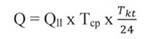
Where:
Qll– Production rate under mineral production license; in m³/24 hours;
Tcp – Production period under mineral production license; in 24 hours;
Tkt – Daily production period under mineral production license (if any), where mineral production license does not dictate daily production period, Tkt equals 24 hours; in hours.
3. In respect of group IV mineral production license and mineral salvaging license, Q shall be mineral quantities available for production under group IV mineral production license and mineral salvaging license.
4. In respect of mineral recovery in accordance with Article 76 of the Law on Geology and Minerals, Q shall be determined by mineral quantities specified under verification of registration for mineral recovery, written approval and permission for recovery, except for mineral quantities under Clause 3 Article 98 of the Law on Geology and Minerals.
Article 134. Price based on which mineral production licensing fee is calculated
1. Price based on which mineral production licensing fee is calculated (G) shall be the price of one unit of raw mineral which is determined on the basis of prices used for calculation of severance tax and adjustable below:
G = Gtn x Kqđ
Where:
G – Prices based on which mineral production licensing fee is calculated, determined by average mineral contents and quality in mineral exploration reports or general general survey and assessment results in case of group IV minerals; in VND/unit of mineral reserve and quantity;
Gtn – Prices used for calculation of severance tax promulgated and applied by provincial People’s Committees on the date on which mineral production licensing fee is approved and adjusted; in VND/unit of resource product;
Kqđ – Adjustables according to Appendix IV attached hereto and rounded to the nearest thousandth decimal.
2. Where prices used for calculation of severance tax are not available or prices used for calculation of severance tax promulgated by provincial People’s Committees do not comply with regulations of the law pertaining to calculation of severance tax, prices based on which mineral production licensing fee is calculated shall be temporarily determined by average prices of raw minerals under severance tax brackets promulgated by the Minister of Finance.
Where new minerals not specified under severance tax brackets are found, prices based on which mineral production licensing fee is calculated shall be temporarily determined on the basis of prices used for calculation of severance tax of mineral types with similar use purposes.
3. Where prices used for calculation of severance tax promulgated by provincial People’s Committees consist of multiple prices for a type of minerals, prices used for calculation of severance tax for the purpose of determining mineral production licensing fee shall be selected on the basis of order of priority below:
a) Prices used for calculation of severance tax imposed individually to each mine only for determination of mineral production licensing fee at the mine specifically;
b) Prices used for calculation of severance tax imposed to raw minerals;
c) Prices used for calculation of severance tax imposed to metal products;
d) Prices used for calculation of severance tax imposed to ore concentrates.
Article 135. Determination and approval of mineral production licensing fee
1. Within 30 days from he date on which mineral production license, mineral salvaging license, and verification of registration for mineral recovery come into force, competent authorities under Article 131 hereof have the responsibility to determine and approve mineral production licensing fee.
2. mineral production licensing fee shall be approved for temporary adoption for cases under Clause 2 Article 134 hereof. Where prices used for calculation of severance tax promulgated by provincial People’s Committees are compliant with regulations of the law, the prices shall be used for determination of prices based on which mineral production licensing fee is calculated, replacing temporary mineral production licensing fee, and approved as official mineral production licensing fee.
3. In respect of mineral quantities produced and extracted as a result of violations of the law, mineral production license fee shall be approved where all requirements below are met:
a) The violations have been dealt with by competent authorities as per the law;
b) The violations are not met with penalties that involve confiscation or surrendering of illegally generated revenues in respect of mineral quantities produced and recovered.
4. In respect of mineral production license, mineral salvaging license, documents permitting mineral production and recovery that are issued before the effective date hereof where mineral reserves and quantities are not determined and production period is not specified, within the period in which mineral production license is not replaced in accordance with Point c Clause 2 Article 111 of the Law on Geology and Minerals, mineral production licensing fee shall be proceeded as follows:
a) Mineral production licensing fees are approved on an annual basis depending on mineral production until mineral production license, mineral salvaging license, documents permitting mineral production and recovery are replaced in accordance with Point c Clause 2 Article 111 of the Law on Geology and Minerals;
b) Mineral production in practice are determined on the basis of declaration reports of organizations and individuals conducting mineral production and recovery;
c) Where mineral production license is replaced in accordance with Point c Clause 2 Article 111 of the Law on Geology and Minerals, mineral production licensing fee shall be settled for mineral quantities produced until the date on which mineral production license is renewed or re-issued and re-approved on the basis of the remainder of mineral reserves on the date on which mineral production license is renewed or re-issued.
5. The Minister of Agriculture and Environment shall prescribe sample decision approving mineral production licensing fee.
Article 136. Amendment to mineral production licensing fee
1. Mineral production licensing fee shall be approved for amendments where:
a) Mineral reserves and quantities permitted for production and recovery are changed;
b) Number of payments of mineral production licensing fee are changed;
c) On the date on which mineral production licensing fee is settled (except for cases detailed under Point d Clause 1 Article 139), prices based on which mineral production licensing fee is calculated are changed by more than 20% relative to prices based on which mineral production licensing fee is calculated applicable on the date on which approval is granted or rate at which mineral production licensing fee is charged is changed.
2. Determination and approval of amendment to mineral production licensing fee for cases detailed under Point a and Point b Clause 1 of this Article within 30 days from the date on which competent authorities decide to renew, amend, re-issue, and return mineral production license.
3. Annual payables of mineral production licensing fees after amendments are approved shall be determined as follows:
a) In respect of years in which settlement has been implemented, mineral production licensing fee shall be the settled amount;
b) In respect of years in which settlement has not been implemented, mineral production licensing fee shall be determined in accordance with Article 132 hereof. In which mineral reserves and quantities based on which mineral production licensing fee is calculated shall be the remainder of mineral reserves and quantities permitted for production on the date on which amendment is approved; rate at which mineral production licensing fee is charged shall be determined on the date on which amendment is approved.
4. The Minister of Agriculture and Environment shall prescribe sample decision approving amendment to mineral production licensing fee.
Article 137. Methods for submitting and collecting mineral production licensing fee
1. Decision approving, amending, re-approving mineral production licensing fee; documents requesting temporary suspension to mineral production and recovery in accordance with Clause 3 of this Article; documents allowing organizations and individuals that temporarily suspend mineral production and recovery in accordance with Clause 3 of this Article to resume mineral production and recovery (if any), written notice of settlement of mineral production licensing fee shall be sent to organizations and individuals conducting mineral production and recovery and local tax subdivisions which will issue notice of payment, monitor, and expedite payment of mineral production licensing fee as per the law.
2. The date on which mineral production licensing fee is submitted shall be prescribed as follows:
a) For the first year: Within 30 days from the date on which tax authorities issue notice regarding submission of mineral production licensing fee;
b) From the second year: By May 31 each year. Where decisions approving amendment to mineral production licensing fee, the additional mineral production licensing fee (if any) shall be submitted within 30 days from the date on which tax authorities promulgate notice regarding payment of mineral production licensing fee;
c) For cases detailed under Point b Clause 3 of this Article: Within 30 days from the date on which mineral production and recovery resumes.
3. Where mineral production and recovery must be temporarily suspended at request of competent authorities due to reasons other than violations of regulations of the law committed by organizations and individuals committing mineral production and recovery, submission of mineral production licensing shall be implemented as follows:
a) Mineral production licensing fee shall not be required for periods from the following year to the year preceding the year in which mineral production and recovery resumes;
b) Where organizations and individuals are permitted to resume mineral production and recovery, they must report to competent authorities entitled to mineral production and recovery.
4. Collection and submission of mineral production licensing fee shall conform to regulations of the law pertaining to tax administration and this Decree.
Article 138. Extension of time limit for payment of mineral production licensing fee
1. Organizations and individuals eligible for extension of tax submission deadline in accordance with tax administration laws shall be considered for extension of time limit for payment of mineral production licensing fee.
2. Eligibility for extension; period of extension; application for extension; procedures and entitlement for extension of payment time limit of mineral production licensing fee, late payments, and fines shall conform to tax administration laws.
Article 139. General provisions pertaining to settlement of mineral production licensing fee
1. Other than cases detailed under Clause 7 of this Article, organizations and individuals conducting mineral exploration and production shall settle mineral production licensing fee:
a) Once every 5 years on a periodic basis;
b) Upon renewing, amending, re-issuing, transferring mineral production license;
c) Upon closing mines and expiry of verification of registration for mineral recovery, written approval and permission for mineral production and recovery;
d) Upon settling mineral production licensing fee, initial winning bid of mineral production right in accordance with Point b Clause 9 Article 111 of the Law on Geology and Minerals.
2. Mineral production licensing fee to be settled shall be calculated using formula below:

Where:
T – Total mineral production licensing fee in settlement period; in VND;
Qqti – Mineral production based on which mineral production licensing fee is settled in the year i and determined in accordance Clause 3 of this Article;
Gqti – Settlement of mineral production licensing fee of the year i and determined in accordance with Clause 4 of this Article;
Rqti – Rate at which mineral production licensing fee of the year i is charged and determined in accordance with Clause 5 of this Article;
n – Number of years in which mineral production licensing fee has been settled
3. Mineral production, for the purpose of settlement of mineral production licensing fee, shall be converted to mineral reserves and quantities in accordance with decisions approving mineral production licensing fee and determined as follows:
Qqti = SLi x TLqđ
Where:
Qqti – Mineral production for settlement of mineral production licensing fee in year i;
SLi – Raw mineral production performed in year i; determined on the basis of declaration of settlement information of mineral production licensing fee filed by applicants. Organizations conducting mineral production and recovery shall be fully legally responsible for accuracy of data provided in declaration of settlement information of mineral production licensing fee;
TLqđ – Adjustables according to Appendix V attached hereto and rounded to the nearest thousandth decimal.
4. Settlement value of mineral production license shall be determined on the basis of prices used for calculation of severance tax and adjustables as follows:
Gqti = Gtni x Kqđ
Where:
Gqti – Settlement value of mineral production licensing fee, determined by contents and quality of minerals produced; in VND/unit of mineral reserve and quantities;
Gtni – Prices use for calculation of severance tax prescribed by provincial People’s Committees, applicable as of January 1 of year i; in VND/unit of resource product.
In respect of mineral reserves and quantities produced, recovered before the date on which mineral production licensing fee is approved, including where temporary mineral production licensing fee is approved, Gtni shall be prices prescribed by provincial People’s Committees and applicable on the date on which mineral production licensing fee is approved or temporary mineral production licensing fee is approved; where prices used for calculation of severance tax are not available on the date on which temporary mineral production licensing fee is approved, Gtni shall be prices prescribed by provincial People’s Committees and applicable on the date on which official mineral production licensing fee is approved.
Kqđ – Adjustables according to Appendix IV attached hereto and rounded to the nearest thousandth decimal.
5. Rate at which mineral production licensing fee is charged which is used for settlement of mineral production licensing fee shall be determined as follows:
a) In respect of sites where mineral production right is not auctioned, the rate at which mineral production licensing fee is charged applicable on January 1 of year i shall be used.
In respect of mineral reserves and quantities produced, recovered before the date on which mineral production licensing fee is approved, including cases where temporary mineral production licensing fee is approved, R. shall be the rate at which mineral production licensing fee is charged that is applicable on the date on which mineral production licensing fee is approved or temporary mineral production licensing fee is approved;
b) In respect of sites where mineral production right is auctioned, the rate at which mineral production licensing fee is charged for mineral production right awarded via auction shall prevail, except for cases detailed under Point c of this Clause;
c) In respect of auctions of mineral production right at sites where mineral exploration results have been available before the effective date of Decree No. 10/2025/ND-CP dated January 11, 2025, rate at which mineral production licensing fee is charged that is used for settlement of mineral production licensing fee shall be determined as follows:
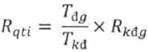
Where:
Tđg– Winning bid of mineral production licensing fee;
Tkđ – Starting price;
Rkđg – Rate at which mineral production licensing fee is charged at sites where mineral production right is not auctioned for the type of minerals won at auction on the date on which auction is held.
6. Where organizations and individuals licensed to produce and recover multiple types of minerals, mineral production licensing fee shall be settled for each type of mineral.
7. Delay of the date on which mineral production licensing fee is settled shall be regulated as follows:
a) Where prices used for calculation of severance tax are not available or where prices used for calculation of severance tax prescribed by provincial People’s Committees do not comply with regulations of the law pertaining to prices used for calculation of severance tax on the date on which mineral production licensing fee is settled in accordance with Clause 1 of this Article, the date on which mineral production licensing fee is settled shall be delayed until prices used for calculation of severance tax compliant with regulations of the law are prescribed by provincial People’s Committees;
b) Where organizations and individuals conducting mineral production and recovery are being met with consideration and actions for their violations of the law relating to mineral production under mineral production license, mineral salvaging license, verification of registration for mineral recovery, documents approving and permitting mineral production and recovery, the date on which mineral production licensing fee is settled shall be delayed until actions taken by competent authorities are finished.
8. Handling of excess or missing mineral production licensing fee after settlement has been implemented:
a) Where mineral production licensing fee submitted to state budget is greater than amount payable after settlement, the excess shall be taken into consideration and resolved by local tax authorities in accordance with tax administration laws except for cases under Point c of this Clause;
b) Where mineral production licensing fee submitted to state budget is lower than amount payable after settlement, organizations and individuals conducting mineral production and recovery shall be required to submit additional mineral production licensing fee within 30 days from the date on which notice regarding settlement of mineral production licensing fee is issued;
c) In respect of cases under Point d Clause 1 of this Article, where mineral production licensing fee submitted to state budget is greater than amount payable after settlement, the excess shall be deducted from amounts that they own the state budget then subsequent payments of mineral production licensing fee.
9. In respect of cases detailed under Clause 9 Article 111 of the Law on Geology and Minerals, during periods in which settlement has not been implemented in accordance with Point d Clause 1 of this Article, payment of mineral production licensing fee shall conform to effective decisions approving mineral production licensing fee.
Article 140. Applications and procedures for settlement of mineral production licensing fee
1. Applications for settlement of mineral production licensing fee consist of: Written applications for settlement of mineral production licensing fee; declaration of settlement information for mineral production licensing fee; reports on statistics and inventory of mineral reserves, quantities produced, remaining mineral reserves, quantities available for production of each year in settlement period.
2. Procedures for settling mineral production licensing fee:
a) Applicants for settlement of mineral production licensing fee shall submit applications under Clause 1 of this Article to agencies that settle mineral production licensing fee before January 31 of the settlement year for cases detailed under Point a Clause 1 Article 139 hereof; within 30 days from the date on which mineral production license or mineral salvaging license, decision on mine closure is renewed, amended, re-issued, or transferred for cases detailed under Point b and Point c Clause 1 Article 139 hereof; before September 30, 2025 for cases detailed under Point d Clause 1 Article 139 hereof.
Where applications are adequate, agencies that settle mineral production licensing fee shall receive the applications as per the law. Where applications are not adequate, agencies that settle mineral production licensing fee shall reject the applications, state reasons for rejection in written request for application revision according to regulations of the Government pertaining to reception of applications for administrative procedures;
b) Agencies that settle mineral production licensing fee have the responsibility to settle mineral production licensing fee within 90 days from the date on which they receive adequate applications for settlement of mineral production licensing fee for cases detailed under Points a, b, and c Clause 1 Article 139 hereof and before December 31, 2026 for cases detailed under Point d Clause 1 Article 139 hereof;
c) Where applications for settlement of mineral production licensing fee must be revised, agencies that settle mineral production licensing fee shall request applicants in writing to revise in detail. Request for revision of applications shall only be made once. Where revised applications do not satisfy requirements under initial request for revision, request can be repeated for the same revision details as long as no further revisions are requested. The amount of time that it takes applicants to revise their applications shall not be counted towards the time limit for settlement of mineral production licensing fee under Point b of this Clause.
Where applications for settlement of mineral production licensing fee are not adequate after revision, agencies that settle mineral production licensing fee shall suspend settlement process and return the applications for settlement of mineral production licensing fee. Organizations and individuals under this case may submit applications again in which case they are considered to be submitting new applications.
3. Organizations and individuals conducting mineral production and recovery have legal responsibility to ensure adequacy and legitimacy of data, information in applications for settlement of mineral production licensing fee.
4. The Minister of Agriculture and Environment shall prescribe sample application for settlement of mineral production licensing fee and files in documents on settlement of mineral production licensing fee under this Article.
Article 141. Re-approval of mineral production licensing fee for cases detailed under Point c Clause 9 Article 111 of the Law on Geology and Minerals (including auction of mineral production right)
1. Mineral production licensing fee shall be calculated using the formula below:
Tpdl = Qcl x G x R
Where:
Tpdl – Mineral production licensing fee;
Qcl – Remaining mineral reserves and quantities available for production and recovery as of July 1, 2025 defined in accordance with Clauses 2 and Clause 3 of this Article;
G – Prices based on which mineral production licensing fee is calculated as of July 1, 2025 in accordance with Article 134 hereof;
R – Rate at which mineral production licensing fee is charged (R) in accordance with Appendix III attached hereto for sites where mineral production right is not auctioned; rate at which mineral production licensing fee is charged where mineral production right is awarded via auction for sites where mineral production right is auctioned.
Where mineral production right of sites where mineral exploration results are available is awarded via auction before the effective date of Decree No. 10/2025/ND-CP dated January 11, 2025 of the Government, the rate at which mineral production licensing fee is charged on the date on which mineral production right is awarded via auction shall be determined in accordance with Point c Clause 5 Article 139 hereof.
2. Remaining mineral reserves and quantities available for production and recovery as of July 1, 2025 used for re-approval of mineral production licensing fee shall be determined as follows:
a) Other than cases detailed under Point b, Point c, and Point d of this Clause, the formula is as follows:
Qcl = Qcp – (SL2014 + SL2025) x TLqđ
Where:
Qcl – Remaining mineral reserves and quantities for production as of July 1, 2025;
Qcp – Mineral reserves and quantities available for production under mineral production license, mineral salvaging license, documents permitting mineral recovery and production;
SL2014 – Mineral production from the date on which mineral production license, mineral salvaging license, documents permitting mineral production and recovery until December 31, 2013 (for mineral production license issued before January 1, 2014), defined upon initial approval for mineral production licensing fee;
SL2025– Mineral production implemented from January 1, 2014 to June 30, 2025, defined on the basis of declaration of settlement information of mineral production licensing fee filed by applicants;
TLqđ – Adjustables according to Appendix V attached hereto and rounded to the nearest thousandth decimal.
Organizations and individuals conducting mineral production and recovery shall be fully legally responsible for accuracy of data provided in declaration of settlement information of mineral production licensing fee.
b) Where solid mineral production license only specifies annual production capacity and production period, determination of remaining mineral reserves and quantities for production as of July 1, 2025 (Qcl) shall conform to Point a of this Clause where mineral reserves and quantities available for production (Qcp) are determined by multiplying annual production rate with production period of mineral production license;
c) In respect of production license for natural geothermal spring, natural mineral water, CO2 gas, remaining mineral reserves as of July 1, 2025, (Qcl) shall conform to Clause 2 Article 133 hereof with Tcp being the remaining effective period of mineral production license;
d) Where mineral production license specifies quantities of products (e.g. quantities of bricks, tiles, or other cases) and implementation period, determination of remaining mineral reserves and quantities on July 1, 2025 (Qcl) shall conform to Point a of this Clause where mineral reserves and quantities available for production (Qcp) are determined by multiplying ingredient consumption rate per unit of product in investment projects with amount of products made in the year and remaining production period of mineral production license.
3. Where mineral production license, mineral salvaging license, documents approving and permitting mineral recovery and production specifies different types of reserves, mineral reserves and quantities used as the basis for determination of mineral reserves and quantities available for production on July 1, 2025 under Clause 2 of this Article shall be determined in the following order of priority:
a) Mineral reserves available for production;
b) Produced reserves;
c) Reserves available to be mobilized in production design;
d) Geology reserves;
dd) Mine reserves;
e) Production capacity multiplied with production period.
4. Annual mineral production licensing fee shall be determined using the formula below:
Thn = Tpdl : Xcl
Where:
Thn – Annual mineral production licensing fee on the date on which approval is granted again;
Tpdl – Mineral production licensing fee;
Xcl – Remaining payments of mineral production licensing fee in years, from 2025 until expiry of production period. Where production period expires before July 1, the year in which production period expires shall not be counted towards number of payment of mineral production licensing fee; in other cases, the year in which production period expires will be counted towards number of payment of mineral production licensing fee.
5. The Minister of Agriculture and Environment shall prescribe sample decision re-approving mineral production licensing fee.
Article 142. Management and use of mineral production licensing fee
1. Management and use of mineral production licensing fee shall conform to state budget laws.
2. Determination of deductibles for the purpose of determining corporate income tax obligation for paid mineral production licensing fee shall conform to corporate income tax laws.
3. On an annual basis, agriculture and environment authorities shall prepare expenditure estimates for geological reconnaissance, mineral survey, unextracted mineral protection tasks at the same time as development of state budget estimates and send to financial authorities. Financial authorities shall consider, consolidate, and submit budget expenditure solutions to competent authorities for consideration and decision.
Section 3. ZONING OF SITES WHERE MINERAL PRODUCTION RIGHT IS NOT AUCTIONED AND AUCTION OF MINERAL PRODUCTION RIGHT
Article 143. Criteria for zoning sites where mineral production right is not auctioned
Sites where mineral production right is not auctioned shall be zoned and approved in accordance with Clause 3 and Clause 4 Article 100 of the Law on Geology and Minerals where any of the criteria below are met:
1. Sites of radioactive minerals; other than coal sites that have been zoned and declared sites with scattered minerals and peat sites.
2. Mineral sites in vicinity of national borders.
3. Mineral sites where deep exploration and expansion is prioritized in accordance with Point dd Clause 2 Article 4 of the Law on Geology and Minerals.
4. Mineral sites selected by organizations and individuals conducting geological survey for minerals in accordance with Points b and c Clause 2 Article 22 of the Law on Geology and Minerals.
5. Sites of minerals used as materials and ingredients for projects of national importance, emergency investment projects, structures and work items under national target programs.
6. Sites of minerals subject to cooperation in research, exploration, production, processing as per intergovernmental agreement.
7. Sites of strategic, important minerals.
8. Sites of minerals where mineral production right has been auctioned 3 times without success by regulatory authorities.
9. Sites of minerals specified in cases under Clause 7 Article 153 hereof.
Article 144. Development and approval of plans for auction of mineral production right
1. Basis for developing plans for auction of mineral production right:
a) Sites where mineral production right is auctioned in accordance with Clause 1 Article 100 of the Law on Geology and Minerals;
b) Not declared as sites where mining operations are prohibited or temporary suspended in accordance with Article 26 of the Law on Geology and Minerals.
2. Vietnam Department of Geology and Minerals and Departments of Agriculture and Environment shall prepare and submit plans for auction of mineral production right to the Ministry of Agriculture and Environment and provincial People’s Committees for approval in accordance with entitlement to issuance of mineral exploration and production license.
3. Within 15 days from the date on which competent authorities approve plans for auction of mineral production right, plans for mineral production right shall be publicly posted as follows:
a) Publicly posted on website of the Ministry of Agriculture and Environment, provincial People’s Committees of administrative divisions where minerals are located in respect of minerals where the Ministry of Agriculture and Environment is entitled to issuance of mineral production and exploration license;
b) Publicly posted on websites of provincial People’s Committees of administrative divisions where minerals that provincial People’s Committees are entitled to issuance of mineral exploration and production license are located.
Article 145. Methods for determining deposits
1. Deposits in auction of mineral production right shall be determined as follows:
a) At least 10% and at most 30% of total estimated mineral production licensing fee of mineral production sites, except for cases under Point b of this Clause;
b) At least 20% and at most 50% of total estimated mineral production licensing fee of mineral sites involving group IV minerals and minerals that are river bed, lake bed, sea waters sand and gravel;
c) Formula for determining deposits:

Where:
Tđt – Deposits;
Qi – Type i mineral reserves and quantities in area where mineral exploration results are not available, mineral salvaging sites, group IV mineral sites for auction; type i mineral reserves in area where mineral exploration results are available for auction;
Gi – Prices based on which mineral production licensing fee is calculated for type i minerals applicable on the date on which deposits are determined;
Ri – Rate at which type i mineral production licensing fee is charged in accordance with Appendix III attached hereto;
H – Percentages under Point a and Point b of this Clause.
2. Where auction is led by Council for property auction, organizations and individuals participating in auction of mineral production right shall submit deposits to accounts of agencies implementing auction of mineral production right; where auction is led by organizations conducting property auctions, payment of deposits shall conform to property auction laws.
3. Management and use of deposits shall conform to property auction laws.
Article 146. Compositions of bids
1. Bids shall consist of 2 sets, each of which includes:
a) Original copies of application for participation in auction of mineral production right; written commitment regarding fulfillment of obligations after being awarded mineral production right;
b) Original copies or certified true copies or copies accompanied by original copies or certified digital copies of proof of financial capabilities in accordance with Clause 2, Clause 3, and Clause 4 Article 26 hereof in case auction takes place in areas where mineral exploration results are not available or Clause 2, Clause 3, and Clause 4 Article 55 hereof in case auction takes place in areas where mineral exploration results are available.
2. Requirements pertaining to financial capability of organizations and individuals participating in auction of mineral production right:
a) In respect of areas where mineral exploration results are not available, organizations and individuals participating in auction of mineral production right must satisfy criteria under Clause 1 Article 26 hereof, except for sites of mineral salvaging and group IV mineral sites. Total estimates of mineral exploration schemes for sites where mineral production right is auctioned that serve as the basis for determining fulfillment of financial capability requirements of organizations and individuals participating in auction of mineral production right shall be determined on the basis of actual investment rate based on exploration area of ongoing or completed projects for exploration of similar minerals;
a) In respect of areas where mineral exploration results are not available, organizations and individuals participating in auction of mineral production right must satisfy criteria under Clause 1 Article 55 hereof, except for sites of mineral salvaging and group IV mineral sites. Total estimates of mineral production projects in respect of sites where mineral production right is auctioned that serve as the basis for determining fulfillment of financial capability requirements of organizations and individuals participating in auction of mineral production right shall be determined on the basis of actual investment rate based on mineral reserves and quantities of ongoing or completed projects for exploration of similar minerals.
3. The Minister of Agriculture and Environment shall prescribe sample application for participation in mineral production right auction and components of bids.
Article 147. Performance of financial obligation prior to participation in auction and roadmap for implementation
1. Applicants for participation in auction must, as of the date on which they submit applications for participation in auction, have fulfilled financial obligations related to mineral production license, mineral salvaging license, including
a) Mineral production licensing fee;
b) Environmental protection fee in case of mineral production;
c) Severance tax associated with minerals;
d) Environmental protection deposits in mineral production.
2. Agencies and entities selecting bids shall examine fulfillment of financial obligations of applicants for participation in mineral production right auction in accordance with Clause 1 of this Article on geology, mineral information and data system connected and shared with tax database.
3. Regulations under this Article shall be applied as soon as the Ministry of Agriculture and Environment finishes development of geology, mineral information and data system and successful connection, sharing with tax database.
Article 148 Auction of mineral production right at sites where at least 2 types of minerals have been identified
1. Types of minerals shall be selected for auction of mineral production right in accordance with Clause 4 Article 105 of the Law on Geology and Minerals in the following order of priority:
a) Primary minerals in sites where mineral production right is auctioned;
b) Minerals with the highest estimated mineral production licensing fee. Estimated mineral production licensing fee shall be determined using the formula below:
T = Qđg x Gđg x R
Where:
T – Estimated mineral production licensing fee;
Qđg – Mineral reserves and quantities in area where mineral exploration results are not available, mineral salvaging sites, group IV mineral sites for auction; mineral reserves in area where mineral exploration results are available for auction;
Gđg – Prices based on which mineral production licensing fee is calculated for auctioned mineral type applicable on the date on which deposits are determined;
R – Rate at which auctioned mineral production licensing fee is charged in accordance with Appendix III attached hereto.
2. Other than Clause 3 of this Article, the rate at which mineral production licensing fee is charged of remaining minerals identified at sites where mineral production right is auctioned shall be calculated as follows:
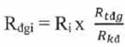
Where:
Rđgi – Rate which mineral production right licensing fee is charged for type i minerals;
Ri – Rate at which mineral production licensing fee for type i minerals is charged in accordance with Appendix III attached hereto;
Rtđg – Rate at which mineral production licensing fee is charged for auctioned minerals;
Rkđ – Starting price of auctioned minerals.
3. In respect of mine spoils, organizations and individuals that wish to recover or consume mine spoils, the rate at which mineral production licensing fee is charged shall be determined by mineral production licensing fee applicable to minerals with similar use purposes at sites where mineral production right is not auctioned.
Article 149. Procedures for approving auction results
1. Within 15 days from the date on which Vietnam Department of Geology and Minerals and Departments of Agriculture and Environment receive documents transferred by auction organizations or auction councils, Vietnam Department of Geology and Minerals and Departments of Agriculture and Environment shall request competent regulatory authorities entitled to issuance of mineral exploration and production license to approve winning bid of mineral production right. The documents consist of:
a) Written request for approval of winning bids;
b) Record of auction;
c) Bids of organizations and individuals winning the auction;
d) Draft decisions approving winning bid.
2. Within 10 days from the date on which competent authorities entitled to issuance of mineral exploration and production license receive request for approval of winning bid, competent authorities shall promulgate decisions approving winning bid of mineral production right. Where approval is rejected, written response and reasons must be provided.
3. The Minister of Agriculture and Environment shall prescribe sample decisions approving winning bid, decisions cancelling winning bid of mineral production right, and decisions cancelling decisions approving winning bid of mineral production right.
GEOLOGY AND MINERAL INSPECTION
Article 150. Basis, entitlement, responsibility, contents, and methods of geology and mineral examination
1. Geology and mineral examination shall be conducted on the basis of any of the elements below:
a) Annual examination plans;
b) Direction of competent geology, mineral authorities and competent persons;
c) Feedback and recommendations of organizations or individuals filed in person or mass media pertaining to violations of the law on mineral exploration and production; mineral recovery; mine closure.
2. Entitlement to issuance of examination plans, examination decisions, and responsibility for implementation:
a) The Minister of Agriculture and Environment, heads of geology and mineral authorities affiliated to the Ministry of Agriculture and Environment shall promulgate examination plans, examination decisions in geology and minerals on a nationwide scale.
Chairpersons of People’s Committees of all levels, heads of geology and mineral authorities affiliated to People’s Committees of all levels shall promulgate examination plans, examination decisions in geology and minerals in their jurisdiction;
b) The Ministry of Agriculture and Environment and geology, mineral authorities affiliated to the Ministry of Agriculture and Environment; provincial, commune-level geology, mineral authorities; cadres, civil servants, public servants exercising geology and mineral governance have the responsibility to conduct specialized geology, mineral examination;
c) Heads of inspectorate, leaders of examination teams, persons tasked with inspecting shall disclose examination decisions or documents assigning inspectors; arrange examination in accordance with examination decisions; assign tasks to members of inspectorate and examination teams; be responsible to individuals issuing examination decisions, documents on assignment of inspectors and legally responsible for inspection; exercise powers of heads of inspectorate, leaders of examination teams, civil servants, public servants in the performance of their duties as per the law.
Members of inspectorate and examination teams have the responsibility to conduct inspection in accordance with assignment and coordination of heads of inspectorate, leaders of examination teams in accordance with examination decisions; propose necessary actions to heads of inspectorate and leaders of examination teams to ensure effective and law-compliant operations.
3. Methods for conducting geology, mineral examination:
a) Geology and mineral examination shall conform to be conducted in accordance with annual plans or on an irregular basis; can be examined via establishment of inspectorate or documents on assignment of examination teams, persons tasked with conducting examination;
b) Examination is carried out in accordance with examination plans promulgated before December 31 of the preceding year; decisions or documents on irregular examination in presence of basis under Point b and Point c Clause 1 of this Article. Annual examination plans must not overlap geology, mineral examination plans in terms of contents, subjects, and scope;
c) Examination can be arranged via: at examination location or submission of documents to examining agencies or online meeting regarding examination contents or other methods (if any).
4. Contents of geology and mineral examination under Clause 5 Article 107 of the Law on Geology and Minerals include:
a) Examination of compliance with geology and mineral laws of People’s Committees of all levels;
b) Examination of compliance with geology and mineral laws of organizations and individuals engaging in geological and mining operations; mineral recovery.
5. Geology and mineral examination shall adhere to principles below:
a) Geology and mineral inspection must not overlap inspections in terms of contents and scope and must not affect regular operations of agencies, organizations, and individuals;
b) Examination shall conform to approved contents, plans and ensure objectivity on the basis of provided information, data, documents, and contents. Examined agencies, organizations, and individuals shall be entirely legally responsible for report information, data, data, and contents;
c) Geology and mineral inspection is accompanied by rollover of responsibility and cooperation of relevant agencies.
6. Responsibility to file reports on examination results and entitlement to promulgation of notice of examination results
a) Heads of inspectorate, leaders of examination teams, and persons tasked with examination have the responsibility to file reports on examination results;
b) Competent persons entitled to issuance of examination decisions in accordance with Point a Clause 2 of this Article have the responsibility to promulgate notice of examination results.
7. Examination expenditure shall be provided by state budget. Development, management, use, and settlement of examination expenditure shall conform to state budget laws.
Article 151. Procedures for examination
1. Procedures for conducting geology and mineral examination shall conform to Clauses 2, 3, 4, 5, and 6 of this Article.
2. Examination decision, decision on establishment of inspectorate or assignment of examination teams or persons tasked with examination
a) On the basis of annual examination plans, direction of competent persons and authorities specializing in geology and minerals and demands, characteristics of the examination, competent persons under Point a Clause 2 Article 150 hereof shall issue decision on establishment of inspectorate or assignment of inspection teams, persons tasked with examination;
b) Inspectorate consists of heads of inspectorate, deputies (if any) and members; an examination team consists of leaders and members; where cases are not serious or require brief report, persons tasked with examination can be assigned to conduct examination;
c) An examination on each examination subject shall not last longer than 45 days. During examination, competent persons entitled to issuance of examination decisions shall issue decision on one-time extension of examination duration which does not exceed 15 days at request of heads of inspectorate.
3. Development of examination plans and report requirement outlines:
a) Heads of inspectorate and leaders of examination teams have the responsibility to coordinate development of examination plans and report requirement outlines and send to subject of examination.
Where persons tasked with examination conduct examination, the persons shall discuss examination plans with subject of examination without developing examination plans.
In case of irregular examination, examination plans are not required; subject of examination are not required to file report prior to examination;
b) Subject of examination have the responsibility to reports in accordance with outlines or request of inspectorate, examination teams, and persons tasked with examination before declaring examination decisions and conducting physical examination.
4. Inspectorate, examination teams, and persons tasked with examination shall conduct examination as follows:
a) Declare examination decisions, examination documents, documents on assignment of examining personnel and immediately conduct examination;
b) Collect documents, study files, work with relevant organizations and individuals, conduct physical examination; when necessary, request relevant organizations and individuals to provide necessary documents, files, and explanation for unclear details; record working results in writing;
c) Develop and submit reports on examination results, draft notice of examination results to competent persons entitled to issuance of examination decisions under Point a Clause 2 Article 150 hereof within 30 days (except for cases under Clause 6 of this Article) from the date on which examination period specified under examination decisions, documents on examination, and documents on assignment of examining personnel.
Reports on examination results, draft notice of examination results shall include: examination results, compliance with regulations of the law; propositions and recommendations of solutions.
5. Other than cases detailed under Clause 6 of this Article, within 15 days from the date on which competent persons entitled to issuance of examination decisions under Point a Clause 2 Article 150 hereof receive reports on examination results and draft notice of examination results, competent persons shall sign notice of examination results or promulgate documents addressing recommendations raised by inspectorate, examination teams, and examining personnel.
Notice of examination results or documents addressing examination results must include time and results of implementation, be sent to subject of examination, and publicly posted.
6. In respect of complicated cases that require verification clarification, heads of inspectorate or examining personnel shall report to competent persons entitled to issuance of examination decisions to extend time limit for filing reports on examination results and notice of examination results.
Article 152. Amendment and annulment of relevant legislative documents
1. Amendment to Clause 6 Article 18 of Decree No. 126/2020/ND-CP dated October 19, 2020 of the Government:
“6. Mineral production licensing fee: conforms to mineral laws.”.
2. Annul regulations pertaining to eligibility of mineral exploration service providers under Decree No. 60/2016/ND-CP dated July 1, 2016 of the Government amended by Decree No. 136/2018/ND-CP dated October 5, 2018 of the Government.
3. Annul Point b Clause 9 Article 12 of Decree No. 40/2025/ND-CP dated February 26, 2025 of the Government.
4. Annul Point b Clause 12 Article 2 of Decree No. 33/2025/ND-CP dated February 25, 2025 of the Government.
Article 153. Transition clause
1. Regarding sites of mining operations that are declared sites where mining operations are prohibited or sites where mining operations are temporarily suspended before the effective date hereof where compensation for damage has not been implemented. Damage compensation shall be implemented in accordance with Article 15 hereof.
2. Where mineral reserves available for production have not been depleted due to force majeure or market demands while data of mineral production license remain compliant with applicable law provisions, mineral production license can be renewed in accordance with Clause 2 Article 59 of the Law on Geology and Minerals.
3. Where applications of organizations and individuals have been received by regulatory authorities for processing in accordance with geology and mineral administrative procedures before the effective date hereof and application processing results are not available:
a) Organizations and individuals may choose to have procedures and entitlement compliant with either regulations of the law applicable on the date on which they submit applications or this Decree adopted, except for cases detailed under Point b of this Clause;
b) Competent regulatory authorities entitled to issuance of mineral production license shall continue to arrange determination and approval of mineral production license in accordance with regulations of the law applicable on the date on which they receive applications; methods for determining, collecting, and submitting mineral production licensing fee shall conform to this Decree.
4. Where organizations and individuals must temporarily suspend mineral production and recovery before the effective date hereof at request of competent authorities and not as a result of their violations of regulations of the law and where provincial People’s Committees of administrative divisions where mineral production takes place have issued confirmation, provisions under Clause 3 Article 137 can be adopted from the date on which mineral production is temporarily suspended.
5. Where applications for mineral production license of organizations and individuals have been received by regulatory authorities before the effective date hereof and where applications processing results are not issued, determination and approval of determination results of mineral potential evaluation expenditure and mineral exploration expenditure for reimbursement shall be proceeded as follows:
a) Where applicants choose adoption of procedures and entitlement applicable on the date on which their applications are received, determination and approval of determination results of mineral potential evaluation expenditure and mineral exploration expenditure for reimbursement shall conform to Decree No. 158/2016/ND-CP dated November 29, 2016 of the Government amended by Article 1 Decree No. 10/2025/ND-CP dated January 11, 2025 of the Government;
b) In other cases, this Decree shall prevail.
6. Where valid production license of river bed, lake bed sand and gravel is issued before the effective date hereof, the license and Clause 1 Article 115 hereof shall prevail in accordance with decisions of Chairpersons of provincial People’s Committees.
7. In respect of mineral production license issued before the effective date of Law on Geology and Minerals, the mineral production license shall be re-issued without organizing auction of mineral production right for the same organizations and individuals where requirements below are met:
a) Existing mineral production license is compliant with mineral planning that is applicable on the date on which the license issue and expired after July 1, 2011;
b) Mineral reserves at mineral production sites have not been depleted as of the date on which applications for re-issuance of mineral production license are submitted;
c) Organizations and individuals conducting mineral production do not violate mineral laws to an extent that they are met with criminal prosecution;
d) Organizations and individuals under consideration for re-issuance of mineral production license satisfy requirements under Article 63 hereof.
8. In respect of group II mineral sites where the Ministry of Agriculture and Environment has approved plans for mineral production right auction and signed property auction contracts, the Ministry of Agriculture and Environment shall continue implementation of approved plans for mineral production right auction.
9. Within 30 days from the date on which this Decree enters into force, the Ministry of Industry and Trade and the Ministry of Construction have the responsibility to:
a) transfer data, documents, diagrams, maps, and database in planning for exploration, production, processing, and use of mineral types of 2021 – 2030 period and vision to 2050 and planning for exploration, production, processing, and use of mineral types used as construction materials of 2021 – 2030 period and vision to 2025 approved by the Prime Minister to the Ministry of Agriculture and Environment;
b) transfer amendments to completed and ongoing planning for exploration, production, processing, and use of mineral types of 2021 – 2030 period and vision to 2050; planning for exploration, production, processing, and use of mineral types used as construction materials of 2021 – 2030 period and vision to 2025.
Article 154. Replacement of mineral production license
Replacement of mineral production license under Point c Clause 2 Article 111 of the Law on Geology and Minerals shall be proceeded as follows:
1. Mineral production license issued before the effective date hereof and falling under any of the cases detailed below must be replaced:
a) Mineral production license does not specify mineral reserves or quantities available for production;
b) Mineral production license does not specify appropriate production period in accordance with Clause 4 Article 56 of the Law on Geology and Minerals.
2. Principles of mineral production license replacement:
a) Replacement of mineral production license shall be implemented not via auction of mineral production right;
b) Procedures pertaining to approval or decision of investment guidelines, environmental impact assessment, and environment license are not mandatory on the date on which applications for replacement are submitted, except for cases under Point d of this Clause;
c) Remaining production period after replacement shall be the remaining effective period of mineral production license, except for cases where replacement is combined with renewal or re-issuance of mineral production license;
d) Where replacement of mineral production license is combined with renewal or re-issuance or amendment thereof, corresponding procedures under Article 61, Article 62, and Article 63 hereof shall apply;
dd) Replacing mineral production license shall include details of renewal, re-issuance, and amendment (if any).
3. Except for cases under Point d Clause 2 of this Article, applications for replacement of mineral production license under Clause 1 of this Article consist of:
a) Written application for replacement of mineral production license (original copies);
b) Mineral production license (photocopies).
4. Applications for replacement of mineral production license for cases under Point d Clause 2 of this Article consist of:
a) Written applications for replacement of mineral production license which specify demands for renewal, re-issuance, or amendment (original copies);
b) Other documents corresponding to components of applications for renewal, re-issuance, or amendment to mineral production license under this document.
5. Procedures for replacing mineral production license:
a) For cases under Clause 3 of this Article, replacement of mineral production license shall conform to Article 67 hereof;
b) For cases under Point d Clause 2 of this Article, procedures for replacing mineral production license shall be similar to procedures for renewal, re-issuance, or amendment of mineral production license under this document.
6. The Minister of Agriculture and Environment shall prescribe sample documents in applications for replacement of mineral production license.
1. This Decree comes into force from the date of signing.
2. The following Decrees expire from the effective date hereof, except for cases where Clause 3, Point a Clause 5 Article 153 hereof apply:
a) Decree No. 22/2012/ND-CP dated March 26, 2012 of the Government;
b) Decree No. 158/2016/ND-CP dated November 29, 2016 of the Government;
c) Decree No. 67/2019/ND-CP dated July 31, 2019 of the Government;
d) Decree No. 23/2020/ND-CP dated February 24, 2020 of the Government;
dd) Decree No. 51/2021/ND-CP dated April 1, 2021 of the Government;
e) Decree No. 10/2025/ND-CP dated January 11, 2025 of the Government;
g) Decree No. 11/2025/ND-CP dated January 15, 2025 of the Government.
3. Ministers, heads of ministerial agencies, heads of Governmental agencies, Chairpersons of People’s Committees of provinces and central-affiliated cities, and relevant organizations, individuals shall be responsible for the implementation of this Decree.
|
ON BEHALF OF THE GOVERNMENT Tran Hong Ha |

